


Blogpost keywords: bulk glass cups, wholesale drinking glasses, custom glass tumblers
Bulk glass cups remain one of the most frequently sourced items in the glassware industry, yet many procurement teams underestimate the complexity behind a successful order. Getting bulk glass cups right means understanding materials, production methods, and the real trade-offs between cost and durability.
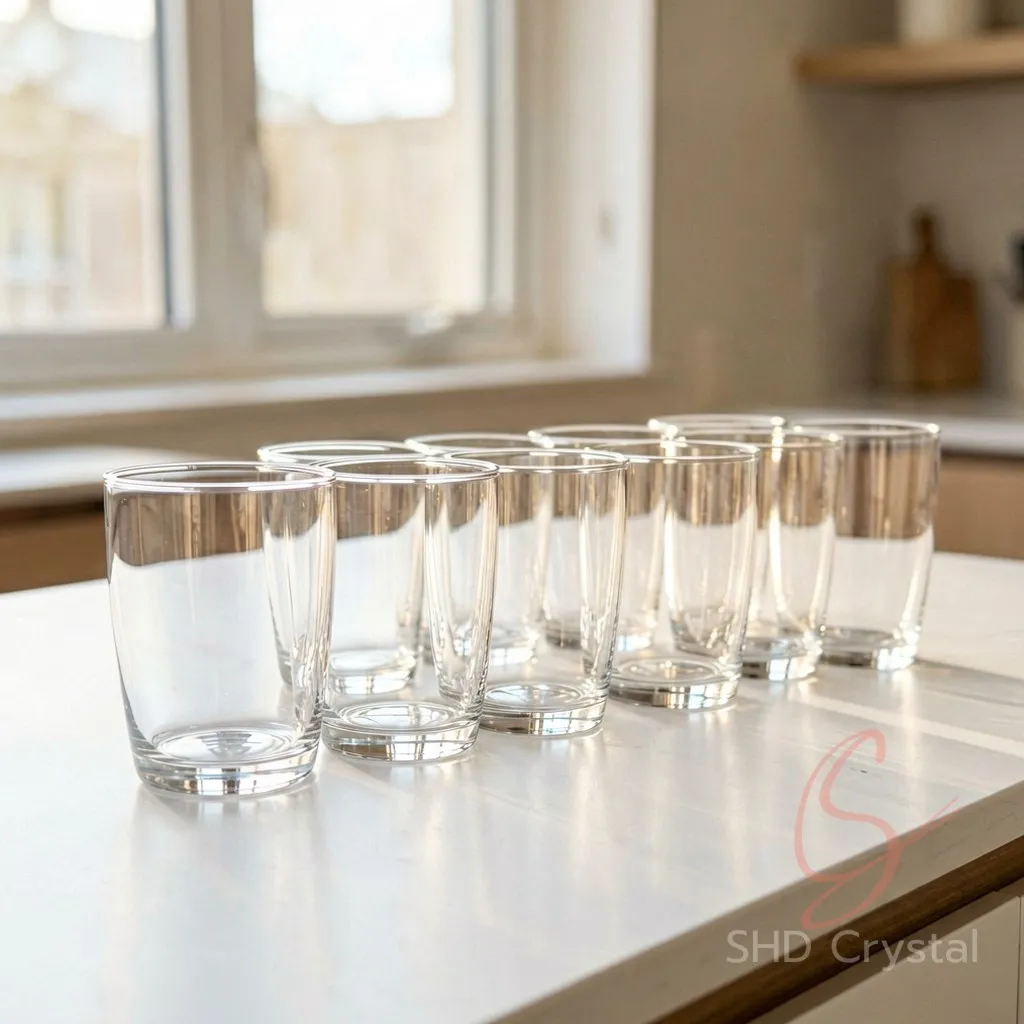
Understanding Material Choices for Bulk Glass Cups
The material decision shapes everything downstream — price, weight, thermal resistance, and how the finished product sits in a customer's hand. Soda-lime glass is the workhorse of the industry: affordable and suitable for everyday use. Borosilicate glass offers thermal shock resistance that soda-lime cannot match, making it better for hot beverages. Crystal, whether leaded or lead-free, delivers the optical clarity luxury brands expect — but the cost reflects that premium positioning.
Quick Material Comparison
Material | Best For | Main Limitation |
Soda-lime | High-volume, cost-sensitive orders | Limited thermal shock resistance |
Borosilicate | Hot beverages, temperature-variable use | Higher per-unit cost |
Lead-free crystal | Premium branding, gift sets | Most expensive, requires careful handling |
Soda-lime handles everyday use, borosilicate withstands thermal shock, and crystal offers the clarity luxury brands expect — each material makes a different trade-off between cost, durability, and perceived value. A practical consideration is matching the material to the end use: a hotel chain sourcing for breakfast service has different requirements than a craft distillery building a gift set.
What a Bulk Glass Cup Supplier Will Not Tell You Upfront Mold availability drives minimum order quantities more than most buyers realize. A standard tumbler shape might sit in a supplier's catalog, but producing it requires a specific mold that may or may not be in active condition. If the mold has been idle, reconditioning adds both cost and lead time.
Mold Setup and Minimum Order Realities
In practice, the better approach is to ask about mold cavity count and current condition before committing to a sample run. A factory running a four-cavity mold produces four cups simultaneously per cycle — that density affects both per-unit pricing and how quickly the order ships. Cutting a new mold can add several weeks to the timeline.
Quality Inspection Standards That Matter
AQL (Acceptable Quality Level) sampling is standard practice in glassware procurement, but how it's applied varies between factories. A supplier might reference AQL 2.5 for critical defects and AQL 4.0 for minor ones — but the real question is whether they actually run those inspections consistently.
Bubble count, wall thickness uniformity, and rim smoothness are the three metrics that most directly affect the end user's experience. A cup with uneven walls feels wrong in the hand. A rough rim is immediately noticeable — these determine whether bulk glass cups succeed in the market or get returned.
Packaging and Shipping for Wholesale Drinking Glasses
Packaging is where many wholesale drinking glasses orders encounter their first real problems. Glass is heavy and fragile, and the gap between 'packed well' and 'arrived broken' often comes down to whether the supplier uses inner dividers, double-wall corrugated cartons, and proper palletization.
The trade-off between packaging cost and damage rate is straightforward: skimping on packaging saves a small amount per unit but increases the risk of receiving broken goods at destination. For large-volume wholesale drinking glasses orders, even a modest damage rate compounds quickly. Buyers should request packing specifications before confirming any PO.
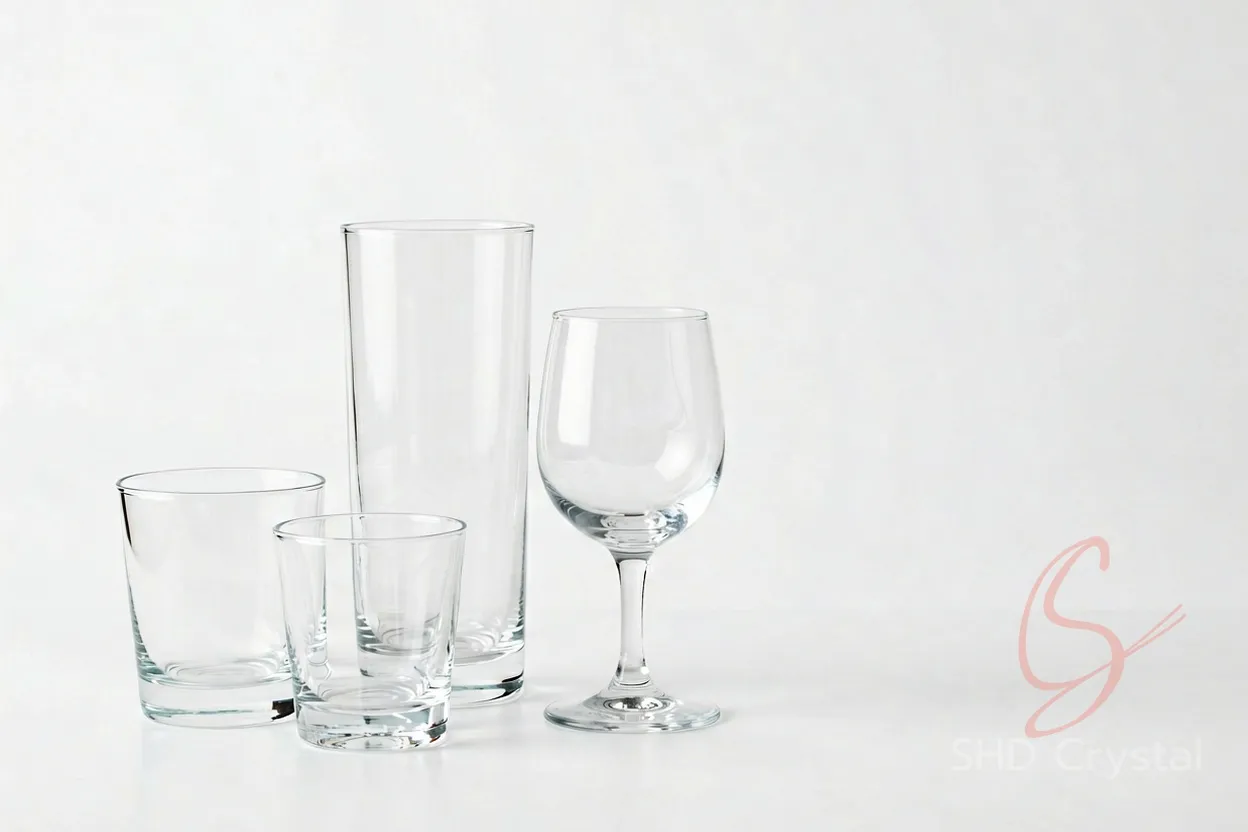
Custom Glass Tumblers: What to Specify in Your RFQ
When requesting custom glass tumblers, the details you include in your RFQ determine the quality of the quotes you receive. A vague request for 'custom tumblers, 300ml' invites misunderstandings. Specifying wall thickness, base diameter, rim finish, and decoration method saves time and reduces back-and-forth during sample approval.
Decoration method selection deserves careful thought. Screen printing offers vivid color and fast turnaround but may show edge wear over time. Acid etching creates a permanent frosted finish that holds up through thousands of wash cycles, though the initial setup requires more lead time. Hot stamping works well for metallic accents but demands precise temperature control during application — a detail that separates an experienced factory from a basic one. Custom glass tumblers with branded elements represent a growing segment, and getting the decoration right from the start avoids costly rework. The more precise your custom glass tumblers specification, the faster the sample approval process moves.
FQA
What is the typical MOQ for bulk glass cups from Chinese manufacturers?
MOQs vary based on whether the supplier uses an existing mold or cuts a new one. Standard shapes from stock molds often start at relatively low quantities, while custom designs typically require higher minimums to justify tooling costs.
How do wholesale drinking glasses differ from retail glassware in production?
Wholesale orders prioritize consistency across large batches — wall thickness, weight, and color tone must match across hundreds or thousands of units. Retail glassware can tolerate more variation because each piece is often sold individually.
What quality certifications should I look for when sourcing glass cups?
ISO 9001 certification indicates a documented quality management system, which is a reasonable baseline. For food-contact glassware, LFGB or FDA compliance ensures the material is safe for intended use.
Can custom glass tumblers be produced with both interior and exterior decoration?
Yes, but the decoration sequence matters. Interior printing is typically done before final annealing to ensure adhesion, while exterior decoration can happen at various stages depending on the method.
How long do lead times usually run for bulk orders?
Lead times depend on order volume, customization complexity, and current production load. Standard orders with existing molds typically ship within a few weeks. Custom designs requiring new molds can extend the timeline considerably.
Conclusion
Sourcing bulk glass cups successfully comes down to asking the right questions early — about materials, molds, quality processes, and packaging. Procurement teams that treat the supplier relationship as a collaboration rather than a transaction tend to get better results. The goal is not just to find the lowest price but to secure a product that meets specifications consistently. SHD Crystal works with procurement teams navigating these decisions, from initial material selection through production and quality assurance.
Ready to Start Your Next Order?
If your team is evaluating bulk glass cups or exploring custom glass tumblers for your next project, reaching out to an experienced supplier early can save weeks of back-and-forth. SHD Crystal supports buyers with material guidance, mold development, and production oversight — helping turn a specification sheet into a finished product that performs.
If you are interested in our glassware or related products,
please feel free to contact us.

