


Blogpost keywords: custom beer cups, custom beer glasses, wholesale beer mugs
Custom beer cups are among the most frequently requested items in promotional drinkware, but sourcing them is more nuanced than most buyers expect. Material selection, wall thickness, decoration method, and production location all shape the final product — and getting any one wrong can turn a promising order into a costly rewrite. For teams sourcing wholesale beer mugs in bulk, these variables matter even more at scale.
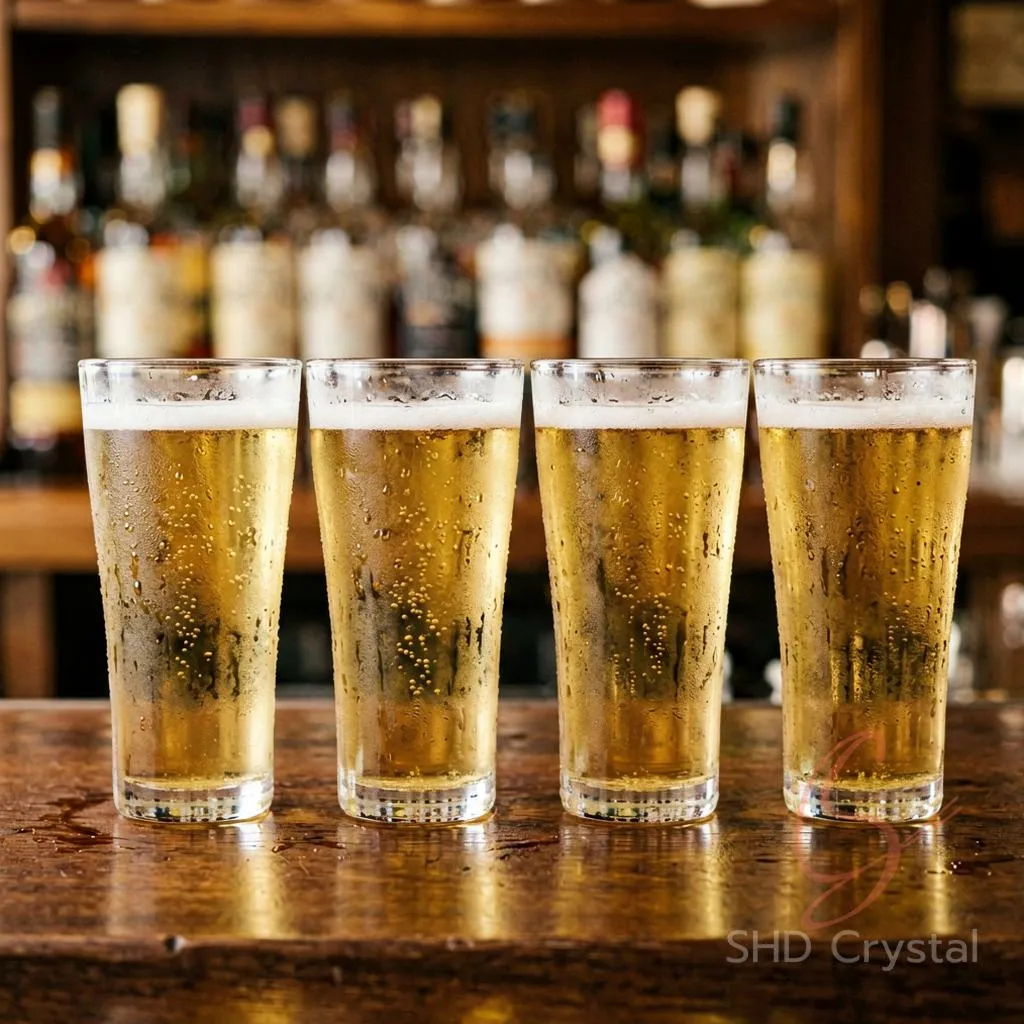
Why Material Choice Shapes the End Result for Custom Beer Cups The material chosen for custom beer glasses drives everything downstream: mold design, forming temperature, decoration compatibility, and how the cup feels in a customer's hand. Soda-lime glass handles everyday use and resists moderate thermal shock, making it the default for high-volume promotional orders. Borosilicate glass withstands repeated temperature swings without cracking, which matters for craft beer brands that serve both icy pints and room-temperature ales. Lead-free crystal delivers the clarity and weight that premium hospitality brands expect — each material makes a different trade-off between cost, durability, and perceived value.
Wall thickness matters more than buyers realize. Thin-walled cups feel elegant but chip easily during shipping. A heavier base adds stability. Request samples before committing to a full run.
Decoration Methods and What to Watch For
Decoration Method | Best For | Main Risk |
Screen Printing | Large-volume orders, bold logos | Ink adhesion failure on curved surfaces after repeated use |
Acid Etching | Premium frosted finish, subtle branding | Uneven opacity if bath temperature or immersion time varies |
Laser Engraving | Fine detail, small production runs | Higher per-unit cost at scale |
Screen printing works well for large batches with bold, centered logos. The ink sits on the glass surface and gradually shows edge wear — a trade-off worth noting for long-term brand visibility on custom beer glasses. Acid etching produces a smooth frosted finish but requires careful bath temperature control. Laser engraving avoids surface wear entirely but setup costs make it less practical for very large orders.
Common Misconceptions About Sourcing Custom Beer Cups
One frequent mistake is equating low unit price with good value. The cheapest quote often comes from a supplier using thinner glass, simpler molds, or outsourced decoration — factors that surface later as higher breakage rates or rejected shipments.
Not every glass factory produces the same quality of custom beer glasses. In practice, factories in established glass clusters like Boshan in Shandong often have deeper forming expertise than generalist facilities, and the difference shows in wall consistency and how well the cup holds up after repeated use.
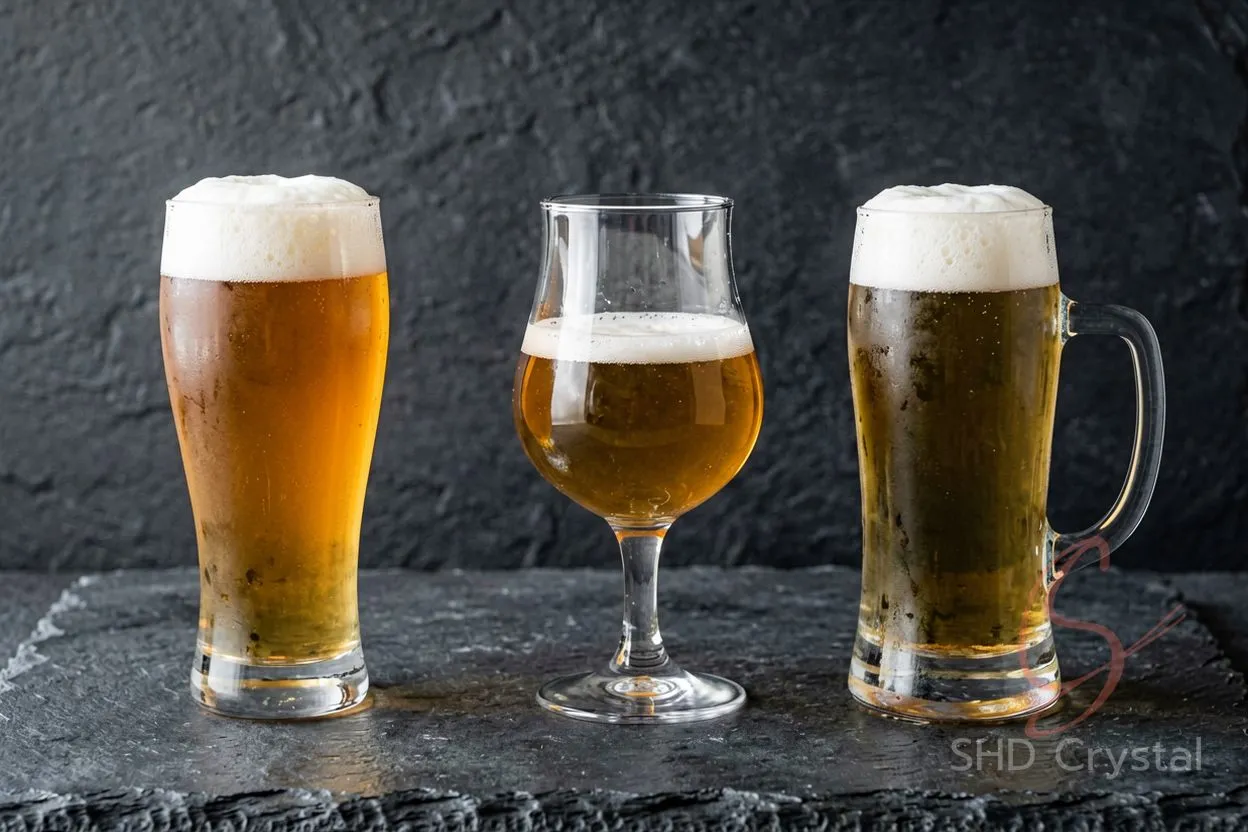
What Minimum Order Quantities Actually Look Like
MOQs vary by decoration method. Screen printing has the lowest setup cost, so suppliers may accept smaller runs. Etching and laser engraving require more preparation — chemical bath setup for the former, digital file calibration for the latter — which pushes minimums higher.
Blank cups usually carry lower MOQs than decorated ones. Some buyers order blanks in advance and add branding later, especially when launching wholesale beer mugs on a tight timeline.
Custom molds add tooling fees and lead time, separate from per-unit pricing. Amortizing tooling over a larger initial order is usually more cost-effective.
FQA
What is the typical MOQ for custom beer cups from Chinese manufacturers?
Minimum order quantities vary by decoration method. Screen-printed wholesale beer mugs may start at a few hundred pieces, while etched or laser-engraved runs often require higher minimums due to setup time. Blank cups without decoration typically carry the lowest thresholds.
How do soda-lime and borosilicate glass compare for beer drinkware?
Soda-lime glass handles everyday use and is the most cost-effective for high-volume orders. Borosilicate offers better thermal shock resistance, suitable for craft beer brands serving drinks at varying temperatures. Lead-free crystal adds weight and clarity for premium presentations but at a higher price point.
What quality certifications should I look for when sourcing branded pint glasses?
FDA compliance is standard for food-contact glassware in the US market. LFGB covers European requirements. Ask about AQL inspection standards — AQL 2.5 for critical defects and 4.0 for minor ones is a common baseline.
How long does production typically take for custom beer cups?
Lead times commonly run 20 to 30 working days depending on order complexity, decoration method, and factory workload. Custom molds can add one to two weeks for tooling development. Building buffer time into the schedule is wise, particularly for seasonal promotions or event-driven orders.
Conclusion
Ordering custom beer cups is not just about picking a shape and adding a logo. The material, wall thickness, decoration technique, and whether the supplier controls the full production chain all shape the final result. Buyers who invest time upfront in understanding these variables — and who verify quality through samples rather than assuming it from a spec sheet — consistently end up with better outcomes. A thoughtful approach to sourcing custom beer cups pays dividends in fewer defects, stronger brand presentation, and a supply relationship built on transparency.
Start Your Next Drinkware Project With Confidence
Whether you are evaluating options for a craft beer brand launch or sourcing wholesale beer mugs for a hospitality group, SHD Crystal works with buyers to match material, decoration, and production scale to the specific needs of each project. From custom beer glasses for taprooms to branded pint glasses for national campaigns, reach out to discuss specifications, request samples, or get a detailed quote for your custom beer cups.
If you are interested in our glassware or related products,
please feel free to contact us.

