


Blogpost keywords: custom wine cups, wholesale wine glasses, crystal wine glasses
Custom wine cups are among the most frequently requested products in the glassware industry, yet sourcing them is rarely as straightforward as a quick RFQ might suggest. Material, decoration, and quality expectations all shape the final product — and misjudging any one of them means a shipment that falls short of brand standards.
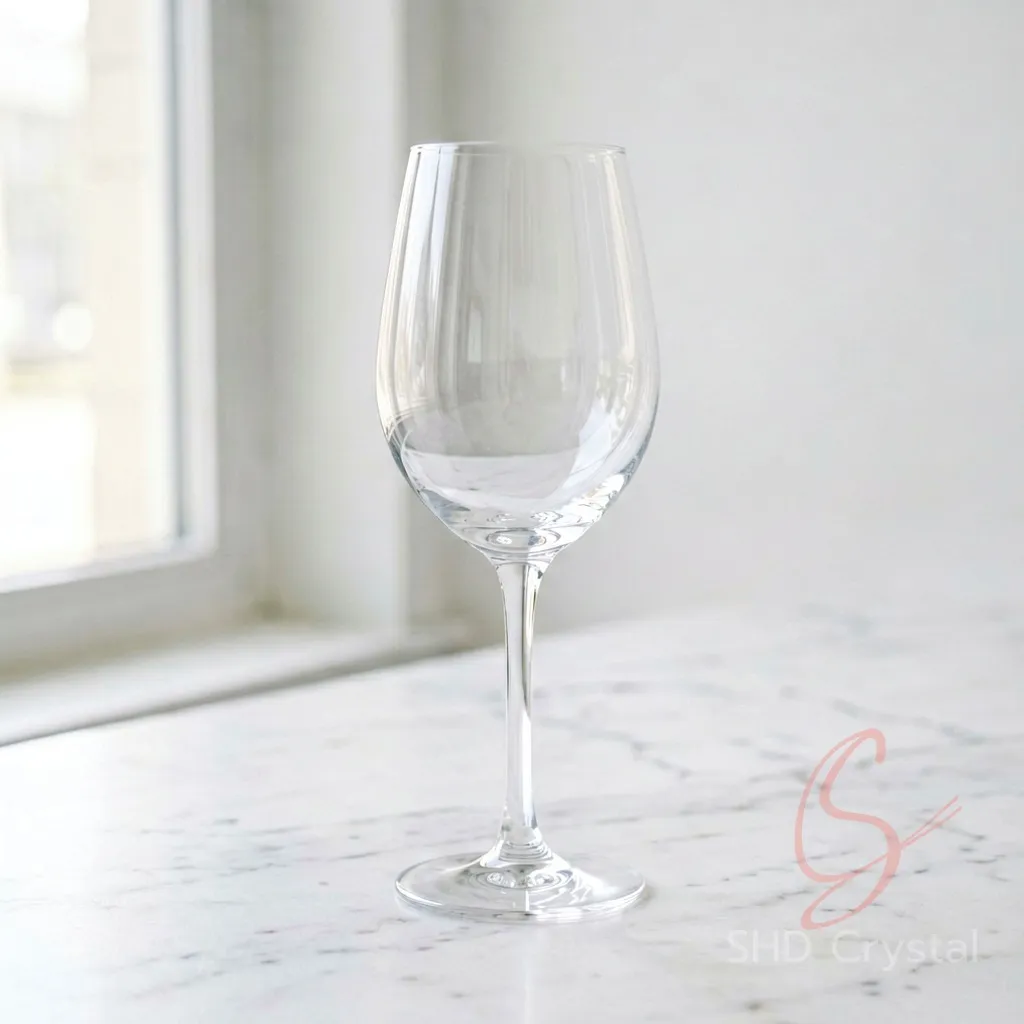
Why Custom Wine Cups Are More Complicated Than They Look
A beverage brand might send a perfect reference image to a factory, only to receive samples that look nothing like it. In Chinese glass clusters like Boshan in Shandong, blank production happens in one workshop while decoration is outsourced elsewhere. That gap creates communication friction, and the buyer pays for it in delays and rework.
The real question isn't "can you make this?" but "who controls every step from forming to finishing?" Factories with in-house etching and packaging tend to deliver more consistent results than those relying on subcontractors. The cheapest quote often comes from suppliers who have outsourced their decoration — the cost savings come with a quality trade-off you absorb later.
Material Choices That Affect Price, Durability, and Brand Perception
Soda-lime glass handles everyday use well and is the standard for casual dining. Borosilicate withstands thermal shock better, which matters for wine served at varying temperatures. Crystal — leaded or lead-free — offers the clarity luxury brands expect, though regulations in certain markets restrict leaded crystal for food-contact use. That depends on where you sell and what your customers expect.
A practical consideration many buyers overlook: the material affects decoration outcomes. Acid etching on crystal produces a different texture than on soda-lime. Screen printing adhesion varies by composition. A responsible supplier will run test prints on your actual material before production.
Material | Best For | Main Risk |
Soda-lime glass | High-volume, cost-sensitive orders | Lower clarity, thermal limitations |
Borosilicate glass | Premium casual, thermal applications | Higher cost, limited decoration options |
Crystal (lead-free) | Luxury brands, giftware | Premium pricing, stricter QC requirements |
Wholesale wine glasses in soda-lime are the most cost-effective option for large orders, but the trade-off is durability and perceived value. Buyers targeting the luxury segment often find that crystal wine glasses command higher retail prices and justify the additional sourcing cost. Ordering samples in all three materials before committing is usually worth the small upfront expense.
Decoration Methods: What Works and What Breaks
Decoration is where custom wine cups either impress or disappoint. Acid etching produces a smooth frosted finish ideal for large batches of wholesale wine glasses, while sandblasting creates deeper texture but carries a higher risk of micro-fractures on thin walls. Laser engraving offers fine detail for small runs but per-unit cost does not scale well.
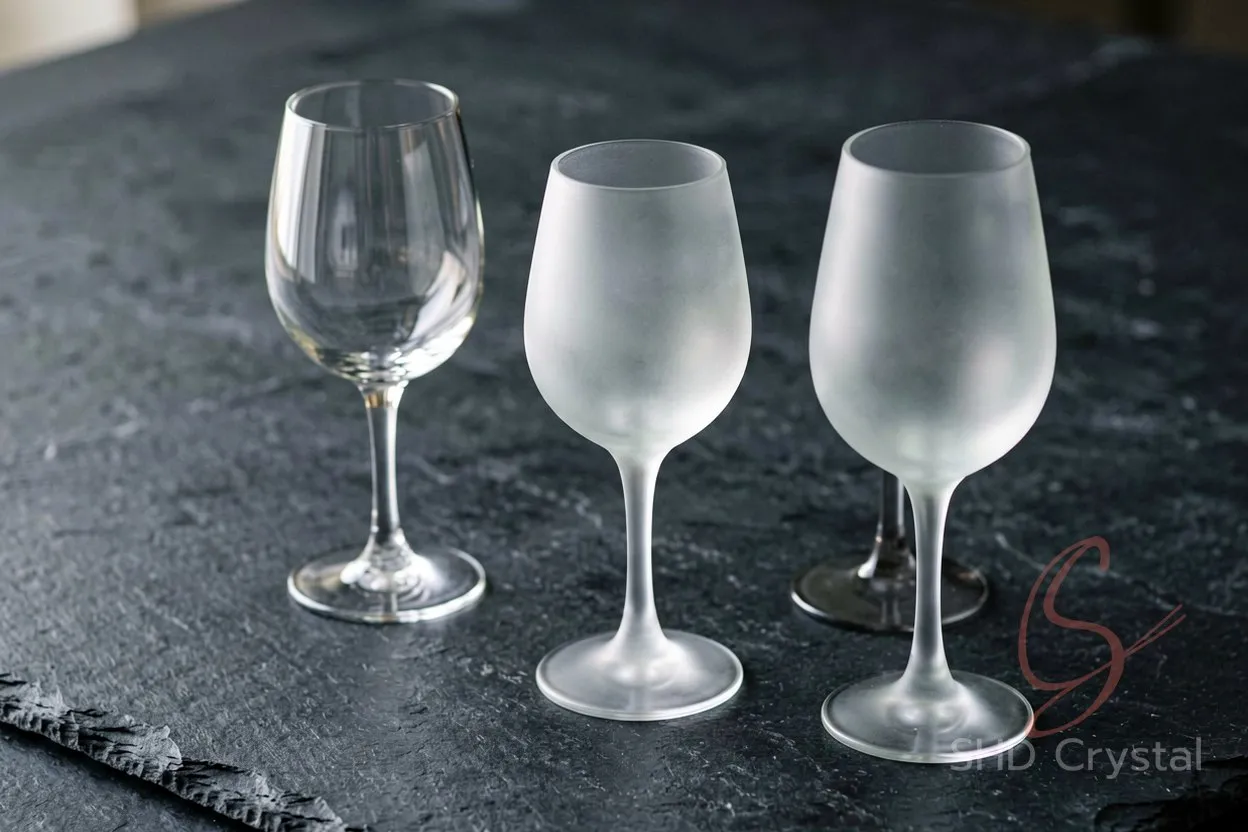
A common buyer mistake is choosing a decoration method based on a sample photo without understanding the production trade-offs. Sandblasting a thin bowl invites microfractures around the design edge — they won't show immediately, but after enough dish cycles, tiny cracks appear along the blasted outline. Screen printing shows edge wear well before etched glass needs replacement — the difference is measured in years, not weeks.
The better approach is usually to request test samples before placing a full order. Ask the factory to run a small batch using the same settings they plan for production — a step that costs little and prevents rework that doubles your lead time.
Quality Control, Packaging, and Lead Time
For wholesale wine glasses and crystal wine glasses alike, quality expectations need to be specified up front. AQL standards — typically AQL 2.5 for visible defects and AQL 4.0 for minor imperfections — give both sides a shared reference. Without clear defect tiers, your receiving team may spend hours debating what constitutes a reject.
Packaging for glass export follows a standard pattern: inner cartons with dividers, export cartons, and pallet wrapping. But the details matter — a hospitality group sourcing crystal wine glasses for a hotel chain once found that thin inner carton dividers caused chip damage across an entire container. The added packaging cost is usually modest compared with replacing damaged glassware.
Lead times typically run 20 to 25 working days for production, plus transit. Building in a buffer for mold adjustments and final QC helps avoid schedule slips that disrupt product launches.
FAQ
What is the typical MOQ for custom wine cups from Chinese manufacturers?
Most factories set minimums between 500 and 3,000 pieces depending on design complexity and decoration method. Custom molds require a higher commitment because tooling costs need to be amortized across the order. Starting at the lower end helps manage risk.
How do crystal wine glasses compare to soda-lime for restaurant use?
Crystal wine glasses offer superior clarity and a lighter feel associated with premium service. However, they are more fragile and may not hold up in high-turnover restaurant environments. Soda-lime is more durable and cost-effective for everyday service.
What certifications matter when sourcing wholesale wine glasses?
Look for ISO 9001 for quality management, LFGB or FDA compliance for food-contact safety, and SGS or BV test reports for material composition. For lead-free crystal, verify documentation confirming regulatory compliance — especially important for products heading to European or North American markets.
Can I combine different decoration methods on a single order?
Yes, but each method typically runs on a separate production line. Combining acid etching and screen printing adds handling steps and increases lead time. Discuss the full scope with your supplier before confirming.
Conclusion
Custom wine cups offer brands a meaningful way to differentiate in a crowded market, but sourcing demands attention to material, decoration, and quality control details that go beyond a basic RFQ. Buyers who invest time understanding production variables — whether ordering wholesale wine glasses for restaurants or crystal wine glasses for luxury retail — and work with suppliers controlling the full chain tend to achieve better outcomes.
Partnering With the Right Manufacturer
If you're evaluating suppliers for custom wine cups, starting with a detailed spec sheet covering material, dimensions, decoration method, and packaging requirements can save back-and-forth. SHD Crystal works with brands across hospitality, retail, and corporate gifting to develop glassware programs matching brand standards and operational realities. Reaching out early allows feasibility checks that save time and cost down the line.
If you are interested in our glassware or related products,
please feel free to contact us.

