


Blogpost keywords: glass cup china, glass cup manufacturer, custom glass cups
Sourcing a glass cup China supplier sounds straightforward until you realize the market spans thousands of factories with wildly different capabilities. The Boshan district in Shandong -- one of China's oldest glassware clusters -- and producers across Hebei together account for a significant share of the world's drinkware output. But volume alone does not guarantee quality. For procurement teams evaluating glass cup china options, the real task is separating reliable factories from those that cut corners.
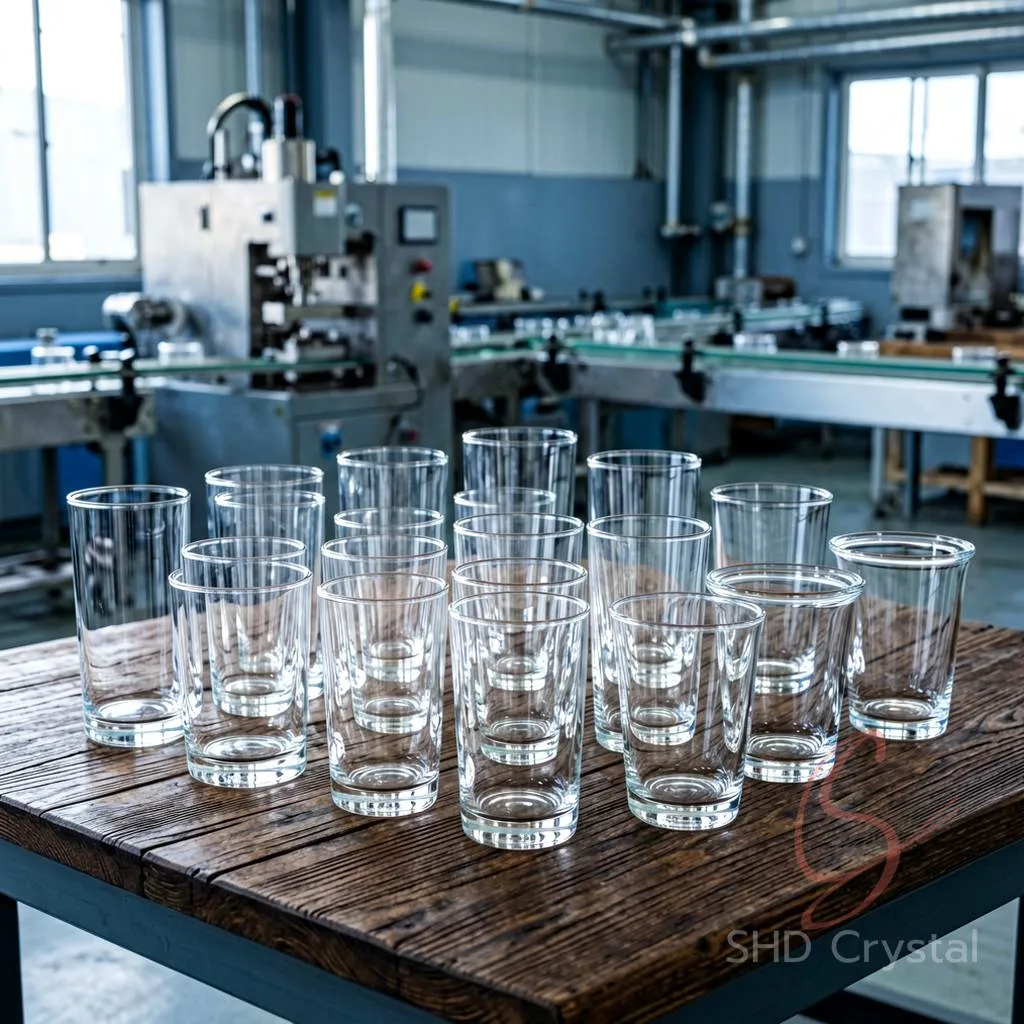
What Drives Glass Cup China Pricing and Quality
China's glass manufacturing ecosystem is not monolithic. Boshan has decades of accumulated expertise in pressing and blowing, while Hebei leans toward higher-volume drinkware. A glass cup manufacturer in these clusters typically controls part of the production chain -- forming in one workshop, decoration in another, packaging elsewhere. This fragmentation allows specialization but creates coordination gaps.
Material choice is the first variable when ordering custom glass cups. Soda-lime glass handles everyday use at low cost. Borosilicate resists thermal shock -- useful for double-wall designs -- but demands tighter forming tolerances. Crystal targets the premium end where clarity and weight signal quality. Each material makes a trade-off between cost, durability, and perceived value.

In practice, many glass cup china factories separate forming from decoration -- blanks produced in one workshop are sent to a specialized etching line in another town. This split creates scheduling gaps and quality handoff risks that direct-integration factories avoid.
Surface Treatments and Their Trade-Offs
Screen printing is the most economical finish for custom glass cups but shows edge wear after repeated washing. Acid etching produces a smooth frosted effect, yet if bath temperature drifts, opacity turns patchy across the batch. Sandblasting creates deeper texture and bolder branding, but carries a higher risk of micro-fractures on thin-walled glass -- a defect that may not surface until after extended use.
The better approach is usually to request physical samples of each treatment method before committing to a large order. A responsible glass cup manufacturer will provide treatment samples without hesitation. Run your fingernail across any etched edge -- a sharp transition may indicate overly aggressive etching depth that could affect durability.
Treatment | Best For | Main Risk |
Screen printing | Large-volume orders, simple graphics | Ink adhesion varies with surface energy |
Acid etching | Premium frosted finish, consistent branding | Uneven opacity on curved surfaces |
Sandblasting | Deep texture, bold logos, tactile branding | Microfractures on thin walls |
How to Evaluate a Glass Cup Manufacturer
A useful first question when evaluating a glass cup china supplier is whether they control forming, decoration, and packaging in-house or outsource stages to subcontractors. Factories managing the full chain typically offer tighter quality control and more predictable timelines. Those that send decoration to a separate workshop introduce coordination risk.
Cavity count and mold maintenance reveal operational discipline. A responsible glass cup manufacturer logs mold impressions and rotates cavities before they drift. After enough impressions, the mold produces uneven walls -- a factory that does not track this will ship product that fails your inbound inspection.
Packaging also matters more than many buyers expect. Glass is fragile and heavy. Inner carton protection, export carton strength, and palletization standards all affect whether your shipment arrives intact. A supplier who quotes low unit prices but uses thin cartons without adequate foam is gambling with your cargo.
What Custom Glass Cups Require From Buyers
A beverage brand once approved a custom tumbler design for custom glass cups based on factory photos without requesting physical samples. When the shipment arrived, wall thickness varied between units and logo placement shifted by several millimeters. The procurement team had not specified mold validation in their RFQ -- a common and entirely preventable oversight.
Lead times typically run 20 to 25 working days for standard shapes, but custom molds can add significant time. A responsible glass cup manufacturer outlines a clear timeline from mold development through sample approval to production. Buyers should consider requesting AQL sampling -- commonly AQL 2.5 for critical defects -- and ask how the supplier documents inspection results.
The real question buyers should ask is not just 'what is the MOQ' but 'what is your defect rate across a full production run.' Factories that track and share this data openly demonstrate the operational transparency that builds long-term sourcing partnerships.
FAQ
What is the typical MOQ when sourcing glass cup China products?
Minimum order quantities vary by factory and forming method. Standard shapes on IS machines may accept a few thousand units, while custom glass cups with new molds often require larger commitments to justify tooling investment.
How does borosilicate compare to soda-lime for commercial drinkware?
Soda-lime is the default for everyday glass cups -- cheaper to produce and adequate for normal use. Borosilicate resists thermal shock, making it suitable for double-wall designs or hot-to-cold transitions.
What quality certifications should I look for in a glass cup manufacturer?
Look for AQL-based inspection protocols and documented defect tracking. ISO 9001 is common among established producers. For food-contact glass, verify FDA or EU compliance depending on your target market.
How do I verify surface treatment quality before placing a bulk order?
Request physical samples and inspect under varied lighting -- acid etching defects and screen printing misalignment are easier to catch in person than in photos. Run your fingernail across any etched edge to check depth consistency.
Conclusion
Sourcing a glass cup China supplier demands more than comparing price lists. Buyers need to understand material trade-offs, evaluate whether a factory controls its full production chain, and verify quality processes before committing to large orders. Glass cup manufacturer capabilities vary across regions and factory types, so due diligence upfront saves costly corrections later. For glass cup china sourcing, the cheapest option often hides costs that surface only after the shipment arrives.
Partnering With the Right Supplier
If you are interested in our glassware or related products,
please feel free to contact us.

