


Blogpost keywords: personalised latte glass, custom coffee glassware, branded latte cups
A personalised latte glass does more than hold coffee — it turns every serving into a branded touchpoint. For cafés, hotels, and beverage companies competing in a crowded specialty market, the shift from generic cups to custom coffee glassware has become a practical way to reinforce brand identity at the point of consumption. Understanding how glass blanks move through the production chain is the first step toward smarter sourcing.
What Makes a Personalised Latte Glass Worth Sourcing Over Generic Options
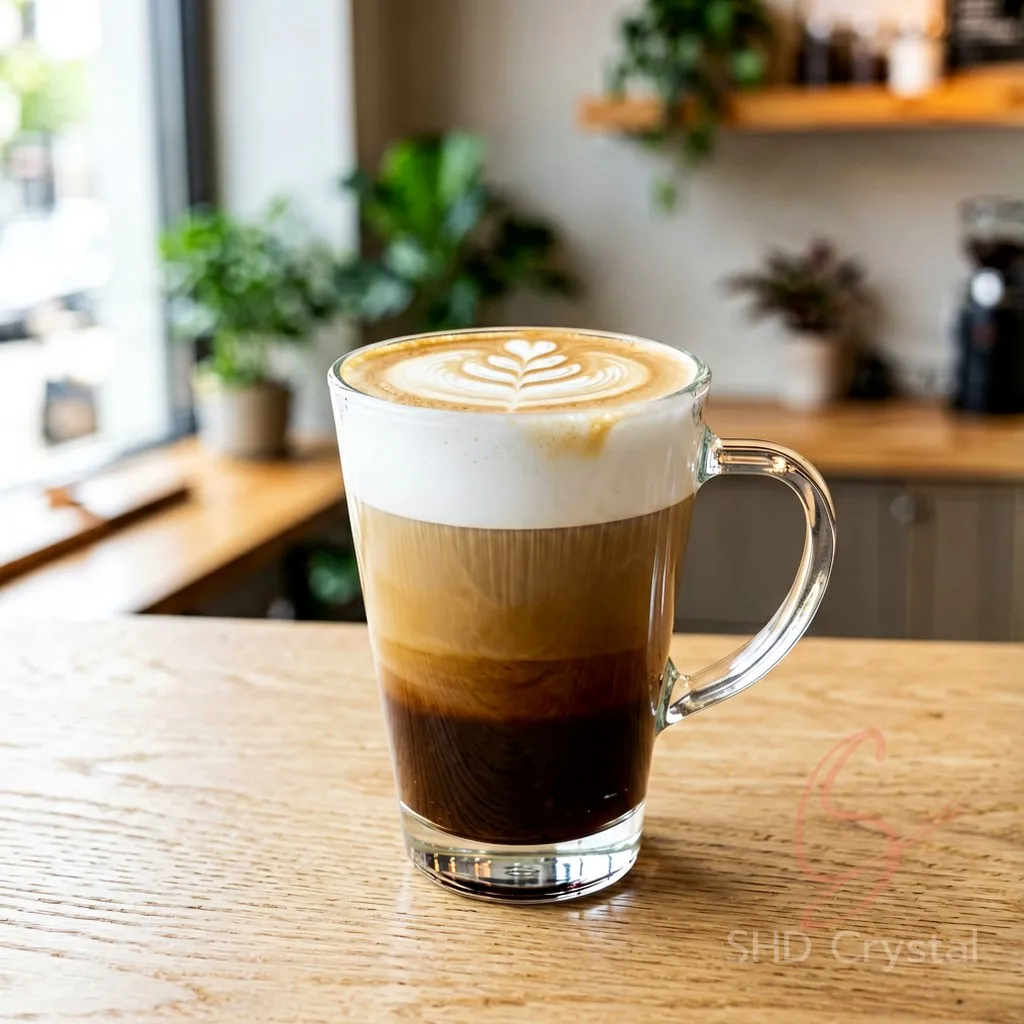
A generic tumbler does its job, but it does nothing for brand recall. A personalised latte glass carries a visual identity that customers associate with the café or hotel experience — and that association drives repeat visits. In hospitality, branded latte cups reinforce a curated atmosphere, and in retail packaging a custom coffee glassware set becomes part of the product itself.
There is also a practical angle. When a buyer specifies weight, wall thickness, and footprint upfront, the receiving team avoids the back-and-forth that comes with off-the-shelf alternatives. Custom runs require a minimum order and longer lead times, but the brand equity gained justifies the wait.
How Material Choice Shapes the Personalised Latte Glass Experience
When selecting a personalised latte glass, material choice matters more than most buyers expect. Soda-lime glass dominates the commercial drinkware market because it offers a reasonable balance of clarity, weight, and cost — and it handles the thermal range of a latte without issues. Borosilicate glass tolerates extreme temperature shifts better, making it sensible for venues that serve both iced and hot drinks. Crystal delivers the lightest weight and brightest refraction, but it carries a higher price point and demands careful handling during shipping.
In practice, the decision comes down to use case. A high-volume café pouring hundreds of lattes a day will likely find soda-lime sufficient, while a cocktail bar that also serves specialty coffee may prefer borosilicate for its versatility. The real question is not which material is “best” — it’s which one aligns with the venue’s service style and cost structure.
Decoration Methods That Define the Personalised Latte Glass
The decoration method determines how a logo or design survives daily use. Screen printing, acid etching, and laser engraving each produce a distinct result, and the choice affects durability, cost, and visual impact.
Method | Best For | Main Risk |
Screen Printing | Large batches, bold logos, short lead times | Edge wear after repeated washing |
Acid Etching | Smooth frosted finish, premium feel | Uneven opacity on curved surfaces |
Laser Engraving | Fine detail, permanent marking | Higher per-unit cost at scale |
Screen printing delivers vivid color and works well for simple logos — but a factory with experience will warn you that printed edges show wear well before etched surfaces do. Acid etching produces a tactile, frosted texture that feels premium, though controlling bath temperature across a rack of curved latte glasses demands tight process oversight. Laser engraving offers precise detail and durability, but the per-unit cost makes it impractical for very large runs. A responsible supplier will walk through sample batches before a full production order — and that step is worth specifying in the RFQ.
Sourcing From Chinese Manufacturers
China’s glass manufacturing clusters — particularly Boshan in Shandong and parts of Hebei — produce a significant share of the world’s commercial drinkware. Factories in these regions often separate forming from decoration: blanks are made in one workshop and sent to a specialized etching or printing line in another town. That split affects lead times, quality control, and communication — buyers who understand the chain upfront avoid surprises later.
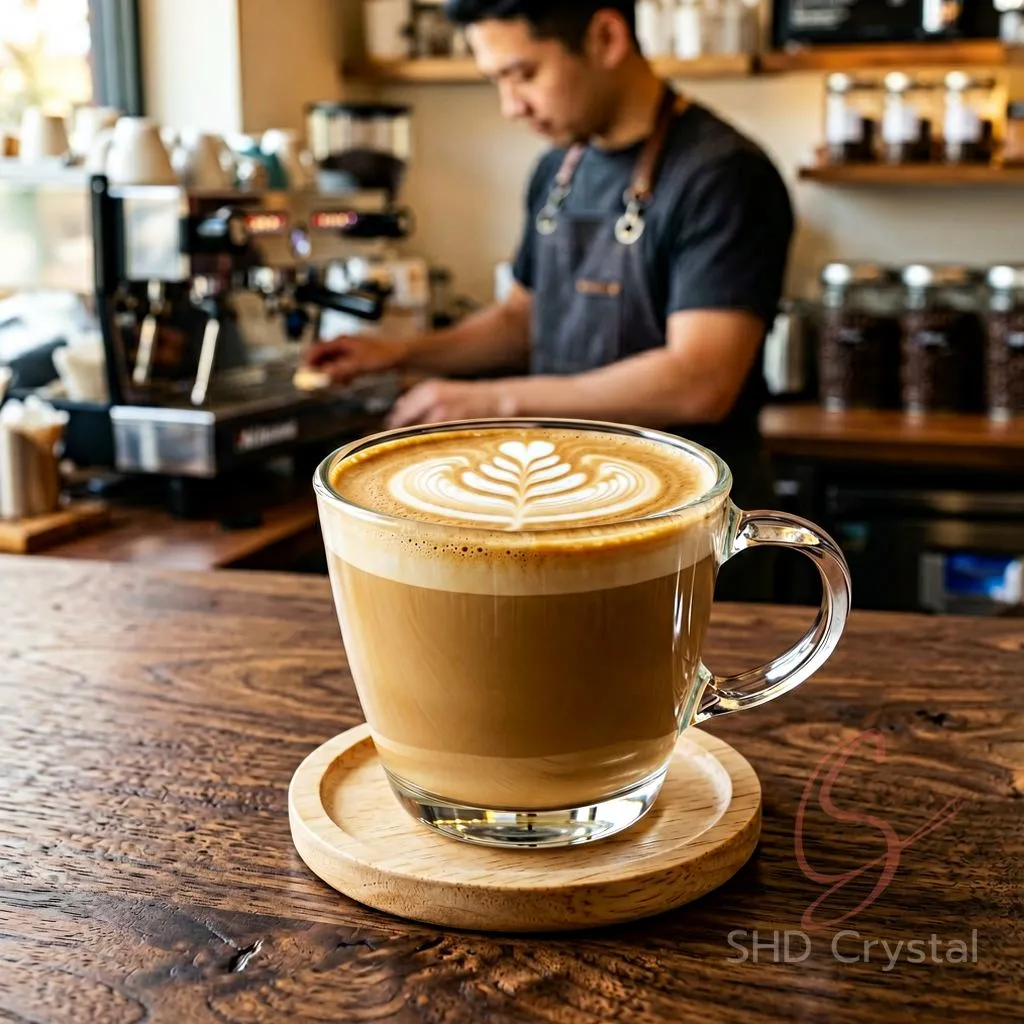
When evaluating a supplier for personalised latte glasses, ask whether the factory controls the full production chain from blank forming through decoration and packaging, or uses subcontractors for any step. An integrated operation typically offers tighter quality consistency. A factory that outsources decoration may offer lower pricing, but the trade-off is less control over finish quality and potential delays.
For international buyers, it’s worth requesting a pre-production sample with the exact decoration method and glass specification. A hospitality group sourcing branded latte cups for a hotel chain once discovered during sampling that the acid-etch depth was too aggressive on their curved design — catching that before a full order saved significant cost. Testing a small batch first is always worth the extra days.
FAQ
What is the typical MOQ for personalised latte glasses from Chinese manufacturers?
Minimum order quantities typically range from 500 to 1,000 pieces for standard designs, though some factories accept smaller runs for laser-engraved orders. Buyers should clarify MOQ upfront in the RFQ, as decoration method and glass complexity both affect the threshold.
How does screen printing compare to acid etching for branded latte cups?
Screen printing offers faster production and lower per-unit cost, making it suitable for large batches with simple logos. Acid etching delivers a more premium, tactile finish that lasts longer through commercial dishwashing — but it requires tighter process control and typically carries a higher unit price.
What quality certifications should I look for when sourcing custom coffee glassware?
Look for food-contact safety compliance (FDA or EU LFGB depending on your market), and ask whether the factory follows AQL inspection standards. For export orders, verify that inner carton packaging and pallet configuration meet your receiving team’s inbound inspection requirements.
How long does production typically take for a custom latte glass order?
Lead times typically run 20 to 30 working days after sample approval, depending on order volume and decoration complexity. Tooling or mold development for a new glass shape can add additional time — it’s worth confirming the full timeline during vendor evaluation.
Conclusion
A personalised latte glass is not a luxury — it is a procurement decision with measurable branding returns. From material selection through decoration method and supplier evaluation, the choices a buyer makes early in the process determine whether the final product reinforces brand identity or becomes just another cup. For businesses sourcing custom coffee glassware at scale, understanding the China supply chain, requesting pre-production samples, and specifying decoration tolerances upfront are the steps that separate a smooth order from an expensive lesson.
Partnering With the Right Supplier for Your Custom Latte Glass Needs
Choosing a supplier for personalised latte glasses is about more than price — it is about finding a partner who understands the full chain from glass forming through decoration and packaging. SHD Crystal works with buyers across hospitality, retail, and food service to develop custom coffee glassware that matches both brand vision and production realities. If the goal is branded latte cups that perform reliably in commercial settings, the conversation starts with specifications, not catalog browsing.
If you are interested in our glassware or related products,
please feel free to contact us.

