


Blogpost keywords: personalized glass mugs, custom glass drinkware, engraved glass tumblers
Personalized glass mugs have become a go-to product for corporate gifting programs, hospitality brands, and retail collections seeking functionality with brand identity. The sourcing process for custom glass drinkware involves decisions on material, personalization method, and production setup that directly affect cost, quality, and delivery timelines.
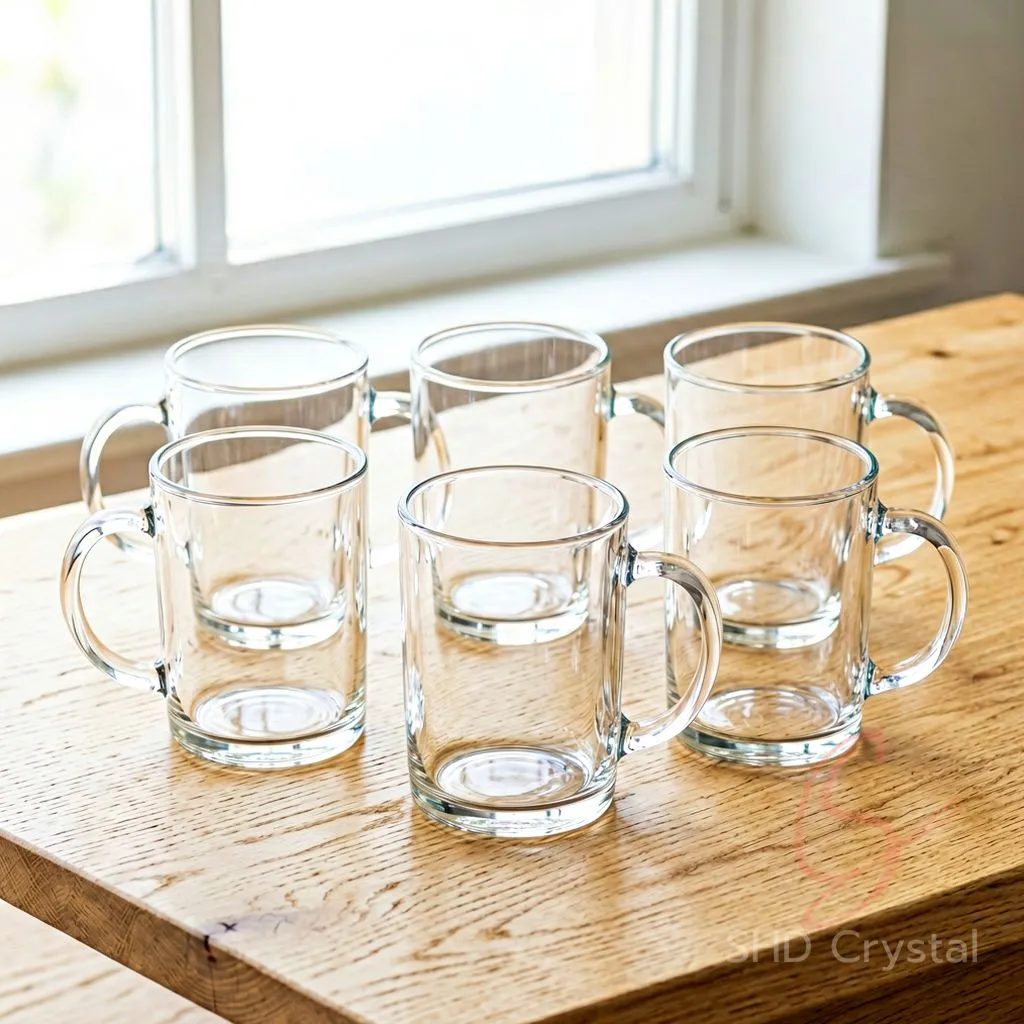
Why Personalized Glass Mugs Command Premium Pricing
Custom mold development requires tooling investment that gets amortized over the production run. A first order of a few hundred pieces carries the full burden, while higher volumes bring the per-unit cost down. Beyond the blank itself, each personalization step — acid etching, screen printing, or laser engraving — adds its own cost layer.
In practice, the biggest price differences between suppliers come not from the glass itself but from how the factory handles decoration. A facility with an in-house etching line quotes differently than one that subcontracts decoration to a separate workshop, and that difference shows in both lead time and consistency. For orders of engraved glass tumblers with intricate artwork, this gap becomes even more visible.
Material Choices and How They Shape the End Product
Soda-lime glass is the most common choice for everyday personalized glass mugs — it handles volume and cost efficiency well. Borosilicate glass offers superior thermal resistance for hot beverage service. Lead-free crystal delivers the highest clarity and a premium hand-feel, though it requires more careful handling during shipping.
For buyers sourcing custom glass drinkware for daily restaurant use, soda-lime with acid etching offers the best durability-to-cost ratio. For retail or gift collections, engraved glass tumblers in borosilicate or crystal create a stronger first impression. Soda-lime handles cost efficiency, borosilicate handles temperature extremes, and crystal handles perceived value — the right choice depends on the end-use scenario.
Personalization Methods: What Works and What Breaks
Method | Best For | Main Risk |
Acid Etching | Large batches, uniform frosted finish | Uneven opacity on curved surfaces if bath conditions vary |
Screen Printing | Bold colors, multi-color logos | Edge wear after repeated washing on high-use items |
Laser Engraving | Fine detail, small-to-mid runs | Higher per-unit cost at scale |
Acid etching demands careful chemical concentration control — if bath temperature drifts across a rack, the opacity turns uneven and the logo looks patchy. Screen printing holds up for promotional items but shows edge wear on daily-use mugs. For engraved glass tumblers, laser engraving offers the finest detail, though per-unit cost can be a barrier for very large runs. A factory with real experience in custom glass drinkware production will have these processes dialed in.
The Manufacturing Details That Separate Good Orders from Bad Ones
Mold setup and changeover matter more than many buyers realize. In China’s major glass clusters — Boshan in Shandong for tableware, parts of Hebei for daily-use glass — forming and decoration are frequently handled by different subcontractors. When these stages are not under one roof, timeline coordination becomes a real challenge and quality consistency can drift.
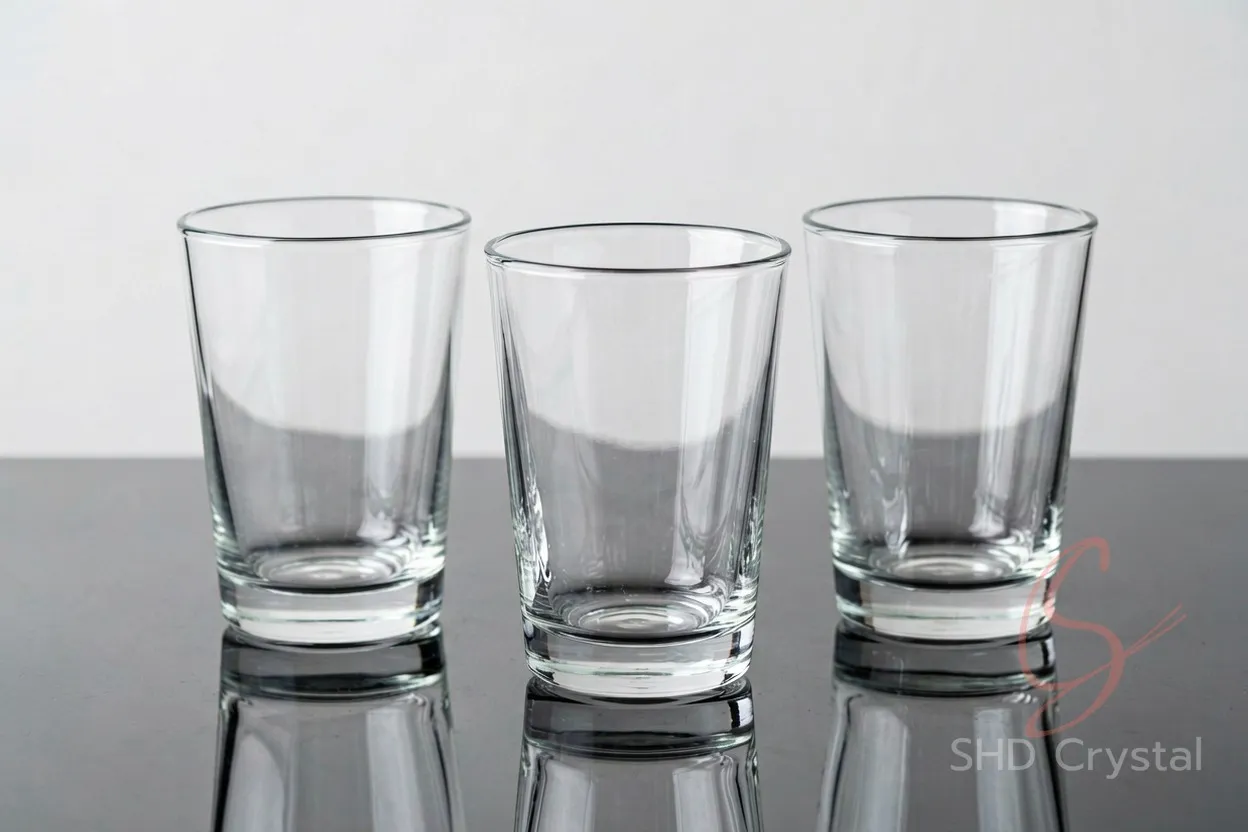
A more useful question than "what is your lead time?" is "who controls the decoration step?" The answer reveals whether the supplier manages the full chain or relies on external partners — and that distinction drives both timeline reliability and defect accountability. This matters for custom glass drinkware orders where decoration consistency is critical. Buyers should request AQL standards for both the forming and decoration stages separately.
FAQ
What is the typical MOQ for personalized glass mugs from Chinese manufacturers?
Minimum order quantities vary by supplier and personalization method. Custom mold projects require higher minimums to justify tooling costs, while orders using standard blanks with decoration can start lower. A reasonable starting point is several hundred pieces.
How does acid etching compare to laser engraving for engraved glass tumblers?
Acid etching produces a smooth frosted finish that works well for batch production. Laser engraving offers sharper detail and finer lines for intricate designs. The choice comes down to production volume and detail requirements.
Can personalized glass mugs withstand commercial dishwashing?
Acid-etched and laser-engraved designs hold up well through repeated wash cycles. Screen-printed designs may show wear sooner on areas that experience friction. Buyers planning for commercial use should clarify expected product lifespan with the supplier.
What quality certifications should I look for when sourcing these products?
For food-contact glassware sold in the US, FDA compliance is expected. European markets may require LFGB or CE marking. Ask about the supplier’s internal AQL standards and whether they use third-party QC inspection.
Conclusion
Choosing the right supplier for personalized glass mugs means evaluating more than per-unit price. Material quality, personalization durability, and production integration all influence the final product. Procurement teams that build inspection criteria into their purchase orders consistently achieve better outcomes.
Working With a Trusted Glass Manufacturer
If your procurement team is evaluating suppliers for personalized glass mugs, SHD Crystal works with buyers across hospitality, retail, and corporate gifting to match material selection and personalization methods to specific use cases. Reach out to discuss your next project and receive a detailed breakdown of options, timelines, and quality standards.
If you are interested in our glassware or related products,
please feel free to contact us.

