


Blogpost keywords: wholesale glass cups with bamboo lids, bamboo lid glass tumblers, custom glass drinkware
Wholesale glass cups with bamboo lids have moved from eco-friendly novelty to mainstream drinkware, appearing in cafe chains, corporate gift programs, and hotel amenity lines. For procurement teams sourcing bamboo lid glass tumblers at volume, the specifications matter more than most buyers realize.
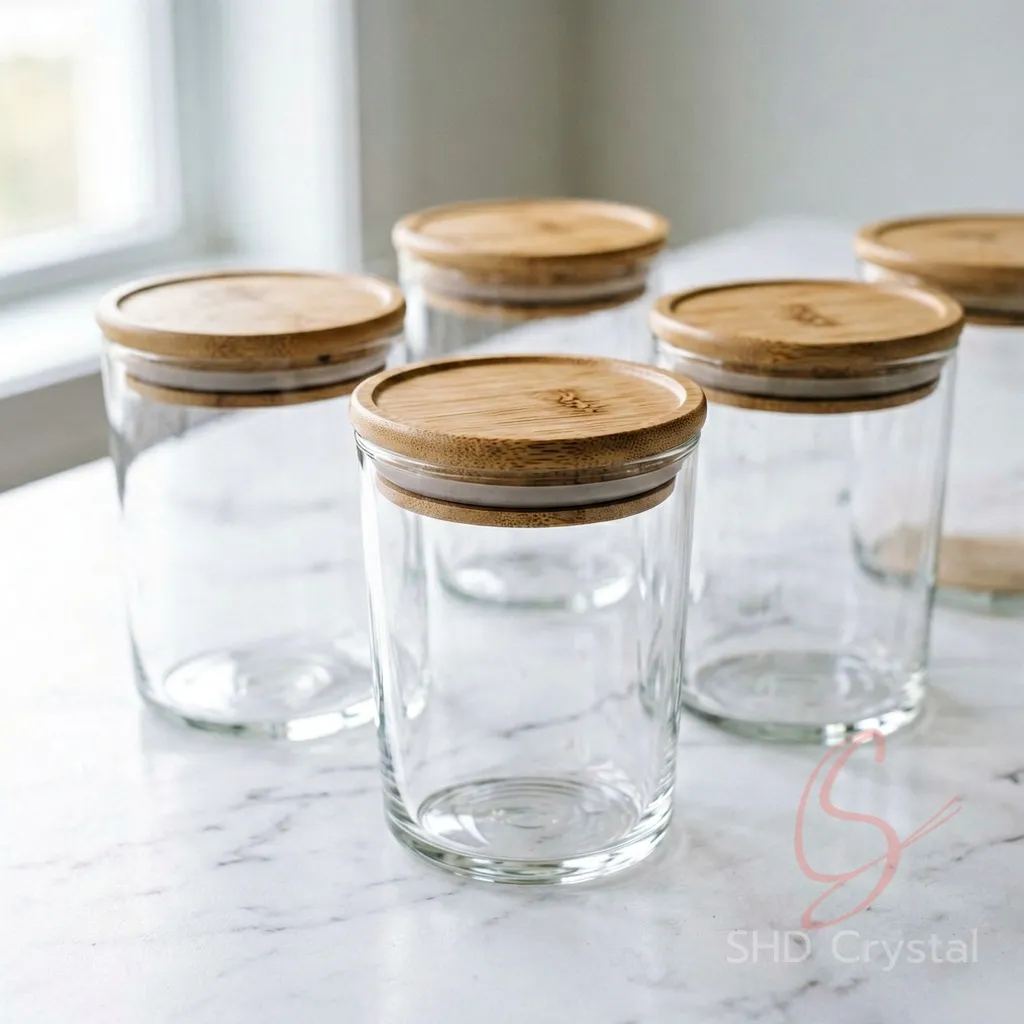
What Sets Wholesale Glass Cups With Bamboo Lids Apart From Standard Drinkware
Bamboo is a natural fiber with inherent dimensional variation. A lid that fits perfectly on a cup produced in humid conditions may shrink or warp after months in a dry warehouse. This seasonal sensitivity is the single most underestimated variable in bamboo lid glass tumblers, and it is where quality problems typically originate.
Soda-lime glass handles everyday use, borosilicate resists thermal shock for hot beverages, and lead-free crystal delivers the clarity luxury brands expect — each material trades off cost against durability. But the bamboo lid introduces more variability than the glass itself, and buyers should weigh that carefully when specifying their custom glass drinkware.
Key Specifications for Bamboo-Lid Glass Cups at Volume
Glass Types and Wall Thickness
Wall thickness affects perceived quality and breakage rate. Thin-walled cups feel elegant but chip more easily, while thicker walls add weight and shipping cost. Most bamboo lid glass tumblers fall into three categories:
Glass Type | Best For | Main Risk |
Soda-lime | Everyday cafe use, large volume | Lower thermal shock resistance |
Borosilicate | Hot beverages, premium positioning | Higher per-unit cost, fewer factories |
Lead-free crystal | Gift sets, luxury hospitality | Fragility, limited forming options |
Soda-lime dominates because production costs are lower and IS machine cavity counts run higher. Borosilicate requires separate annealing schedules and dedicated factory lines. Lead-free crystal, governed by strict regulations on lead content, demands tighter quality controls. Each choice ripples through the entire custom glass drinkware program, from unit cost to lead time.
Bamboo Lid Fit and Sealing Mechanisms
Three common approaches exist: friction-fit, screw-thread, and press-on with a silicone gasket. Friction-fit lids are cheapest but most sensitive to dimensional variation. Screw-thread lids cost more but deliver a reliable seal. A responsible manufacturer will offer sample runs with at least two lid types so procurement teams can test fit before committing to a full order.
Quality Control Red Flags Your Receiving Team Should Watch For
In practice, the most common defects in wholesale glass cups with bamboo lids are in the bamboo component, not the glass. Buyers sourcing bamboo lid glass tumblers should inspect for uneven staining, warping, and gaps between the lid rim and the glass lip. AQL 2.5 is standard for food-contact glassware, though some buyers tighten to AQL 1.0 for branded packaging.
A practical consideration is that bamboo lids often arrive slightly damp from the curing process. If packed against glass without interleaving, moisture causes water spots that show badly under retail lighting. For custom glass drinkware programs, requesting individual lid wrapping is a small cost that prevents a larger problem.
Lead Times, MOQs, and the Real Cost of Going Wholesale
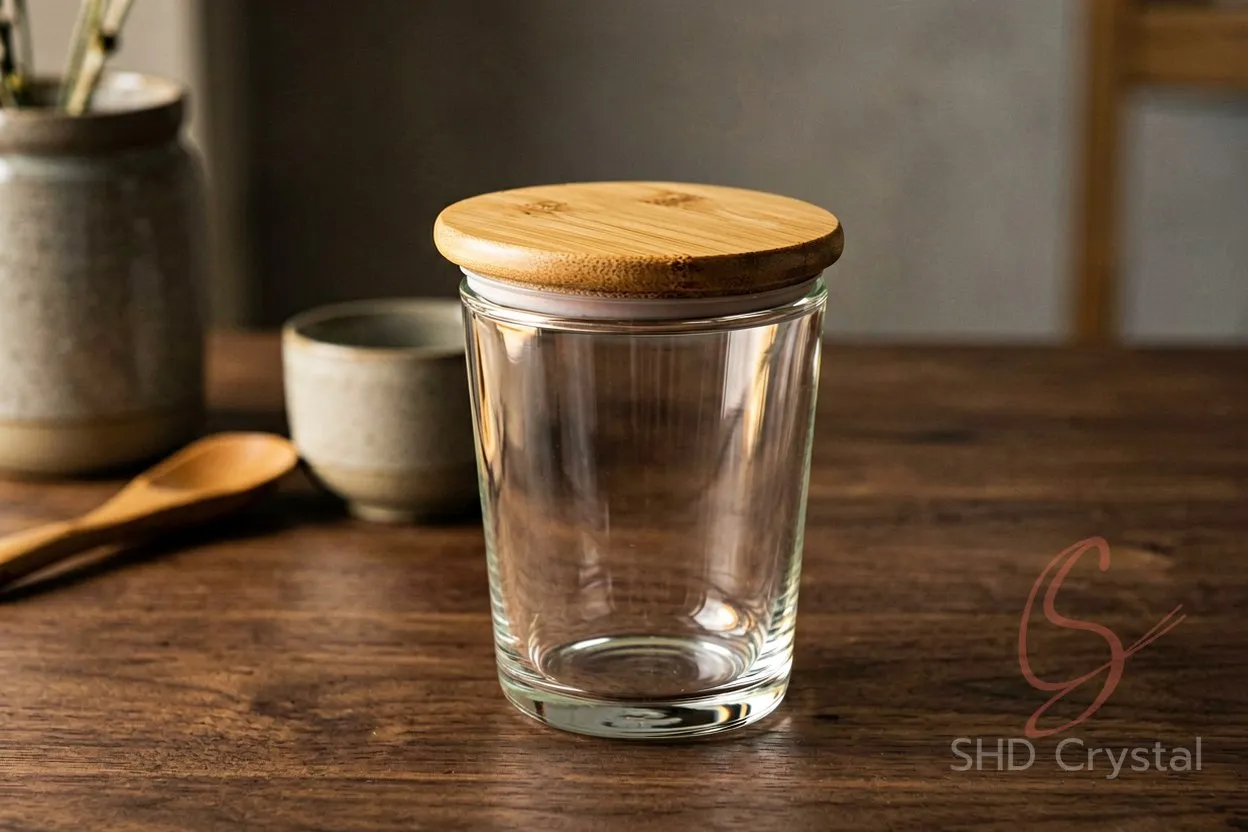
A facility in Boshan, Shandong — one of China's established glass clusters — typically produces this style of bamboo lid glass tumblers on a roughly 25 to 35 working-day lead time for standard shapes. Bamboo lid sourcing may run on a separate supply chain in Zhejiang or Anhui. Confirming that the supplier controls both the glass forming and the bamboo lid production prevents mid-order schedule conflicts in custom glass drinkware orders.
For a hospitality group ordering 5,000 branded tumblers with custom-etched logo and bamboo lid, the negotiation might involve a mold fee of several hundred dollars, a per-unit price that drops meaningfully above 3,000 units, and a quality inspection window before shipment.
MOQs vary widely — some factories accept 1,000 units for standard shapes, but the per-unit price may be two to three times higher than at 10,000 units. Buyers should request a pricing tier breakdown and factor in landed cost, including packaging, inland freight, and applicable duties.
FAQ
What is the typical MOQ for wholesale glass cups with bamboo lids from Chinese manufacturers?
Standard-shape cups typically require 1,000 to 3,000 units minimum, depending on production schedule and lid complexity. Custom molds or color-matched bamboo finishes push the minimum higher.
How does a bamboo lid compare to silicone or plastic for durability?
Bamboo lids offer a premium tactile feel but are less forgiving with repeated dishwashing than silicone. They suit hand-wash or single-use beverage service best. Silicone outperforms in commercial dish environments but lacks the same natural aesthetic.
What certifications should I look for when sourcing glass cups with lids?
FDA compliance is the baseline for US markets. EU buyers should request LFGB certification. Documentation on the bamboo lid's food-grade finish is also worth verifying before placing an order.
Can bamboo lids be customized with logos or branding?
Laser engraving and pad printing are both common. Engraving provides a more permanent, premium look but increases per-unit cost. Pad printing is faster and more economical for large runs but may show wear after extended use.
Conclusion
Wholesale glass cups with bamboo lids are not a commodity purchase — they are a multi-component product where glass quality, lid fit, bamboo finishing, and packaging all interact. The procurement teams that get the best outcomes specify lid type, request material samples before production, and confirm whether the supplier manages the full chain from forming through lid finishing.
Let SHD Crystal Help You Source With Confidence
If you are evaluating wholesale glass cups with bamboo lids for your next custom glass drinkware project or hospitality line, SHD Crystal works with manufacturers across China's glass-producing regions and can help you navigate specifications, quality standards, and lead-time planning. Reach out to discuss your requirements.
If you are interested in our glassware or related products,
please feel free to contact us.

