


Blogpost keywords: custom clear mugs, transparent glass cups, wholesale clear glassware
Custom clear mugs have quietly overtaken printed and colored glassware in the branded drinkware market, and the reason is straightforward: when the product inside the mug is the hero, the mug itself needs to get out of the way. A hospitality group sourcing transparent glass cups for a chain of juice bars found that clear glass consistently outperformed colored tumblers — the vivid layers of a smoothie or cocktail showed through in a way no printed logo could match.
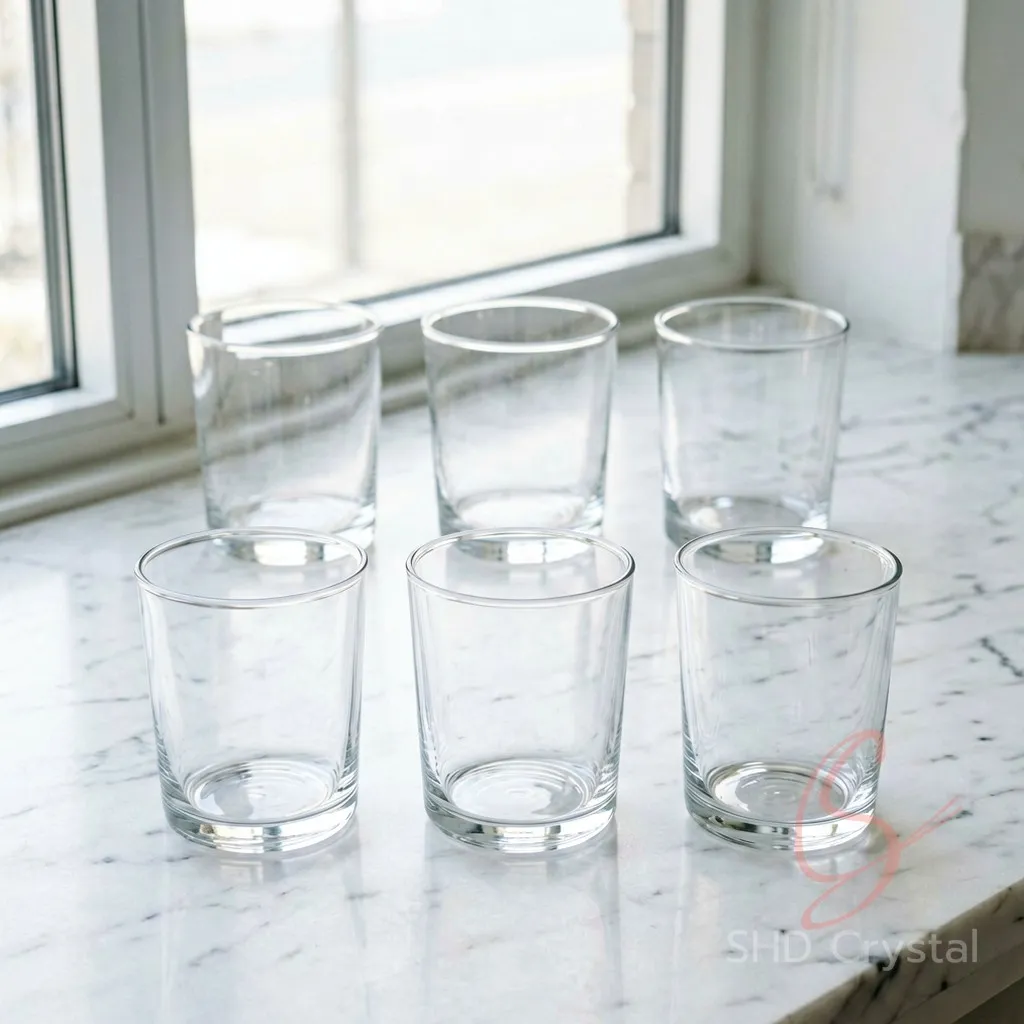
Why Custom Clear Mugs Work When Colored Glass Doesn’t
The appeal of custom clear mugs comes down to product visibility. A craft brewery pouring a hazy IPA, a café serving layered lattes, or a cocktail bar showcasing garnishes — each benefits from transparent glass cups that let the drink do the talking. Colored or frosted glass hides the product. For beverage-forward brands, that is a missed opportunity.
There is also a cost dimension. Custom clear mugs are typically less expensive to produce than colored or printed alternatives because they skip the coloring step. For wholesale clear glassware orders, that difference adds up quickly — especially when outfitting multiple locations.
What Material Should Your Clear Mugs Actually Be Made Of
Not all clear glass is created equal. The material behind custom clear mugs directly affects clarity, weight, thermal performance, and price. Buyers need to understand three common options.
Soda-Lime vs Borosilicate vs Lead-Free Crystal
Material | Best For | Main Limitation |
Soda-lime glass | Everyday drinkware, high-volume orders | Heavier, lower thermal shock resistance |
Borosilicate glass | Hot beverages, outdoor use | Higher cost, slightly less brilliant clarity |
Lead-free crystal | Premium branding, gift sets | Highest cost, requires careful handling |
Soda-lime glass dominates the wholesale clear glassware market: it is affordable, widely available, and produces decent clarity when silica quality is controlled. The trade-off is weight and thermal shock — a soda-lime mug from a hot dishwasher into a cold drink can crack.
Borosilicate solves the thermal problem. It handles temperature swings that would shatter soda-lime, making it the better choice for hot coffee service or outdoor venues. The downside: it costs noticeably more, and the clarity has a slightly different refractive quality.
Lead-free crystal sits at the premium end, offering the brightest clarity and a lighter feel that luxury brands associate with quality. For high-end gift sets or hotel amenity programs, crystal is the obvious pick — though the cost is significantly higher.
Clarity as a Design Choice: Clear vs Frosted vs Textured Glass
Soda-lime glass delivers good transparency at a reasonable price, borosilicate offers sharper optical clarity with better heat resistance, and crystal provides the highest brilliance with the lightest weight — each material makes a different trade-off between cost, durability, and perceived value. Surface finish matters just as much. A polished clear surface shows fingerprints easily, while a lightly acid-etched exterior can reduce glare without obscuring the drink. Textured glass — hammered, ribbed, or faceted — adds visual interest but changes how light passes through.
For most branded applications, polished transparent glass cups are the default. They photograph well, clean easily, and let the product speak. The real consideration is whether the brand wants absolute clarity or is willing to trade a small amount of transparency for fingerprint resistance.
What a Glass Cup China Supplier Will Not Tell You Upfront
Sourcing custom clear mugs from Chinese factories requires attention to details that do not always appear in product catalogs. Glass factories in the Boshan district of Shandong and in Hebei province are major production clusters for drinkware, but their capabilities vary widely. Some operate integrated lines — blank forming, annealing, and decoration under one roof — while others outsource decoration to specialized workshops in neighboring towns.
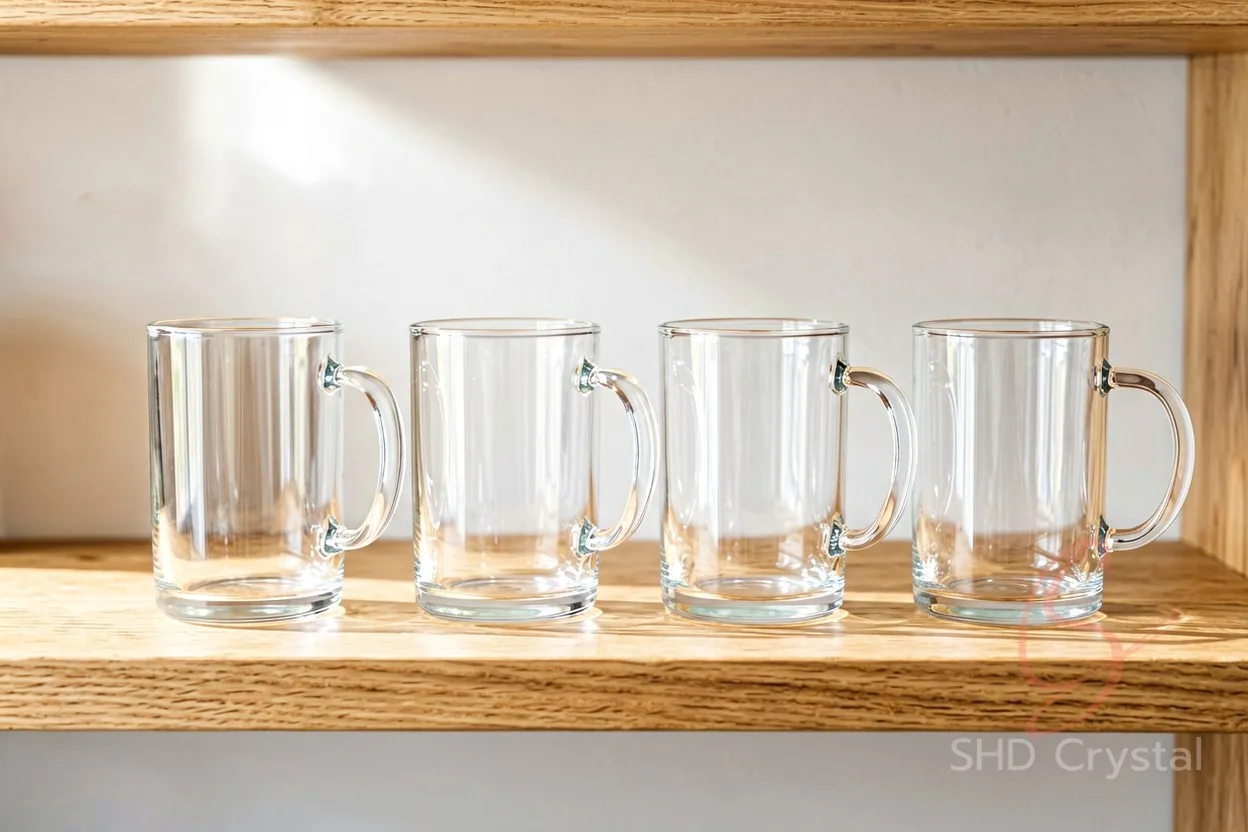
When evaluating a supplier for wholesale clear glassware, a practical consideration is annealing quality. Poorly annealed glass retains internal stress, which means a mug that looks perfect on arrival may develop hairline cracks weeks later.
Export packaging is another detail buyers overlook. Clear glass shows scratches more readily than colored or frosted alternatives, so inner packaging matters. The standard approach is individual tissue wrapping or foam inserts inside the inner carton, with corrugated outer cartons and pallet strapping for ocean freight.
FAQ
What is the typical MOQ for custom clear mugs from Chinese manufacturers?
Minimum order quantities vary by factory size and production complexity. Most standard designs carry low minimums, while custom molds or specialized finishing typically demand higher volumes. Buyers should discuss MOQs early in the RFQ process.
How do transparent glass cups hold up in commercial dishwashers?
Transparency does not affect dishwasher durability — the material does. Soda-lime and borosilicate glass both tolerate commercial dishwashers well when wall thickness is adequate. The main risk is thermal shock from rapid temperature changes.
Can I add logos or branding to clear glass without losing transparency?
Yes. Laser engraving creates a frosted mark without coating the surface. Acid etching produces subtle logos visible at certain angles. Screen printing and decal application add color but cover portions of the glass. The choice depends on how much transparency the brand wants to maintain versus how prominent the logo needs to be.
What quality certifications should I look for when sourcing wholesale clear glassware?
Verify that the factory holds food-contact safety certifications for your target market — FDA for the US, LFGB for Germany, or equivalents. For lead-free crystal, confirm the material meets regulatory thresholds. Asking for independent lab test reports is a standard part of vendor evaluation.
Conclusion
Custom clear mugs offer beverage brands a simple proposition: let the product sell itself through visibility. The material choice — soda-lime, borosilicate, or lead-free crystal — shapes cost, durability, and premium feel. Sourcing transparent glass cups from Chinese manufacturers rewards buyers who pay attention to annealing quality, packaging standards, and factory integration. For wholesale clear glassware orders, request samples before committing to a full production run, inspect them under the same lighting conditions where they will be used, and verify supplier consistency across batches.
Getting Started With Your Next Order
If your brand is evaluating custom clear mugs for the first time or looking to switch suppliers, SHD Crystal works with buyers across hospitality, retail, and beverage industries to match the right glass type, decoration method, and packaging to each project. Reach out with your specifications and timeline — a clear brief leads to a clearer result.
If you are interested in our glassware or related products,
please feel free to contact us.

