


Blogpost keywords: laser engraved wine glasses, custom etched wine glasses, wedding wine glass favors
Why Laser Engraved Wine Glasses Attract Serious Buyers
Laser engraved wine glasses have moved from a niche option to a mainstream choice for wedding planners, hospitality brands, and corporate gifting programs. The appeal is straightforward: laser technology delivers fine-detail marks that resist fading and washing in ways surface printing cannot match.
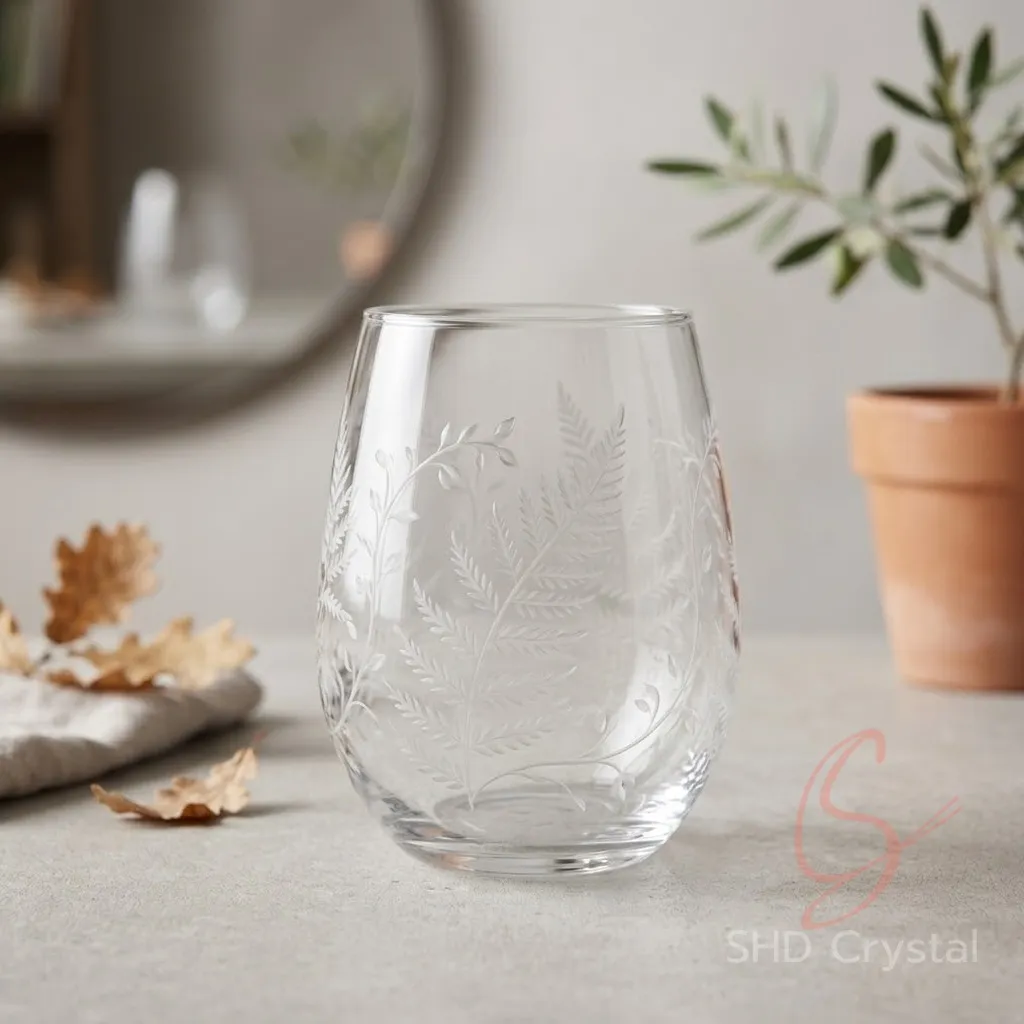
Unlike chemical or mechanical processes, laser engraving uses a focused beam of light to alter the glass surface microscopically. A CO2 laser interacts with the silica structure, creating a controlled fracture pattern that appears as a frosted mark. The result is a permanent mark with sharp edges and consistent depth across a production run.
Laser Engraved Wine Glasses vs. Acid Etching and Sandblasting
Each decoration method has genuine strengths. The real question is not which method is universally superior, but which aligns with the design, volume, and quality expectations of a specific order.
Method | Best For | Main Risk |
Acid etching | Large-volume uniform frost finishes | Uneven opacity on curved surfaces |
Sandblasting | Bold logos and deep tactile texture | Microfractures on thin-walled glass |
Laser engraving | Fine detail, variable designs, small runs | Higher per-unit cost at extreme volume |
Acid etching requires careful concentration control; baths that drift produce uneven results on curved wine bowls. Sandblasting creates bold texture but risks tiny cracks along design edges on thin glass. Laser engraving handles variable designs without mold changes, making it attractive for custom etched wine glasses where detail matters over rock-bottom pricing.
Material Choices That Affect Laser Results
Soda-lime glass, the most common material in Chinese wine glass factories, accepts laser marking well. Clear, low-iron soda-lime produces the cleanest white marks, while green-tinted glass shows reduced contrast. Lead crystal produces excellent contrast because the lead oxide increases refractive index.
Wine glass shape matters too. Stemless tumblers offer a larger engraving surface for intricate designs, while flutes and Bordeaux shapes favor simpler monograms.
What Buyers Should Verify Before Ordering
Quality assurance for custom etched wine glasses hinges on a few critical details. First, ask whether the manufacturer operates CO2 laser equipment in-house. Outsourced laser work introduces delays and variability. A factory controlling both forming and decoration can adjust parameters in real time.
Second, request sample output before approving production. Run a fingernail across the engraved edge: a sharp transition suggests proper calibration, while rough texture indicates problems.
Wedding Wine Glass Favors and Event Applications
Wedding wine glass favors represent one of the largest applications for laser engraved wine glasses. Couples value the precision of laser marks for names, dates, and monograms. Production timelines for wedding orders are typically tight, and laser engraving offers an advantage: no chemical preparation, no masking, no drying time.
Corporate events and promotional programs also benefit from this flexibility. A beverage brand might order small batches for tasting events, then scale up if the campaign succeeds. The ability to iterate designs without new tooling makes laser engraving particularly attractive for wedding wine glass favors orders from a few hundred to several thousand pieces.
Pricing, Lead Times, and the Real Trade-Offs
Pricing for laser engraved wine glasses depends on glass type, design complexity, and order volume. Smaller orders carry higher per-unit costs because laser setup and quality checks remain constant.
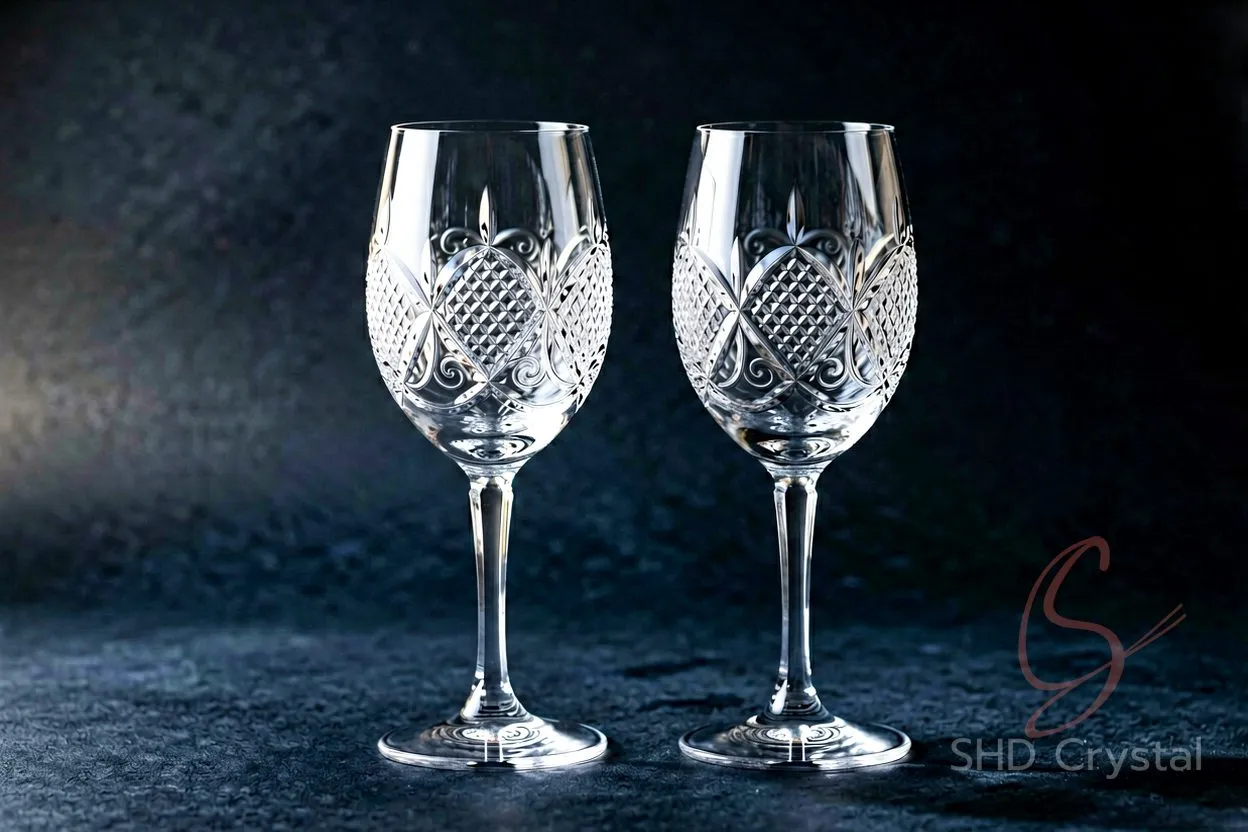
The trade-off between laser and acid etching often comes down to design requirements rather than price. For a simple frosted band, acid etching may be cost-effective at high volume. For detailed logos or personalized text, laser engraving delivers results that acid etching cannot match.
Sourcing from China: What to Look For
China's glass clusters around Boshan in Shandong and Hebei host facilities that combine forming and decoration. However, many factories separate blank production from laser decoration, subcontracting engraving to nearby shops. This separation introduces delays and makes consistency harder to maintain.
The better approach is working with a supplier who controls the full chain from forming through decoration to packaging. That integration simplifies communication and provides a single point of accountability.
Conclusion
Laser engraved wine glasses combine precision, durability, and design flexibility that other decoration methods struggle to match. Whether the application is wedding wine glass favors, corporate branding, or hospitality programs, the technology delivers permanent marks that withstand daily use. The key lies in choosing a supplier with in-house laser capability, consistent quality control, and transparent communication. Before placing a bulk order, request samples, verify production capabilities, and confirm that the supplier controls the full production chain. That foundation turns a one-time purchase into a reliable supply partnership.
FAQ
Q: How durable are laser engraved wine glasses compared to printed ones?
A: Laser marks are permanent because they alter the glass surface itself, whereas printed designs sit on top. Laser engraved wine glasses maintain their appearance through thousands of wash cycles, while printed designs wear quickly.
Q: Can any wine glass shape be laser engraved?
A: Most standard shapes accept laser engraving well, including stemless tumblers, flutes, and Bordeaux glasses. Larger surfaces accommodate more detailed designs, while narrow flutes work best with simple text.
Q: What is the minimum order quantity for custom etched wine glasses?
A: Many Chinese manufacturers accept orders as small as 100 to 500 pieces. Laser engraving requires no chemical setup or mold tooling, making small runs viable.
Q: How long does laser engraving take on a typical order?
A: Laser engraving itself requires one to three days for a mid-size batch once the design is finalized. Total lead time ranges from 20 to 35 working days depending on volume.
Q: Is laser engraving safe for food-contact glassware?
A: Yes. The process alters only the glass surface without introducing chemicals or coatings. The engraved area remains food-safe and is accepted for commercial and personal drinkware.
Find the Right Partner for Your Next Order
For buyers ready to explore laser engraved wine glasses for weddings, events, or branded programs, the next step is evaluating suppliers against your requirements. SHD Crystal works with clients across hospitality, retail, and gifting sectors to match the right glass type and decoration method to each project. Request a sample batch, review production capabilities, and confirm in-house laser engraving before committing to a bulk order.
If you are interested in our glassware or related products,
please feel free to contact us.

