


Blogpost keywords: bulk glass coffee cups, wholesale coffee glass cups, bulk order glass coffee mugs
Ordering bulk glass coffee cups from a Chinese supplier involves product engineering, logistics, and brand presentation. Every choice you make upstream — material, wall thickness, lid compatibility — ripples to your bottom line. For buyers sourcing wholesale coffee glass cups, the challenge is finding a factory that understands how these variables interact.
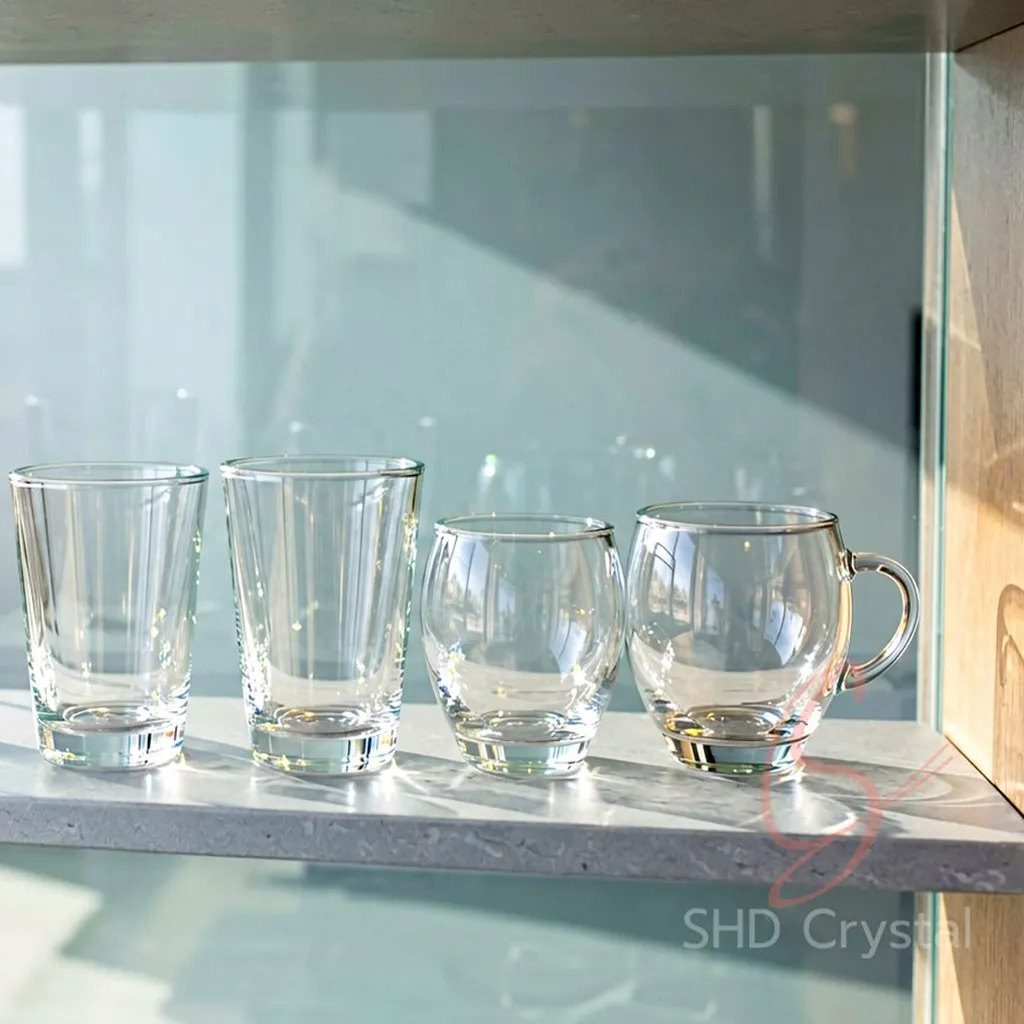
Specifications That Matter When You Buy Bulk Glass Coffee Cups
Cup capacity is the first specification on any RFQ, but the real question is whether it matches the beverage format your customer expects. A 250 ml cup works for a standard Americano, while a 350 ml option serves lattes. Capacity also affects packaging density — smaller cups fit more units per carton, reducing per-unit freight on bulk order glass coffee mugs.
Cup Capacity | Glass Type | Bulk Order Consideration |
180-250 ml | Soda-lime glass | Most common for daily-use coffee service; lower unit cost, wider supplier base, but limited thermal shock resistance |
300-350 ml | Borosilicate glass | Handles temperature swings better; popular for specialty coffee shops where hot pours directly into the cup |
350-450 ml | Borosilicate or crystal glass | Larger format for lattes or iced coffee; heavier per unit increases shipping weight, worth factoring into landed cost |
In practice, thermal shock resistance is the specification most buyers overlook when sourcing bulk glass coffee cups. Soda-lime glass handles many applications, but when hot coffee hits a cold cup — a scenario that plays out dozens of times daily in a busy cafe — thermal stress can cause hairline fractures along the rim. Borosilicate handles this cycle far better, though it costs more per unit, and the price difference multiplies across a large order.
Double-Wall Versus Single-Wall Cost for Bulk Order Glass Coffee Mugs
Double-wall glass coffee cups cost significantly more per unit than single-wall counterparts. The second layer of glass adds material, labor, and a higher defect rate during forming. Double-wall cups stay cooler to the touch, eliminate the need for coasters, and resist condensation — an advantage in hotel breakfast service where water rings on linen are a recurring complaint.
Single-wall glass coffee cups remain the default for most wholesale coffee glass cups orders. They are lighter, simpler to produce, and carry a lower defect rate. The better approach is usually to evaluate total cost of ownership: double-wall cups may eliminate sleeve accessories and photograph better for DTC brands.
Lid Compatibility in Bulk Orders
Lid compatibility is a detail that creates problems when assumed rather than verified. Glass coffee cups from different manufacturers do not share a universal lid standard. Threading, diameter, and snap-fit tolerances vary from factory to factory. Specifying lid requirements on the PO avoids receiving 1,000 cups with lids that sit loose or do not thread properly.
The practical recommendation is to order lids from the same manufacturer as the cups, ideally in the same production run. A factory that makes both can match tolerances in-house. When lids are sourced separately, threading mismatches become the buyer's problem. For bulk order glass coffee mugs, lid compatibility is worth specifying on the PO.
A Practical Scenario: Sourcing for a Hotel Breakfast Service
A hospitality group sourcing for a hotel breakfast service faces a common procurement puzzle. The cups need to hold up to high-temperature coffee, survive commercial dishwashers, and look presentable on a buffet line. The better approach is usually to specify single-wall borosilicate for hot coffee and a separate tumbler for cold beverages.
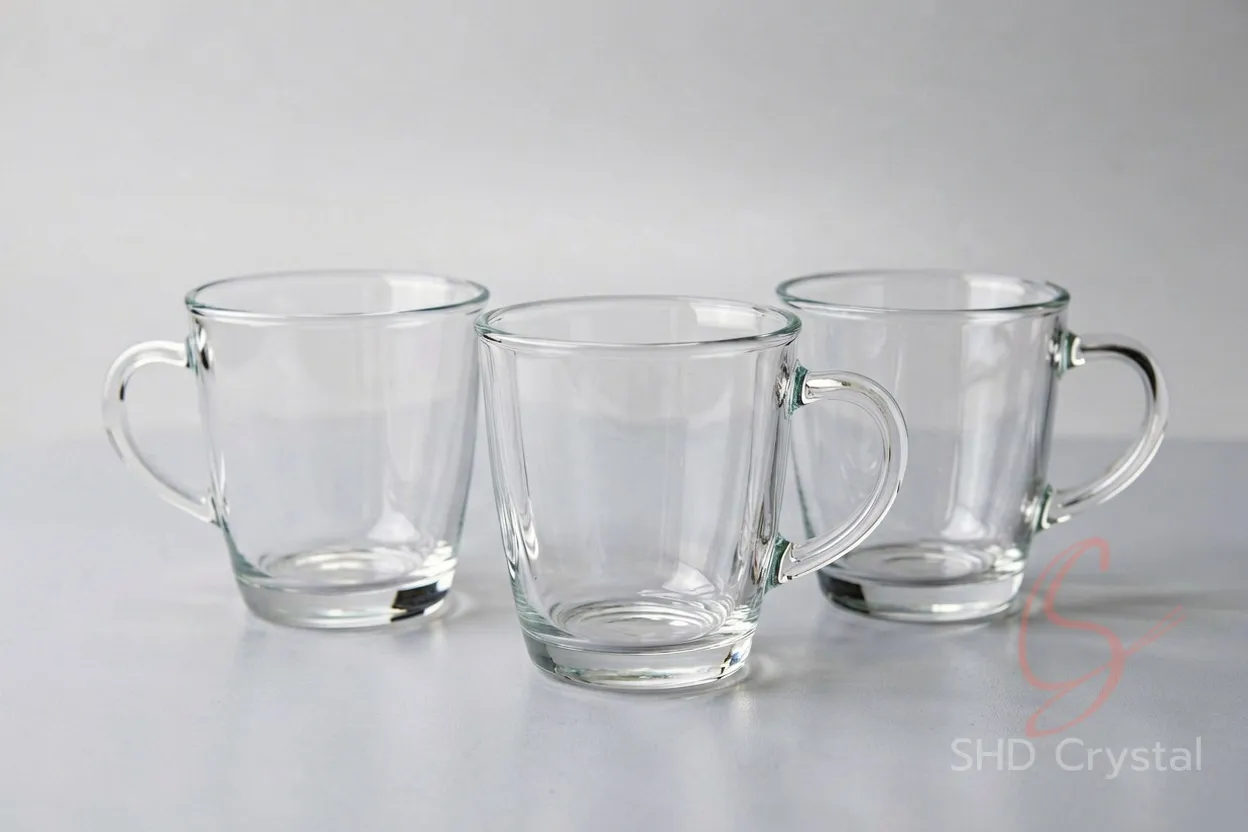
Horizontal Comparison: Glass Types at a Glance
Soda-lime glass handles everyday use, borosilicate withstands thermal shock, and crystal offers the clarity luxury brands expect — each material makes a different trade-off between cost, durability, and perceived value. For wholesale coffee glass cups, soda-lime leads on volume because of its lower price and wider availability in Chinese glass clusters like Boshan in Shandong. Borosilicate has gained ground in specialty coffee, where temperature resilience sells. Crystal glass sits in premium hospitality, where presentation justifies the cost.
FAQ
What is the typical MOQ for bulk glass coffee cups from Chinese manufacturers?
MOQs vary by supplier and cup complexity. Most factories set minimums between 1,000 and 5,000 units for standard cups. Custom molds or branded packaging may push the minimum higher. Buyers sourcing wholesale coffee glass cups should request MOQ details early in the RFQ process.
How long does production usually take for a bulk order?
Lead times for bulk glass coffee cups from Chinese suppliers typically range from three to five weeks for standard shapes. Custom molds add tooling time, extending the schedule by two to three weeks.
What quality standards should I verify when sourcing bulk glass coffee cups?
Buyers should ask for AQL defect reports, verify that the factory runs incoming raw material checks, and request sample batches before committing to a full production run.
Can I order glass coffee mugs with lids in bulk?
Yes, many suppliers offer lid-compatible bulk order glass coffee mugs. The critical step is specifying lid requirements — diameter, threading, and material — on the original PO. Lids sourced from a different manufacturer may not fit due to tolerance variation.
Conclusion
Sourcing bulk glass coffee cups is less about finding the lowest unit price and more about aligning material choice, production capability, and logistics to your use case. The difference between a smooth procurement experience and a headache comes down to the details specified before production begins — thermal shock resistance, lid compatibility, and whether the factory controls the full production chain.
Partnering with a Reliable Glass Supplier
SHD Glassware works with procurement teams sourcing bulk glass coffee cups for hospitality, retail, and food-service applications. Whether the project calls for single-wall borosilicate, double-wall insulated designs, or custom-branded bulk order glass coffee mugs, the team can evaluate material options, production timelines, and packaging logistics. Reaching out early in the procurement cycle is usually the best way to avoid costly rework.
If you are interested in our glassware or related products,
please feel free to contact us.

