


Blogpost keywords: personalized glasses and mugs, custom printed glassware, personalized drinkware wholesale
Personalized glasses and mugs appear in nearly every industry a buyer encounters — hospitality, corporate gifting, event planning, retail merchandise. The challenge is not finding a supplier; it is finding one that delivers consistent branding across different product shapes, glass types, and decoration methods within a single order. Custom printed glassware and personalized drinkware wholesale projects each carry unique production variables that affect quality, cost, and delivery.
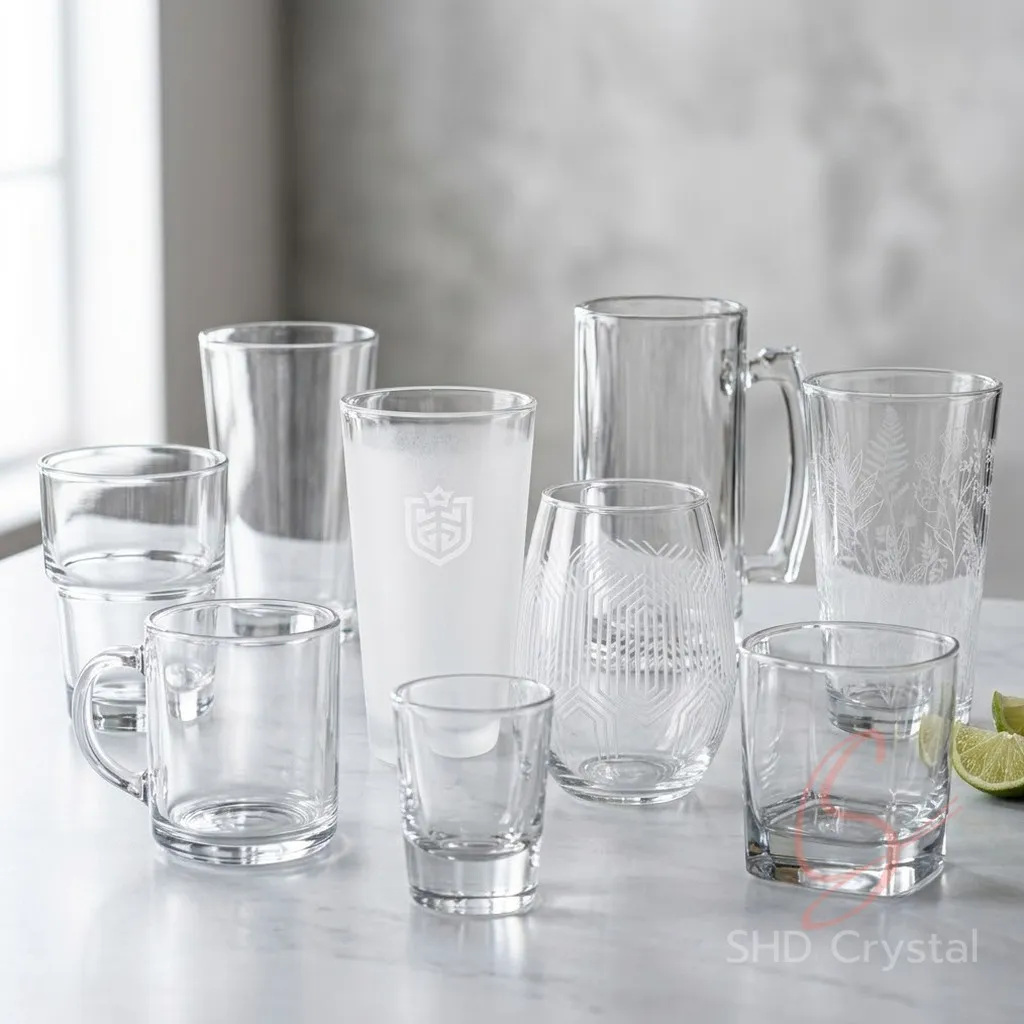
Why Personalized Glasses and Mugs Demand More Planning Than Buyers Expect
A wine glass and a ceramic mug demand completely different decoration approaches. Wine glasses typically use screen printing, laser engraving, or pad printing, while mugs commonly use sublimation, decal firing, or direct transfer. Mixing both in a single order — a common request in custom printed glassware projects — requires a supplier who can coordinate two separate production lines without losing brand consistency.
Wall thickness, surface finish, and material composition all affect how decoration adheres. A soda-lime glass mug and a borosilicate tumbler absorb heat differently during firing, meaning the same decal applied to both can cure at different rates. Buyers who assume one printing method works universally across personalized glasses and mugs often discover color shifts between glass and ceramic pieces in the final shipment.
Comparing Decoration Methods Across Personalized Glasses and Mugs
Product Type | Personalization Method | MOQ Note |
Soda-Lime Glass Tumbler | Screen Printing | Typically 300–500 pcs; setup cost amortizes above 500 |
Borosilicate Glass Mug | Laser Engraving | No minimum for stock shapes; custom molds add 500+ pcs |
Crystal Whiskey Glass | Pad Printing | 200–300 pcs; multi-color logos increase minimums |
Ceramic Coffee Mug | Sublimation Printing | 100–200 pcs; fastest turnaround of all methods |
Double-Wall Glass Mug | Decal Firing | 500+ pcs; requires high-temperature kiln compatibility |
Screen printing remains the most cost-effective option for simple, single-color logos on glass tumblers. Setup costs drop quickly once production begins, but registration on curved surfaces demands careful calibration. Laser engraving eliminates ink entirely — the beam etches a permanent matte mark that resists repeated dishwashing. The trade-off is higher per-unit cost and precise parameters on each glass shape.
Pad printing handles multi-color logos on irregular forms, though adhesion varies depending on surface preparation. On the ceramic side, sublimation printing offers vivid full-color output with low minimums, while decal firing produces the most durable results on mugs destined for commercial use. For custom printed glassware specifically, screen and pad printing remain the dominant choices.
Corporate Gifting Scenario: Mixing Glass Types in One Order
Consider a corporate gifting project that combines branded wine glasses for the executive team with personalized drinkware wholesale ceramic mugs for the broader staff. The wine glasses arrive with laser-engraved logos — polished and premium. The mugs, produced on a separate line using sublimation, feature the same logo in full color. The problem? The engraved mark on glass appears matte and subtle, while the sublimated logo on ceramic looks bright and saturated.
Both results are correct individually, but side by side they read as two different brands. The solution is selecting decoration methods that produce visually compatible outputs — or accepting the contrast and designing around it. A supplier experienced with both custom printed glassware and ceramic mugs can advise on which combinations maintain the most unified appearance.
Packaging consistency is another overlooked variable. Wine glasses ship in corrugated inserts; mugs arrive in printed boxes. If gift sets are presented together, mismatched packaging undermines the branding effort even when product decoration is flawless. Requesting a unified packaging design across both product types — even if internal protection differs — keeps the presentation cohesive.
Quality Control Issues in Mixed-Product Orders
Chinese glassware manufacturers often separate blank production from decoration. A glass blank may be formed in one workshop and sent to a different facility for printing. When your order spans multiple product types — whether custom printed glassware tumblers or ceramic mugs — coordination risk multiplies. The blank maker may fire-polish surfaces in a way that doesn't bond with the decoration factory's inks, or blanks may settle unevenly before decoration begins.
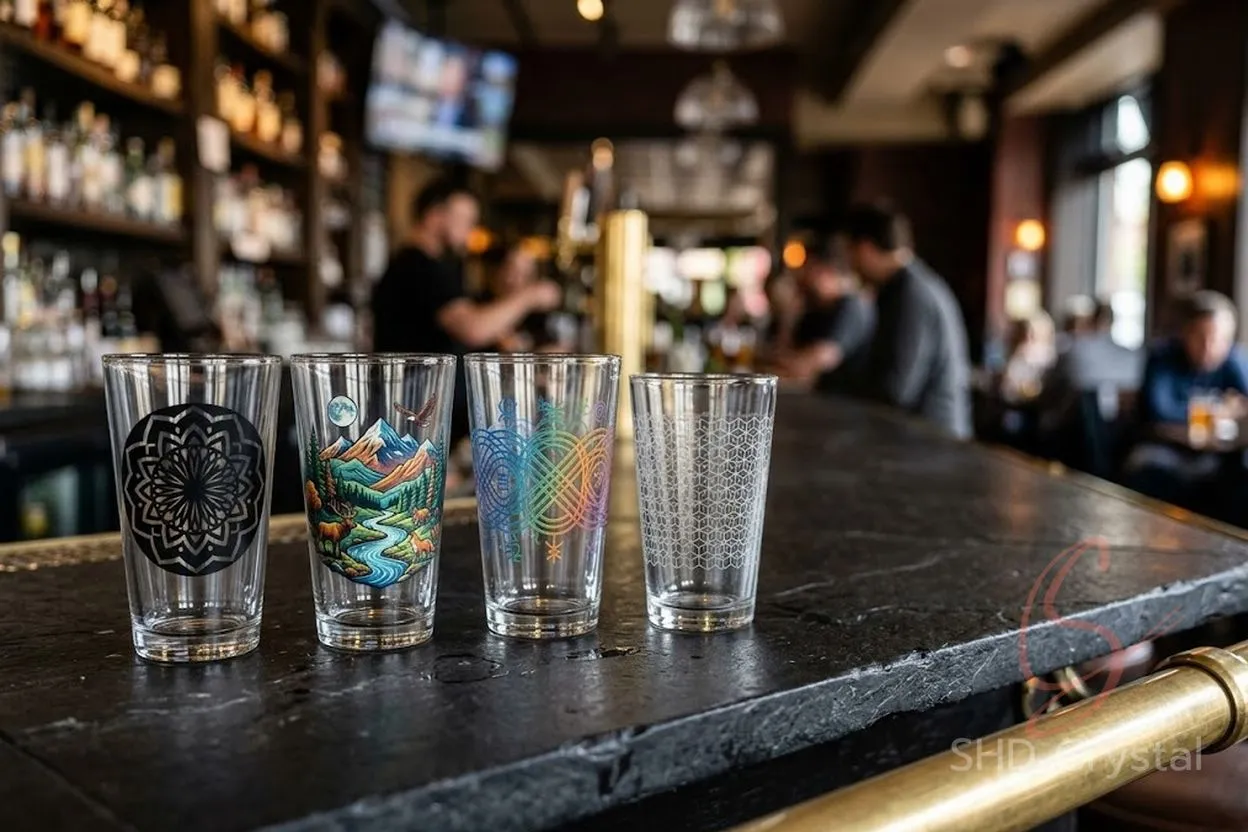
A supplier that controls the full chain — from blank forming through decoration to packaging — reduces these gaps. When two factories handle different product lines, color matching between glass and ceramic becomes harder to guarantee. For personalized drinkware wholesale orders spanning multiple product types, unified branding works best when one facility oversees the entire production sequence.
Buyer Mistakes That Create Consistency Problems
Prioritizing per-unit price over process control is the most common error when sourcing personalized glasses and mugs. The cheapest quote often means the supplier outsources decoration to subcontractors with thinner quality gates, making color matching across product types nearly impossible.
Relying on digital mockups without a physical pre-production sample is another mistake. A digital proof cannot reveal how ink behaves on a glass curvature versus a ceramic surface, or how the same logo renders differently across two decoration methods.
Not specifying AQL levels is risky for mixed orders. Without a defined Acceptable Quality Level, the supplier ships to their internal standard — which may be more lenient. AQL 2.5 for visual defects and AQL 4.0 for functional issues is a reasonable baseline for personalized drinkware wholesale projects.
FAQ
What is the typical MOQ for personalized glasses and mugs from Chinese manufacturers?
MOQs vary by method and product type. Screen-printed glass orders commonly start at 300 to 500 pieces. Ceramic mugs with sublimation can begin as low as 100 pieces. Custom molds require higher minimums to cover tooling costs.
Can I combine different product types in a single order?
Yes, but coordination becomes critical. Mixing glass and ceramic pieces means managing two different decoration lines. A supplier with in-house capability across both product types is far more likely to maintain consistent color output and delivery timing.
How do I ensure color consistency between glass and ceramic pieces?
This is one of the hardest challenges in mixed-product orders. Glass and ceramic absorb ink and heat differently, so identical logos may appear different across materials. Request physical color proofs on both product types before approving production.
What quality certifications should I look for in a supplier?
ISO 9001 is a baseline. For food-contact glassware, ask about FDA or EU compliance and request material composition certificates. Suppliers handling both glass and ceramic should provide separate documentation for each material.
How long does production typically take for mixed glass and mug orders?
Stock glass with screen printing typically runs 20 to 25 working days. Ceramic mugs with sublimation can ship in 10 to 15 days. When both are ordered together, expect the longer timeline unless the supplier runs both lines in parallel.
Conclusion
Personalized glasses and mugs serve a clear branding purpose across hospitality, corporate gifting, and retail — but the sourcing process rewards careful evaluation over speed. Choosing the right decoration method for each product type, verifying production chain integration, and defining quality standards before placing a PO separate a smooth order from a costly one. The buyers who get the best results treat mixed-product orders as a coordination challenge, not just a pricing exercise.
Need Help Evaluating Options for Your Glassware Order?
SHD Glassware works with procurement teams navigating the complexities of ordering personalized glasses and mugs at scale. From material selection through decoration and quality assurance, their team can help evaluate options matching your budget and brand standards. Reaching out with product specs and volume requirements is a reasonable first step.
If you are interested in our glassware or related products,
please feel free to contact us.

