


Blogpost keywords: custom drinking mugs, customized glass drinkware, personalized glass mugs wholesale
Custom drinking mugs show up in bars, hotel gift shops, corporate event swag bags, and retail shelves — but the sourcing experience behind each is far from uniform. Price quotes vary as much as quality, and finding a manufacturer who delivers consistent customization, reliable glass clarity, and reasonable lead times takes more than browsing a catalog.
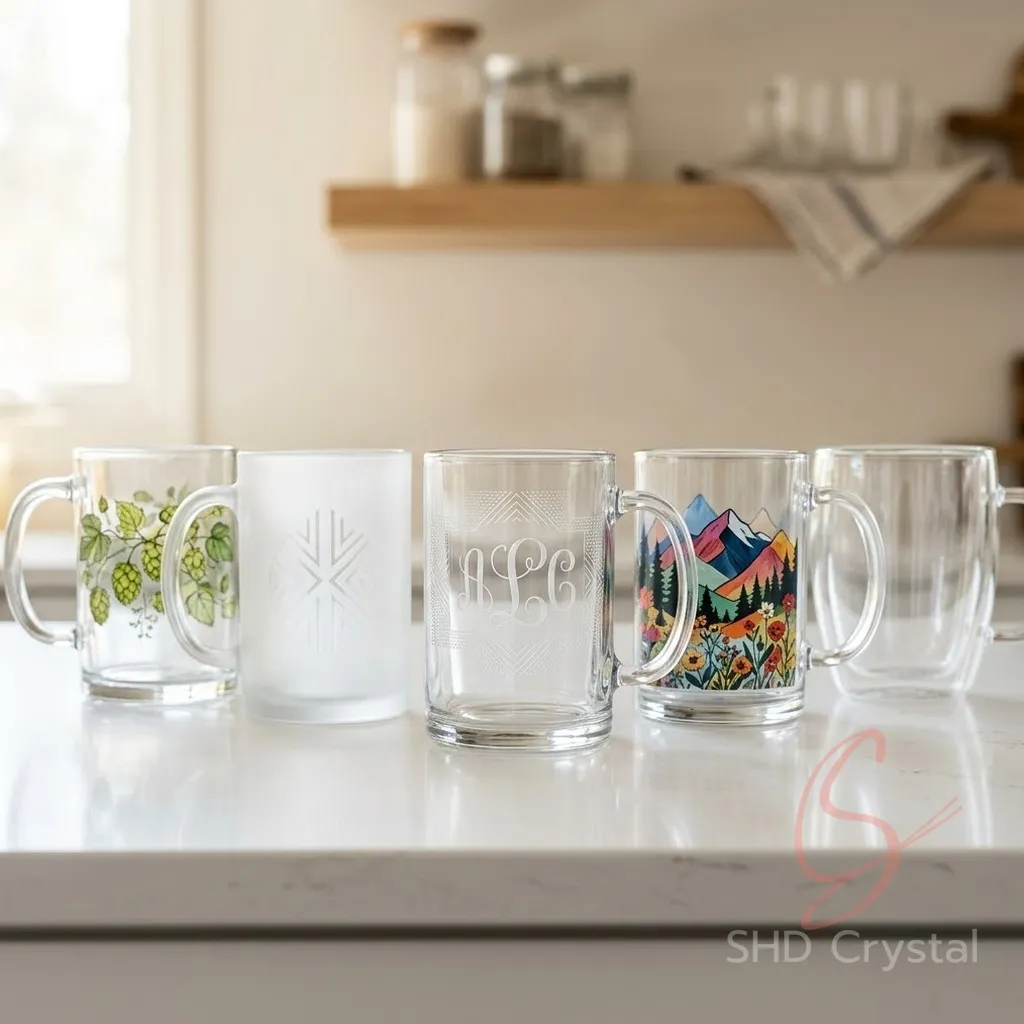
What Matters When Sourcing Custom Drinking Mugs
Finding the right supplier is only part of the equation. The real variable is how well the manufacturer can match your exact specifications — from glass thickness and clarity to the precision of logo placement. A supplier that handles color-matched screen printing beautifully may struggle with fine-line laser work, and vice versa. The better approach is usually to narrow your options based on which customization method your project demands, not just on who offers the lowest unit price.
Buyers evaluating customized glass drinkware should weigh four factors: glass type, capacity, customization method, and acceptable defect thresholds. Soda-lime glass dominates the custom drinking mugs market due to its cost-effectiveness and availability, though borosilicate offers superior durability for premium positioning. Capacity ranges from compact 200 ml espresso mugs to generous 500 ml designs, with most standard options settling around 300 ml. The customization method, however, is where the real trade-offs live.
Matching Mug Style to Customization Method
Each customization method brings a different balance of visual impact, durability, and cost. The right choice depends on the mug style, the complexity of the design, and the volume being ordered. Here is a practical comparison.
Mug Style | Customization Method | Best For |
Classic cylindrical mug | Screen printing | High-volume promotional orders with multi-color logos |
Double-wall insulated mug | Laser engraving | Premium branding with fine detail and lasting finish |
Textured or frosted mug | Sandblasting | Deep tactile branding on thick-walled glass |
Colored glass mug | Decal transfer | Complex illustrations or photographic imagery |
Short tumbler-style mug | UV color printing | Short runs with full-color, photo-quality designs |
Screen printing remains the most popular method for personalized glass mugs wholesale because it handles multi-color logos at scale without a steep per-unit cost increase. Sandblasting produces a distinctive frosted texture but demands thicker glass walls to avoid micro-fractures along the blasted edges. Laser engraving offers the cleanest detail and holds up exceptionally well through repeated dish cycles, though the setup cost per design makes it less economical for very small runs.
Inside the China Supply Chain for Custom Drinking Mugs
Chinese glass factories frequently separate forming from decoration — blanks are produced in one workshop and shipped to a specialized etching or printing line, sometimes in a different town entirely. This split is not inherently a problem, but it does affect lead time, communication speed, and the ability to catch defects early. A factory that controls the full production chain — blank forming, decoration, and packaging — under one roof generally offers tighter quality control and faster response times when adjustments are needed.
Regional glass clusters matter. Boshan in Shandong has long been a glassware production hub, while Hebei hosts many daily-use glass factories. Buyers sourcing customized glass drinkware from these regions often find that lead times run shorter when the supplier maintains in-house decoration capability. Outsourced decoration introduces additional logistics steps, and each handoff is an opportunity for misalignment on specs or timing.
Soda-Lime vs. Borosilicate: Which Glass Fits Your Mug?
The glass material behind the customization changes the entire value proposition. Soda-lime glass is the workhorse of the industry — affordable, widely available, and formed into consistent shapes at high volume. It is the default choice for promotional custom drinking mugs where unit cost drives the decision. Borosilicate glass, by contrast, resists thermal shock and delivers a lighter, more refined feel. It costs more to produce and demands tighter process control, but the premium positioning can justify the difference for brands targeting higher price points.
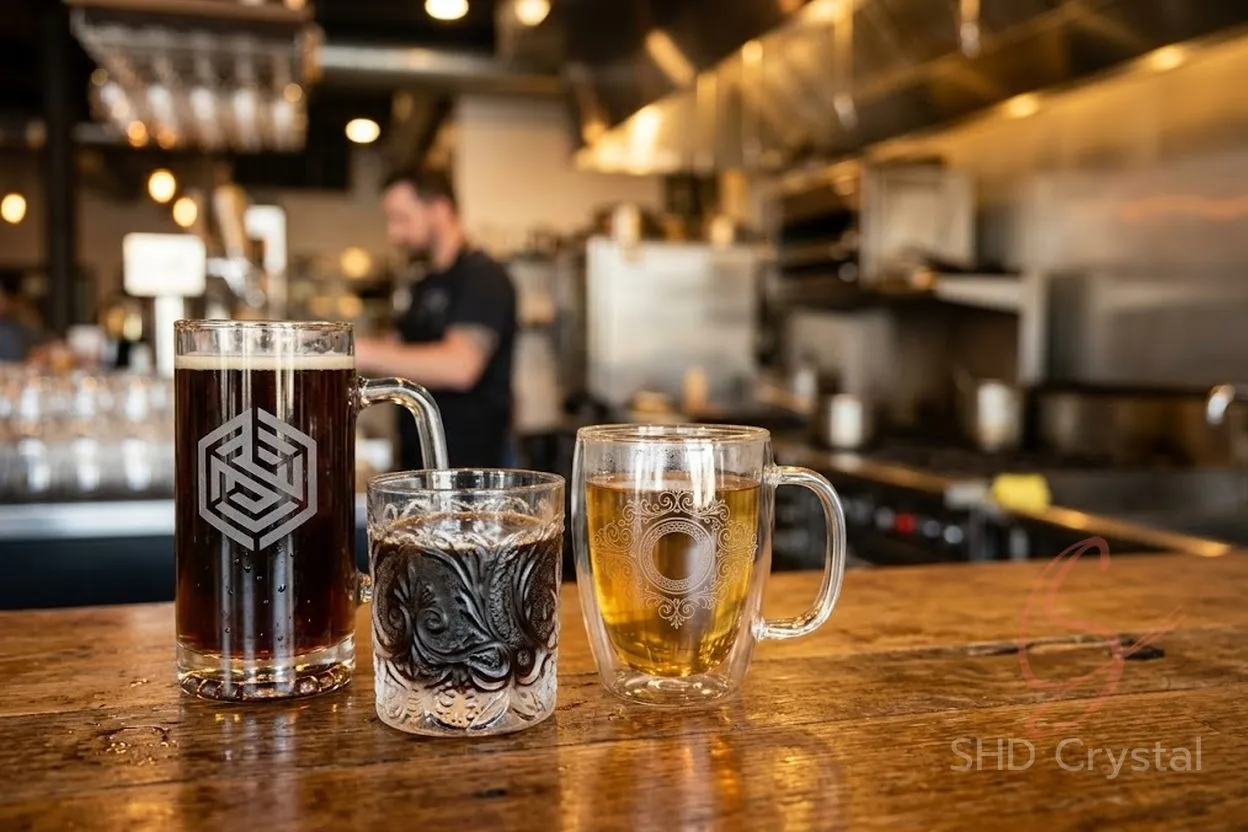
In practice, the trade-off is straightforward. For a bar giveaway or a hotel amenity mug, soda-lime gets the job done without stretching the budget. For a branded travel mug or a retail gift set, borosilicate's durability and clarity communicate quality that customers notice. A practical consideration is whether your target market actually values that distinction — if the mug sits on a desk rather than surviving a commute, the extra cost of borosilicate may not move the needle.
Quality Control: What to Inspect Before You Commit
The most common quality failures in bulk orders of custom drinking mugs involve logo registration errors, wall thickness variation, and poor adhesion of printed designs. A buyer receiving a large shipment should pull a random sample and check logo alignment across multiple mugs — inconsistent centering is an immediate red flag. Look for bubbles trapped in the glass walls, which signal weak points that could crack under thermal stress.
Reputable suppliers will provide AQL inspection results, typically at AQL 2.5 or 4.0 for visual defects, depending on the buyer's tolerance. It is worth specifying this requirement upfront rather than discovering it after the fact. For printed designs, run a fingernail across the logo edge — a rough, raised feel suggests the ink layer may not survive repeated washing. Ask the supplier directly how many dishwasher cycles their decoration withstands before showing visible wear. A responsible manufacturer will have that data logged.
One practical step many procurement teams overlook: request a pre-shipment sample with decoration applied, not just a plain mug. The glass itself may pass inspection while the customization fails. Verifying both at the sample stage prevents the far more expensive scenario of receiving thousands of mugs with a logo slightly off-center or a color that does not match the approved proof.
FAQ
What Is the Typical MOQ for Custom Drinking Mugs from Chinese Manufacturers?
Minimum order quantities vary by supplier and decoration method. Most Chinese manufacturers set MOQs between 500 and 1,000 pieces for standard screen-printed designs. Laser-engraved mugs may have lower minimums because the process requires less tooling setup. Buyers ordering personalized glass mugs wholesale in larger volumes — 5,000 pieces and above — usually unlock better per-unit pricing and more flexibility on customization options.
Can I Order Custom Drinking Mugs with Individual Names or Unique Designs on Each Piece?
Individual personalization requires either laser engraving or UV color printing, both of which support variable data — different text or artwork on every mug. Screen printing and sandblasting are designed for repeating identical designs and are not practical for one-off customization. If individual names are part of your project scope, confirm with the supplier that their equipment supports variable data runs and ask about the per-piece premium.
How Long Does Production Typically Take for Customized Glass Drinkware?
Standard production lead times for customized glass drinkware run three to four weeks from deposit to shipment, depending on order complexity and decoration method. Laser engraving generally ships faster than multi-color screen printing because it requires fewer setup changes. Buyers should also factor in shipping time — sea freight from Shandong or Hebei ports to major destination ports typically adds two to four weeks depending on the route.
What Quality Certifications Should I Expect from a Glassware Supplier?
Reputable Chinese glassware manufacturers commonly hold ISO 9001 quality management certification. For food-contact glassware, FDA compliance or EU food-safe standards are essential depending on your target market. Ask the supplier to provide copies of relevant certificates before placing a purchase order, and verify that the certification covers the specific production facility where your order will be manufactured — not just a parent company.
Conclusion
Sourcing custom drinking mugs successfully means evaluating more than just price per unit. The customization method, glass material, quality control process, and production lead time all shape whether the finished product meets your brand's standards. Buyers who take time to match mug style to the right customization method, verify decoration quality at the sample stage, and understand the supply chain behind their order consistently land better results than those who rush the comparison. Personalized glass mugs wholesale is a category where supplier capability varies widely — the due diligence you invest upfront directly determines the quality of what arrives at your warehouse.
Getting Started with Your Next Order
Before requesting quotes, define your specifications clearly — glass type, capacity, decoration method, acceptable defect tolerance, and target delivery window. SHD Glassware works with buyers across hospitality, retail, and corporate gifting to match custom drinking mugs specifications with the right production approach and lead time. Comparing a few qualified suppliers side by side, with samples in hand, is the most reliable way to confirm that your order will meet both quality and timeline expectations.
If you are interested in our glassware or related products,
please feel free to contact us.

