


Blogpost keywords: custom pint cups, personalized pint glasses, custom printed pint cups
For bar owners, brewery operators, and hospitality procurement managers, the pint cup sitting on every table is more than a vessel — it is a brand impression, a revenue stream, and a daily-use tool that must survive repeated handling. Custom pint cups from a vetted China-based glassware supplier can cover all three functions at a fraction of the cost charged by domestic screen-printing shops. Below, we break down what procurement teams should evaluate before ordering custom printed pint cups in bulk.
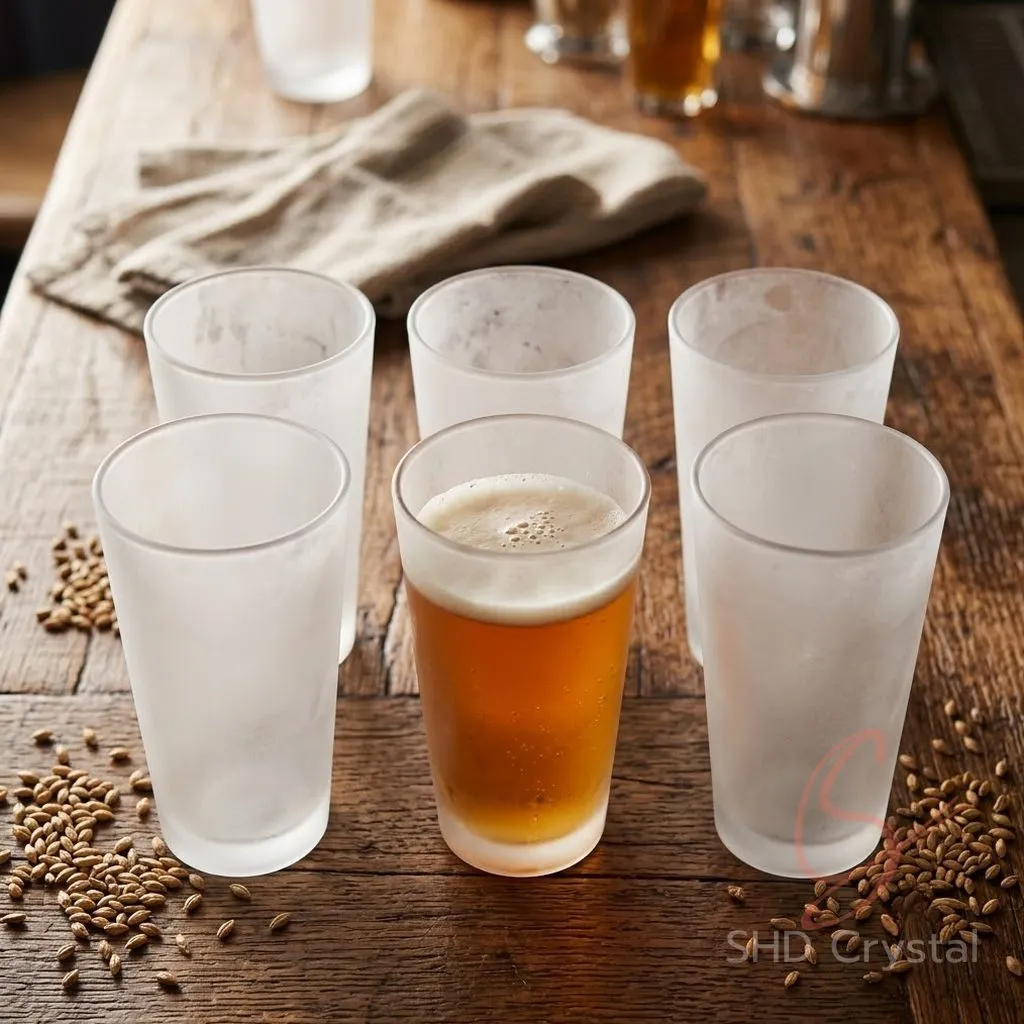
Why Custom Pint Cups Are a Strategic Purchase
A branded pint glass on every table communicates identity before the first sip. Personalized pint glasses also create a tangible takeaway for customers — many patrons keep a glass they received at a taproom, extending your brand reach into their home. When ordered in volume, the per-unit cost drops significantly: a standard 16 oz shaker pint with a one-color wrap print typically lands between $0.65 and $1.10 FOB, depending on order quantity and decoration complexity. That margin gives even a modest neighborhood bar room to sell a branded glass for $8 to $12 and generate profit on the merchandise itself. For procurement teams evaluating custom pint cups, the math is straightforward: lower unit cost means faster payback on the branding investment.
Comparing Print Methods for Custom Printed Pint Cups
Decoration is where most procurement decisions go wrong. Each print method has a distinct cost profile, durability rating, and minimum order threshold. Below is a side-by-side breakdown so your team can match the method to the use case.
Screen Printing vs. Decal Application: Quick Comparison
Screen printing applies ink directly to the glass surface through a mesh screen. It delivers bold, opaque color on both clear and frosted glass and holds up through 2,000+ dishwasher cycles when cured at proper temperatures. Decal application bonds a pre-printed ceramic transfer to the glass in a kiln, allowing photographic detail and unlimited color — but the per-unit cost runs 30 to 50 percent higher than screen printing for runs under 5,000 units. For most bar and brewery buyers, screen printing is the pragmatic default; reserve decal work for premium gift sets or limited-edition releases.
Material and Specification Checklist
Before requesting quotes, confirm these specifications with your supplier. Getting these right on the first proof avoids costly reprints.
Specification | Recommended Range | Why It Matters |
Capacity | 12 oz – 20 oz (16 oz most common) | Standard pour sizes vary by region and venue type |
Glass Thickness | 2.5 mm – 3.2 mm | Thicker walls resist chipping during bus-tub washing |
Base Diameter | 60 mm – 75 mm | Must fit standard bar drain trays and cup dispensers |
Print Area | 270° wrap or front-panel 80 × 60 mm | Determines logo visibility from multiple angles |
Color Count | 1 – 4 spot colors (Pantone matched) | Each additional color adds $0.08 – $0.15 per unit |
MOQ Threshold | 500 – 1,000 units | Below this, setup fees inflate per-unit cost sharply |
A Real-World Scenario: Sourcing for a Craft Brewery Expansion
Micro-Scenario
Imagine a regional craft brewery opening its third taproom location. The marketing director needs 3,000 branded shaker pints for opening-week giveaways and ongoing bar service. A procurement coordinator shortlists two suppliers: one domestic printer quoting $1.85 per unit with a 6-week lead time, and SHD Glassware quoting $0.82 per unit FOB with a 25-day production window. The catch: the China route requires a sea-freight booking and a 14-day transit, plus customs clearance. When the logistics coordinator factors in freight ($0.18 per unit at current LCL rates) and customs brokerage ($0.04 per unit), the total landed cost is roughly $1.04 per unit — still 44 percent cheaper than the domestic option. The brewery pockets the savings toward its next ingredient purchase.
What to Verify Before Placing a China-Based Order
Working with overseas glassware manufacturers introduces variables that domestic orders do not. A disciplined verification process reduces risk. First, request a pre-production sample with your exact artwork — not a stock sample with a different logo. Second, ask for a factory audit report or third-party inspection certificate (SGS, Bureau Veritas, or equivalent). Third, confirm lead times in writing, including penalties for delays. SHD Glassware, for example, provides a dedicated account manager who coordinates sample approvals and production milestones, which is a standard practice among reputable mid-size Chinese glassware exporters. Fourth, negotiate payment terms: a 30/70 split (30 percent deposit, 70 percent upon pre-shipment inspection) is common and protects both parties.
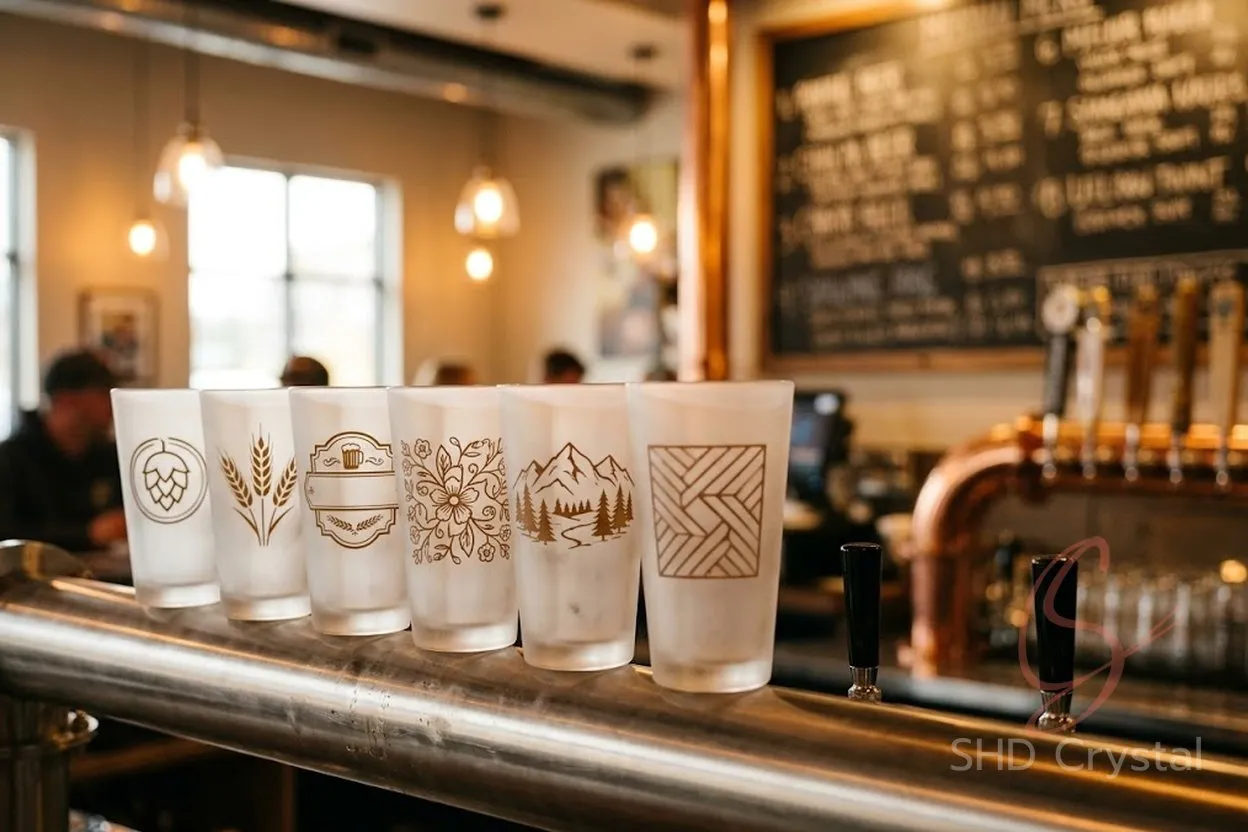
Buyers who skip the sample-approval step often discover after shipment that the glass thickness was underspec or the logo color shifted from Pantone reference. That single mistake can wipe out any cost advantage. Personalized pint glasses demand precision because the decoration is the product — a misprinted logo on clear glass is immediately visible and impossible to hide.
Packaging and Shipping Considerations
Glass is fragile. Your packaging spec is as important as the glass spec. For custom printed pint cups, the industry standard is individual kraft-paper sleeves or bubble-wrap inserts, packed in corrugated cartons with a maximum of 24 units per case. Request drop-test documentation (ISTA 1A or equivalent) from the supplier. For ocean freight, palletize cartons on standard 1200 × 1000 mm pallets and specify floor-loading if container space is tight. Air freight is viable for initial sample batches or reorders under 500 units, but the per-unit freight cost jumps to $0.80 – $1.50 depending on origin city and destination airport.
FAQ
What is the typical MOQ for custom pint cups from SHD Glassware?
Standard MOQ is 500 units for screen-printed orders and 1,000 units for decal or color-change work. Smaller trial runs may be available at a modest per-unit premium — contact the sales team for current thresholds.
How long does production take after artwork approval?
Standard production lead time is 20 to 30 days, depending on order volume and decoration complexity. Add 10 to 14 days for ocean-freight transit to major U.S. or European ports.
Can I order sample glasses before committing to a bulk order?
Yes. SHD Glassware offers pre-production samples with your artwork applied. Samples typically ship within 7 to 10 business days via express courier. Sample cost is credited toward your first bulk order.
What print methods are available for personalized pint glasses?
Screen printing, decal application, and UV digital printing are the three most common methods. Screen printing is best for bold, simple logos; decal handles photographic detail; UV digital is ideal for short runs with full-color artwork.
Do you provide food-safety certifications for the glass?
All SHD Glassware products comply with FDA and EU food-contact standards. Certificates of compliance are provided with every shipment upon request.
Conclusion
Custom pint cups represent one of the highest-ROI branded purchases a bar, brewery, or hospitality venue can make. By understanding print methods, verifying specifications upfront, and partnering with a transparent supplier, procurement teams can secure durable, on-brand glassware at costs that leave room for healthy margins. SHD Glassware serves as a reliable sourcing partner for custom printed pint cups, offering end-to-end support from sample approval through final delivery.
If you are interested in our glassware or related products,
please feel free to contact us.

