


Blogpost keywords: personalised glass cup, custom engraved glass, wholesale personalised drinkware
A personalised glass cup transforms standard drinkware into a branded asset that communicates quality and attention to detail. Whether for hospitality, corporate gifting, or retail, the personalisation method you choose determines both the visual impact and the long-term durability of the finished product. Understanding the options available helps procurement teams make informed decisions.
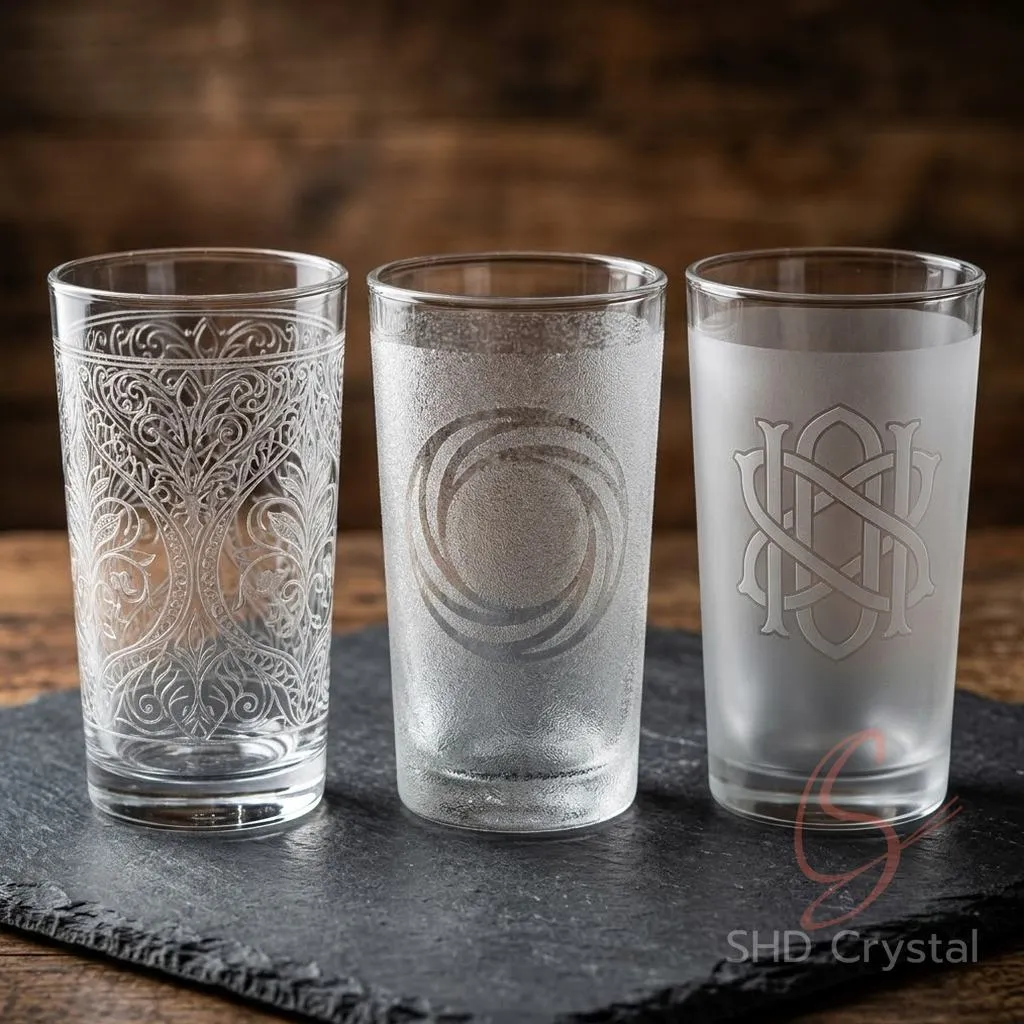
Engraving Methods for Personalised Glass Cups
Three primary methods exist for personalising glass cups: laser engraving, sandblast engraving, and acid etching. Each produces a different finish, durability level, and cost structure. The right choice depends on your design complexity, order volume, and quality requirements.
Method | Detail Level | Cost Profile |
Laser engraving | High — fine lines, intricate logos | Low setup, moderate per-unit at volume |
Sandblast engraving | Medium — bold designs, tactile texture | Higher setup, lower per-unit at scale |
Acid etching | Medium — smooth frosted finish | Moderate setup, consistent at volume |
Laser engraving offers the finest detail capability, reproducing intricate logos with line weights down to 0.3 mm. The process requires no physical stencil, making it economical for smaller runs. Sandblast engraving produces a more tactile, frosted result that many buyers associate with premium craftsmanship. Acid etching creates a smooth, satin finish ideal for full-surface frosting.
Glass Quality and Engraving Compatibility
Not all glass responds equally to personalisation. Wall thickness affects engraving quality — glass below 2.8 mm is vulnerable to chipping during sandblast engraving. For engraved applications, a minimum wall thickness of 3.0 mm is recommended. Glass clarity also matters: low-iron formulations provide better contrast for laser engraving on clear glass.
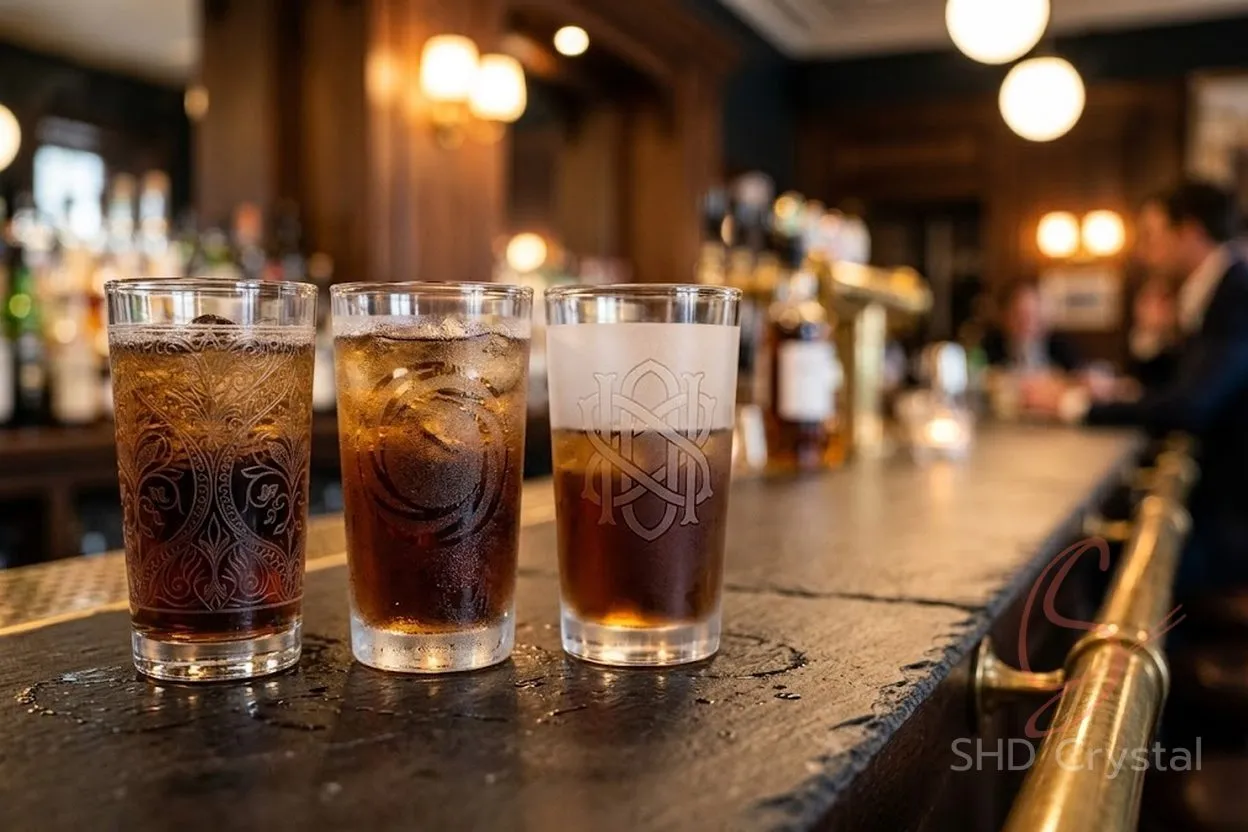
A practical consideration is the intended use case. Personalised glass cups for daily restaurant service face different stress tests than those packaged for corporate gifts. A hospitality group sourcing for high-traffic venues should prioritise durability over intricate detail. A corporate gifting program may value fine engraving quality over dishwasher cycle tolerance.
Placement and Design Guidelines
Logo placement affects both visibility and durability. Positioning the primary mark in the upper third of the cup body ensures it remains visible during use. Logos placed near the rim face more abrasion from stacking and handling. For personalised glass cups with handles, verify that the design does not interfere with handle attachment points.
Design complexity should match the engraving method. Laser engraving handles intricate details well but produces less tactile contrast than sandblasting. Sandblast engraving excels with bold, simple logos that benefit from texture. When planning your personalised glass cup design, consider how it will be perceived from across a room — fine details may not read well at distance.
Sourcing from China
Chinese glass manufacturers in Hebei, Shandong, and Guangdong provinces produce the majority of personalised glass drinkware. The Boshan district in Shandong has a strong reputation for glass quality. When sourcing personalised glass cups, verify that the supplier controls the engraving process in-house and can demonstrate consistent results across production batches.
FAQ
How long does personalised glass cup engraving take?
Lead times vary by method and volume. Laser engraving for orders under 1,000 units typically requires 7-10 business days. Sandblast engraving for larger orders may take 15-20 business days due to stencil fabrication.
Will engraved designs fade over time?
Engraved designs are physically etched into the glass surface and do not fade like printed inks. Durability depends on engraving depth — medium-depth engravings (0.3-0.5 mm) typically survive 500+ commercial wash cycles.
What is the minimum order for personalised glass cups?
MOQs vary by supplier and engraving method. Laser engraving often has MOQs as low as 100-200 units. Sandblast engraving typically requires 500+ units due to stencil costs.
Conclusion
Personalised glass cups offer a durable, premium branding option that outlasts printed alternatives. The key decisions — selecting the right engraving method, ensuring glass compatibility, and planning appropriate design complexity — all affect the final product's quality and cost. By partnering with experienced suppliers and verifying quality at the sample stage, procurement teams can confidently order personalised glass cups that meet brand and durability expectations.
Starting Your Personalisation Project
Before requesting quotes, define your design requirements, engraving depth preference, and expected usage conditions. SHD Glassware offers sample units with production-quality engraving to help buyers evaluate options. Comparing samples from qualified suppliers confirms that your personalised glass cups will meet quality standards.
If you are interested in our glassware or related products,
please feel free to contact us.

