


Blogpost keywords: printed glass cups, custom printed glassware, wholesale printed drinkware
Printed glass cups represent one of the most versatile customization options in the drinkware market. From bold promotional logos to intricate full-color designs, the printing method you choose directly impacts durability, cost, and visual impact. Understanding the differences between available print techniques helps procurement teams make decisions that align with both budget and quality expectations.
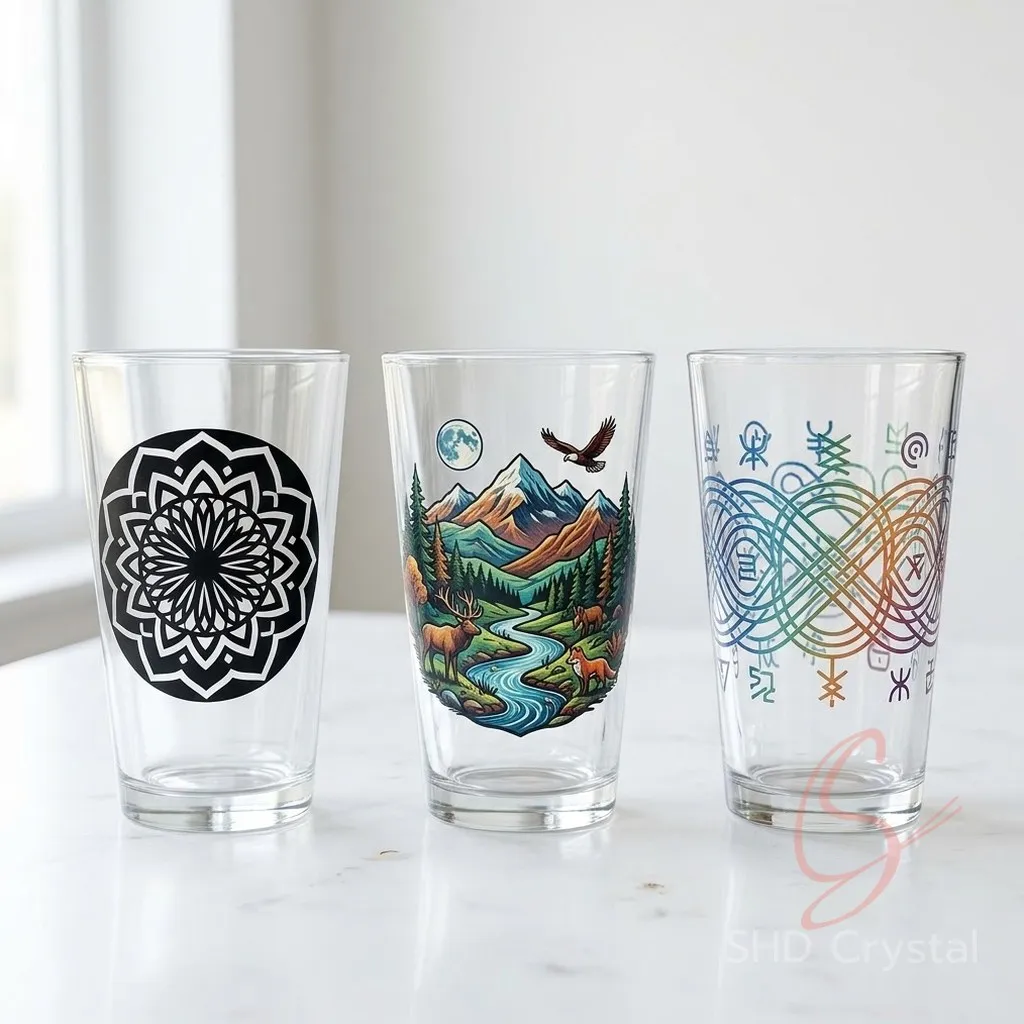
Screen Printing vs Decal Transfer: The Core Decision
The two dominant methods for printed glass cups are screen printing and decal transfer. Each serves different use cases, and choosing the wrong one is the most common sourcing mistake. Screen printing applies ink directly through a mesh screen, producing bold, opaque colors that bond well with glass surfaces. Decal transfer bonds a pre-printed ceramic transfer to the glass in a kiln, allowing photographic detail and unlimited color.
Method | Best For | Key Trade-Off |
Screen printing | Bold logos, high-volume orders, single or limited colors | Lower per-unit cost; limited to simpler designs |
Decal transfer | Full-color artwork, photographic imagery, complex illustrations | Higher per-unit cost; requires kiln firing |
UV digital printing | Short runs, variable data, rapid prototyping | Moderate cost; ink durability varies by formulation |
For most wholesale printed glass cups orders, screen printing delivers the best balance of cost and durability. The ink cures onto the glass surface and withstands commercial dishwasher cycles when properly applied. Decal transfer excels when the design requires photographic detail or gradients that screen printing cannot reproduce.
Ink Durability and Dishwasher Resistance
The longevity of printed glass cups depends on ink type, curing process, and wash conditions. Organic inks (standard screen printing) offer vibrant colors but may fade after 200-300 commercial wash cycles. Ceramic inks (kiln-fired decals) bond permanently with the glass surface and survive 1,000+ cycles. UV-cured inks fall somewhere between, offering good durability for moderate use.
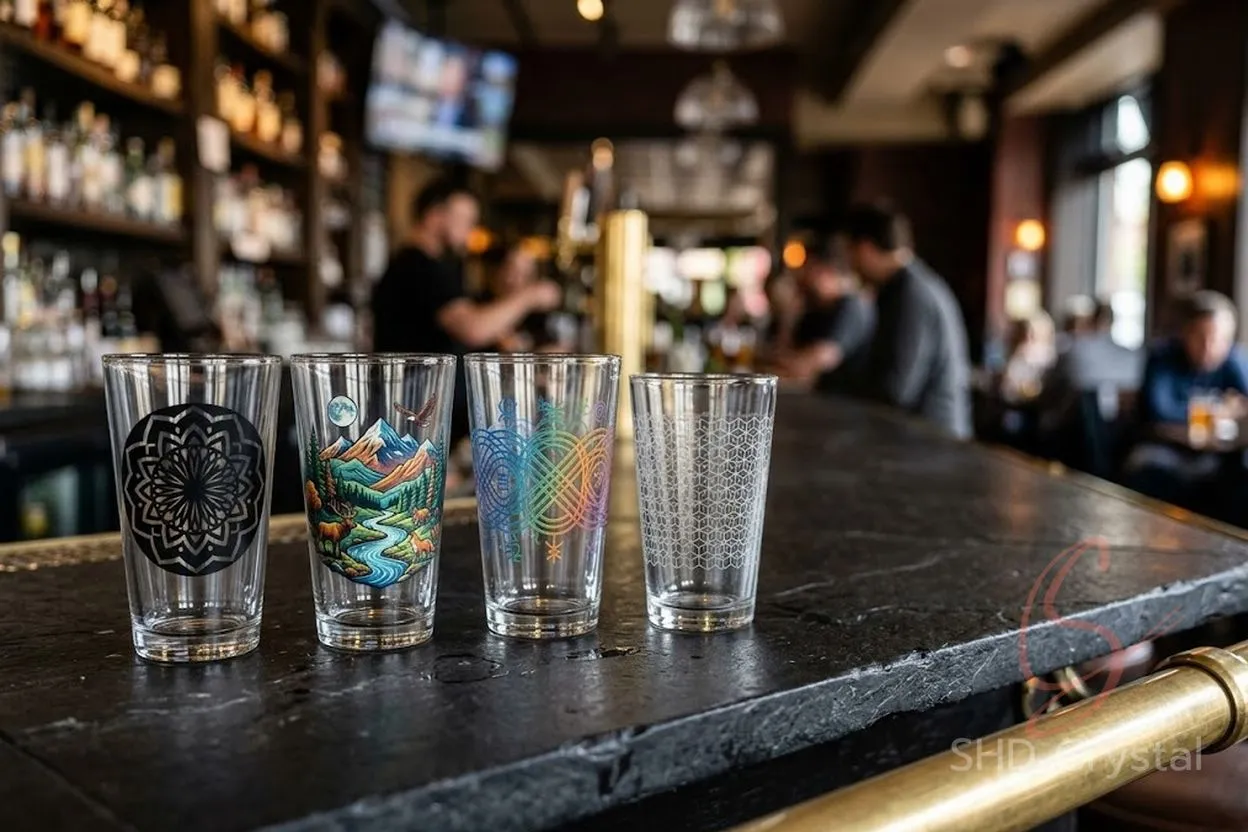
A practical consideration is whether the cups will face commercial dishwashers or hand washing. Commercial units use higher temperatures and stronger detergents, which accelerate ink degradation. Buyers ordering printed glass cups for restaurant or bar service should specify ceramic or UV-cured inks. For promotional giveaway items that see lighter use, standard screen printing is typically sufficient.
Color Matching and Proof Accuracy
Color consistency across large orders requires careful proofing. Request a physical color proof before production begins — digital proofs on screen do not accurately represent how ink appears on glass. Pantone color matching adds cost but ensures brand consistency. For multi-color designs, verify that each color layer registers correctly by inspecting the proof under different lighting conditions.
China Production for Printed Glass Cups
Chinese glass manufacturers in Hebei, Shandong, and Guangdong provinces produce the majority of printed glass cups exported globally. The Boshan district in Shandong has a particularly strong reputation for glass quality and decoration capability. When sourcing printed glass cups from these regions, verify that the supplier controls the printing process in-house rather than outsourcing to third-party decoration facilities.
Outsourced decoration introduces communication delays and quality drift risks. A factory that handles both glass forming and printing under one roof can coordinate proofing, color matching, and quality control more efficiently. This integration typically results in shorter lead times and fewer surprises during mass production.
FAQ
What is the typical MOQ for printed glass cups?
Minimum order quantities vary by supplier and print method. Most Chinese manufacturers set MOQs between 500 and 1,000 pieces for screen-printed designs. Digital UV printing may have lower minimums because it requires less setup.
How long do printed designs last on glass?
Durability depends on ink type and wash conditions. Standard screen-printed designs last 200-300 commercial wash cycles. Ceramic kiln-fired decals last 1,000+ cycles. UV-cured inks typically last 500-700 cycles.
Can I print different designs on each cup in a single order?
Variable data printing (different designs on each piece) is possible with UV digital printing but not practical with screen printing or decals. Confirm with your supplier that their equipment supports variable data runs.
Conclusion
Printed glass cups offer a cost-effective way to add branding and visual appeal to drinkware. The key decisions — choosing between screen printing and decal transfer, selecting appropriate ink types, and verifying color accuracy — all affect the final product's durability and appearance. By matching the print method to your volume and use case requirements, and by partnering with suppliers who control the decoration process in-house, procurement teams can confidently order printed glass cups that meet quality and timeline expectations.
Starting Your Printed Glass Cup Project
Define your specifications before requesting quotes: design complexity, color requirements, expected wash cycles, and target price point. SHD Glassware offers sample units with production-quality printing to help buyers evaluate options before committing to a full run. Comparing samples from qualified suppliers confirms that your printed glass cups will meet both brand and durability standards.
If you are interested in our glassware or related products,
please feel free to contact us.

