


Blogpost keywords: bamboo lids with straw hole wholesale, reusable cup lids bulk, bamboo cup accessories wholesale
Bamboo lids with straw hole wholesale have become a standard sourcing item for drinkware brands looking to pair sustainability credentials with functional design. From bubble tea chains to specialty coffee roasters, the demand for lids that accommodate straws while sealing a tumbler has grown steadily over the past few years. For procurement teams evaluating suppliers, the product looks simple on a catalog page — but the details that determine whether the lid actually fits, holds up, and passes food-contact testing are anything but straightforward.
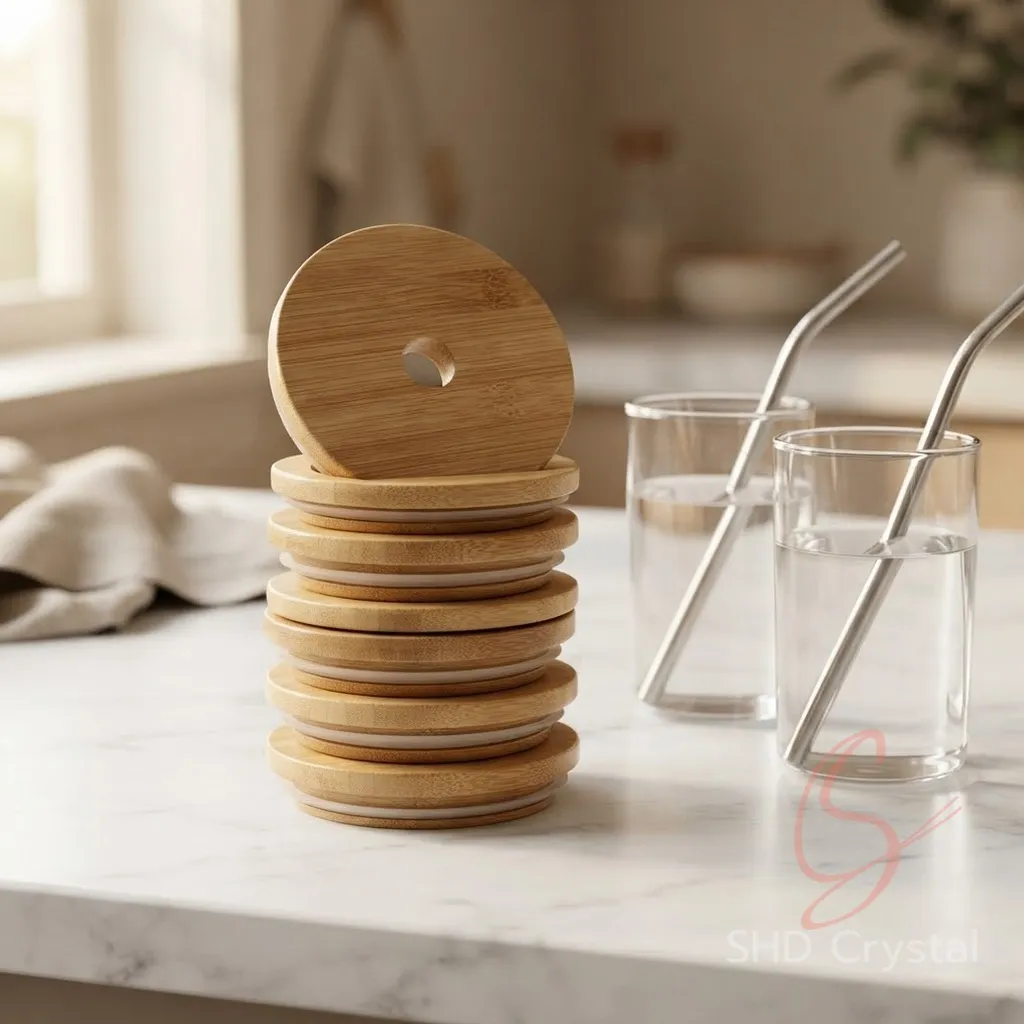
Why Bamboo Lids With Straw Hole Wholesale Require More Scrutiny Than You Might Expect
A bamboo lid is not a single product — it is an assembly of material selection, machining tolerance, and surface treatment that all have to work together. The straw hole, in particular, introduces a failure point that solid lids avoid entirely. If the hole is routed too tightly, standard straws bind or crack the bamboo grain. Too loose, and the lid no longer seals the tumbler effectively, which defeats the purpose of a reusable cup accessory. For teams sourcing reusable cup lids bulk, these tolerances are not trivial — a fraction of a millimeter difference can determine whether the product passes or fails inbound inspection.
In practice, the difference between a lid that survives daily commercial dishwashing and one that warps after a few weeks often comes down to two factors: the bamboo species used and the moisture barrier applied to the surface. Moso bamboo is the most common material in Asian production — it is fast-growing, relatively hard, and widely available in Hebei and Zhejiang provinces. But not all Moso is equal. Bamboo harvested younger than five years tends to be less dense and more prone to splitting along the grain when the straw hole is CNC-routed.
Surface treatment matters just as much. A lid that arrives with a food-safe lacquer or water-based polyurethane coating will resist moisture absorption during repeated wash cycles. Without it, the bamboo absorbs water and swells, the fit on the tumbler tightens or loosens unpredictably, and the lid ends up in a landfill after a handful of uses — which undermines the sustainability story the buyer was marketing in the first place. This is where bamboo lids with straw hole wholesale orders frequently go wrong: buyers focus on unit price and overlook the coating specification that determines product lifespan.
Material / Treatment | Best For | Main Risk |
Moso bamboo + lacquer coating | High-volume retail, daily dishwashing | Coating may yellow over time with UV exposure |
Bamboo composite + oil finish | Premium branding, hand-wash-only lines | Oil finish needs periodic reapplication by end user |
Bamboo fiber blend + no coating | Budget-tier promotional items | Moisture absorption causes swelling and warping |
The table above captures the basic trade-offs, but procurement teams should note that coating quality varies enormously between suppliers. A responsible manufacturer will provide a food-contact compliance certificate (typically LFGB or FDA) along with a spec sheet detailing the exact coating type and curing process. Asking for a sample batch of 50 to 100 units before committing to a full production run is a reasonable request — and a supplier who resists that step is sending a signal.
Specifications That Actually Matter When Sourcing Reusable Cup Lids Bulk
Tumbler diameter is the obvious starting point, but it is far from the only dimension that counts. A standard 3.5-inch tumbler opening might accept lids from multiple suppliers, yet the rim profile — whether it is a smooth lip, a stepped edge, or a press-fit groove — determines how securely the lid sits. Buyers sourcing reusable cup lids bulk often discover during inbound inspection that lids from two different factories, both described as 'fits 3.5-inch tumblers,' do not actually interchange on the same cup.
The straw hole diameter is another variable. Most suppliers default to a 12mm to 14mm opening, which works for standard boba straws and wide silicone straws. But if the buyer's product is positioned for smoothie or juice consumption, a wider hole — or even an adjustable grommet — may be worth specifying. That decision has packaging implications too: a lid with a silicone grommet requires an additional component in the bill of materials, which affects both unit cost and assembly time at the factory. Buyers exploring bamboo cup accessories wholesale options should confirm grommet compatibility as part of their spec sheet.
A practical consideration is the lid stacking behavior during transit. Flat bamboo lids stack efficiently, but when the straw hole creates an uneven surface, the lids can shift inside the carton and chip at the edges. When buying reusable cup lids bulk, experienced buyers typically request inter-layer tissue paper or individual poly bags — the added packaging cost is usually modest compared with the expense of replacing damaged units after a 20-foot container arrives at port.
Lead Times, MOQs, and the Real Cost of Bamboo Cup Accessories Wholesale
Minimum order quantities for bamboo cup accessories wholesale typically start at 1,000 to 3,000 units, depending on whether the buyer needs custom engraving, custom sizing, or a proprietary lid shape. A standard round lid with a pre-cut straw hole can ship faster than a custom-molded design, but 'faster' in the context of Chinese bamboo production still means roughly 20 to 30 working days for production, plus ocean freight transit.
Tooling costs deserve a direct conversation with the supplier. For standard round lids, most factories absorb the mold cost into the unit price at higher volumes. For custom shapes — oval, hexagonal, or lids with integrated handle cutouts — tooling fees typically range from a few hundred to over a thousand dollars, depending on complexity. This is one area where buyers should not assume the tooling belongs to them; in many Chinese factories, the mold stays with the supplier unless the buyer negotiates ownership upfront.
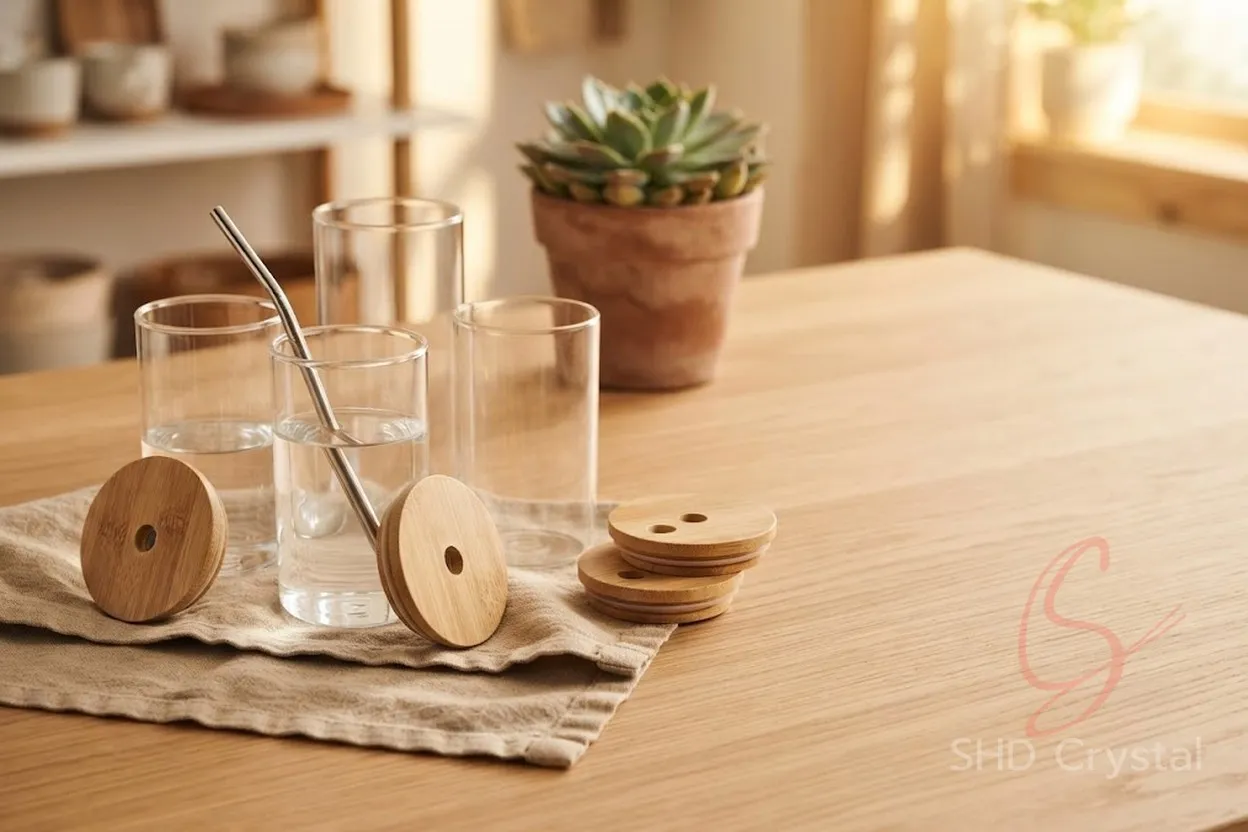
One micro-scenario worth noting: a beverage brand once placed a bamboo lids with straw hole wholesale order specifying a 15mm straw hole for its launch line of tumblers, only to discover during sampling that their promotional paper straws — at 13mm — rattled inside the hole and leaked during transport. The fix required a silicone grommet insert, which added roughly two weeks to the production timeline and a small per-unit cost increase. The lesson: always test the lid-to-straw fit with the actual straws the product will ship with, not just with a generic reference straw.
How to Evaluate a Supplier Without Visiting the Factory
Factory visits are valuable but not always feasible, especially for small to mid-size buyers. A more useful question might be: what documents and evidence can a supplier of bamboo cup accessories wholesale provide that substitute for an in-person visit? At minimum, procurement teams should request a factory audit report (SMETA, BSCI, or equivalent), a food-contact compliance certificate, and photographs or video of the specific production line that will handle the order.
It may help to ask whether the supplier controls the full production chain — from bamboo sourcing and blank production through to the final coating and packaging — or whether certain steps are subcontracted. In regions like Anji in Zhejiang, which is one of China's largest bamboo processing clusters, it is common for forming and decoration to happen in separate workshops, sometimes in different towns. That separation can introduce timeline variability and quality inconsistency if the coordination between the two is not tight.
The trade-off is clear: integrated factories may charge slightly more per unit, but they typically offer shorter lead times and tighter quality control. Subcontracted production can be cheaper on paper, but the buyer absorbs more risk when something goes wrong — and in bamboo products, where moisture sensitivity amplifies small defects, that risk is worth weighing carefully.
FAQ
What is the typical MOQ for bamboo lids with straw hole wholesale orders?
Minimum order quantities generally fall between 1,000 and 3,000 units for standard sizes. Custom shapes or branded engraving may require higher MOQs to justify tooling setup. Buyers should clarify MOQ requirements early in the RFQ process to avoid scope surprises.
How does bamboo compare to silicone or plastic for reusable cup lids?
Bamboo offers a natural aesthetic and stronger sustainability positioning, which matters for brands marketing eco-friendly drinkware. Silicone lids tend to be more flexible and universally fit multiple tumbler sizes, but they lack the premium tactile quality. Plastic lids are the cheapest option but face increasing regulatory and consumer pushback in several markets.
What quality certifications should I look for when sourcing bamboo cup accessories wholesale?
LFGB (German food-contact standard) and FDA compliance are the most commonly requested certifications for bamboo drinkware components. FSC certification for the bamboo raw material itself is increasingly expected by European and North American buyers. A responsible supplier should be able to provide these documents without hesitation.
Can bamboo lids with straw holes survive commercial dishwashing?
That depends heavily on the surface treatment. A lid with a properly applied food-safe lacquer or polyurethane coating can withstand commercial dishwashing cycles for a reasonable service life. Uncoated bamboo, however, will absorb water and warp relatively quickly. Buyers should specify the expected wash conditions and request testing evidence from the supplier.
Conclusion
Bamboo lids with straw hole wholesale sourcing rewards procurement teams that ask detailed questions before placing orders. The product may look like a simple commodity, but material selection, hole sizing, coating quality, and supplier integration all influence whether the lid performs as expected in the hands of end users. Taking the time to verify specifications, request samples, and understand the supplier's production chain is not just good practice — it is the difference between a sustainable product story that holds up and one that falls apart after the first reorder.
Source With Confidence
For buyers evaluating bamboo lids with straw hole wholesale options, SHD Glassware works with drinkware brands across multiple product categories and can help navigate material choices, specification details, and supplier coordination. Reaching out early in the sourcing process often prevents the kind of costly mid-production adjustments that slow down product launches.
If you are interested in our glassware or related products,
please feel free to contact us.

