


Blogpost keywords: custom engraved glass cups, personalized glassware, engraved drinkware
Custom engraved glass cups have become one of the most requested items for corporate gifting, hospitality, and promotional events — but sourcing them effectively means understanding engraving methods, material options, and production realities that separate a good result from a disappointing one.
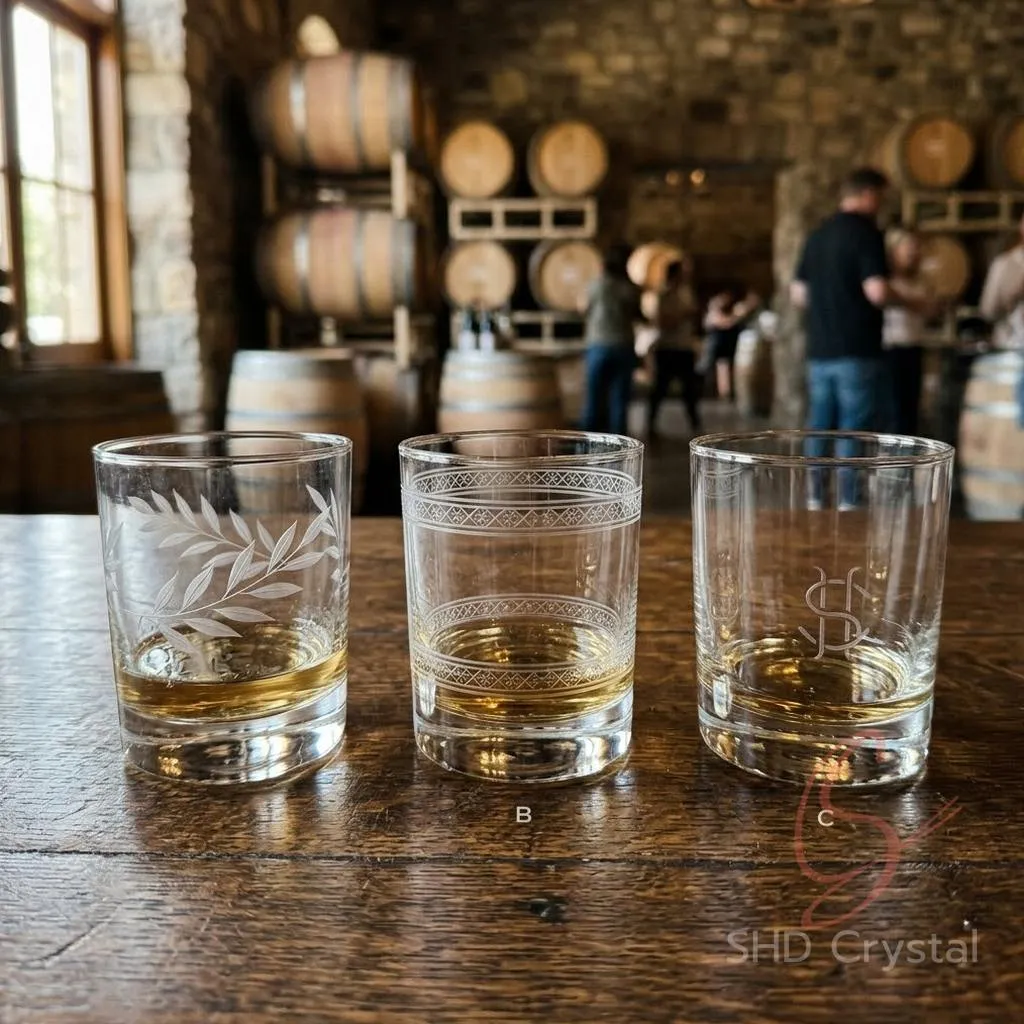
What Custom Engraved Glass Cups Require Beyond Basic Decoration
Standard glassware ships as-is after forming. Custom engraved glass cups add at least one additional production step — and that step introduces variables most buyers do not anticipate. Factories in Hebei and Shandong typically produce blanks in one workshop and route pieces to a decoration line elsewhere. That split means changeover time between designs, and it is worth clarifying whether the supplier controls production end to end.
Engraving Methods Compared
Method | Best For | Main Risk |
Laser engraving | Fine detail, small to mid-size runs | Higher per-unit cost at large volume |
Acid etching | Large batches, smooth frosted finish | Uneven opacity if bath conditions drift |
Sandblasting | Deep texture, bold branding | Microfractures on thin-walled glass |
Laser engraving cuts into the glass with precision, ideal for logos with thin lines or intricate details. The setup involves programming a digital file rather than producing a mold, keeping minimum orders accessible for personalized glassware projects. Acid etching handles higher volumes more cost-effectively and creates a frosted finish — but chemical concentration must stay consistent, or opacity turns patchy. Sandblasting carves deeper, producing a textured finish, though it risks microfractures.
Choosing the Right Material for Engraved Drinkware
Engraved drinkware comes in three common material categories. Soda-lime glass handles everyday use and keeps costs manageable. Borosilicate glass resists thermal shock better, which matters for outdoor events. Lead-free crystal delivers the clarity premium brands expect — engravings appear sharper because of light refraction, and the weighted base adds a tactile quality buyers notice.
The better approach is usually to match material to the intended lifecycle rather than defaulting to the cheapest option. A hospitality group ordering engraved drinkware for a seasonal festival may prioritize durability, while a spirits brand curating a tasting experience may prefer crystal's clarity.
MOQ, Lead Times, and What to Verify Before Ordering
Minimum order quantities vary by engraving method. Laser engraving often starts at a few hundred pieces because the setup is digital. Acid etching requires a stencil, adding tooling cost that becomes economical at volume. Sandblasting needs a mask per design, so custom artwork adds setup time.
Lead times for decorated glassware typically run several weeks from order confirmation to shipment. Buyers should verify whether the supplier controls the full chain. A practical consideration is to request a sample before placing a full run — running a fingernail across an engraved edge reveals depth consistency; a sharp transition may signal engraving that compromises glass.
Common Mistakes When Sourcing Custom Engraved Glass Cups
Many buyers focus on visual design and overlook production factors. One frequent miscalculation is treating all engraving methods as equivalent in durability. Surface-printed logos wear quickly under commercial dishwasher conditions, while laser-engraved and acid-etched designs modify the glass and hold up much longer.
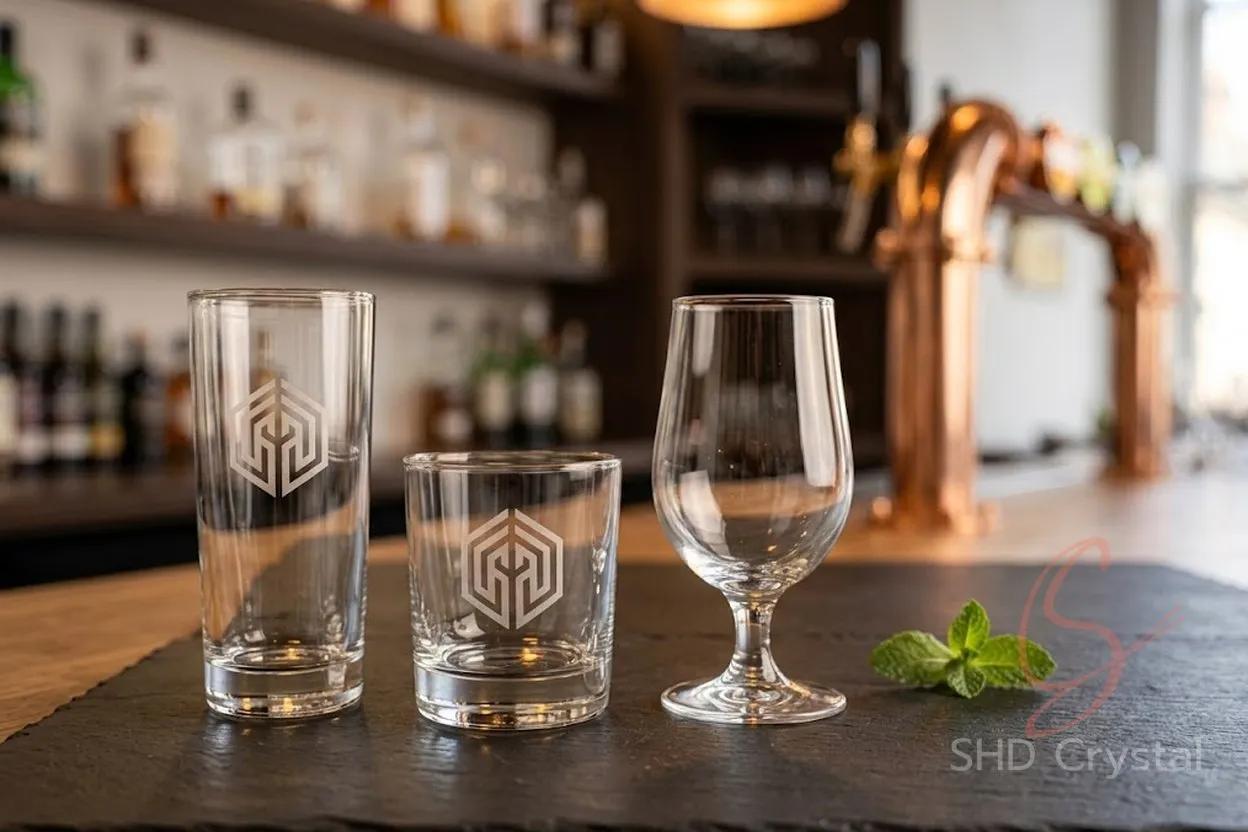
Another mistake is ordering based solely on unit price without evaluating the supplier's decoration capability. A beverage brand that chose the lowest-cost option found the engraved logo looked sharp in the sample but appeared inconsistent across the shipment — the stencil had degraded between batches. Ask whether the supplier engraves in-house and how quality is managed.
How Personalized Glassware Fits Into Brand Strategy
Personalized glassware works best when the engraving method aligns with the brand's intended use case and lifespan. A subtle etched mark near the base of a glass bowl tends to age better than a large printed graphic. Buyers should consider the full lifecycle — from unboxing through years of use — rather than optimizing for day-one impact.
In practice, the most effective branded glassware feels intentional rather than pasted on. Corporate gift programs, hotel amenities, and winery tasting rooms all benefit when engraving reinforces the brand quietly. Personalized glassware that ages well becomes a lasting brand element.
FAQ
What is the typical MOQ for custom engraved glass cups from Chinese manufacturers?
MOQ depends on the engraving method. Laser-engraved pieces can start at a few hundred units, while acid etching and sandblasting generally require larger minimums. Most suppliers in Boshan and Hebei offer flexibility for first-time orders, though pricing improves at volume.
How does laser engraving compare to acid etching for branded glassware?
Laser engraving offers finer detail and lower minimum orders, making it suitable for small runs or complex logos. Acid etching produces a smooth frosted finish and handles large volumes more efficiently. The choice depends on design complexity, order size, and the visual effect the buyer wants.
What quality certifications matter when sourcing engraved drinkware?
Buyers should look for food-contact safety certifications and consistent AQL standards. A responsible manufacturer will share details about raw material sourcing and forming methods, which affect product safety and durability.
Can custom engraved glass cups be produced with non-standard shapes?
Yes, custom molds can be developed for specific bowl profiles, stem lengths, or base designs. Custom mold development adds tooling cost and lead time, but gives buyers full control over glass geometry. Specify early for distinctive silhouettes.
Conclusion
Sourcing custom engraved glass cups involves more than selecting a design. Material choice, engraving method, and supplier capability all interact to determine quality and durability. Buyers who specify requirements clearly, verify capabilities at the sample stage, and understand trade-offs tend to achieve stronger outcomes.
Partner With a Trusted Glassware Supplier
SHD Glassware works with buyers sourcing custom engraved glass cups for corporate gifts, hospitality programs, and promotional campaigns. Their team can walk through engraving options, material recommendations, and production timelines to help align glassware with branding objectives. Reaching out early gives procurement teams flexibility to explore samples and refine specs.
If you are interested in our glassware or related products,
please feel free to contact us.

