


Blogpost keywords: custom made glass cups, custom drinkware manufacturing, branded glassware supplier
Custom made glass cups sit at the intersection of brand identity, guest experience, and operational cost — and getting the sourcing right matters more than most procurement teams expect. A single production run touches mold engineering, glass composition, surface decoration, and export packaging, and when any link in that chain breaks down, the result is inconsistency or delays.
What Actually Drives Quality in Custom Made Glass Cups
The first mistake buyers make is assuming every factory operates the same way. In practice, the level of vertical integration — whether a supplier controls blank forming, decoration, and packaging under one roof or subcontracts key steps — is the single biggest factor behind lead time and finish consistency. A branded glassware supplier in Hebei may handle forming in-house but send etching to a workshop in another district, introducing coordination gaps and quality drift.
Glass composition drives cost and performance. Soda-lime glass is the standard for everyday tumblers — cost-effective and widely available. Borosilicate handles thermal shock better, fitting hot beverage programs or commercial dishwashing. Crystal offers the clarity luxury brands expect but demands tighter tolerances and higher per-unit cost.
A beverage startup once ordered several thousand custom made glass cups for a product launch, expecting consistent frosted finish across the batch. When the shipment arrived, etching opacity varied cup to cup. The factory outsourced decoration to a separate workshop without enforcing acid bath concentration controls — split production without aligned quality standards.
Chinese glass clusters — Boshan in Shandong for specialty glassware, Hebei for daily-use glass — often separate forming from decoration. Buyers who understand this geography tend to avoid the most expensive mistakes.
Production Methods and Decoration Options
Custom drinkware manufacturing typically uses blow molding, press molding, or automated IS machine production. Each method shapes wall thickness, clarity, and minimum viable order quantity differently.
Decoration Method | Best For | Main Risk |
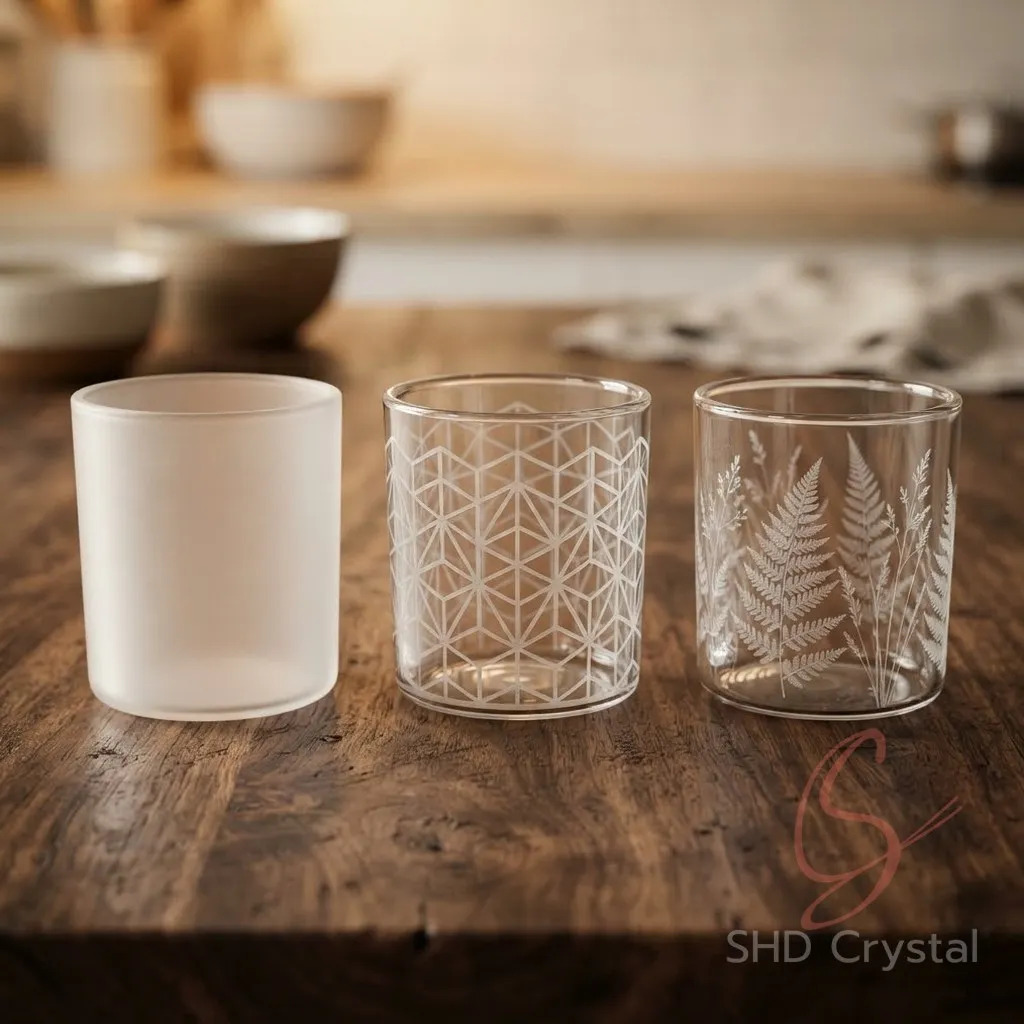
Acid etching | Large-volume orders with uniform frosted finish | Uneven opacity on curved surfaces if bath concentration drifts |
Sandblasting | Deep texture, bold branding elements | Microfractures on thin-walled glass around design edges |
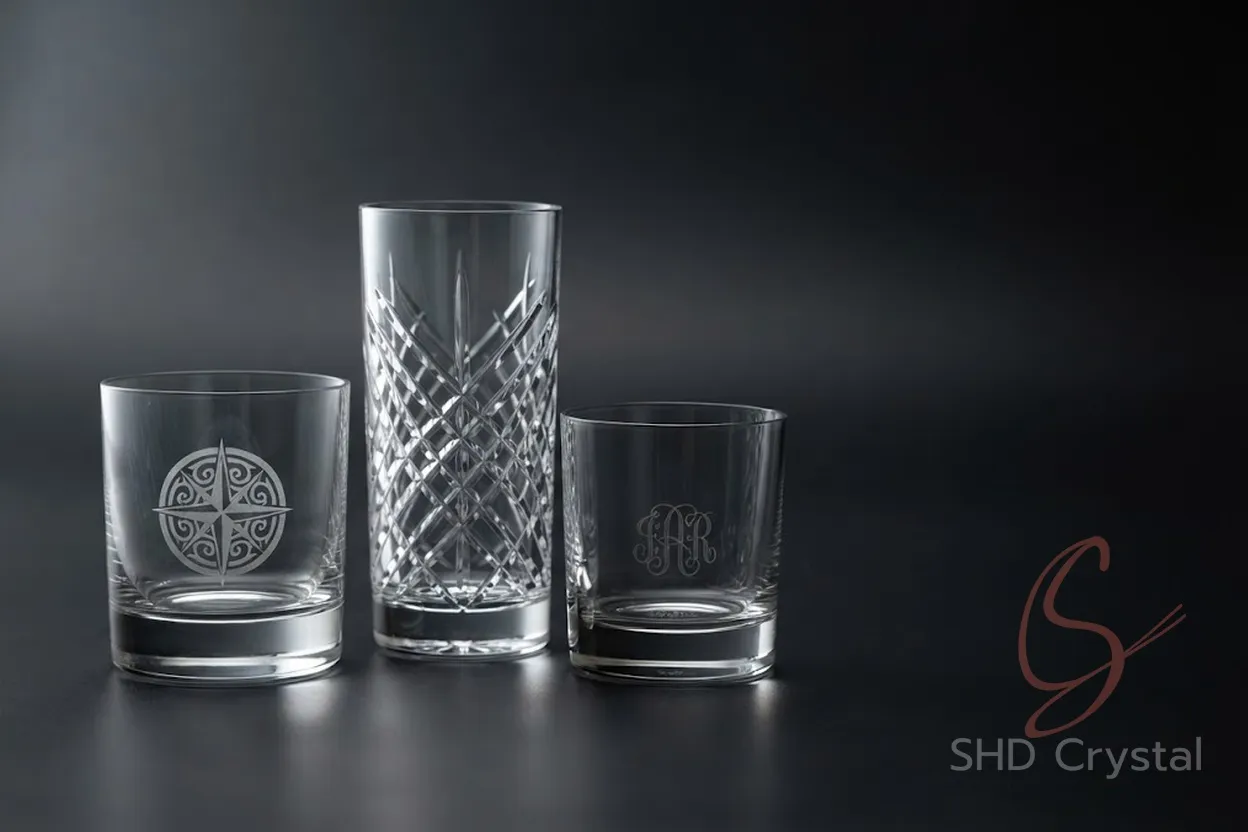
Laser engraving | Fine detail, small to mid-size runs | Higher per-unit cost at scale, limited depth on thick walls |
Acid etching on curved surfaces demands careful concentration control — if bath temperature shifts, opacity turns patchy. Sandblasting solves the depth problem but introduces microfractures on thin walls that appear after repeated dish cycles. Laser engraving sidesteps both for small runs, but per-unit economics climb once quantities increase.
A practical consideration is the trade-off between finish quality and unit cost — laser engraving looks sharp at small volumes but becomes expensive at scale, while acid etching scales well but demands tighter process controls.
Procurement Checklist for Custom Made Glass Cups
Buyers evaluating a branded glassware supplier should work through a structured checklist rather than relying on catalog photos.
Pre-Production Validation
Request pre-production samples with your exact specifications — not stock samples from a previous run. A responsible supplier will produce a short run with your artwork and decoration method so you can evaluate color accuracy and finish consistency. If a supplier resists this step, that is a meaningful signal.
Quality Inspection
AQL sampling is the baseline, but buyers should ask what happens when defects are found. Does the factory sort and re-inspect, or ship the full lot and let the receiving team discover problems? A responsible manufacturer will have documented defect tiers and a clear rework protocol.
Packaging and Logistics
Custom made glass cups typically ship within 20 to 30 working days after artwork approval. Packaging should follow export standards — inner cartons with dividers, double-walled corrugated export cartons, and palletization for container loads. The added packaging cost is modest compared with replacing scratched premium glassware on arrival.
That depends on whether the factory controls the full chain from blank production through decoration and packaging, or uses subcontractors. Integrated operations tend to deliver more predictable timelines and tighter quality consistency.
Mistakes That Show Up After the Shipment Lands
One common issue in custom drinkware manufacturing is color matching across batches. Glass color depends on raw material composition, furnace temperature, and cooling rate — variables that shift between runs. Specifying a Pantone range rather than a single code gives the factory realistic tolerances.
Wall thickness uniformity is another overlooked factor. Thin-walled glasses are harder to produce consistently on IS machines where cavity-to-cavity variation is inherent. A weight drift of several grams across cavities over a single shift is not unusual.
The real question is not whether a supplier can produce one beautiful sample — it is whether they can reproduce that quality across thousands of units and multiple production runs without cutting corners.
FAQ
Minimum order quantities vary depending on factory and design complexity. Standard drinkware with simple decoration may have MOQs in the range of 1,000 to 3,000 units, while heavily customized pieces with new molds can require larger commitments. Ask about mold costs separately — new tooling affects per-unit economics on smaller orders.
Soda-lime glass forms at lower temperatures and is more forgiving, generally translating to lower per-unit costs. Borosilicate requires higher forming temperatures but delivers superior thermal shock resistance for hot beverage service.
ISO 9001 certification is a reasonable baseline. For food-contact glassware, request lead and cadmium release testing documentation. Factories serving US and EU markets typically maintain these records.
Combining methods — acid etching on the body with a laser-engraved logo on the base — is technically feasible but adds complexity to production scheduling and quality control. Discuss this upfront to understand lead time implications.
Rather than specifying an exact Pantone code, approve a color range and request retained samples from each run for comparison. Some factories maintain color master samples, though this is not universal.
Conclusion
Sourcing custom made glass cups is not a commodity purchase — it is an engineering and logistics exercise that rewards careful planning. The procurement teams that get the best results ask about production integration, request pre-production samples, and build quality inspection into the process rather than treating it as an afterthought.
The better a buyer understands the variables — glass composition, decoration method, factory capability, and packaging standards — the more precisely they can specify requirements and the fewer surprises show up when the container doors open.
Working With SHD Glassware on Your Next Project
SHD Glassware works with procurement teams navigating custom made glass cups across a range of applications — from hospitality drinkware programs to branded corporate gifts and retail product lines. The team can walk through glass composition options, decoration methods, and quality inspection protocols to help align your specifications with realistic production capabilities. If you are evaluating suppliers for custom drinkware manufacturing, a conversation about your requirements and timeline is a reasonable first step.
If you are interested in our glassware or related products,
please feel free to contact us.

