


Blogpost keywords: custom milkshake glasses, wholesale milkshake glasses, custom dessert glasses
Custom milkshake glasses have become a defining visual element for ice cream parlors, hotel bars, and dessert-focused restaurants looking to stand out in a crowded market. For procurement teams sourcing branded glassware, the challenge lies in navigating material selection, decoration methods, minimum order quantities, and packaging standards that affect both unit cost and long-term durability.
What to Know Before Ordering Custom Milkshake Glasses
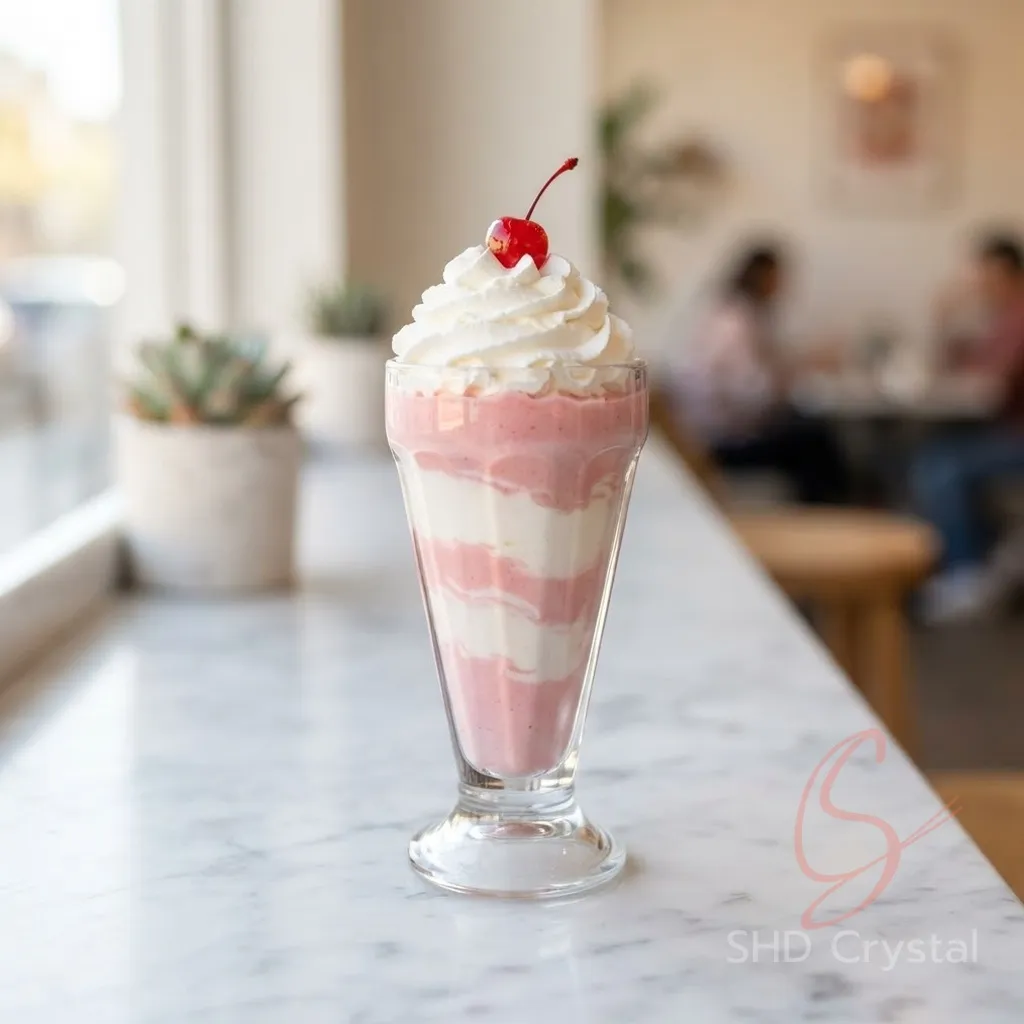
A typical milkshake glass holds between 300 and 500 milliliters, with a weighted base that prevents tipping on busy service counters. The most common materials are soda-lime glass for everyday use, borosilicate for thermal shock resistance, and lead-free crystal for premium dessert presentations. Each material makes a different trade-off between cost, weight, and the clarity that affects how custom milkshake glasses photograph on social media.
In practice, soda-lime glass handles high-traffic QSR environments without complaint, while borosilicate makes more sense when glasses also hold heated toppings or move between kitchen temperatures and outdoor patio settings. Crystal suits luxury dessert brands that want the glass to do half the marketing work.
Decoration Methods That Affect Branding and Durability
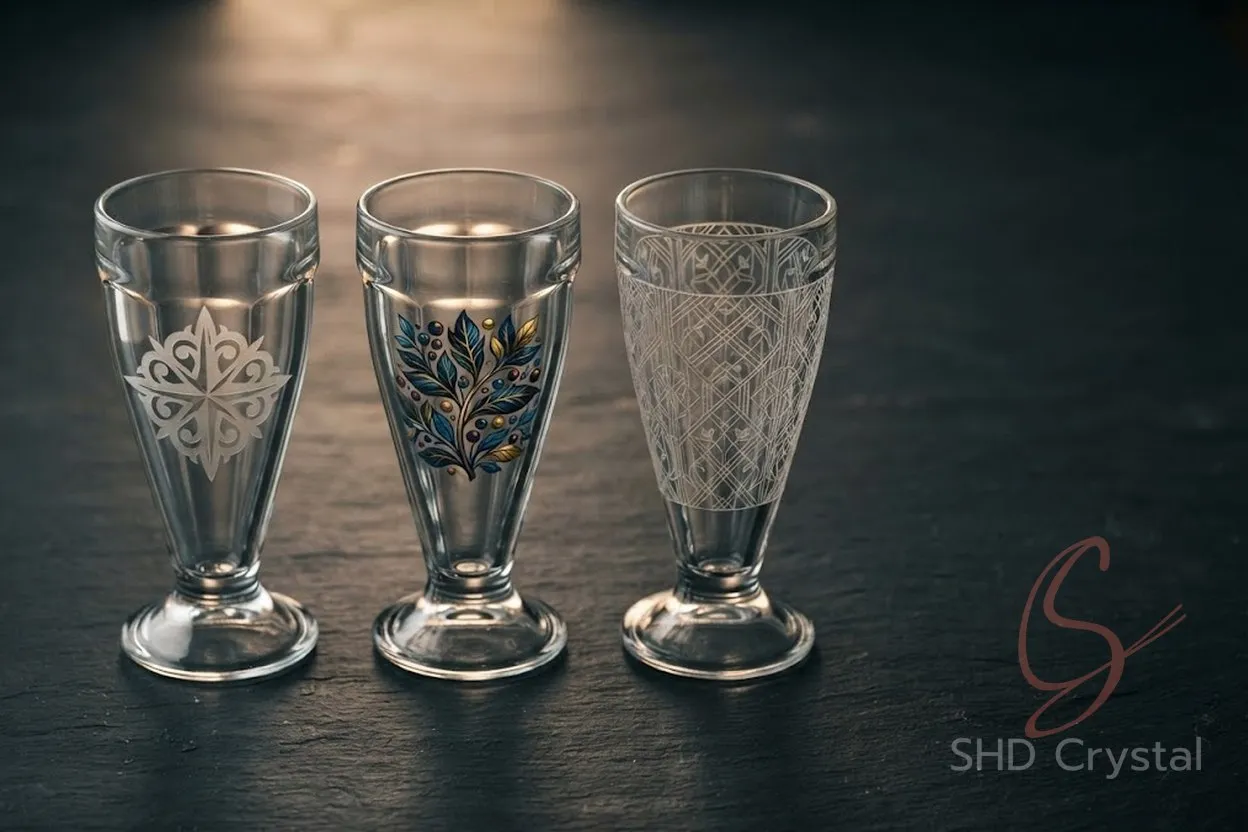
The decoration method chosen for wholesale milkshake glasses directly impacts how long a brand mark survives daily use. Acid etching, screen printing, and laser engraving are the three most common approaches, each carrying distinct advantages depending on order volume and logo complexity for wholesale milkshake glasses.
Method | Best For | Main Risk |
Acid etching | Large volume, consistent frosted finish | Uneven opacity on curved surfaces |
Screen printing | Colorful logos, short-to-medium runs | Edge wear after repeated dish cycles |
Laser engraving | Fine detail, premium branding | Higher per-unit cost at scale |
Acid etching on a curved milkshake bowl requires careful chemical concentration control. If bath temperature drifts or immersion time varies across a rack, the opacity turns uneven and the logo looks patchy in direct light. Screen printing holds up well for the first several months, but daily commercial dishwasher use will show edge wear before an etched glass does.
A practical consideration for custom dessert glasses is whether the supplier handles decoration in-house or sends blanks to a subcontracted etching line. Factories in glass clusters like Hebei or Shandong sometimes separate forming from decoration, adding lead time but improving consistency when the decoration partner specializes in the technique.
MOQ, Lead Times, and Mold Considerations
Minimum order quantities for custom milkshake glasses typically depend on whether the buyer uses an existing mold or requires a new cavity design. Stock molds support lower MOQs and shorter lead times — often three to four weeks from production start to shipment. Custom molds involve tooling fees and add several weeks, but give the brand full control over silhouette, wall thickness, and base geometry for custom milkshake glasses that need to match a specific brand aesthetic.
A beverage brand commissioning a signature glass for a seasonal campaign might face a choice: pay a mold fee for a unique shape, or adapt an existing design with custom decoration at a lower upfront cost. The better approach depends on how long the product stays on the menu and whether the glass itself is part of the brand storytelling.
Quality Inspection and Packaging for Glass Export
Glass export packaging follows a standard progression — inner carton or sleeve, then export cartons on pallets with corner protectors. Thin-walled custom milkshake glasses shipped without adequate dividers can arrive with hairline rim chips that only show up under warehouse lighting.
The better approach is to request pre-shipment inspection photos showing the packaging configuration. Buyers should clarify AQL standards — typically AQL 2.5 for critical defects and 4.0 for minor ones — so both sides share expectations before the container leaves the factory. This applies to custom dessert glasses and other branded glassware alike.
Sourcing Custom Milkshake Glasses From Chinese Manufacturers
China remains the dominant production base for wholesale milkshake glasses, with concentrated manufacturing clusters in Hebei for daily-use glassware and the Boshan district in Shandong for higher-end production. Buyers evaluating vendors should ask whether the factory controls the full chain — blank forming through decoration to final packaging — or relies on subcontractors. That question alone reveals a lot about consistent quality and realistic lead times, whether sourcing custom dessert glasses or standard tumblers.
When sourcing custom dessert glasses, it may help to order pre-production samples in the exact material and decoration intended for the final run. Photographs can hide wall thickness variations and color shifts that only become apparent under restaurant lighting. Receiving teams should evaluate samples against a pass-fail checklist rather than relying on subjective impressions. This applies equally to wholesale milkshake glasses ordered in large batches.
FAQ
What is the typical MOQ for custom milkshake glasses from Chinese manufacturers?
Minimum order quantities usually range from 500 to 3,000 pieces for stock mold designs, depending on the factory and decoration method. Custom mold orders often require higher quantities to justify tooling investment.
How does soda-lime glass compare to borosilicate for milkshake service?
Soda-lime glass is more affordable and performs well for cold beverage service. Borosilicate offers better resistance to thermal shock, which matters if the glass holds heated toppings or moves between temperature extremes.
What quality certifications should buyers look for when sourcing milkshake glasses?
FDA food-contact compliance is standard for US-bound orders. LFGB certification is relevant for European markets. Buyers should request copies rather than accepting verbal confirmation.
Can custom dessert glasses be produced with both etching and screen printing?
Combining techniques is possible but adds complexity. Acid etching the base design and screen printing accent colors is a common approach, though it requires two separate production stages and careful alignment.
Conclusion
Sourcing custom milkshake glasses is a procurement decision that extends beyond unit price. Material choice, decoration durability, packaging standards, and supplier capabilities all shape how the product performs on a service counter. The buyers who get the best results ask detailed questions early and validate answers through samples rather than assumptions.
Work With a Glassware Supplier Who Understands Your Brand
SHD Glassware works with hospitality and food service brands to develop custom milkshake glasses that balance design intent with production reality. From material selection through decoration and export packaging, every step is managed to meet the demands of commercial service environments.
If you are interested in our glassware or related products,
please feel free to contact us.

