


Blogpost keywords: drinking glass wholesale, wholesale glass tumblers, bulk order glass cups
When sourcing drinking glass wholesale from Chinese manufacturers, procurement teams face a surprisingly complex set of variables beyond unit price. A glass tumbler that looks flawless in a sample photo may warp, chip, or arrive with inconsistent wall thickness when produced at scale. Understanding what separates reliable products from problematic ones starts with knowing where to look and what specifications to demand.
Understanding the Drinking Glass Wholesale Market
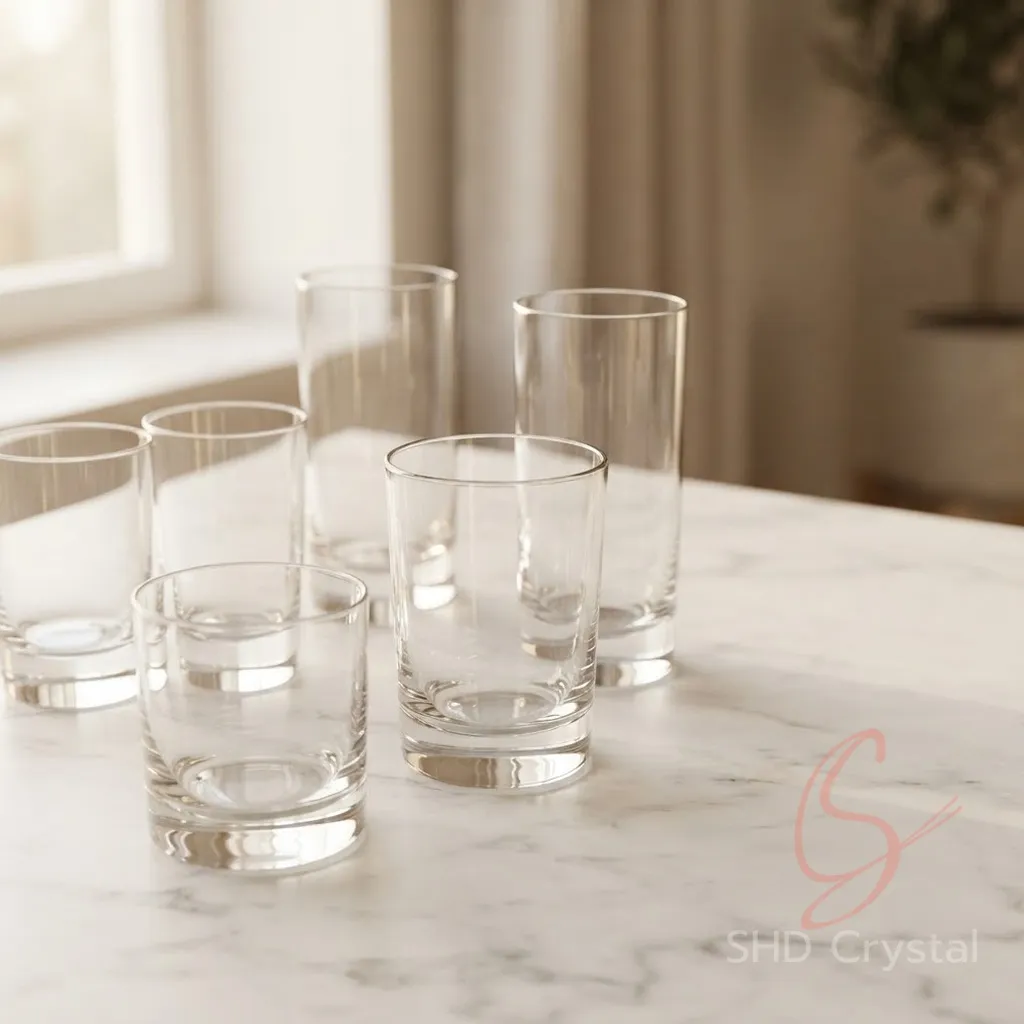
Sourcing drinking glass wholesale means navigating a supply chain where blank production, decoration, and packaging often happen in separate workshops across different regions. Chinese glass clusters like Boshan in Shandong and daily-use glass factories in Hebei offer distinct capabilities — Boshan excels at decorative techniques while Hebei focuses on high-volume commodity glass production. A buyer who understands this regional specialization can match supplier capabilities to project requirements more effectively.
Controlling the full production chain matters more than chasing the lowest per-unit quote. Factories that handle blank forming, decoration, and packaging under one roof generally produce more consistent quality than facilities coordinating across subcontractors — though integrated operations are not always the cheapest option.
Specifications That Determine Order Quality
When placing a bulk order for glass cups, the specification sheet is where most problems originate. A small difference in wall thickness affects not only weight and feel but also how the glass survives thermal cycling and repeated dishwasher exposure. Cavity count on the IS machine determines whether a factory runs uniform pressure across all cavities — uneven cavity wear produces weight drift that your receiving team will catch during inbound inspection.
In practice, requesting detailed dimensional tolerances upfront rather than discovering inconsistencies after production saves considerable trouble. Ask specifically about weight tolerance per piece, lip diameter variation, and base flatness — these three parameters correlate directly with stackability and the end-user experience.
Material Options for Wholesale Glass Tumblers
Soda-lime glass handles everyday use across hospitality and retail channels. Borosilicate withstands thermal shock — relevant for coffee bars and restaurants serving hot and cold beverages from the same glassware line. Crystal offers the clarity luxury brands expect, though buyers should verify whether the supplier produces lead-free crystal compliant with destination market regulations.
The real question is not which material is best overall, but which material fits the specific use case and price point a buyer needs to hit. Each option makes a different trade-off between cost, durability, and perceived value.
Material | Best For | Main Risk |
Soda-lime glass | Everyday tableware, hospitality | Lower thermal shock resistance |
Borosilicate glass | Hot and cold beverage service | Higher unit cost, specialized forming |
Crystal glass | Luxury hospitality, giftware | Lead content regulations vary by market |
Decoration Methods for Bulk Order Glass Cups
For branded or custom glassware, the decoration method changes both cost structure and product durability. Screen printing suits large-volume orders with simple logos but shows edge wear well before etched glass needs replacement — the difference in service life is measured in years, not weeks. Acid etching produces a smooth, uniform frosted finish ideal for premium positioning, while sandblasting creates deeper texture but carries a higher risk of micro-fractures on thin walls.
Method | Best For | Main Risk |
Screen printing | Large-volume orders, simple logos | Edge wear after repeated washing |
Acid etching | Premium frosted finish, uniform opacity | Uneven results on curved surfaces |
Laser engraving | Fine detail, limited production runs | Higher per-unit cost at scale |
Acid etching on a curved bowl needs careful chemical concentration control. If the bath temperature drifts or immersion time varies across a rack, the opacity turns uneven and the branding looks patchy in direct light. Sandblasting creates deeper texture but invites microfractures around the design edge — damage that may not appear until the glass has endured several commercial dishwasher cycles.
Quality Control and Inspection Practices
A common scenario involves a beverage brand ordering several thousand units of branded tumblers. The initial samples pass inspection, but production-line pieces show inconsistent print alignment because the decoration workshop runs different screen tension than the sample line. This gap between sample and production quality is typical when factories separate forming from decoration — blanks are made in one facility and sent to a specialized printing line elsewhere.
Buyers should consider requesting pre-shipment inspection with AQL sampling rather than relying solely on factory self-inspection. Running your fingernail across any etched or printed edge reveals whether the surface treatment is properly bonded — a sharp transition suggests aggressive execution that may not survive commercial dishwasher cycles. That depends on the specific factory’s process controls, which is exactly why independent verification matters.
Lead Times, Logistics, and Packaging
Lead times for drinking glass wholesale typically run several weeks from order confirmation to shipment, depending on whether the supplier runs in-house decoration or uses subcontractors. Custom molds add tooling time before production begins. A practical consideration is that packaging standards for glass export require inner cartons, corrugated export cartons, and proper palletization — skipping or under-specifying packaging is a frequent cause of transit damage.
The better approach is usually to confirm packaging specifications at the RFQ stage rather than leaving it to the factory’s default. Each glass should be individually wrapped with adequate padding, and palletization with corner protectors and stretch wrapping adds meaningful protection for ocean freight.
FAQ
What is the typical MOQ for drinking glass wholesale orders from Chinese factories?
Minimum order quantities vary significantly by product complexity and decoration requirements. Simple undecorated glasses may have lower minimums, while custom-molded or decorated pieces typically require larger commitments to justify tooling and setup costs. Buyers should expect higher MOQs for any glass requiring custom molds.
How do soda-lime and borosilicate compare for restaurant use?
Soda-lime glass is the standard for most restaurant tableware due to its lower cost and adequate durability for normal service conditions. Borosilicate makes sense for establishments serving both hot and cold beverages, as it handles rapid temperature changes without cracking — though it comes at a premium price point.
What quality certifications matter when sourcing bulk order glass cups?
Look for factories that can provide relevant testing reports for food-contact safety compliance. ISO 9001 certification indicates a quality management system is in place, though it does not guarantee product quality on its own. For export markets, verify compliance with destination country regulations regarding food-contact materials.
How should I specify packaging for wholesale glass tumblers to minimize transit damage?
Each glass should be individually wrapped with adequate padding, placed in corrugated export cartons rated for the combined weight. Palletization with corner protectors and stretch wrapping adds meaningful protection for ocean freight. Request packaging specifications before production begins rather than leaving it to the factory’s default.
Conclusion
Succeeding with drinking glass wholesale procurement requires attention to material selection, dimensional tolerances, decoration durability, and logistics execution. China’s established glass clusters offer genuine capability, but buyers who skip specification details or rely on factory self-inspection alone tend to discover problems at the destination port rather than on the production floor.
Partnering With the Right Supplier
For procurement teams evaluating drinking glass wholesale options or sourcing wholesale glass tumblers, working with an experienced manufacturer reduces the learning curve considerably. SHD Glassware operates within China’s established glass production regions and maintains oversight from blank production through final packaging — a structure that shortens feedback loops when specifications need adjustment. A hospitality group placing a bulk order for glass cups, for instance, benefits from a single point of accountability across the entire production chain. Contact SHD Glassware to discuss your next project requirements.
If you are interested in our glassware or related products,
please feel free to contact us.

