


Blogpost keywords: insulated wine cups personalized, custom wine tumblers, personalized insulated drinkware
Why Material Choice Matters for Insulated Wine Cups Personalized
Sourcing insulated wine cups personalized for a brand or event requires more than picking a shape off a catalog. Unlike standard glassware, these double-wall items involve complex manufacturing variables — from wall thickness and seal integrity to the choice between borosilicate and acrylic. This guide covers what procurement teams actually need to know when evaluating suppliers for custom wine tumblers and personalized insulated drinkware.
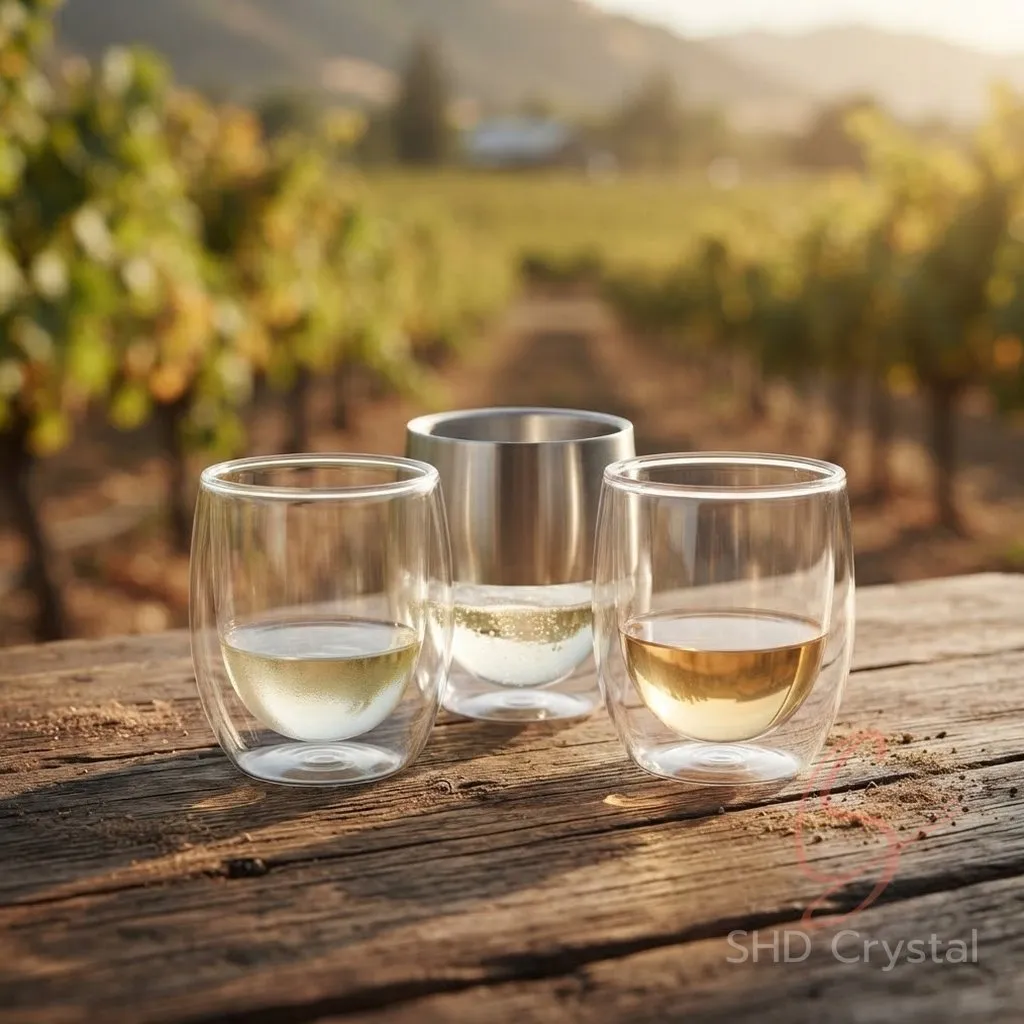
Construction Details and Trade-offs
The material choice is the first variable in any RFQ. Borosilicate glass offers excellent thermal shock resistance and a premium feel, making it a favorite for high-end hospitality; double-wall acrylic is nearly indestructible, which is why many event planners prefer it for outdoor settings where breakage is a real risk; and stainless steel provides maximum durability but loses the visual transparency that many wine drinkers expect.
Borosilicate vs. Acrylic vs. Stainless Steel
In practice, the trade-off is often between perceived value and operational cost. A luxury hotel might insist on borosilicate for its clarity and heat resistance, while a high-volume event venue might opt for acrylic to minimize replacement costs. A practical consideration is that borosilicate, while more durable against heat, is significantly heavier, which affects both shipping costs and the user’s experience.
Customization Methods
Choosing the right decoration method is critical for branded products. Screen printing is the most common for large runs, offering vibrant colors and a relatively low per-unit cost. Laser engraving provides a more premium, permanent finish, though it is limited to single-color designs. Acid etching creates a subtle, frosted look that is popular for high-end personalized insulated drinkware, but it requires careful control of chemical concentration and immersion time to ensure uniform opacity across a batch.
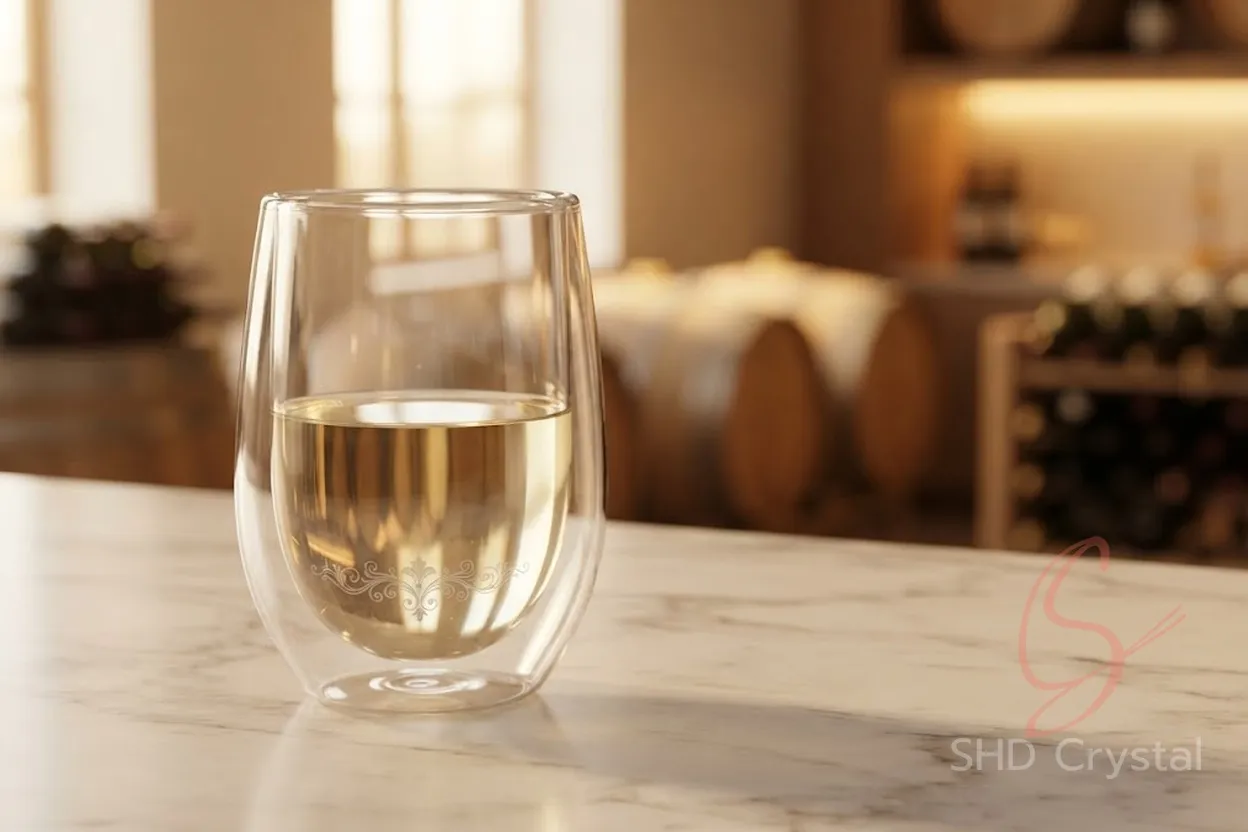
A beverage brand looking for custom wine tumblers for a seasonal promotion might choose screen printing and acrylic for durability, while a luxury brand might opt for laser engraving and borosilicate for a premium feel. The trade-off is often between the initial setup cost and the long-term perceived value of the product. Screen-printed glass shows edge wear well before etched glass needs replacement — the difference is measured in years of service, not weeks.
Procurement Pitfalls
Failing to account for the weight difference between materials. A batch of borosilicate glass cups will weigh significantly more than an equivalent batch of acrylic, which can lead to unexpected freight charges. Another pitfall is assuming that all double-wall construction is equal; the quality of the seal between the inner and outer walls determines both insulation performance and long-term durability. A smart move is to request samples and perform a simple thermal test before committing to a large order. It is also worth checking how the cups stack, as some custom wine tumblers are prone to "nesting" that can make them difficult to pull apart, slowing down service in a high-volume environment.
A factory with experience will warn you about the risks of poor seal integrity. A factory without will ship and let you find out after the first shipment arrives with condensation on the outer walls. Buyers should verify whether the supplier controls the full production chain — from blank forming to decoration — rather than subcontracting, as that integration directly affects timeline and quality. Buyers should request a full specification sheet that includes the wall thickness, seal method, and total weight before finalizing an order.
FAQ
What is the typical MOQ for insulated wine cups personalized from a Chinese factory?
MOQs vary by supplier and decoration method, but most suppliers accept custom orders starting at roughly 500 to 1,000 units. Higher-volume orders usually see a significant reduction in per-unit cost due to setup efficiencies.
How does double-wall borosilicate differ from acrylic for outdoor events?
Borosilicate glass offers better thermal clarity and a more premium feel, but it is heavier and more fragile than acrylic. For outdoor events where breakage is a concern, acrylic is generally the safer choice for custom wine tumblers.
What quality certifications should I look for when sourcing personalized insulated drinkware?
Buyers should look for factories that follow AQL standards for defect tiers. While specific ISO certifications are common, the more important factor is whether the supplier has a dedicated quality control team that performs inbound inspection on every batch.
Conclusion
Selecting the right insulated wine cups personalized for your needs requires a clear understanding of material trade-offs, decoration methods, and supply chain logistics. The better approach is usually to start with a smaller sample batch to verify both the product quality and the supplier's communication before committing to a full production run.
Start Your Custom Project
SHD Glassware works with a network of vetted factories to ensure consistent quality and competitive lead times for insulated wine cups personalized. Contact us to discuss your specifications and receive a tailored quote for custom wine tumblers or any other personalized insulated drinkware.
If you are interested in our glassware or related products,
please feel free to contact us.

