


Blogpost keywords: personalised beer cup, custom beer glass, personalized drinking glass
A personalised beer cup that fails to meet basic glass specifications is one of the most common procurement headaches in the promotional drinkware market.
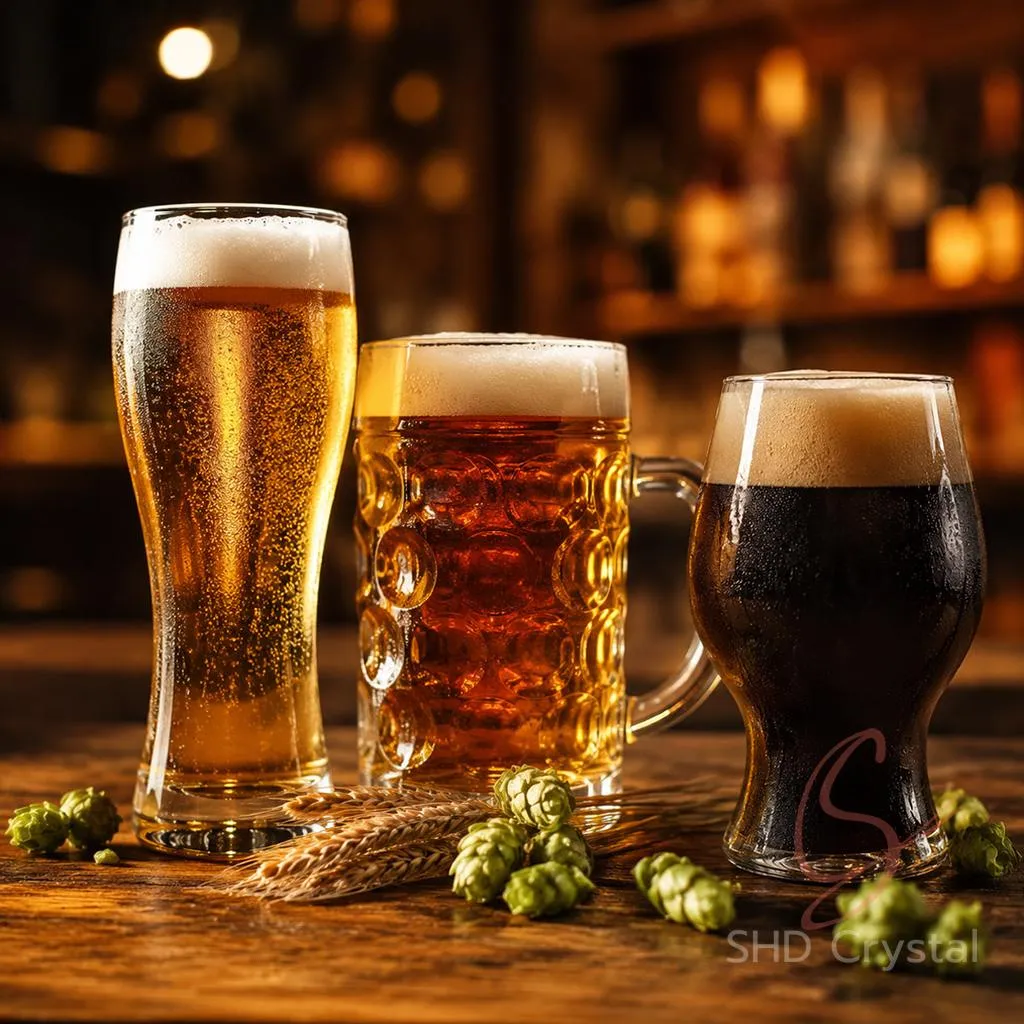
What Procurement Teams Get Wrong About Personalised Beer Cup Specifications
The most frequent mistake is focusing on logo placement while ignoring the glass itself. Procurement teams send artwork files and expect the supplier to handle the rest, but the real variable is the material. Soda-lime glass handles everyday use, borosilicate withstands thermal shock, and lead-free crystal delivers the clarity luxury brands expect.
A practical consideration is that the term standard glass means different things across factories. A supplier in Boshan, Shandong might interpret it as 2.5 mm wall thickness with a pressed rim, while a factory in Hebei produces the same catalog reference at 2.0 mm with a fire-polished edge.
How Decoration Method Affects Cup Durability
Decoration Method | Best For | Main Risk |
Acid Etching | Large batches, smooth frosted finish | Uneven opacity if bath temperature drifts |
Screen Printing | Vibrant multi-color logos, short runs | Edge wear after repeated dishwasher cycles |
Laser Engraving | Fine detail, permanent marking | Higher per-unit cost at scale |
Acid etching on a curved beer bowl needs careful chemical concentration control. If the bath temperature drifts or immersion time varies across a rack, the opacity turns uneven. A factory with experience will warn you before production starts.
Screen printing delivers eye-catching colors, but the ink sits on the glass surface rather than bonding into it. After enough dish cycles, printed edges show wear long before an etched design changes. For a custom beer glass headed to a high-traffic bar, that durability gap matters more than per-unit cost savings.
Material and Wall Thickness: The Variables That Matter Most
Wall thickness affects both the feel of the cup in hand and its survival rate in commercial dishwashers. Thin walls look elegant but chip easily when stacked. The better approach is usually to specify a minimum wall thickness in the RFQ and let the supplier propose the forming method.
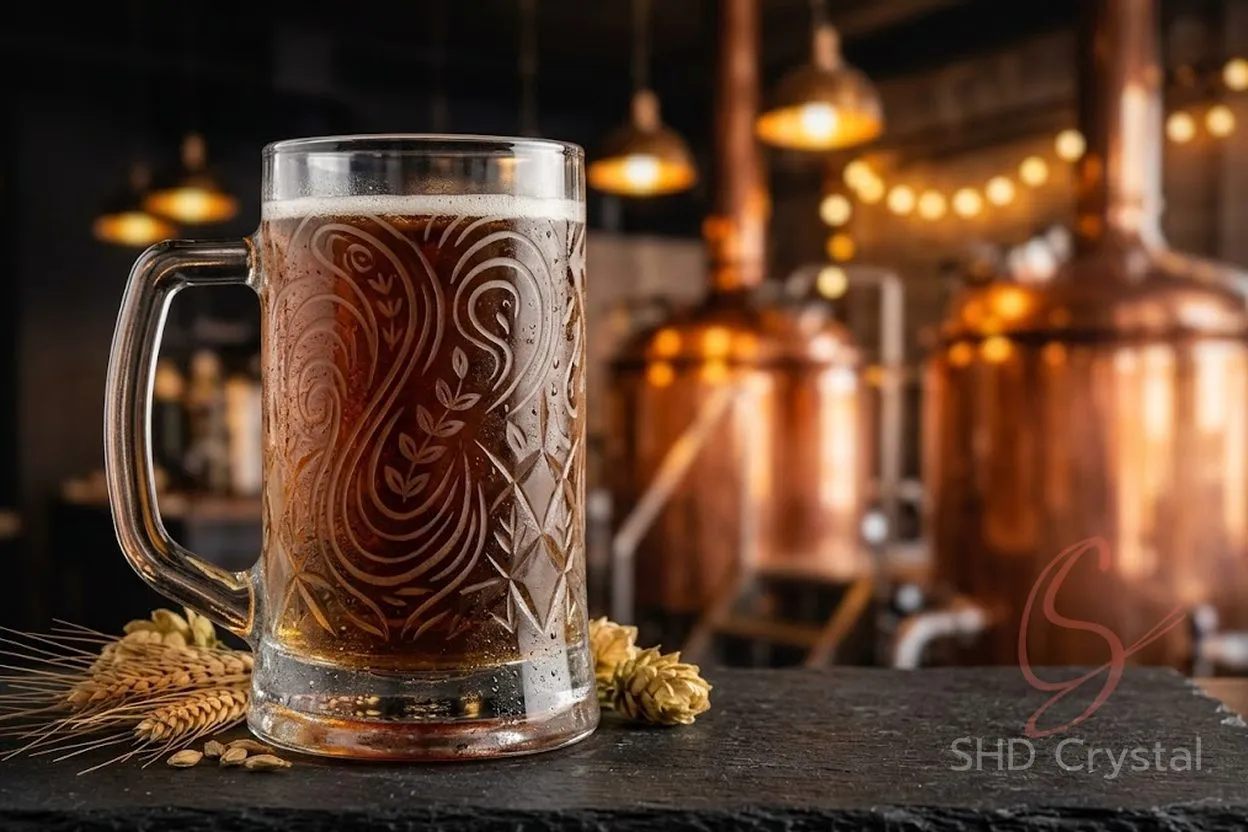
In practice, a hospitality group sourcing personalized drinking glasses for a chain of pubs might request 3.0 mm minimum wall thickness with a rolled rim. That specification steers the factory toward press molding on an IS machine rather than free-blown production, changing both unit cost and mold setup timeline.
Lead Times, MOQs, and What a Realistic Production Schedule Looks Like
Most Chinese glass factories separate forming from decoration. Blanks are produced in one workshop and transferred to a specialized etching or printing line, sometimes in another town. That separation affects lead times in ways that surprise buyers. Typical lead times run from three to six weeks depending on order volume and decoration complexity.
A common buyer mistake is assuming that a low MOQ means faster turnaround. Smaller orders often require the same mold setup and quality checks as larger runs, so per-unit time investment is higher. Rushing the schedule typically means compressed quality inspection windows, increasing the risk of defects slipping through.
FAQ
What is the typical minimum order quantity for custom beer glasses from Chinese manufacturers?
MOQs vary by factory and decoration method, but most suppliers set minimums between 500 and 1,000 units for acid-etched or laser-engraved designs. Screen printing may allow lower quantities since the setup is less involved.
How does acid etching compare to screen printing for durability?
Acid etching creates a permanent frosted finish by chemically altering the glass surface, so it does not peel or fade with regular use. Screen printing applies ink to the surface, which can wear down over time, especially in commercial dishwashers. For a personalized drinking glass that will see heavy daily use, etching is typically the more durable choice.
What quality certifications should I look for when sourcing custom beer glasses?
ISO 9001 certification indicates a documented quality management system, which is a reasonable baseline. For food-contact glassware, look for LFGB or FDA compliance documentation.
What wall thickness is recommended for commercial dishwasher use?
A minimum of 2.5 mm is a common recommendation for glassware that will undergo repeated commercial washing. Thinner walls may survive home dishwashers but chip or crack under commercial equipment.
Conclusion
Selecting the right personalised beer cup requires more than picking a shape and uploading a logo. Material choice, wall thickness, and decoration method all interact in ways that affect durability, cost, and delivery timelines.
Ready to Source Your Next Batch of Drinkware?
Whether you need a personalised beer cup for a hospitality rollout or a personalized drinking glass for a brewery branding program, SHD Glassware works with buyers to match material, decoration, and production methods to each project. Reach out to discuss specifications, request samples, or review your current RFQ approach.
If you are interested in our glassware or related products,
please feel free to contact us.

