


Blogpost keywords: personalized friends wine glasses, custom wine glasses, engraved wine glasses
Personalized friends wine glasses remain one of the most popular gift categories across retail, hospitality, and corporate gifting channels, yet buyers frequently underestimate how many variables separate a well-made engraved piece from a mediocre one that chips after a few uses.
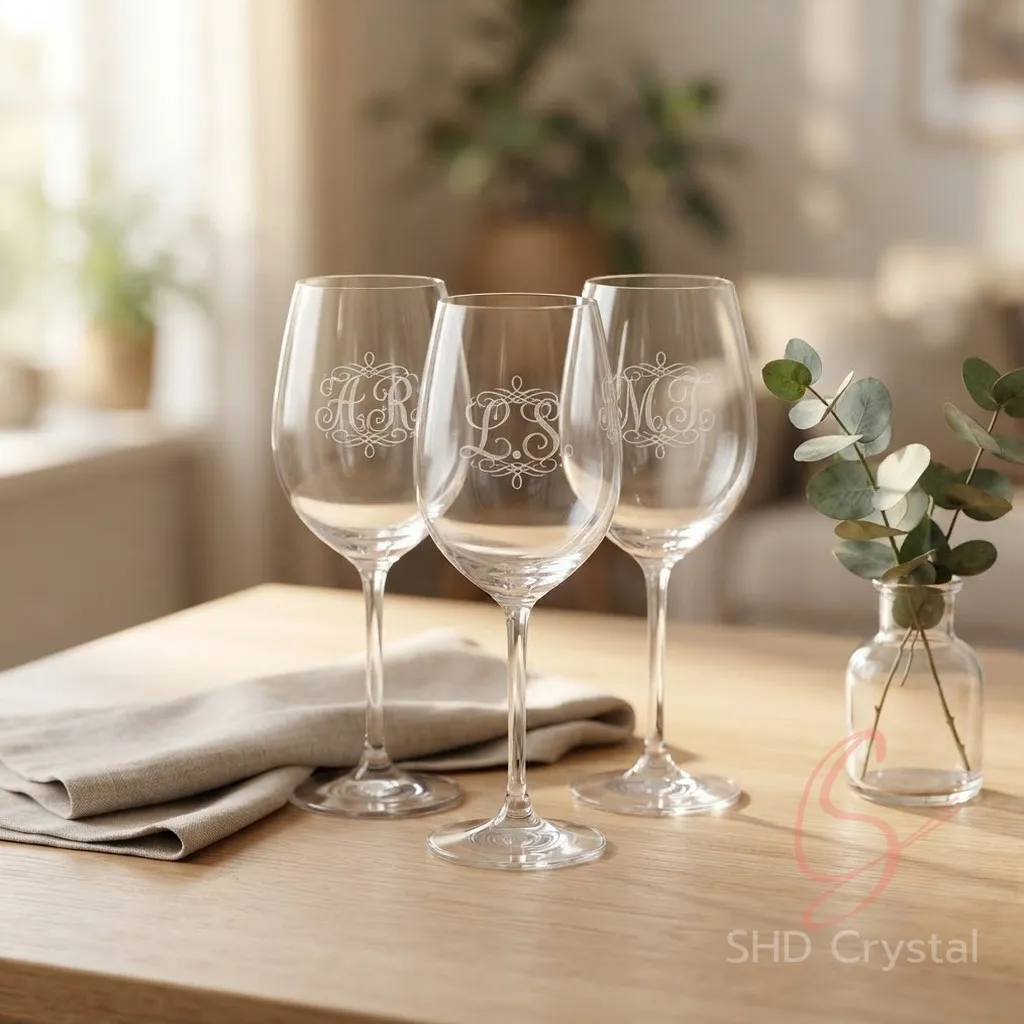
Why Personalized Friends Wine Glasses Attract Different Buyers
The demand for personalized friends wine glasses spans distinct buyer profiles. Event planners order them for bridal showers and milestone birthdays. Wine clubs use them as member gifts. Corporate sourcing teams include them in client appreciation packages. Each buyer cares about slightly different attributes — but the core evaluation criteria overlap more than most people expect.
A common mistake is treating all custom wine glasses as interchangeable. A screen-printed logo on a restaurant-grade tumbler serves a different purpose than a sandblasted monogram on a crystal stem. The decoration method, the base glass type, and the intended use cycle all affect which product makes sense. Choosing without understanding these variables often leads to reorders, returns, or gifts that disappoint.
Decoration Methods: What Each Technique Actually Delivers
Three decoration methods dominate the personalized wine glass market. Each produces a distinct look and carries different trade-offs in cost, durability, and minimum order quantity — and choosing the right one for custom wine glasses depends on both the design complexity and the volume of the order.
Method | Best For | Main Risk |
Laser engraving | Fine detail, small runs, custom names | Higher per-unit cost at volume; deeper cuts can weaken thin walls |
Sandblasting | Bold logos, deep texture, premium feel | Microfractures on curved surfaces if blast pressure is uncontrolled |
Screen printing | Large batches, full-color designs, low cost | Wears off with frequent washing; not dishwasher-safe long term |
Laser engraving tends to be the default recommendation for engraved wine glasses meant as personal gifts. It handles names, dates, and small illustrations well, and the mark becomes part of the glass surface rather than sitting on top. For personalized friends wine glasses specifically, the fine detail capability of laser engraving makes it possible to include individual names without compromising the glass structure. Sandblasting suits buyers who want a bolder, more tactile result — think wine club logos or resort branding — but the process requires tighter quality control to avoid surface damage. Screen printing makes sense only when the piece is disposable or promotional. It delivers color flexibility at low cost, but the design fades quickly under commercial dishwashing conditions.
Glass Material Choices and Their Practical Implications
Soda-lime glass handles everyday use and keeps costs modest. Borosilicate glass resists thermal shock, which matters for pieces that move between cold storage and warm serving environments. Lead-free crystal delivers the clarity and weight that premium gift buyers expect, though it demands more careful handling during production and shipping.
In practice, the choice of material drives everything downstream — the engraving depth, the packaging requirements, and the fragility risk during transit. Engraved wine glasses made from lead-free crystal, for example, demand gentler handling and more protective packaging than soda-lime equivalents, and the per-unit cost reflects that. A crystal stem with a laser-engraved monogram is far more sensitive to drop impact than a thick-walled soda-lime tumbler. Buyers should match the material to the use case rather than defaulting to whatever looks best in a catalog photo.
What Procurement Teams Overlook in Personalized Wine Glass Orders
Several factors trip up even experienced buyers when ordering custom wine glasses. First, sample approval does not always predict bulk consistency. A sample engraved on one machine may come from a different line than the production run. Asking whether the same equipment and operator handle both is a reasonable request.
Second, packaging for personalized pieces demands more attention than for plain glassware. Custom wine glasses with engraved or printed surfaces are more vulnerable to surface abrasion during transit. Individual tissue wrapping or foam inserts are not luxury add-ons — they are practical necessities for any order where presentation matters.
Third, lead times for personalized items typically run longer than for standard stock. The personalization step adds production days, and any artwork proofing process introduces additional back-and-forth. A sourcing manager planning a holiday gift campaign should build in a buffer of several weeks beyond the quoted lead time.
The Misconception That Personalization Equals Premium Quality
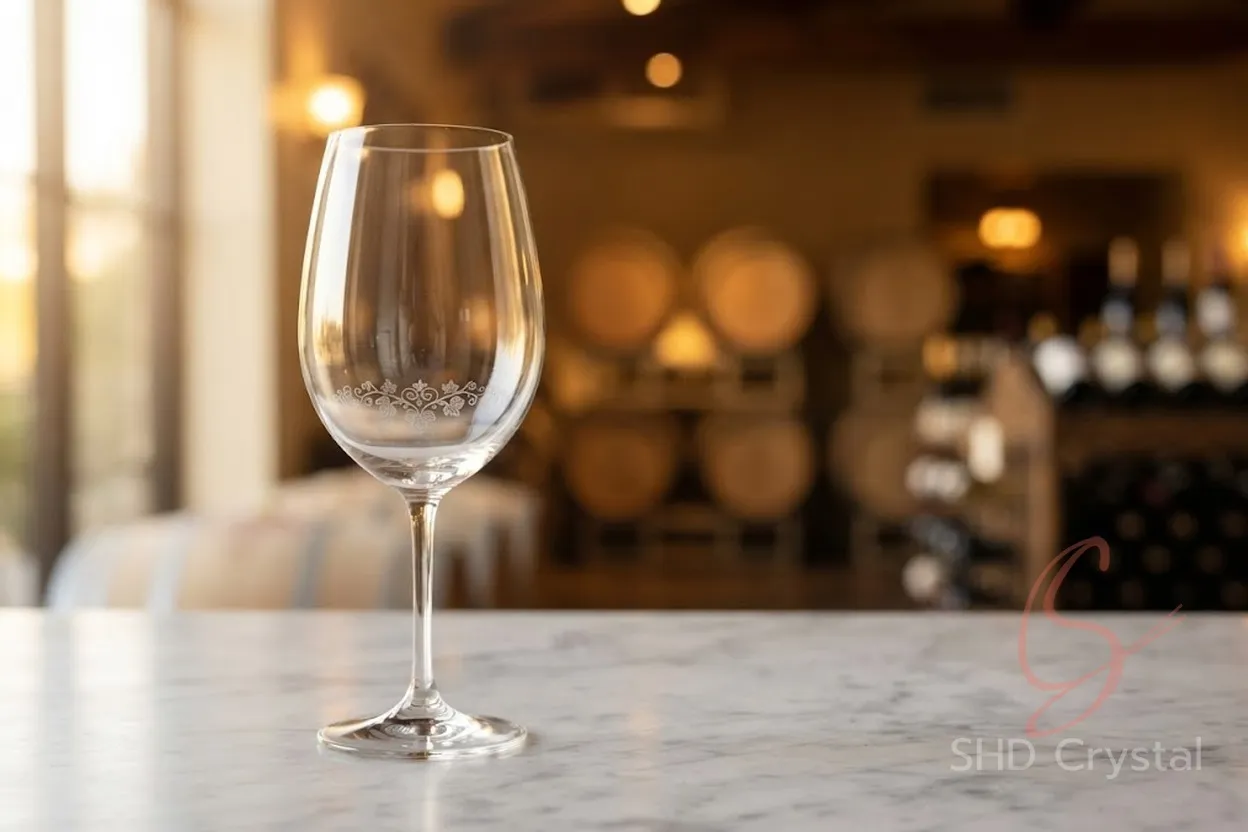
A frequent buyer assumption is that adding personalization automatically elevates the product. It does not. The base glass must meet the quality standard first — the engraving or print sits on top of that foundation. Personalized friends wine glasses that look premium in photos may still have visible mold lines, uneven walls, or inconsistent weight, and those flaws communicate the opposite of what the buyer intended.
A more useful question might be: does the supplier control both the blank production and the decoration in-house, or does one step get subcontracted? When custom wine glasses are produced this way — blanks manufactured in one facility and sent to a separate workshop for engraving — quality consistency becomes harder to guarantee. That matters because alignment, depth, and finish all depend on handoff precision between the two stages.
FAQ
What is the typical minimum order quantity for personalized friends wine glasses from Chinese manufacturers?
MOQs vary widely depending on the decoration method and glass type. Laser-engraved pieces may start at lower quantities than screen-printed orders, since laser setups are more flexible. Many suppliers offer sample runs of a few dozen pieces before committing to a full production order.
How does laser engraving compare to sandblasting for engraved wine glasses?
Laser engraving produces finer detail and works well for names, dates, and small logos. Sandblasting creates a deeper, more tactile texture but carries a higher risk of surface microfractures if the process is not carefully controlled. For personal gifts, laser-engraved wine glasses are usually the safer choice.
Can custom wine glasses be safely shipped internationally without damage?
Yes, but packaging must account for the fragility of decorated glass. Individual wrapping, foam inserts, and sturdy outer cartons are standard for export orders. Buyers should request drop-test results or packaging specifications before confirming a bulk shipment.
What quality certifications should buyers look for when sourcing personalized friends wine glasses?
ISO 9001 certification covers general quality management systems. For food-contact glassware, LFGB or FDA compliance is relevant depending on the destination market. Buyers should also request AQL inspection reports from the production facility.
Conclusion
Selecting personalized friends wine glasses comes down to matching decoration method, glass material, and intended use to the buyer's actual needs rather than defaulting to the cheapest or most visually striking option. The difference between a gift that gets used for years and one that sits in a cabinet often traces back to decisions made at the sourcing stage. Buyers who invest time in understanding these variables — and who communicate clearly with their suppliers about expectations — consistently end up with better outcomes.
A Starting Point for Your Next Sourcing Decision
When the goal is to source personalized friends wine glasses that balance quality, presentation, and cost, working with a supplier who handles both blank production and decoration under one roof reduces the variables that cause quality drift. SHD Glassware works with buyers across retail, hospitality, and gifting channels to align glass type, decoration method, and packaging with the specific use case. If evaluating options for an upcoming order, requesting production samples from multiple decoration methods on the same glass style can provide the direct comparison needed to make a confident decision.
If you are interested in our glassware or related products,
please feel free to contact us.

