


Blogpost keywords: printed glass mugs, custom printed drinkware, screen printed glass cups
Printed glass mugs sit at the intersection of drinkware durability and brand presentation, but sourcing them involves more variables than most procurement teams expect. A buyer who defines material specs, decoration limits, and quality checkpoints before engaging suppliers avoids the disappointment of receiving mugs that differ from the approved sample.
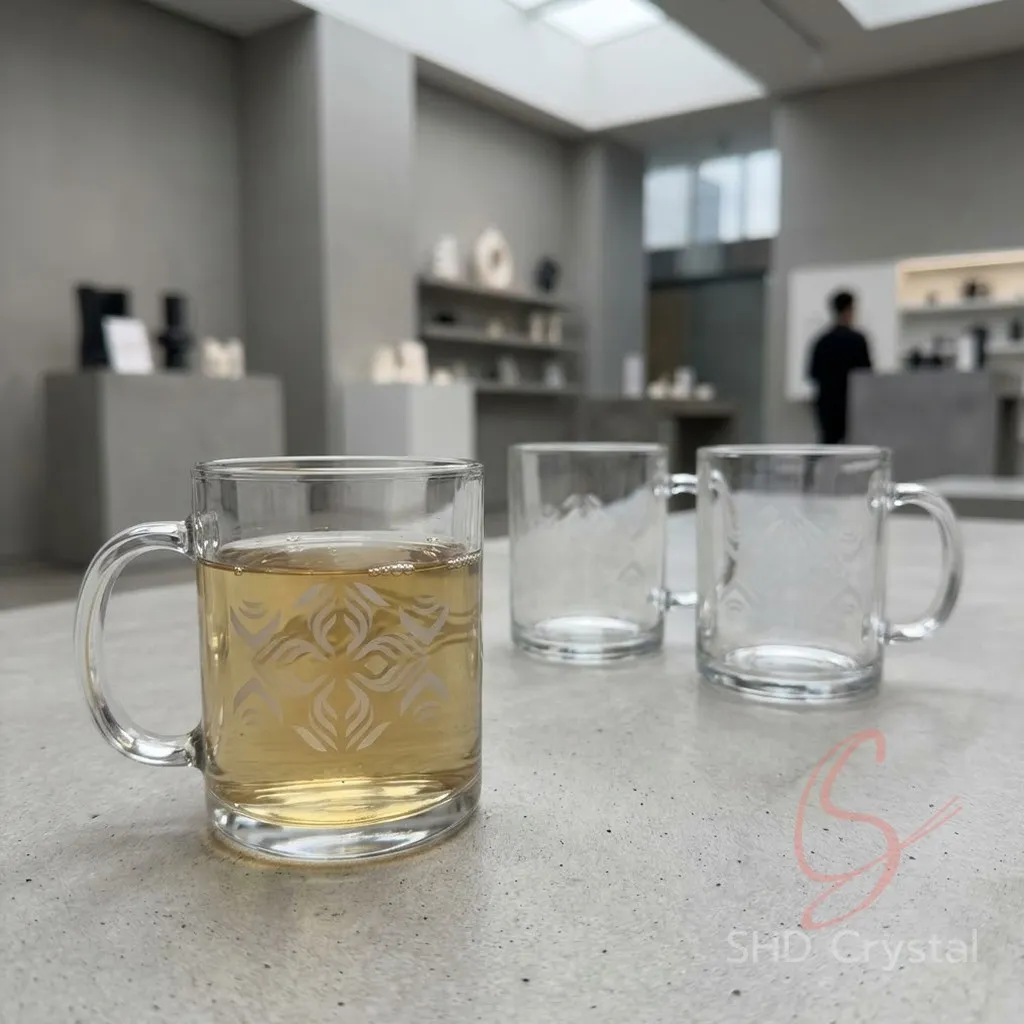
Why Printed Glass Mugs Are Not as Simple as They Look
On paper, the process seems straightforward: choose a shape, select a printing method, approve a proof. In practice, each decision interacts with others in ways that affect cost, durability, and visual consistency. A handle that feels proportional on a sample may feel awkward at scale. A color that matches perfectly may shift under factory firing conditions.
The end-use environment and material selection both drive the outcome. Mugs destined for a brewery taproom face daily handling, commercial dishwashers, and stack storage — very different demands than corporate gift mugs prioritizing unboxing presentation. Soda-lime glass is the standard for high-volume orders, borosilicate offers better thermal shock resistance, and crystal provides superior clarity at higher cost. Custom printed drinkware buyers should weigh these trade-offs against their target market.
Decoration Methods for Printed Glass Mugs Compared
Choosing the right decoration method is one of the most consequential decisions in a printed glass mugs order. Each approach has production trade-offs buyers should understand before committing.
Method | Best For | Main Limitation |
Screen printing | High-volume orders, bold single-color logos | Surface ink can wear with heavy dishwasher use |
Laser engraving | Permanent marks, detailed designs, small text | Shallower than etching, less tactile feel |
Acid etching | Frosted premium appearance, large surface areas | Requires precise chemical control for consistency |
Decal application | Full-color artwork, complex multi-color designs | Potential lifting at edges with thermal cycling |
Screen printed glass cups remain the most common choice for promotional and hospitality orders. The ink sits on the surface and prints quickly at scale, keeping per-unit decoration costs low. The trade-off is durability: surface-applied ink shows edge wear after repeated commercial dishwasher cycles, especially on handles and high-contact areas. For orders where longevity matters more than initial cost, laser engraving or acid etching is typically the better investment.
Combining methods — pairing screen printing with acid etching on a single mug, for example — creates visual depth but adds production complexity. The two processes must be sequenced correctly to avoid damaging the first decoration. Buyers should confirm the factory has experience running combined orders.
Glass Quality and Production Variables That Affect Print Results
The glass forming process introduces variation that affects print registration. Different cavities on an IS machine produce subtle dimensional differences, and decoration applied to out-of-tolerance blanks results in off-center logos. Specifying AQL 2.5 for dimensional checks alongside print placement verification gives buyers real leverage during inbound inspection.
Custom printed drinkware orders also require attention to glass thickness. Thinner walls reduce material cost but increase breakage risk during the printing process, especially under screen-printing pressure. A fire-polished rim is typically the safer choice for high-traffic commercial environments, as it resists chipping better than a cut rim.
Pricing, Lead Times, and What a Quote Does Not Tell You
Pricing involves multiple cost layers that a simple per-unit quote does not reveal. Mold fees, color-matching charges, setup fees, and packaging costs all affect the final invoice. Requesting a complete cost breakdown before committing prevents surprise charges.
Minimum order quantity reflects more than production economics. MOQ signals how a factory allocates production slots and manages changeover time. A new mug shape requires mold investment that must be amortized across units. Buyers who push for low MOQs on custom shapes typically see the per-unit price climb to compensate.
Lead time is another area where expectations need calibration. A factory quoting fifteen working days may not include time for color proofing, mold preparation, or quality inspection. Clarifying whether the quoted lead time covers the entire process from PO to packed cartons, or just the forming stage, prevents scheduling conflicts.
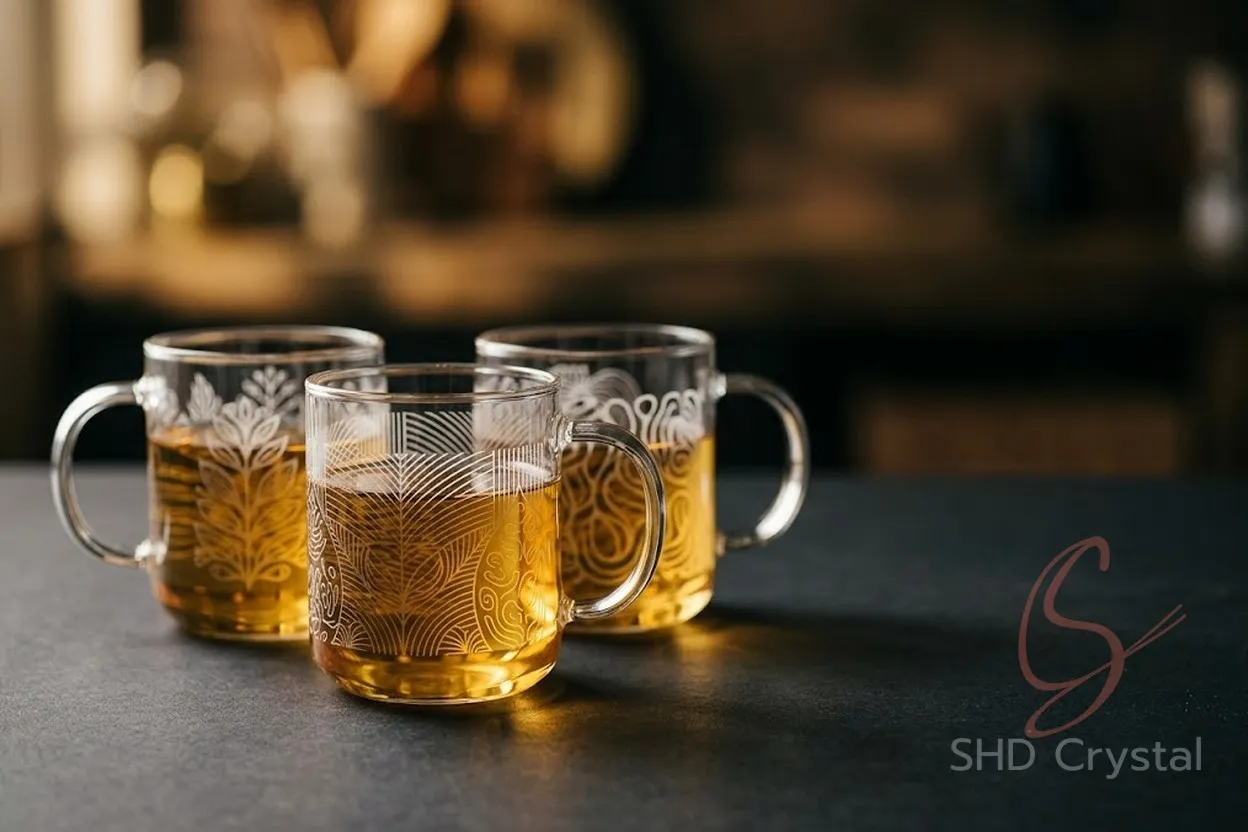
That depends heavily on whether the supplier controls the full production chain. In many Chinese glass manufacturing regions, forming happens in one facility while decoration is outsourced to a specialized printer in another town. For custom printed drinkware with tight deadlines, an integrated supplier is generally the safer choice.
Packaging and Logistics for Screen Printed Glass Cups
Packaging is not a detail to delegate to the supplier's discretion. Each mug should be individually wrapped, with dividers preventing glass-to-glass contact inside the carton. Double-walled cartons and palletized loading protect mugs during ocean freight. Specifying packaging requirements in the purchase order, including drop-test standards, significantly reduces damage rates.
A practical check during receiving: examine the mugs at both ends of the pallet. Compression damage typically affects the bottom cartons most, and those are the ones a cursory inspection might miss. Sampling from multiple cartons gives a more accurate picture than inspecting only the top layer.
FAQ
What is the typical MOQ for printed glass mugs from Chinese manufacturers?
Minimum order quantities vary by mug shape and decoration complexity. Standard shapes with screen printing typically start around 1,000 to 3,000 units, while custom molds may require higher volumes to justify tooling investment. Buyers should request MOQ details early in the quoting process.
How do screen printed glass cups hold up in commercial dishwashers?
They withstand commercial dishwashers reasonably well when cured at proper temperatures, but the surface ink gradually shows wear over time, particularly around handles and high-contact edges. For aggressive cleaning cycles, laser engraving or acid etching offers better long-term durability.
What quality certifications should I look for when sourcing printed glass mugs?
ISO 9001 certification indicates a documented quality management system. For food-contact glassware, lead-free and cadmium-free compliance is essential for North American and European markets. Request test reports from accredited laboratories before committing to production.
Conclusion
Sourcing printed glass mugs rewards thorough preparation. Buyers who define material requirements, understand the trade-offs between decoration methods, and specify quality checkpoints before requesting quotes consistently get better results than those chasing the lowest unit price. The real advantage lies in finding a supplier that controls the full chain — from blank production through decoration to packaging — rather than outsourcing critical steps.
Next Steps for Your Mug Project
If you are evaluating printed glass mugs, custom printed drinkware, or screen printed glass cups for an upcoming initiative, sharing your specifications and volume requirements with an experienced supplier can help identify the right production approach.
If you are interested in our glassware or related products,
please feel free to contact us.

