


Blogpost keywords: wholesale iced coffee cups, custom glass tumblers, glass tumbler wholesale
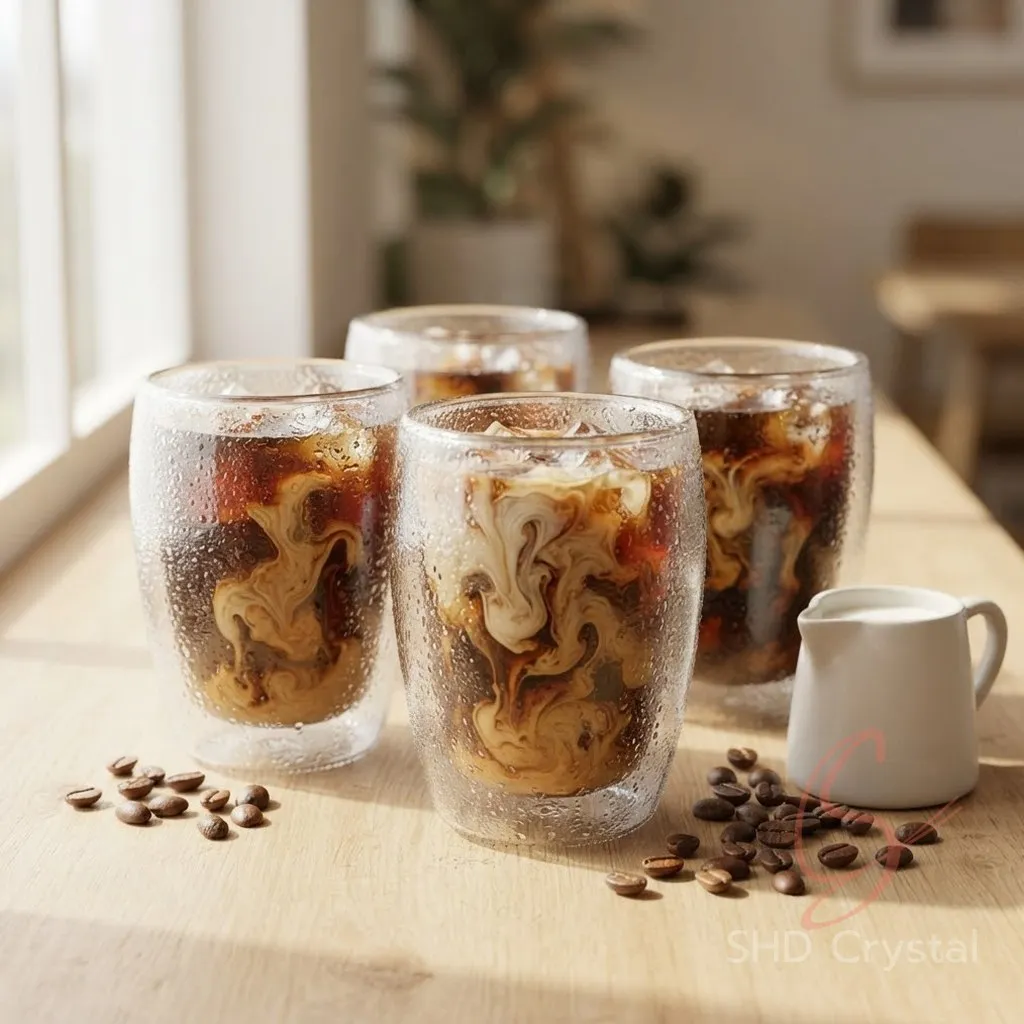
Wholesale iced coffee cups represent one of the most overlooked procurement categories in the foodservice supply chain — yet the sourcing decisions made here ripple through brand perception, customer experience, and operational costs. For procurement teams evaluating suppliers and comparing specifications, the challenge is not finding options. It is distinguishing between glassware that will hold up under daily service and glassware that will crack, chip, or disappoint within months.
Why Wholesale Iced Coffee Cups Deserve More Procurement Attention
Iced coffee has moved from a seasonal menu item to a year-round revenue driver for cafes, restaurants, and hospitality groups across North America. That shift means the vessels holding those drinks are no longer afterthoughts. They are brand touchpoints. Custom glass tumblers with a logo or distinctive shape can reinforce a brand identity that paper cups and plastic alternatives simply cannot match.
For sourcing teams, the practical reality is that glassware procurement involves more variables than most buyers expect. Wall thickness, rim finishing, lid compatibility, and packaging methods all affect whether the product arrives intact and performs reliably in service. A glass tumbler wholesale order that looks competitive on unit price can become expensive fast if breakage rates climb or aesthetic quality falls short of the brand's standards.
The better approach is usually to start with the end-use scenario before comparing quotes. A hotel chain sourcing for in-room beverage service has different tolerances than a quick-service coffee franchise handling hundreds of transactions per day. Understanding that distinction upfront saves time and prevents costly re-orders.
Materials and Construction — What Actually Matters
Selecting the right material for wholesale iced coffee cups is not simply a matter of choosing between glass and plastic. Within glass alone, several distinct compositions serve different purposes, and each carries trade-offs that matter in real-world service.
Material | Strengths | Limitations |
Soda-lime glass | Low cost, wide availability, easy to decorate | Poor thermal shock resistance, heavier per unit |
Borosilicate glass | Thermal shock resistant, lightweight, durable | Higher unit cost, fewer decoration methods available |
Crystal / lead-free | Premium clarity, perceived value, brand lift | Highest cost, fragile, regulatory compliance needed |
Soda-lime glass handles everyday use and is widely available from manufacturers in China's major glass clusters — Boshan in Shandong and Hebei province being two of the most prominent. It offers reasonable durability at lower cost but does not tolerate thermal shock well. A hot espresso shot poured directly into a cold soda-lime cup can crack the glass, which is a real concern for mixed-temperature beverage service.
Borosilicate glass withstands temperature changes far more effectively, making it the preferred option for iced coffee cups that may come into contact with hot liquids. The material also tends to be lighter, which some end-users prefer. The trade-off is a slightly higher per-unit cost and fewer decoration options compared to soda-lime.
Crystal and lead-free crystal deliver premium clarity and weight that luxury brands expect. Lead crystal is increasingly restricted in many markets, so buyers should verify compliance with applicable regulations before placing orders.
Plastic alternatives like Tritan or acrylic reduce breakage risk considerably, which matters for high-traffic environments and outdoor service. The trade-off is durability versus perceived quality — plastic feels less premium to most consumers even when it performs better mechanically. In practice, the choice between glass and plastic often comes down to whether the brand prioritizes the drinking experience or operational resilience.
Customization and Decoration Methods for Custom Glass Tumblers
Decoration is where product differentiation happens, and it is also where procurement teams face the widest variation in supplier capability. Screen printing, acid etching, and laser engraving each produce distinctly different results, and not every factory handles all three in-house.
Screen printing remains the most common method for high-volume branded glassware. It delivers consistent color reproduction and handles multi-color logos effectively. The limitation is durability — screen-printed designs show edge wear well before etched glass needs replacement, and the difference becomes noticeable after repeated commercial dishwashing cycles.
Acid etching produces a frosted, permanent finish that reads as premium. It works well for understated branding where texture and tactile quality matter more than vivid color. The challenge is consistency across production batches. If bath temperature drifts or immersion times vary across a rack, opacity turns uneven and the logo looks patchy in direct light.
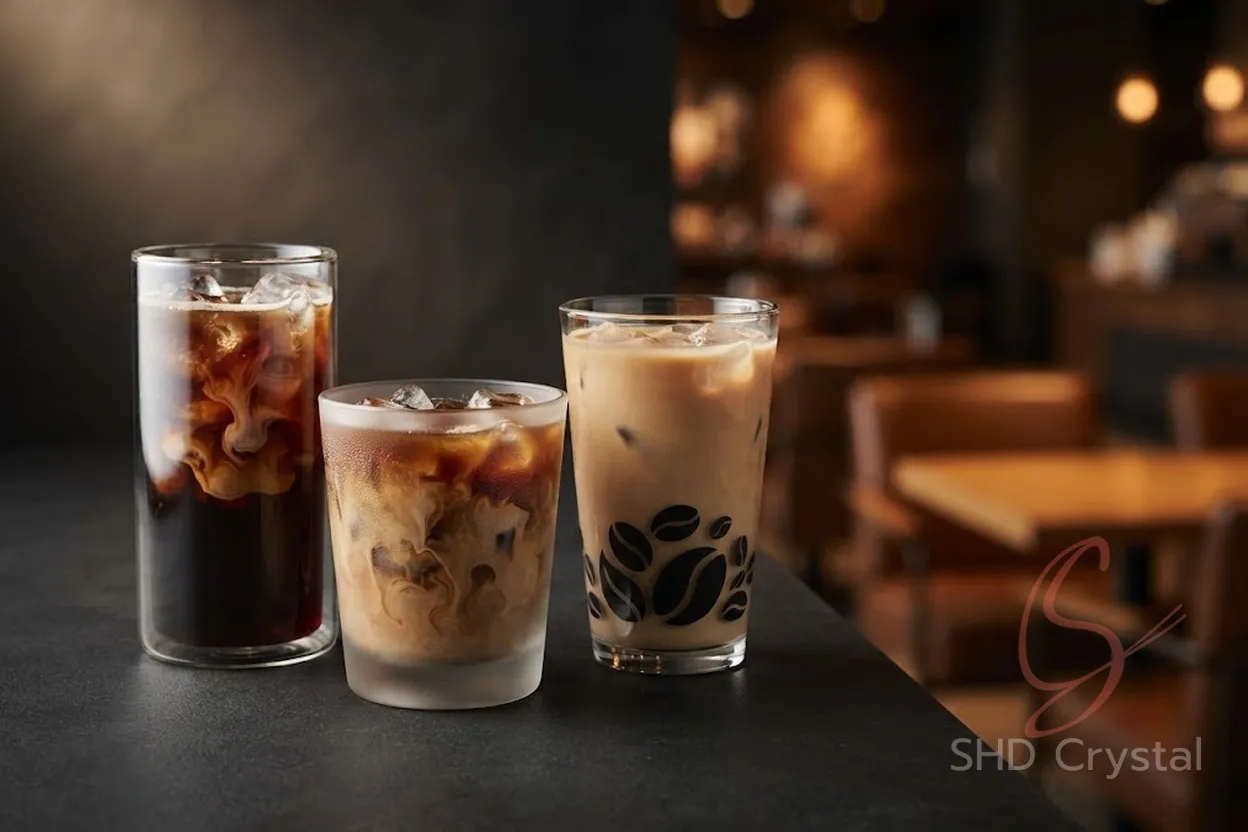
Laser engraving handles fine detail and suits smaller production runs where per-unit cost is less critical than precision. It also avoids the chemical handling concerns associated with acid etching. A practical consideration is that engraved designs on curved surfaces require careful calibration — the laser focal distance changes as the beam moves across the glass contour.
The real question is not which method looks best in a sample, but which will hold up under the actual service conditions the cups will face. Buyers should request samples finished with each proposed method and run them through their standard dishwashing protocol before committing to a production order.
Supply Chain Logistics and Order Quantities
Order quantity decisions shape everything from unit cost to delivery timeline. Most Chinese glass manufacturers set minimum order quantities for standard designs that are accessible to mid-size buyers, but custom molds or unique finishes push thresholds higher. Tooling fees for bespoke shapes are a one-time expense amortized across the order, so larger volumes reduce the effective per-unit tooling cost.
Lead times from Chinese factories typically run three to six weeks for standard products, with custom orders extending beyond that. Chinese production clusters matter here — Boshan in Shandong and Hebei province host concentrated glass manufacturing ecosystems where forming, decoration, and packaging often happen within the same region. Factories with in-house decoration capabilities tend to offer faster turnaround than those outsourcing etching or printing to external workshops.
Shipping costs can quietly erode the margin advantage of a lower unit price. Glass is heavy and fragile — export carton specifications, inner partition design, and pallet configuration all affect breakage rates in transit. A responsible supplier will share packaging specifications proactively, and buyers should review them before finalizing purchase orders.
Consider this scenario: a specialty beverage brand sources iced coffee cups with a custom frosted logo and embossed base. The factory handles blank forming and etching in-house, but the embossing die requires a separate tooling run. Two weeks of coordination between the forming line and the tooling workshop adds to the timeline and introduces a quality-checkpoint that a fully integrated operation would not require. A glass tumbler wholesale order from a factory controlling the full production chain — blank forming, decoration, and packaging — typically avoids these coordination gaps.
Evaluating Suppliers Beyond the Quote
Price comparisons are necessary but insufficient. Experienced procurement teams evaluate suppliers on production capacity, quality control systems, sample availability, decoration capabilities, and communication responsiveness. A lower quote from a factory that cannot deliver consistent quality or meet lead-time commitments is not actually cheaper — it is a different kind of risk.
Sample evaluation is a critical step that many buyers rush through. When reviewing wholesale iced coffee cups samples, check wall thickness consistency, the base-to-wall junction for stress points, color uniformity across the batch, lid fit precision, and surface finish quality. Run your fingernail across any etched or engraved edge — a sharp transition suggests the finishing depth may be too aggressive.
Quality certifications and defect-rate tracking provide useful context, but they are starting points, not guarantees. AQL inspection standards help quantify acceptable defect levels, yet the real test is whether a factory catches and addresses issues during its own internal checks before samples reach the buyer.
Many buyers overlook the packaging stage, which is where a surprising number of high-quality glassware orders go wrong. Scratched surfaces, chipped rims, and crushed cartons arrive at the receiving dock because inner partitions were insufficient or export cartons did not meet the stacking requirements for the chosen freight mode. It may help to request a packed-sample shipment that mirrors the actual production packaging before approving a full order.
Common Mistakes When Sourcing Glass Tumbler Wholesale
Several patterns recur across procurement teams evaluating glass tumbler wholesale options. The first is choosing suppliers based on unit price alone without verifying production capacity and quality systems. A factory offering aggressive pricing may be running at maximum capacity, which increases the risk of quality drift during peak production periods.
The second mistake is skipping the sample stage or accepting pre-production samples that were not made on the actual production line. Factory samples sometimes come from a different setup than the one that will run the order, which means they may not accurately represent what arrives in the shipping carton.
The third is underestimating logistics costs and timelines. Glass shipping involves freight class considerations, insurance, and customs documentation that add both time and expense. When comparing landed costs across suppliers, the total cost picture — including packaging, freight, duties, and potential re-work — tells a more accurate story than the FOB price alone.
Another common oversight is failing to clarify decoration methods upfront. Some factories subcontract etching or printing to external workshops, which extends lead times and introduces quality-control gaps. Buyers should ask directly whether the supplier controls the full production chain or relies on outside vendors for decoration work.
FAQ
What is the typical MOQ for wholesale iced coffee cups from Chinese manufacturers?
MOQs vary by factory and product complexity. Standard iced coffee cup designs often have MOQs starting around five hundred to one thousand pieces. Custom shapes, unique finishes, or specialized lid requirements may increase the minimum. Buyers should request MOQ details early in conversations with potential suppliers to avoid wasting time on mismatched expectations.
How long does it take to receive custom glass tumblers after placing an order?
Lead times depend on order volume, complexity, and whether the factory runs decoration in-house. Standard production typically requires three to six weeks, with custom orders sometimes extending beyond that. Rush timelines are possible but usually carry a cost premium. Planning ahead keeps budgets intact.
What quality certifications should I look for when sourcing glassware?
ISO 9001 certification indicates a quality management system is in place. FDA compliance matters for food-contact glassware destined for the US market. Buyers should also inquire about AQL inspection standards and defect-tier definitions, which provide a structured framework for evaluating production quality.
How do glass and plastic iced coffee cups compare for wholesale orders?
Glass delivers a premium look and feel that enhances the drinking experience, which matters for cafes and restaurants building a specific brand image. Plastic cups handle drops and outdoor conditions better, making them practical for high-traffic or outdoor settings. The cost gap at wholesale volumes is often modest, so the choice usually comes down to brand strategy rather than unit economics.
Can suppliers add custom logos to glass tumbler wholesale orders?
Most Chinese glassware manufacturers offer logo customization through screen printing, acid etching, or laser engraving. Each method has different durability and cost characteristics. Buyers should specify their preferred method and request samples to evaluate the finish quality before committing to a production run.
Conclusion
Sourcing wholesale iced coffee cups is a procurement exercise that rewards careful planning and clear specifications. The differences between glass types, decoration methods, and supplier capabilities are significant enough that the cheapest option on paper often proves expensive in practice. By evaluating materials against end-use requirements, verifying supplier capabilities beyond the quote, and planning logistics with realistic timelines, procurement teams can build glassware programs that serve their brands well and their customers reliably.
Partnering With the Right Glassware Supplier
SHD Glassware works with procurement teams navigating the complexities of sourcing wholesale iced coffee cups, from initial specification development through production and export packaging. Their experience across soda-lime, borosilicate, and crystal glass types, combined with in-house decoration capabilities, positions them to support buyers seeking custom glass tumblers and glass tumbler wholesale solutions tailored to specific brand and operational requirements.
If you are interested in our glassware or related products,
please feel free to contact us.

