


Blogpost keywords: wine cups personalized, custom wine glasses, personalized crystal wine cups
Wine cups personalized with laser engraving, acid etching, or screen printing have become a staple product category for distributors, hospitality groups, and corporate gifting companies sourcing from Chinese glass manufacturers. The demand reflects a broader shift: buyers no longer settle for off-the-shelf drinkware when branded or commemorative pieces can reinforce identity at relatively modest cost.
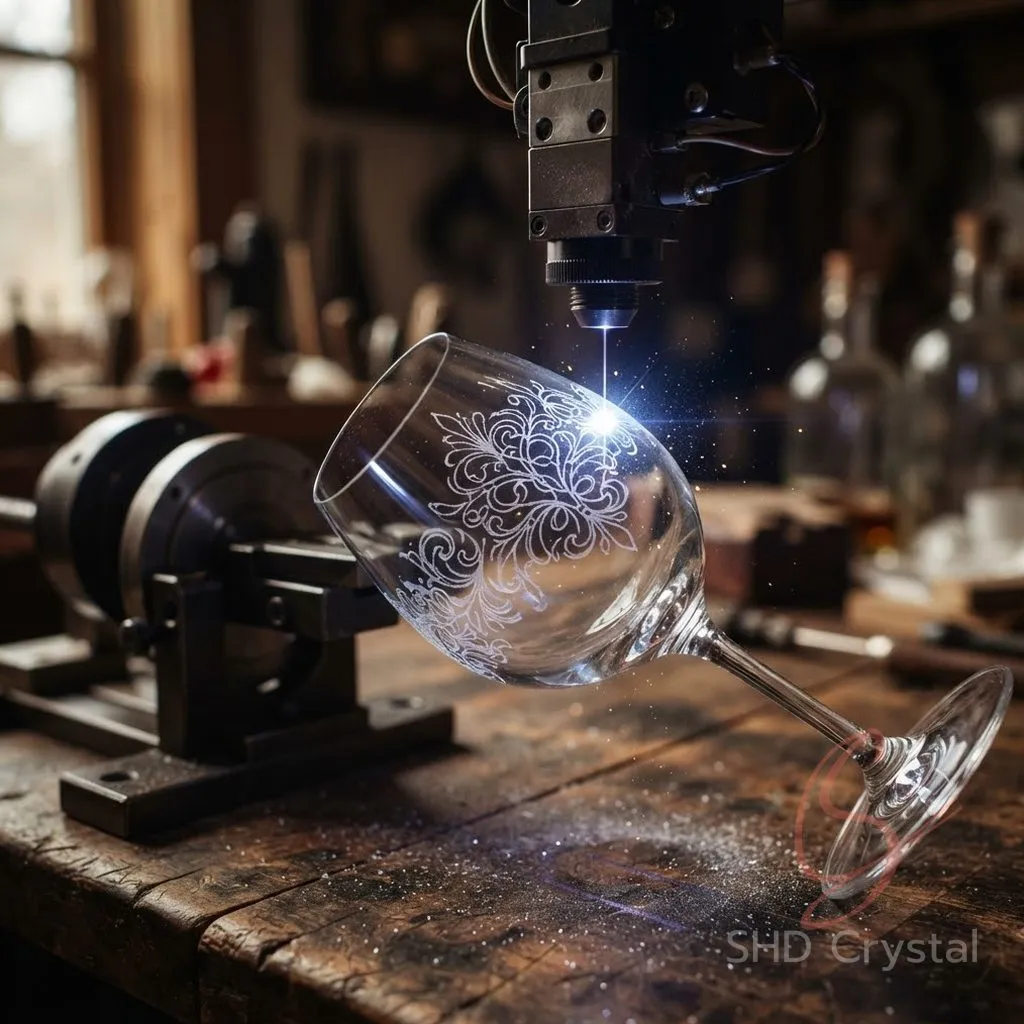
Why Wine Cups Personalized Suit a Wide Range of Buyers
The appeal of wine cups personalized for bulk orders goes beyond aesthetics. A hotel chain refreshing its barware, a winery packaging tasting sets, or a corporate events team ordering gifts for a product launch—each scenario calls for the same core requirement: consistent decoration across hundreds or thousands of units without sacrificing visual quality.
Custom wine glasses in this category are typically formed from soda-lime glass, borosilicate, or lead-free crystal. Soda-lime remains the most common material for mid-range applications, valued for its cost efficiency and acceptable clarity. Borosilicate offers thermal shock resistance that matters in settings where glasses move between cold storage and warm service. Lead-free crystal, meanwhile, delivers the brilliance and light refraction that premium hospitality brands expect—though the per-unit cost reflects that advantage.
In practice, the decoration method tends to matter more than the glass material when buyers evaluate long-term value. A laser-engraved logo holds up through hundreds of dish cycles, while a screen-printed design may show edge wear much sooner. The right choice depends on how the glasses will be used, how often they are washed, and what visual standard the brand requires.
Decoration Methods and What Each One Demands
Method | Best For | Main Risk |
Laser Engraving | Fine detail, small to mid-size runs, no chemical waste | Higher per-unit cost at very large volumes |
Acid Etching | Large batches, smooth frosted finish, consistent opacity | Uneven results on curved surfaces if bath conditions drift |
Screen Printing | Bold color logos, fast turnaround on simple designs | Lower durability through repeated wash cycles |
Laser engraving has gained ground in recent years because it requires no tooling investment and produces crisp, permanent marks. For buyers running customization orders under a few hundred pieces, it is often the most practical route. The trade-off is per-unit cost—laser time scales linearly with volume, so at very high quantities, acid etching or screen printing may offer better economics.
Acid etching creates a smooth, frosted appearance that feels premium to the touch. The process involves applying a resist pattern to the glass, then immersing it in an acid bath. The depth and uniformity of the etch depend on concentration, temperature, and immersion time—variables that a well-equipped factory controls closely. When these conditions shift across a production run, the opacity can turn inconsistent, and that shows up most obviously on curved wine bowls where light catches unevenly.
Screen printing remains the fastest option for straightforward logo applications. It works well when the design uses one or two colors and durability expectations are moderate. Many buyers in the events space favor it for short-lived campaigns where the glasses serve a single purpose before being kept as souvenirs.
What Matters When Evaluating a Supplier
Sourcing personalized crystal wine cups or soda-lime alternatives from China means navigating a supply chain where forming and decoration are sometimes handled in separate facilities. A factory in the Boshan district of Shandong—a region with decades of glassware production history—may blow or press the blanks on-site but send them to a specialized etching workshop in another town. That split introduces additional logistics steps and can affect both quality consistency and lead time.
A more reliable arrangement is a vertically integrated operation where blank production, decoration, and packaging happen under one roof. Buyers should ask directly whether the supplier controls the full chain. The answer matters: a factory that manages both forming and decoration can adjust processes in real time, catching issues before they compound.
Beyond factory setup, several practical details warrant attention. Glass thickness and wall uniformity affect both durability and the feel of the finished product. Rim quality—smooth, fire-polished edges versus ground rims—makes a noticeable difference in hand-feel and perceived value. And balance matters: a glass that tips forward when filled slightly past center will frustrate end users regardless of how elegant it looks on the shelf.
For personalized crystal wine cups specifically, clarity and light refraction are non-negotiable for premium positioning. A practical check is holding the glass against a printed page—the text should appear sharp and undistorted through the bowl. If it looks blurry or tinted, the crystal quality may not meet the standard that high-end hospitality buyers expect.
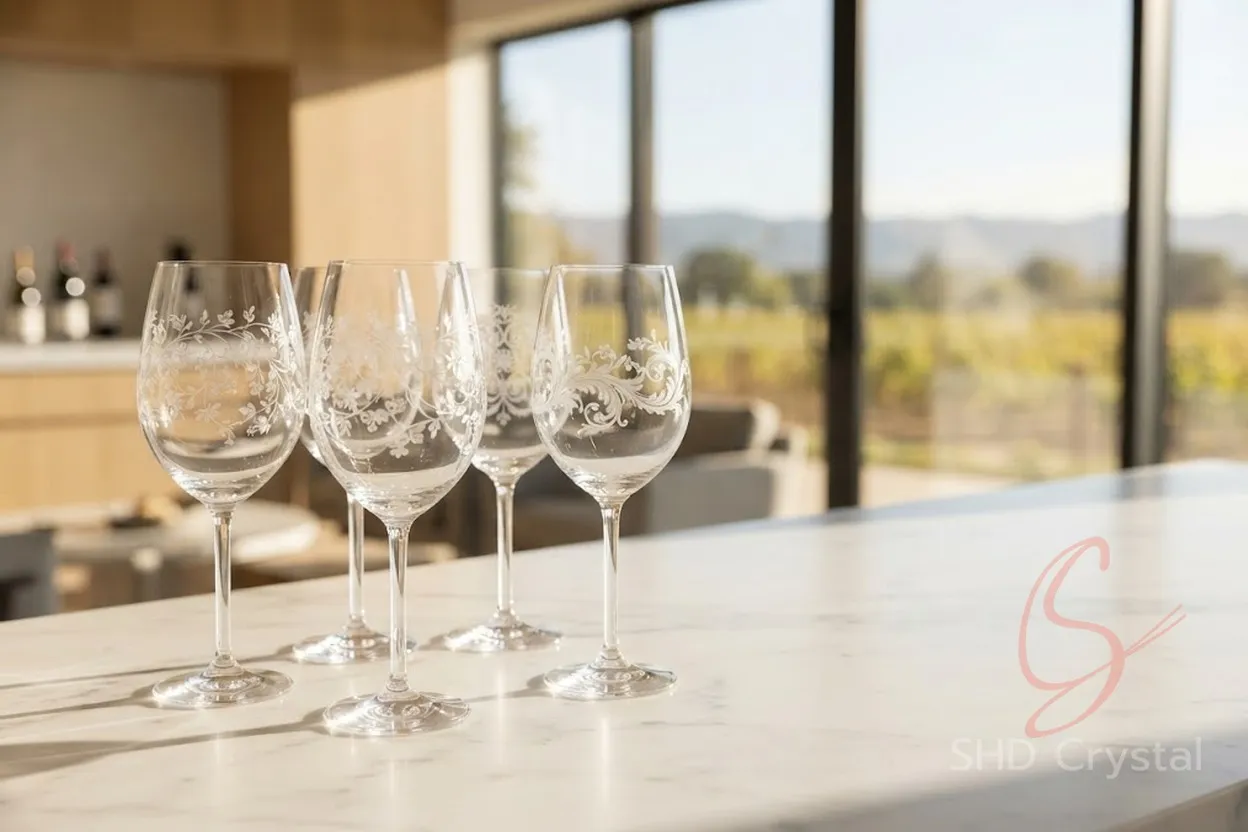
A common oversight in procurement is neglecting packaging specifications for export. Glasses that survive the factory floor can still arrive damaged if inner cartons lack sufficient cushioning or if pallet configurations do not account for the vibration and handling typical in ocean freight. Specifying packaging requirements early—ideally at the sampling stage—saves significant cost and frustration.
Lead Times, Minimum Orders, and What to Confirm Early
Production timelines for wine cups personalized with decoration typically run a few weeks after sample approval, though the exact window depends on order volume, decoration complexity, and the factory’s current production schedule. Buyers should confirm both the production lead time and the shipping window before committing to a delivery date.
Minimum order quantities vary by decoration method. Laser engraving can often accommodate runs as small as a few hundred pieces, while acid etching and screen printing generally require higher volumes to justify setup costs. For buyers testing a new product line or ordering for a single event, laser engraving tends to offer the most flexibility.
FAQ
What is the typical minimum order quantity for wine cups personalized with laser engraving?
Most Chinese manufacturers accept laser engraving orders starting at a few hundred pieces, though exact thresholds vary by factory. Acid etching and screen printing usually require higher minimums to cover setup costs. Buyers should request an RFQ with their specific quantity to get accurate pricing.
How do personalized crystal wine cups compare to soda-lime for hotel bars?
Crystal offers superior clarity and light refraction, which enhances the perceived value of wine service. Soda-lime glass is more cost durable but lacks the brilliance that premium hospitality brands typically require. The choice depends on the property’s positioning and budget.
Which personalization method works best for small-batch custom wine glasses?
Laser engraving is generally the most practical option for orders under a few hundred pieces. It requires no tooling, delivers fine detail, and produces a permanent mark without chemical processes. For larger volumes, acid etching offers a smoother frosted finish at a lower per-unit cost.
What quality certifications should I verify when sourcing from China?
Buyers should ask about food-contact safety compliance, ISO quality management certification, and export testing documentation. Requesting pre-shipment inspection through a third-party QA provider is also a reasonable step, especially for large or first-time orders.
How long does production usually take after sample approval?
Lead times typically run three to four weeks for standard orders, though complex decoration or peak-season scheduling can extend that window. It is worth confirming both production and shipping timelines at the quotation stage.
Conclusion
Choosing wine cups personalized for bulk orders involves balancing material selection, decoration method, supplier capabilities, and logistics. The best results come from buyers who clarify their requirements early—from glass type and decoration technique through to packaging specifications—and who work with suppliers that offer transparent answers about their production setup. Whether the target is custom wine glasses for a hospitality rebrand or personalized crystal wine cups for a premium gifting line, the procurement process rewards careful specification and honest communication.
Partnering With SHD Glassware
For buyers exploring wine cups personalized for hospitality, retail, or corporate gifting, SHD Glassware works with clients across North America and Europe to match product specifications with realistic production timelines. SHD Glassware can advise on decoration method selection, material options, and packaging standards—helping procurement teams move from concept to shipment with fewer surprises along the way.
If you are interested in our glassware or related products,
please feel free to contact us.

