


Blogpost keywords: custom printed glass cups, personalized drinking glasses, custom glassware
Custom printed glass cups sit at the intersection of branding and beverage service, and getting the order right depends on choices most buyers underestimate. A procurement team comparing vendors across Shandong and Hebei will quickly notice that the same shape can yield wildly different results depending on the printing method, glass composition, and decoration setup. Understanding these variables before issuing an RFQ saves time, money, and the frustration of receiving a first batch that does not match expectations.
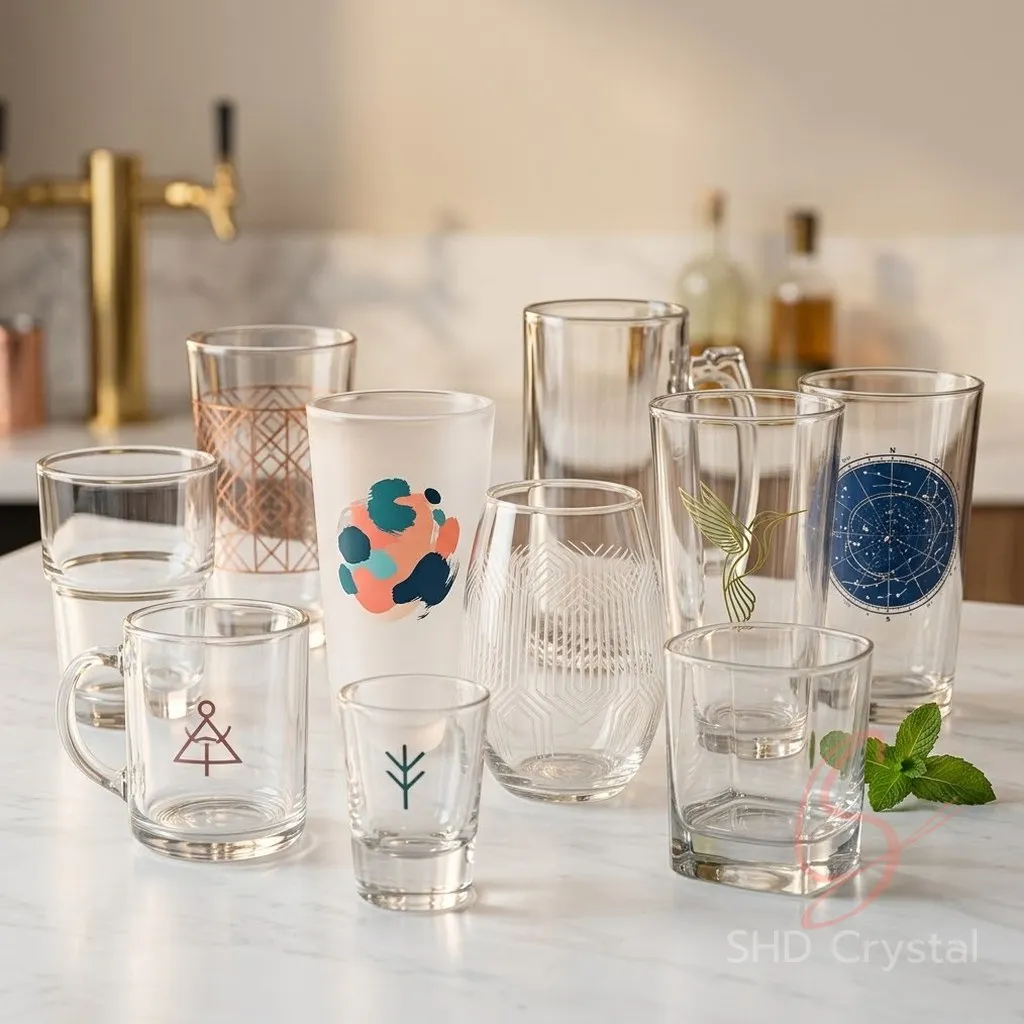
Why Custom Printed Glass Cups Demand More Than a Standard Quote
Requesting a quote for custom printed glass cups is straightforward. What separates a successful order from a headache is the detail behind that quote — glass type, wall thickness, print area, ink durability, and whether the decoration happens in-house or through a subcontractor. In many Chinese glass clusters, blank production occurs in one facility while decoration is outsourced to a separate workshop, sometimes in a different town. This split between forming and decoration introduces variability in color matching, alignment, and quality inspection at each stage.
A beverage brand launching a limited-edition pint series might find that the factory producing the blanks has tight control over glass weight and clarity, but the outsourced etching line applies inconsistent depth across a batch. Without verifying whether the supplier controls the full chain — blank production, decoration, and packaging — a buyer risks receiving product that passes visual inspection at the factory but fails once filled and stacked in a bar cooler. The same risk applies to any custom glassware order that involves multiple production stages.
Comparing Printing Methods for Custom Glassware
The choice of printing method determines both the visual outcome and the long-term durability of custom printed glass cups. For personalized drinking glasses, the method matters just as much as the design itself. Three approaches dominate the market, each with distinct trade-offs.
Screen printing handles large runs efficiently and delivers bold, opaque color on smooth surfaces, but it struggles with fine detail and small text. Pad printing accommodates irregular shapes and small logos, though ink adhesion on glass requires careful surface preparation. Acid etching produces a frosted, permanent finish that resists dishwasher cycles, yet it demands precise chemical concentration control — if the bath temperature drifts or immersion time varies across a rack, the opacity turns uneven and the design looks patchy under direct light.
Method | Best For | Main Risk |
Screen printing | Large-volume orders, bold single-color logos | Poor adhesion on curved or textured surfaces |
Pad printing | Small logos, irregular shapes, multi-color detail | Higher per-unit cost at scale, ink buildup |
Acid etching | Premium frosted finish, permanent branding | Uneven opacity if bath conditions drift |
On the ground, the better approach is usually to match the method to the product's end use. A restaurant chain ordering hundreds of branded tumblers for daily service may prioritize the durability of acid etching, accepting the higher tooling cost. A marketing team producing a short-run promotional line might favor screen printing for speed and lower setup fees. What matters most is method is cheapest per unit, but which method will still look presentable after months of handling.
Quality Inspection and What Buyers Should Verify
Receiving teams often perform a visual check on incoming glass, but that alone misses most decoration defects. A more useful inspection runs a fingernail test across printed or etched edges — a sharp transition suggests the etching depth is too aggressive, while a smooth, barely perceptible edge indicates proper chemical control. For screen-printed pieces, check for ink adhesion by running a strip of painter's tape across the print and peeling it sharply; any transfer signals a curing problem.
Buyers should consider requesting defect-tier documentation from the factory. A supplier running under AQL 2.5 for critical defects and AQL 4.0 for minor defects signals a different level of quality discipline than one without a formal sampling plan. It may help to ask whether the factory runs in-house decoration or outsources — integrated facilities typically offer tighter process control over ink curing temperatures and batch consistency. That depends on the factory's willingness to share production data, but reputable custom glassware suppliers generally accommodate reasonable requests. For personalized drinking glasses destined for retail, this level of traceability becomes especially important.
Design Considerations for Personalized Drinking Glasses
Custom printed glass cups require design input that goes beyond sending a vector file. Wall thickness affects how light passes through the glass, which changes how printed colors appear once the cup is filled. A thick-walled tumbler absorbs more light and may dull a pastel logo, while thin-wall glass amplifies vibrancy but chips more easily during shipping. Specifying glass weight and thickness at the RFQ stage prevents surprises downstream.
One thing buyers should note the print area itself. Curved surfaces compress the design at the edges, and designs that look balanced on a flat proof can appear skewed when wrapped around a cylinder. Factories with experience in custom glassware will flag this during the pre-production sample stage — but only if the buyer submits artwork sized for the actual print area, not just a desktop mockup.
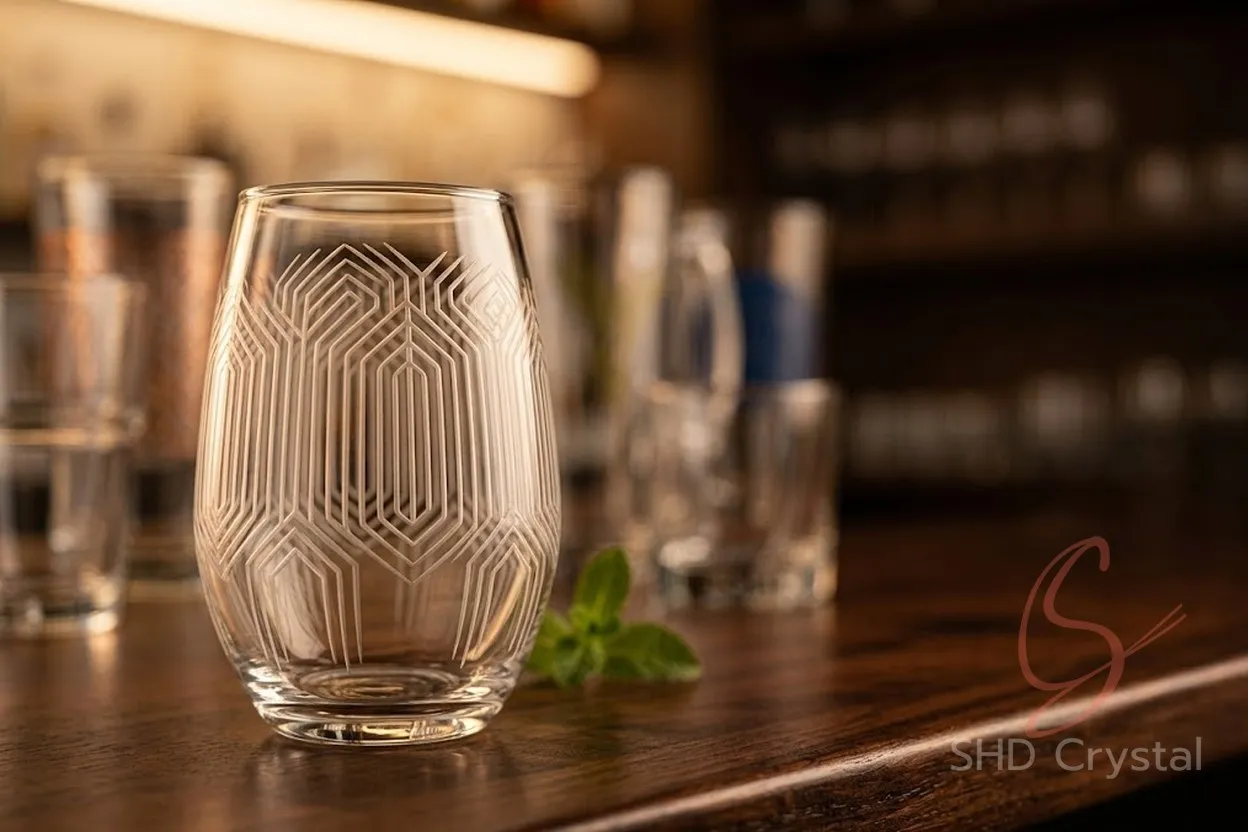
Lead Times, Tooling, and the Real Cost Picture
Tooling costs for custom printed glass cups vary significantly by decoration complexity. A single-color screen print on a standard shape may require no tooling at all — just a screen setup fee. Acid etching, by contrast, typically involves a stencil or resist pattern that must be produced for each design. Multi-color pad printing may need separate pads for each color layer, adding to both setup time and cost. Buyers sourcing custom glassware at scale should request a line-item breakdown of tooling versus per-unit pricing.
Lead times commonly run 25 to 35 working days for standard orders, but this assumes the blank shape is already in production. Introducing a new mold extends timelines considerably, and buyers should factor in an additional 15 to 20 working days for tooling development alone. Smart procurement teams request a production timeline breakdown that separates blank forming from decoration, so delays in one stage do not mask problems in the other. This matters especially for personalized drinking glasses tied to event deadlines.
FAQ
What is the typical MOQ for custom printed glass cups from Chinese manufacturers?
MOQs vary by decoration method and glass type. Screen-printed orders on existing shapes may start as low as 500 units, while acid-etched designs on custom molds often require higher minimums to justify tooling costs. Buyers should confirm MOQ thresholds during the RFQ stage to align order volume with vendor requirements.
How do screen printing and acid etching compare for dishwasher durability?
Acid etching produces a permanent surface treatment that resists repeated dish cycles without visible degradation. Screen-printed designs rely on ink adhesion and curing quality — well-cured prints last years, but poorly cured ink may show edge wear within months. Requesting a sample and running it through commercial dishwashers before committing is a reasonable due-diligence step.
What quality certifications should buyers look for when sourcing custom glassware?
Factories producing glass for food-contact use should hold relevant food safety compliance documentation. ISO 9001 certification signals a quality management system is in place, though certification alone does not guarantee product-level quality. Buyers should also verify whether the supplier runs in-house decoration or outsources, as this affects traceability across the production chain.
How does glass composition affect the outcome of custom printing?
Soda-lime glass handles everyday printing methods well and offers the best cost-to-volume ratio. Borosilicate glass resists thermal shock but has a different surface energy that can affect ink adhesion — requiring adjusted curing profiles. Crystal glass delivers superior clarity for luxury applications, but its softness makes it more susceptible to scratching during handling and packaging.
What packaging should I expect for bulk orders of printed glass cups?
Standard export packaging for glass typically includes individual cell dividers or tissue wrapping inside an inner carton, with the inner carton packed into a corrugated export carton on pallets. Buyers shipping personalized drinking glasses to retail distribution should specify retail-ready packaging requirements at the order stage, as retrofitting packaging after production adds both cost and lead time.
Conclusion
Custom printed glass cups reward buyers who invest time in understanding the variables behind a quote — glass type, printing method, decoration in-house vs outsourced, and quality inspection protocols. The difference between a successful promotional line and a costly rework often comes down to these details, not just the unit price. A procurement team that specifies clearly at the RFQ stage and verifies during production is far more likely to receive product that meets brand expectations on the first delivery.
Partnering with SHD Glassware for Your Next Custom Order
SHD Glassware works with brands and hospitality groups navigating the full scope of custom printed glass cups — from material selection through decoration and export packaging. Whether the project calls for screen-printed promotional tumblers or acid-etched premium barware, the team can help align specifications with production realities. Reaching out early in the planning cycle typically yields better results than rushing a tight timeline with incomplete specifications.
If you are interested in our glassware or related products,
please feel free to contact us.

