


Blogpost keywords: customized drinking glass, personalized glassware, custom bar glassware
Customized Drinking Glass Sourcing Starts With Material Selection
Ordering a customized drinking glass for a hospitality brand or retail line involves more decisions than most procurement teams expect. Material type, wall thickness, decoration method, and minimum order quantity all interact in ways that directly affect unit cost and whether the finished product survives repeated use.
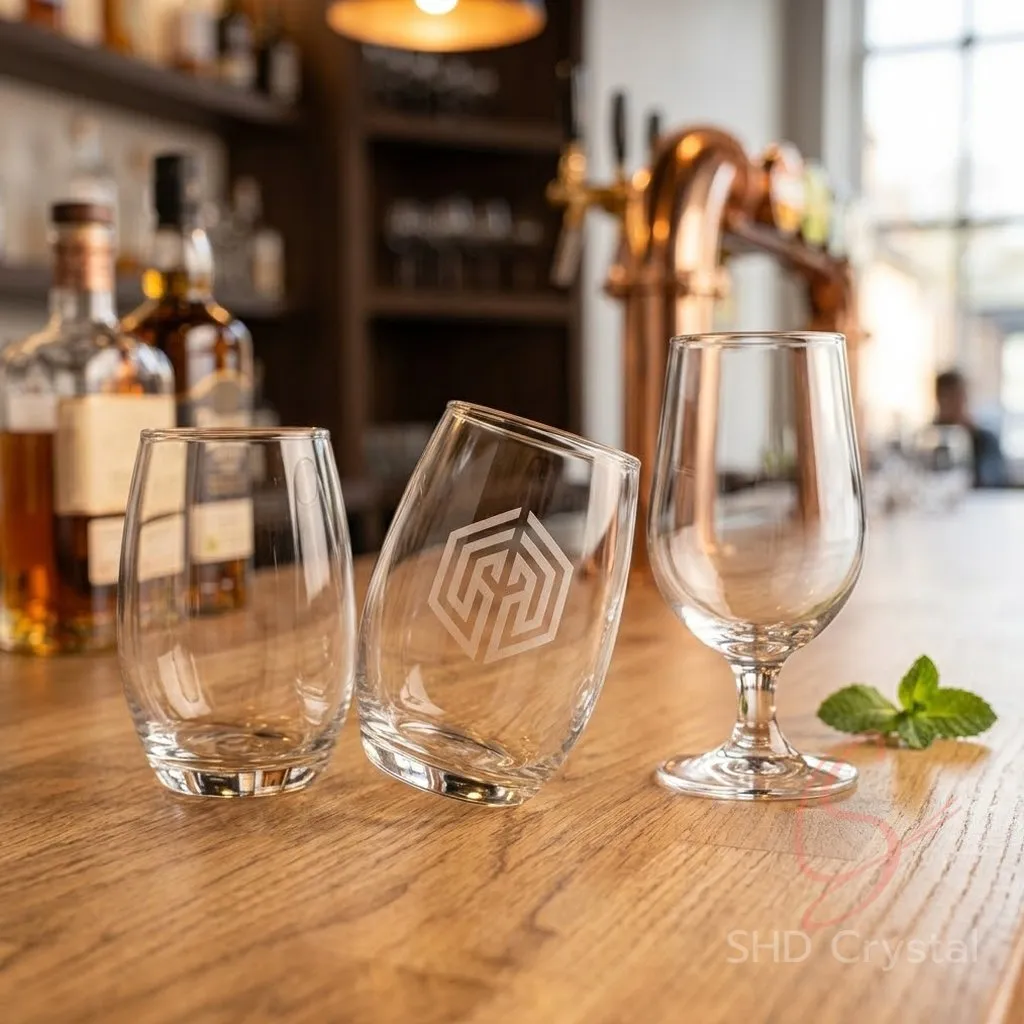
The first decision — and often the one with the biggest cost impact — is glass type. Soda-lime glass dominates daily-use drinkware because raw materials are inexpensive and forming speeds on IS machines are fast. Borosilicate resists thermal shock better, making it suitable for hot beverage applications, though it demands tighter annealing control. Crystal delivers the clarity luxury brands expect, but typically requires lead-free formulations for North American and European export.
material choice also constrains decoration options. A customized drinking glass made from thin-walled soda-lime can weaken under heavy acid etching if chemical concentration is not carefully controlled. Buyers should request a small test batch before committing to a full decoration run on any new material-form combination.
Decoration Methods and What Actually Survives Daily Use
For personalized glassware, the decoration method is often the deciding factor in brand perception. Customized drinking glass branding typically relies on screen printing, acid etching, laser engraving, or spray coating — each making a different trade-off between visual impact, durability, and unit cost.
Method | Best For | Main Risk |
Screen Printing | Vivid color, multi-color logos | Edge wear after repeated dish cycles |
Acid Etching | Durable frosted finish, high-volume | Uneven opacity if bath conditions drift |
Laser Engraving | Fine detail, small runs, no chemicals | Higher per-unit cost at scale |
Spray Coating | Full-surface color, quick turnaround | Surface wear, limited longevity |
Screen printing produces vivid color but shows edge wear after repeated dish cycles. Acid etching creates a frosted appearance that lasts significantly longer, though it requires tight chemical concentration control. If the bath temperature drifts across a rack, opacity turns uneven and the design looks patchy under direct light. Laser engraving handles fine detail well and avoids chemicals, but per-unit cost climbs on large runs.
For custom bar glassware used in high-traffic venues, durability matters more than initial appearance. Personalized glassware sourcing for a cocktail program might favor acid-etched designs that outlast screen-printed logos after months of commercial dishwashing — the difference is measured in years of service, not weeks.
MOQ, Lead Times, and the Real Cost Breakdown
Minimum order quantities from Chinese glass manufacturers typically range from a few thousand units for standard shapes to higher thresholds for custom molds. Many suppliers offer lower MOQs for standard custom bar glassware shapes, while fully bespoke designs require higher minimums to justify tooling costs. For a customized drinking glass project, mold development is a significant line item — producing a new shape requires tooling investment, sample approval cycles, and a trial run before full production.
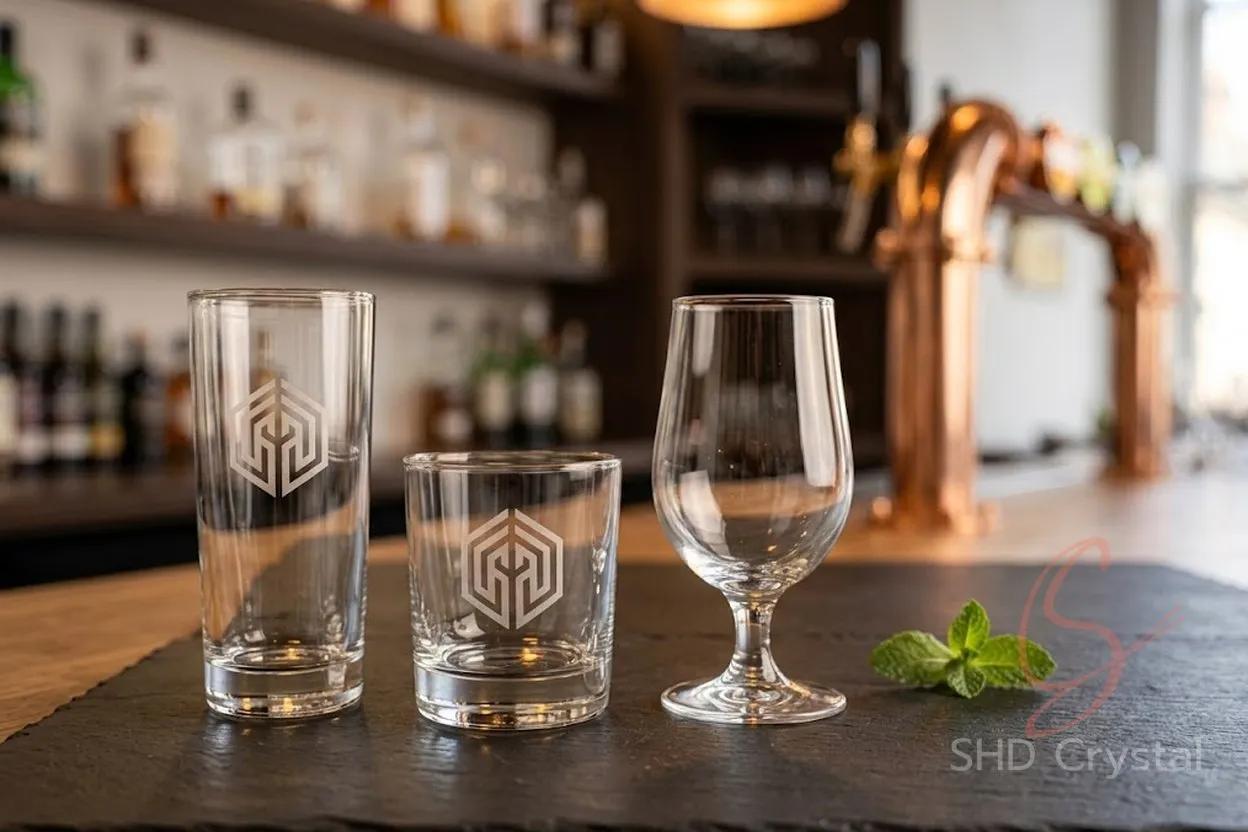
Lead times depend on whether the factory controls the full chain or outsources decoration. Factories in glass clusters like Boshan in Shandong often separate blank forming from decoration work, which can add days to the schedule. A buyer who needs a tight delivery window should confirm whether the supplier runs in-house decoration or subcontracts.
A beverage brand planning a seasonal launch once discovered, too late, that its supplier outsourced all etching to a subcontractor three towns away — the lead time expanded by two weeks, and the brand missed its retail shelf deadline. Confirming the decoration workflow upfront is worth specifying in every RFQ.
How Personalized Glassware Differs from Custom Bar Glassware
The distinction between personalized glassware and custom bar glassware comes down to use case and order profile — and it directly affects what a customized drinking glass buyer should prioritize. Personalized glassware typically refers to pieces branded for corporate gifts, promotional events, or retail lines where logo visibility matters most. Custom bar glassware prioritizes durability, stackability, and weight balance for active service environments.
Soda-lime glass handles everyday bar use well, borosilicate suits programs serving hot drinks, and crystal elevates the experience in fine dining. Each material makes a different trade-off between cost, durability, and brand positioning. That depends on the venue's volume, dishwashing setup, and how the glass fits into the guest experience.
FAQ
What Is the Typical MOQ for Customized Drinking Glass Orders?
MOQs vary by shape and decoration complexity. Standard tumbler shapes may have lower thresholds, while custom molds with specialized finishes require higher minimums to justify tooling costs. Buyers should request a clear breakdown separating forming, decoration, and packaging.
How Does Screen Printing Compare to Acid Etching for Branded Drinkware?
Screen printing delivers sharper color detail initially but wears faster under commercial dishwashing. Acid etching produces a subtler, more durable finish that resists fading over time. For high-traffic venues, etching is generally the stronger long-term choice.
What Quality Certifications Should I Look for When Sourcing Personalized Glassware?
ISO 9001 certification indicates a documented quality management system. For food-contact drinkware, verify lead-free and cadmium-free compliance through accredited lab testing. Request test reports before committing to production.
Can a Factory Handle Both Custom Bar Glassware and Personalized Glassware Together?
Some factories with integrated decoration lines manage both product types, but this depends on the methods required. Confirm whether the factory controls the full chain from blank forming through decoration, or relies on subcontractors.
How Long Does Mold Development Take for a New Design?
First-off samples for a new shape generally take three to four weeks, depending on complexity and the factory's tooling schedule. Budget additional time for sample approval before full production begins.
Conclusion
Ordering a customized drinking glass requires balancing material performance, decoration durability, MOQ thresholds, and supplier capabilities into a coherent procurement decision. Buyers who invest time upfront in material testing and decoration validation typically avoid the costly revisions that derail timelines. The process rewards patience, clear specifications, and partners who communicate openly.
Your Next Step Toward Better Glassware Sourcing
For brands evaluating customized drinking glass options, the most productive next move is requesting sample batches from two or three qualified suppliers and comparing material quality, decoration execution, and packaging standards side by side. SHD Glassware works with buyers across hospitality, retail, and promotional channels to match the right material and decoration method to each application. A short conversation about personalized glassware goals, volume, and compliance requirements can narrow the field quickly and point toward a sourcing strategy that holds up over time.
If you are interested in our glassware or related products,
please feel free to contact us.

