


Blogpost keywords: engraved wine cups, custom wine glasses, wholesale engraved stemware
Why Engraved Wine Cups Demand a Closer Look at Sourcing
Sourcing engraved wine cups is not a straightforward catalog purchase. Prices, minimum order quantities, and lead times vary enormously between factories, and those differences trace back to the engraving method, glass material, and whether the supplier controls the full production chain.
This guide breaks down the key variables a buyer should evaluate when sourcing engraved wine cups — from material selection through engraving technology to quality inspection.
Choosing the Right Engraving Method
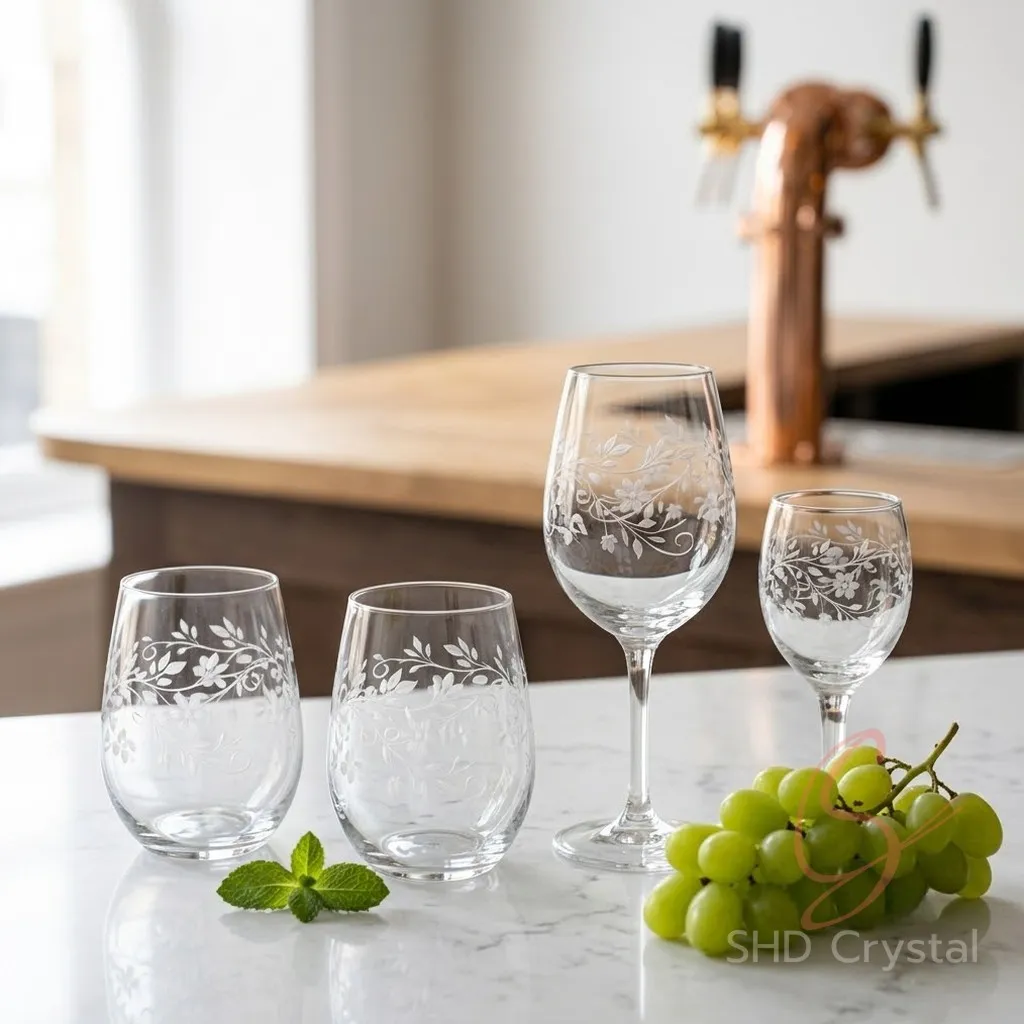
Acid etching on a curved wine bowl requires precise chemical concentration control. If bath temperature drifts or immersion time varies across a rack, the opacity turns uneven. Sandblasting creates deeper texture and bolder branding, but carries a higher risk of microfractures on thin-walled glass. Laser engraving handles fine detail with minimal setup, making it the better choice for small production runs — though per-unit cost climbs at scale.
a factory that runs in-house etching and laser decoration under one roof produces more consistent results than a supplier who blanks in one workshop and sends pieces to a decoration line in another town. That separation adds transit time and handling damage risk.
The trade-off is straightforward: acid etching suits high-volume orders, sandblasting works for deep-relief branding on thicker glass, and laser engraving is the practical choice when artwork complexity matters more than unit price. For engraved wine cups with intricate artwork, laser is usually the starting point.
Engraving Methods Compared
| Method | Best For | Main Risk |
|---|---|---|
| Acid Etching | Large-volume orders, uniform frosted finish | Uneven opacity on curved surfaces |
| Sandblasting | Deep texture, bold branding on thicker glass | Microfractures on thin-walled bowls |
| Laser Engraving | Fine detail, small runs, complex artwork | Higher per-unit cost at scale |
A buyer evaluating these options should request production samples from each method before committing. Inspect the etched surface under direct light — a sharp transition at the design edge suggests the etching depth is too aggressive, which weakens the glass over repeated dish cycles.
Glass Material Selection for Custom Wine Glasses
Soda-lime glass handles everyday use at the lowest cost, borosilicate withstands thermal shock, and lead-free crystal offers the clarity luxury brands expect — each material makes a different trade-off between price, durability, and perceived value. For custom wine glasses destined for the hospitality sector, soda-lime is standard. Premium gift lines typically call for crystal or borosilicate.
In the Boshan district of Shandong — one of China’s oldest glassware clusters — factories produce both soda-lime and crystal blanks, but not all run their own decoration lines. Buyers should verify whether the supplier controls the full chain from blank forming through engraving to packaging, or whether decoration is outsourced.
wall thickness. Engraving removes material from the surface, and thin-walled glass is more susceptible to structural weakness if etching depth is not carefully controlled.
MOQs, Lead Times, and Supplier Communication
MOQs for wholesale engraved stemware vary widely. A factory running custom molds may require a higher initial quantity than one using stock blanks with surface decoration only. The engraving setup — whether an acid bath, sandblast template, or laser file — is a fixed cost amortized across order volume. Buyers sourcing custom wine glasses alongside engraved stemware should confirm whether combining SKUs into a single PO affects the minimum.
Lead times typically run longer for engraved products than for plain glassware. In the Hebei glass cluster, decoration is sometimes subcontracted to workshops in neighboring towns, adding transit time. Buyers who combine several SKUs into a single PO should expect changeover to add days to the schedule.
A Typical Sourcing Scenario
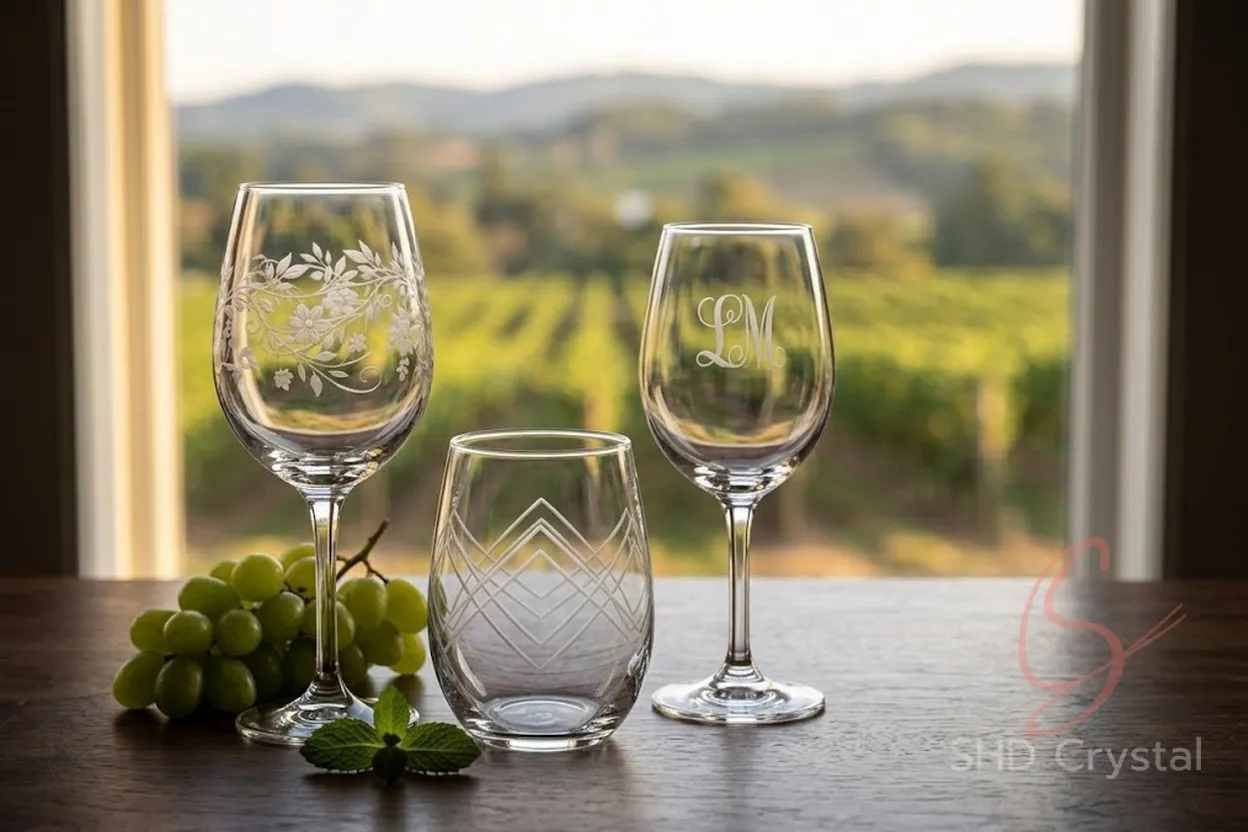
A beverage brand planning a holiday promotion needs 5,000 engraved wine cups with a two-color logo. The RFQ comes back with three quotes: laser engraving at a low MOQ but higher unit price, acid etching at lower cost but a larger commitment, and sandblasting for a premium tactile finish. The procurement team requests samples from all three, inspects the engraving depth, and runs a drop test before choosing the method that best suits their wholesale engraved stemware needs.
Quality Inspection and Packaging for Export
Engraved wine cups require more careful inspection than plain glassware. The receiving team should check each batch for engraving consistency — uneven depth, misaligned logos, and surface scorching are the most common defect tiers. An AQL of 2.5 or 4.0 is standard for decorative glassware.
Packaging matters more than many buyers expect. For wholesale engraved stemware and custom wine glasses alike, inner dividers, foam inserts, and pallet stabilization are worth specifying in the purchase order — the added cost is modest compared with replacing damaged premium glassware.
FAQ
What is the typical MOQ for engraved wine cups from Chinese manufacturers?
MOQs vary by engraving method and whether the factory uses stock or custom molds. Laser-engraved orders may start at quantities in the low hundreds, while acid-etched runs typically require a larger commitment. Buyers should confirm the MOQ during the initial RFQ stage.
How does acid etching compare to laser engraving for custom wine glasses?
Acid etching produces a smooth, frosted finish for large batches with consistent branding. Laser engraving offers sharper detail for smaller runs or designs with fine lines. The main trade-off is cost at scale — acid etching is more economical for high-volume orders.
What quality certifications should I look for when sourcing wholesale engraved stemware?
Buyers should verify whether the factory holds certifications for food-contact glassware and can provide test reports for lead and cadmium compliance. For export orders to the US and EU, FDA and EU food contact material compliance is essential.
Conclusion
Sourcing engraved wine cups successfully means evaluating more than unit price. The engraving method, glass material, factory integration, and packaging standard all influence final product quality and total cost of ownership. A procurement team that requests production samples and clarifies the supply chain before committing to a PO will avoid the most common pitfalls. Wholesale engraved stemware ordered with clear specifications tends to arrive in better condition and perform better in the field.
Working With a Supplier on Your Next Engraved Order
SHD Glassware works with buyers who need consistent quality across engraved wine cups, custom wine glasses, and promotional glassware programs. The team can walk through engraving method options, material recommendations, and packaging specifications to match a specific project. Reaching out with a brief and reference samples is a practical first step — it gives the production team enough detail to provide an accurate quote and realistic lead time.
If you are interested in our glassware or related products,
please feel free to contact us.

