


Blogpost keywords: glass tea cups wholesale, wholesale drinking glasses, custom glass teacups
What Affects the Cost of Glass Tea Cups Wholesale Orders
The price of glass tea cups wholesale depends on several intertwined variables. Cup dimensions, wall thickness, and forming method all affect raw material consumption and cycle time. A 250 ml press-molded tea cup runs on a standard IS machine with multiple cavities, keeping per-unit cost competitive. A hand-blown borosilicate cup with thinner walls demands more labor and a slower forming pace, pushing the price up regardless of order volume.
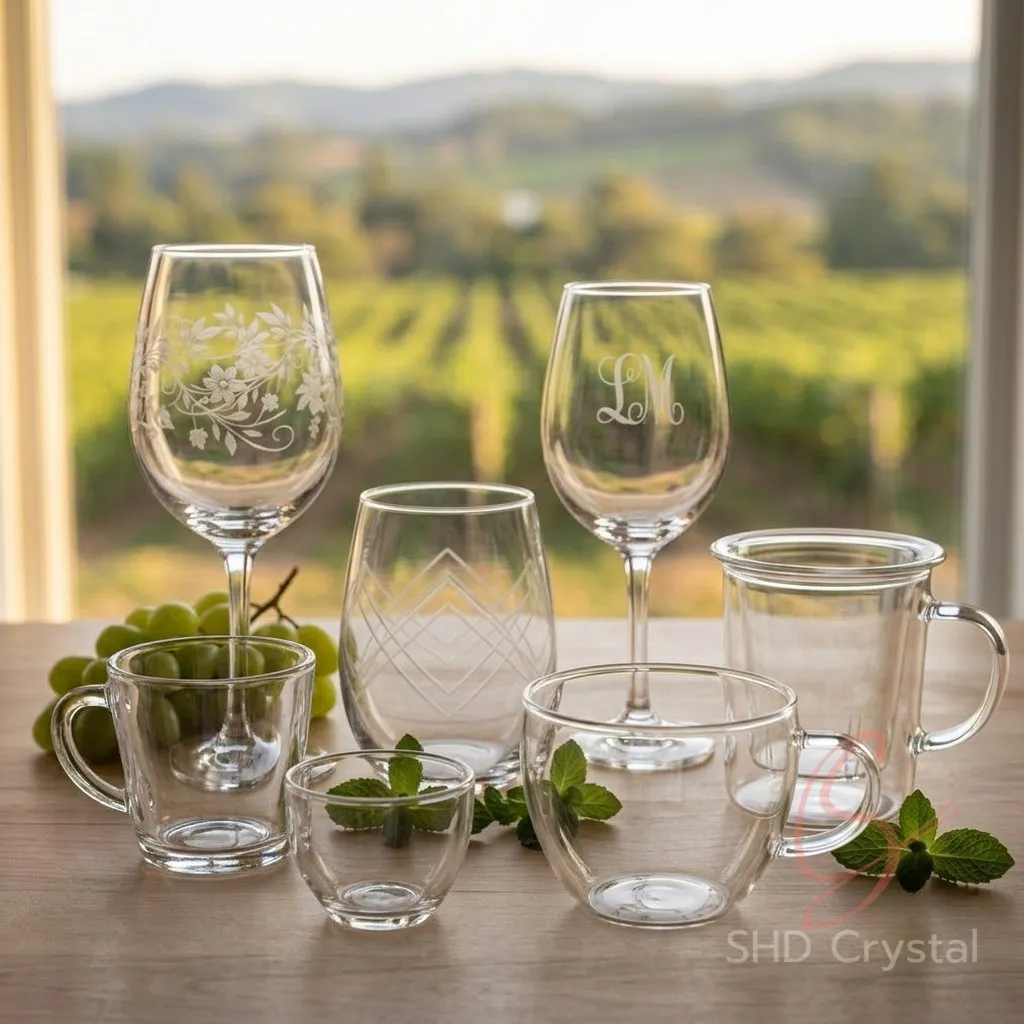
Press-molded cups dominate the wholesale drinking glasses market for their balance of cost and repeatability. Blow-molded options suit brands positioning a lighter silhouette. Hand-finished pieces make sense for limited-run collections where the margin per unit absorbs the extra labor.
Forming Method | Best For | Main Trade-Off |
Press Molding | High-volume, consistent shapes | Limited wall thinness, visible mold seams |
Blow Molding | Taller forms, lighter weight | Higher per-unit cost, piece-to-piece variation |
Hand Finishing | Premium lines, unique profiles | Slowest output, requires skilled labor |
Material and Forming Options for Bulk Glass Tea Cups
Soda-lime glass handles everyday use and keeps costs manageable — it is the standard material for most glass tea cups wholesale orders heading to restaurants and retail channels. Borosilicate glass withstands thermal shock better, making it practical when tea is served boiling-hot. Crystal delivers the clarity premium brands expect, though it demands more careful handling throughout the supply chain.
the better approach is matching material to the service environment rather than defaulting to the cheapest option. A hospitality group sourcing for a hotel chain might find soda-lime works for the buffet line while in-room tea service calls for borosilicate. Borosilicate costs more per unit, but breakage rates in commercial dishwashing drop meaningfully.
Custom Glass Teacups: Decoration Methods and Branding
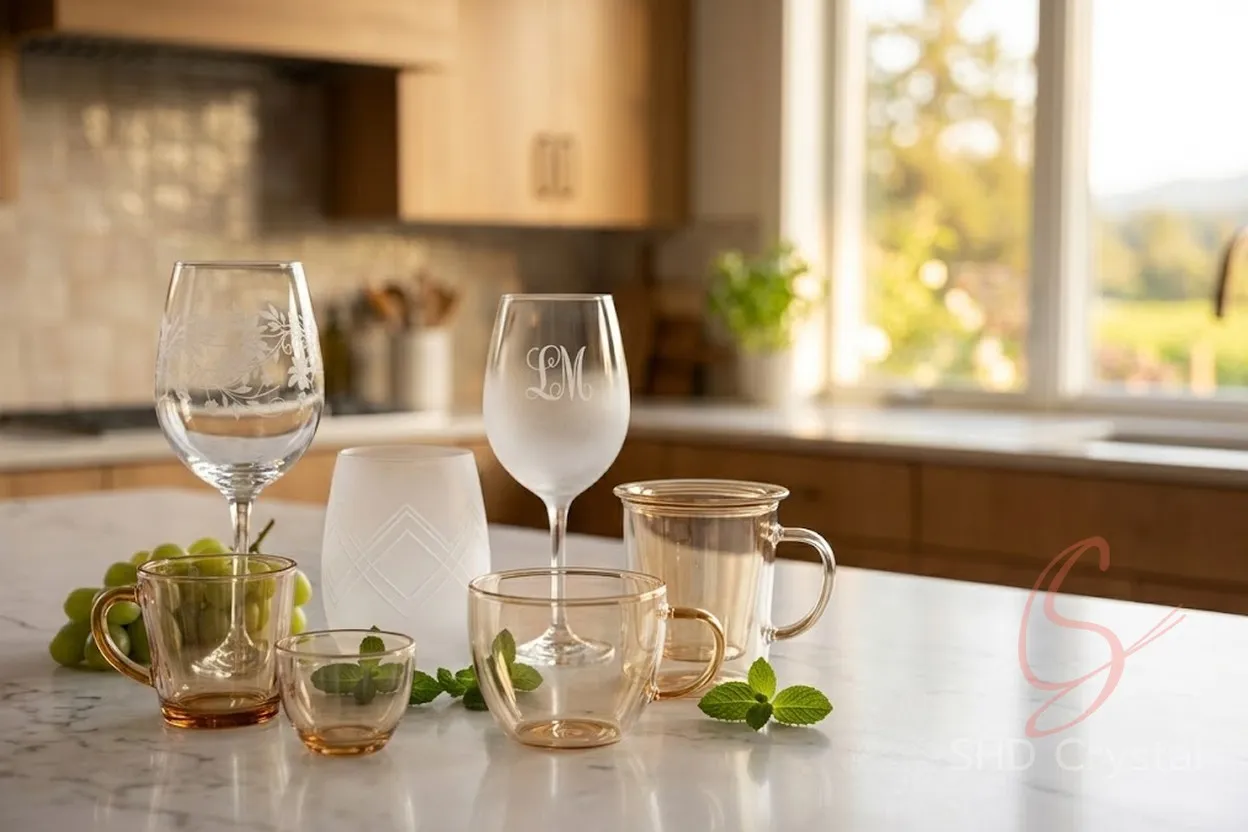
For buyers ordering custom glass teacups, decoration is where brand identity meets manufacturing reality. Acid etching produces a smooth frosted finish ideal for large batches, while sandblasting creates deeper texture but carries a higher risk of micro-fractures on thin walls. Screen printing offers multi-color logo flexibility, though durability depends on ink quality and kiln-firing temperature.
A beverage brand launching a tea line might request etched logos on the cup body and a printed design on the lid. Mixing decoration methods adds complexity — etching runs on one line while printing needs a separate station, extending lead times. Confirming whether decoration is in-house or outsourced affects both quality control and delivery.
Quality Assurance and Lead Times for Wholesale Drinking Glasses
Quality inspection should be part of the conversation before the first PO is cut. AQL 2.5 or 4.0 is common for drinkware, but the real question is what defect tiers the factory tracks. Hairline bubbles and minor surface scratches are typical — the issue is whether the supplier has clear acceptance criteria.
Lead times for glass tea cups wholesale typically run 20 to 30 working days from order confirmation, depending on whether existing molds apply. Custom shapes may need new tooling. Requesting production samples before a full run is a practical step even when the quote looks competitive.
Packaging and Shipping Considerations
Packaging is one of the most overlooked variables in a glass order. Inner cartons with dividers, export cartons rated for weight, and proper palletization all matter for overseas shipping. The added packaging cost is usually modest compared with replacing scratched glassware after transit.
Requesting a packing specification sheet along with the product quote removes ambiguity about cup nesting, inter-piece protection, and carton drop-test ratings. A responsible manufacturer provides this without being asked, but specifying it in the RFQ is worth the effort — especially for wholesale drinking glasses enduring multiple handling points.
FAQ
What is the typical MOQ for glass tea cups wholesale from Chinese manufacturers?
Minimum order quantities vary. Some factories accept orders as low as a few hundred pieces for standard shapes, while custom designs or specialized decoration may require a higher commitment. Ask whether the MOQ applies per SKU or per the entire order.
How do I compare wholesale drinking glasses from different suppliers?
Request production samples, compare wall thickness and weight consistency, and ask for AQL documentation. Unit price alone does not tell the full story — factor in mold fees, decoration costs, and packaging.
Can custom glass teacups include both printed and etched decoration?
Yes, but mixing methods adds complexity. Confirm whether the factory handles both processes in-house or uses subcontractors, and clarify how that affects lead times and batch consistency.
What quality certifications matter when sourcing drinkware in bulk?
ISO 9001 indicates a baseline quality management system. For food-contact glassware, FDA or LFGB compliance confirms material safety. These matter most for commercial food-service or retail environments.
How long does ocean freight take from Chinese ports?
Shipping to US West Coast ports commonly takes two to three weeks, while East Coast destinations may take four to five weeks. Factor this into inventory replenishment planning alongside production lead times.
Conclusion
Ordering glass tea cups wholesale is a procurement decision that rewards careful preparation. Material, forming method, decoration, and packaging all influence cost and quality. Transparent suppliers share samples, certifications, and packing specs without being asked. Evaluating these factors before ordering reduces risk and builds a sourcing relationship that holds up over repeat runs.
Finding a Supplier That Fits Your Requirements
SHD Glassware works with procurement teams sourcing glass tea cups wholesale across a range of capacities and price points. Whether the project calls for standard soda-lime cups or custom glass teacups with brand-specific decoration, the team can walk through material options, sample timelines, and packaging configurations. A detailed spec sheet helps move the conversation toward a quote faster.
If you are interested in our glassware or related products,
please feel free to contact us.

