


Blogpost keywords: personalised wine cups, personalized glassware, engraved wine glasses
Personalised wine cups have become a staple in corporate gifting, hospitality venues, and event planning — but sourcing them effectively means understanding how decoration method, glass material, and production logistics interact.
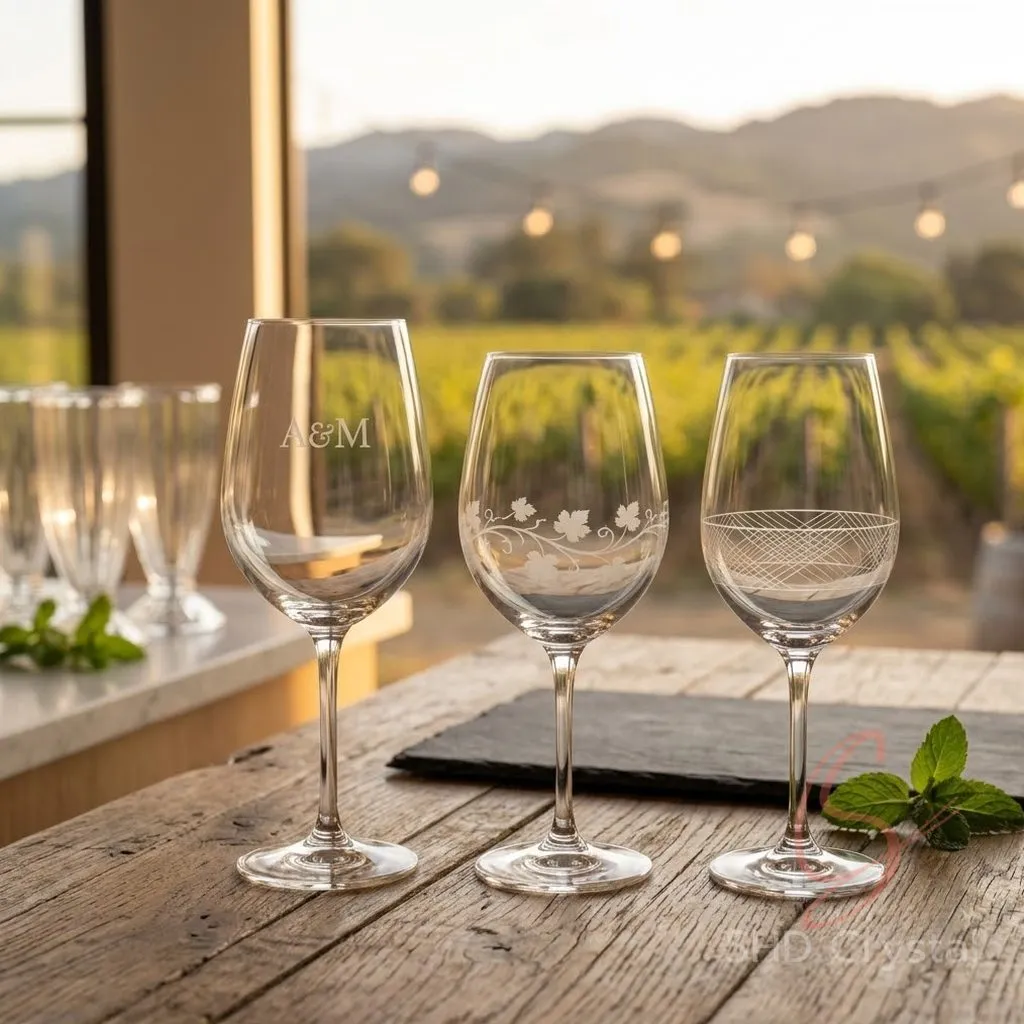
What Makes Personalised Wine Cups Different From Off-the-Shelf Glassware
Off-the-shelf barware is engineered for volume and uniformity — consistent wall thickness, standardized shapes, and a finish that survives repeated commercial washing. Personalised wine cups require at least one additional production step: laser engraving a logo, acid etching a monogram, or screen printing a design onto the bowl. Each decoration method introduces distinct tooling requirements and quality risks.
Chinese glass factories commonly separate blank forming from decoration. Blanks are produced on IS machines in one facility, then transferred to a dedicated etching or printing line — sometimes in a different town within the Hebei or Shandong glass cluster. That separation adds changeover time between designs, which is worth factoring into timelines when sourcing personalised wine cups.
Decoration Methods at a Glance
Method | Best For | Main Risk |
Laser engraving | Fine detail, small-batch logos | Higher per-unit cost at volume |
Acid etching | Large runs, frosted finish | Uneven opacity if bath conditions drift |
Screen printing | Full-color graphics, event branding | Surface wear after repeated washing |
Laser engraving handles intricate logos with precision, cutting into the glass surface rather than sitting on top. The mark resists washing, but setup complexity keeps per-unit cost elevated at volume. Acid etching produces a smooth frosted finish that feels premium, making it popular for engraved wine glasses. The chemical bath must stay consistent — if temperature or immersion time drifts, opacity turns patchy across a batch.
Screen printing deposits ink on the surface, making it the fastest route for full-color graphics. The trade-off is durability: the graphic is vulnerable to abrasion, especially in commercial dishwashers. For a one-time event, screen printing delivers visual impact at reasonable cost. For daily service, engraved wine glasses will outlast printed alternatives by a wide margin.
Glass Materials and Their Trade-Offs
Material selection shapes both the tactile experience and the customization method each piece supports. Soda-lime glass dominates everyday commercial use — affordable and tolerant of moderate thermal shock. Borosilicate handles temperature swings more gracefully, useful for outdoor events. Lead-free crystal delivers the clarity premium brands expect; the light refraction makes engravings appear sharper. Personalized glassware buyers should weigh these trade-offs against budget.
Soda-lime glass accepts screen printing readily but does not showcase laser detail as crisply as crystal. Crystal highlights fine engraved lines but costs more per unit. The better approach is to align material with method: etched designs look best on crystal, while printed graphics perform well on soda-lime.
Minimum Order Quantities and Lead Times
MOQ for personalised wine cups varies by decoration method and supplier. Laser-engraved pieces often carry lower minimums because setup involves programming a digital file rather than fabricating a mold. Acid-etched designs require a mask, which adds tooling cost but becomes economical at volume. Screen printing requires a separate screen per color, so multi-color orders carry higher setup costs but benefit from scale.
Lead times for decorated glassware typically span several weeks from order confirmation to shipment. The critical variable is whether the supplier controls the full production chain or outsources customization. An integrated facility offers tighter timeline control and more consistent batch quality.
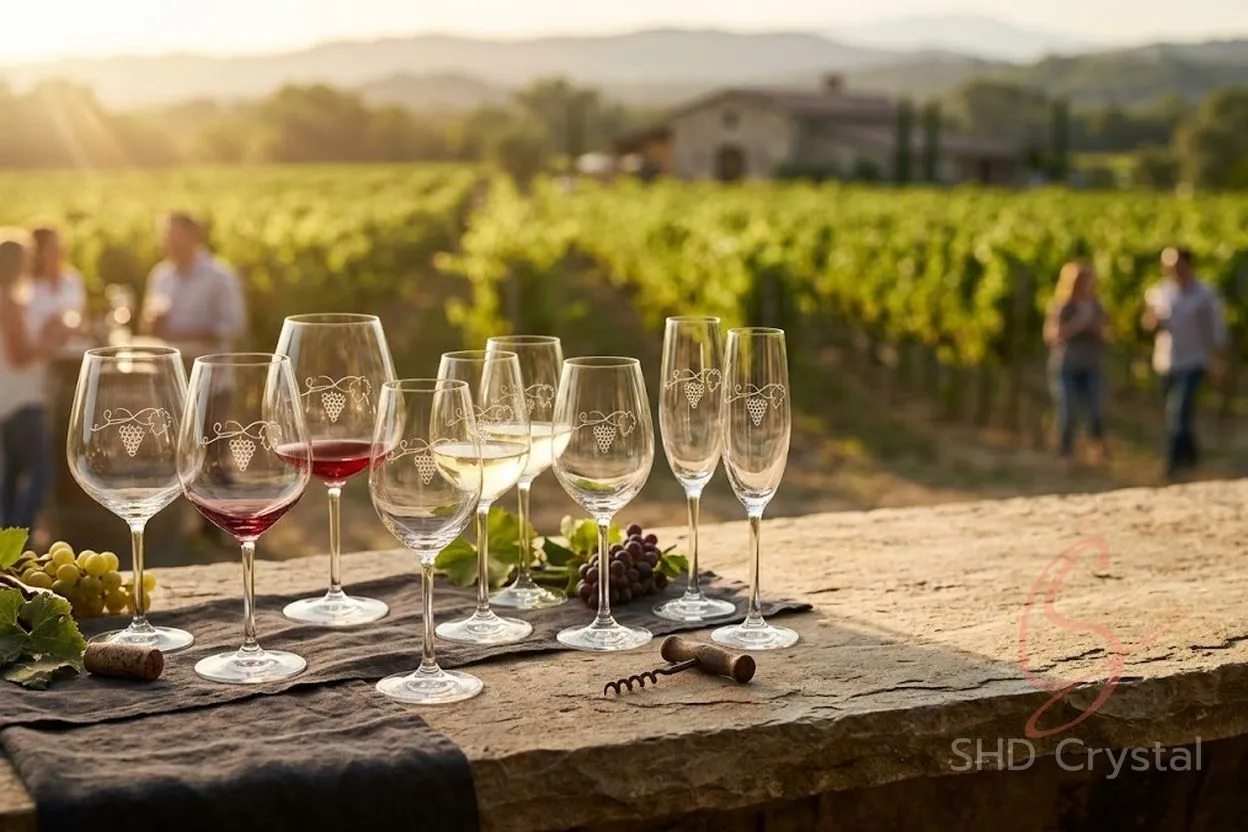
Real-World Applications Across Industries
Personalized glassware serves branding purposes beyond displaying a logo. Wineries use personalised wine cups to create a cohesive tasting room experience. Corporate gift programs deploy personalized glassware as branded merchandise recipients actually keep. Event planners use them as table settings that double as souvenirs. Engraved wine glasses tend to remain in use longer than printed alternatives, compounding that exposure.
A hospitality group sourcing engraved wine glasses for quarterly client dinners found that laser-engraved logos held up beautifully after months of use, while screen-printed versions showed noticeable fading within weeks. They now specify engraving for long-term service pieces.
the most effective branding on glassware feels intentional rather than pasted on. A subtle etched mark near the base ages better than a large printed graphic. Buyers should consider the full lifecycle rather than optimizing for first-day impact alone.
FAQ
What is the typical MOQ for personalised wine cups from Chinese manufacturers?
MOQ varies by decoration method. Laser engraving can start at a few hundred units, while acid etching and screen printing generally require larger minimums to justify tooling. Most suppliers in the Boshan and Hebei clusters offer flexibility on first-order quantities, though pricing improves at higher volumes.
How do engraved wine glasses compare to printed options for durability?
Engraved and etched designs modify the glass surface, resisting wear from washing. Printed designs sit on the surface and are more vulnerable to abrasion, especially with frequent dishwasher use. For long-term branding, engraving is typically the stronger investment.
What quality certifications should buyers verify when sourcing personalized glassware?
Buyers should look for factories holding food-contact safety certifications and demonstrating consistent AQL standards. A responsible supplier will share details about raw material sourcing and forming methods, which affect product safety and durability.
Can personalised wine cups be produced with custom shapes or bowl sizes?
Custom molds can be developed for specific bowl profiles, stem lengths, or base geometries. Custom mold development adds tooling cost and lead time, but gives buyers full control over the glass silhouette. Custom molds are worth specifying early in the project scope.
Conclusion
Sourcing personalised wine cups is a multi-variable decision where material selection, decoration method, and supplier capability all interact. The best outcomes come from procurement teams who specify requirements clearly, understand trade-offs, and verify quality at the sample stage rather than discovering issues after a full shipment arrives. Personalized glassware ordered without proper sampling often leads to disappointment.
Begin Your Glassware Sourcing Journey
SHD Glassware works with buyers sourcing personalised wine cups and personalized glassware for events, hospitality, and corporate gifting. Their team walks through customization options, material recommendations, and production timelines to help align glassware with branding goals. Reaching out early gives procurement teams flexibility to explore samples before placing an order.
If you are interested in our glassware or related products,
please feel free to contact us.

