


Blogpost keywords: personalized hurricane cups, custom hurricane glasses, bulk cocktail glasses
Personalized hurricane cups occupy a specific niche in the barware market: tall, curved vessels designed for tropical cocktails, resort service, and seasonal promotions. For procurement teams sourcing from Chinese glass manufacturers, these glasses present different challenges than standard tumblers — the elongated bowl affects wall thickness, and high-traffic use demands durability that some customization methods struggle to deliver.
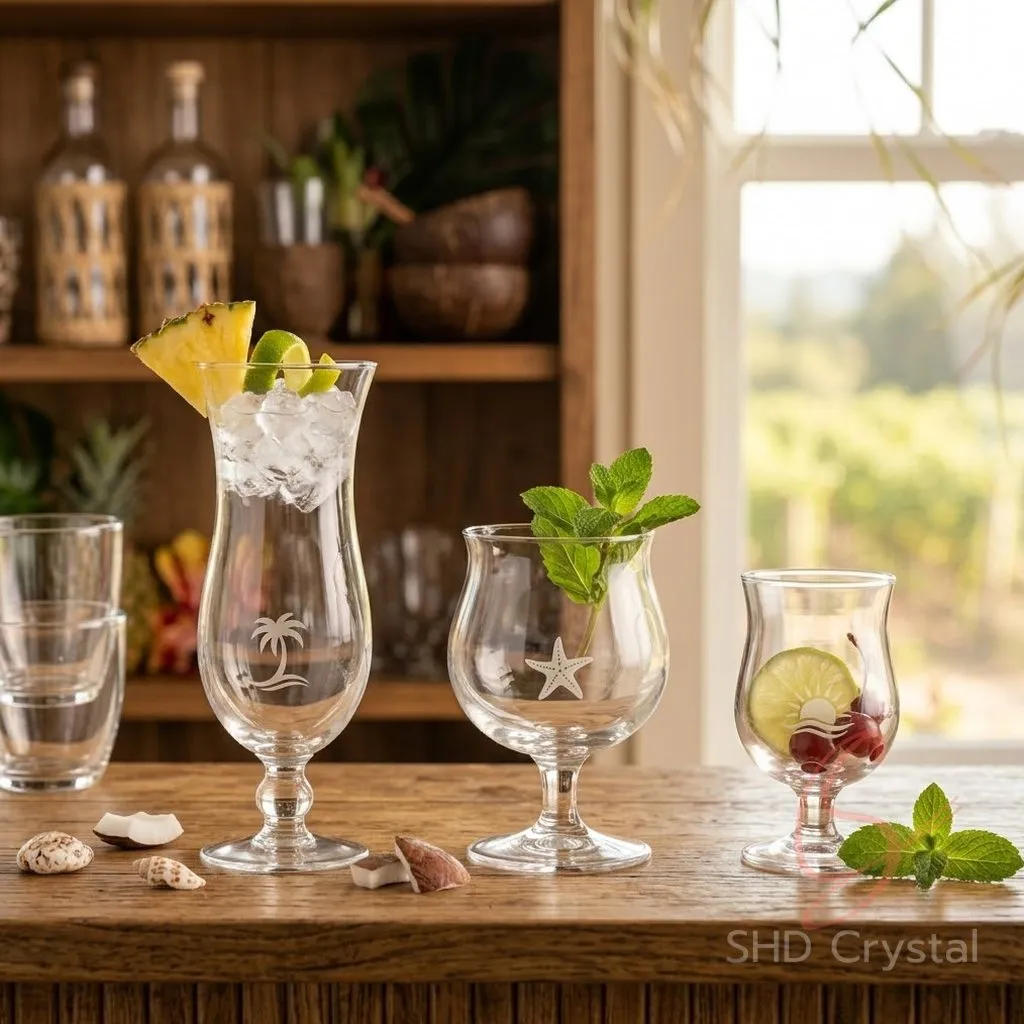
Why Personalized Hurricane Cups Require Careful Method Selection
A hotel bar replacing stock after a rebrand, a spirits company packaging limited-edition cocktail kits, or a beachfront restaurant ordering branded glassware — each scenario calls for consistent decoration across hundreds of units. The method chosen affects visual outcome and lifespan of the branding.
Custom hurricane glasses are typically formed from soda-lime glass, borosilicate, or lead-free crystal. Soda-lime remains the most common material for mid-range barware, valued for cost efficiency. Borosilicate offers thermal shock resistance that matters when glasses move between cold storage and room temperature. Lead-free crystal delivers the brilliance that premium brands expect — though per-unit cost reflects that.
On the ground, the decoration method tends to matter more than the glass material when buyers evaluate long-term value. A laser-engraved logo holds up through hundreds of dish cycles, while a screen-printed design shows edge wear much sooner. The right choice depends on usage frequency and visual standards.
Decoration Methods Compared for Bulk Cocktail Glasses
Method | Best For | Main Risk |
Laser Engraving | Fine detail, small to mid-size runs, permanent marks | Higher per-unit cost at very large volumes |
Acid Etching | Large batches, smooth frosted finish, consistent opacity | Uneven results on curved surfaces if bath conditions drift |
Screen Printing | Bold color logos, fast turnaround on simple designs | Lower durability through repeated wash cycles |
Laser engraving has gained ground because it requires no tooling investment and produces crisp, permanent marks. For orders under a few hundred pieces, it is often the most practical route. The trade-off is per-unit cost — laser time scales linearly with volume, so at high quantities, acid etching offers better economics.
Acid etching creates a smooth, frosted appearance that feels premium. The depth and uniformity depend on concentration, temperature, and immersion time — variables that a well-equipped factory controls closely. When conditions shift, the opacity can turn inconsistent, showing up most obviously on curved hurricane bowls.
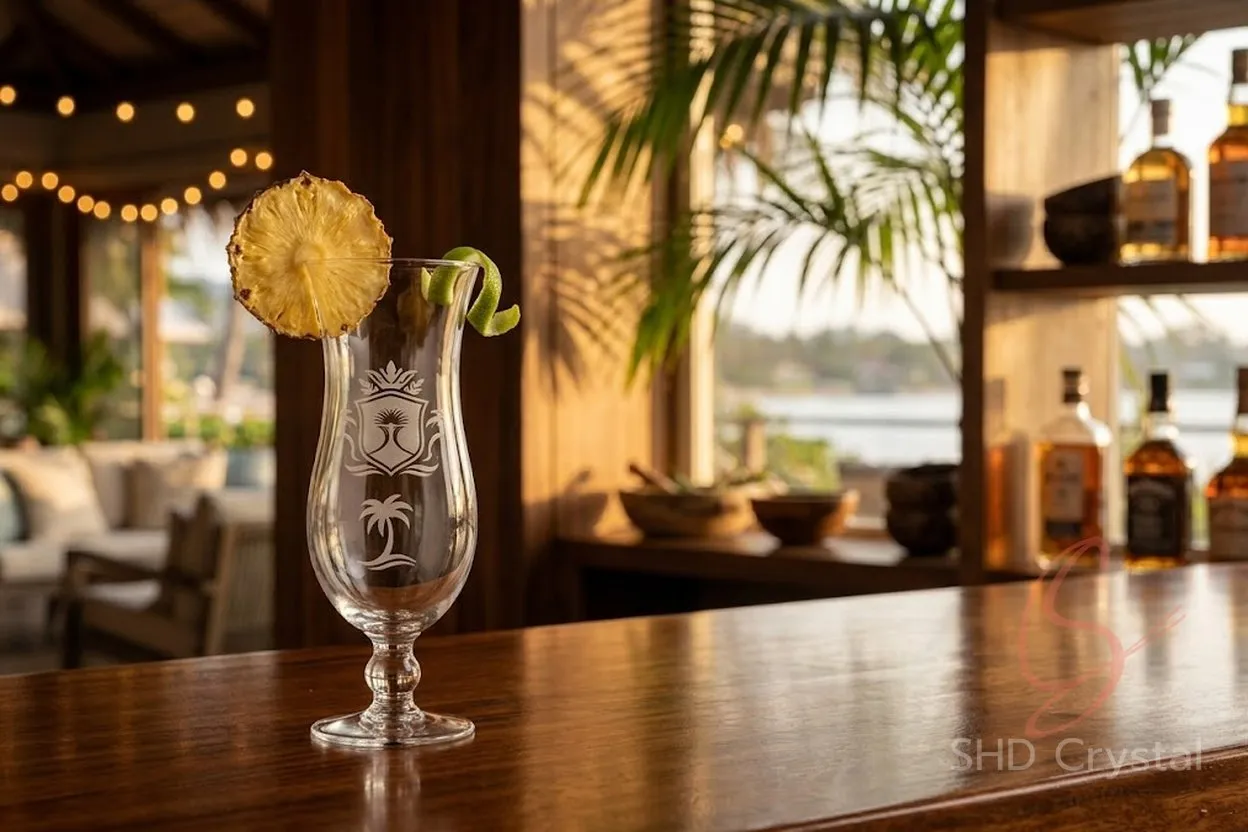
Screen printing remains the fastest option for straightforward logo applications on personalized hurricane cups. It works well when the design uses one or two colors and durability expectations are moderate. Events buyers favor it for short-lived campaigns where glasses serve a single purpose.
What a China Supplier Will Not Tell You Upfront
Sourcing personalized hurricane cups from China means navigating a supply chain where forming and decoration are sometimes handled in separate facilities. A factory in the Boshan district of Shandong — a region with decades of glassware production history — may blow blanks on-site but send them to a specialized etching workshop in another town. That split introduces logistics steps and affects quality and lead time.
A more reliable arrangement is a vertically integrated operation where blank production, decoration, and packaging happen under one roof. Buyers should ask whether the supplier controls the full chain — a factory that manages both forming and decoration can adjust processes in real time.
Beyond factory setup, practical details warrant attention. Glass wall thickness tends to vary more on hurricane cups than on shorter vessels because the elongated form stretches the glass during blowing. Rim quality — smooth, fire-polished edges versus ground rims — makes a noticeable difference in hand-feel. And balance matters: a glass that tips forward when filled will frustrate bartenders.
Matching Custom Hurricane Glasses to the Right Use Case
The intended application drives almost every specification decision. A resort bar needs pieces that survive repeated dishwasher cycles. A spirits brand packaging a promotional kit needs visual impact at lower volume. An event planner ordering for a tropical-themed gala may prioritize bold color over durability.
That trade-off between durability and visual impact is the real decision point for bulk cocktail glasses. Etched or engraved pieces hold up best through years of service, but limit the design to single-color effects. Printed glasses allow full-color graphics, but the surface coating will degrade with heavy use. Some factories offer a hybrid approach — printing the base design and applying a protective overglaze — though that adds cost.
FAQ
What is the typical MOQ for personalized hurricane cups from Chinese manufacturers?
Most Chinese manufacturers accept laser engraving orders starting at a few hundred pieces, though thresholds vary. Acid etching and screen printing usually require higher minimums. Buyers should request an RFQ with their specific quantity.
How do custom hurricane glasses compare to standard tumblers in terms of decoration?
The elongated bowl creates more surface area for decoration, enhancing visual impact. However, the curved shape makes acid etching more challenging — uneven immersion can produce inconsistent opacity. Laser engraving handles curvature more reliably.
Which material works best for bulk cocktail glasses used in high-traffic bars?
Soda-lime glass offers the best balance of cost and durability for high-volume service. Lead-free crystal provides superior clarity but at a higher price. Borosilicate adds thermal shock resistance, which matters less for cocktails.
What quality certifications should buyers verify when sourcing from China?
Buyers should ask about food-contact safety compliance, ISO quality management certification, and export testing documentation. Pre-shipment inspection through a third-party QA provider is reasonable for first-time orders.
How long does production usually take after sample approval?
Lead times typically run three to four weeks for standard orders, though complex decoration or peak-season scheduling can extend that window. Buyers should confirm production and shipping timelines at quotation.
Conclusion
Sourcing personalized hurricane cups involves balancing material selection, decoration method, supplier capabilities, and logistics. The best outcomes come from buyers who specify requirements clearly — from glass type through to packaging — and who work with suppliers that offer transparent answers about their production setup. Whether the target is custom hurricane glasses for a hospitality rebrand or bulk cocktail glasses for a promotional campaign, specification pays off.
Partnering With SHD Glassware
For buyers exploring personalized hurricane cups for hospitality, retail, or promotional use, SHD Glassware works with clients across North America and Europe to match specifications with realistic production timelines. SHD Glassware can advise on decoration methods, materials, and packaging — helping procurement teams move from concept to shipment.
If you are interested in our glassware or related products,
please feel free to contact us.

