


Blogpost keywords: personalized wine and beer glasses, custom drinkware wholesale, branded glassware supplier
Sourcing personalized wine and beer glasses requires more than picking a shape and adding a logo. Material choice, decoration method, minimum order quantities, and packaging standards all influence the final product — and the cost per unit. This guide walks through the decisions that matter when procurement teams evaluate suppliers for custom drinkware wholesale.
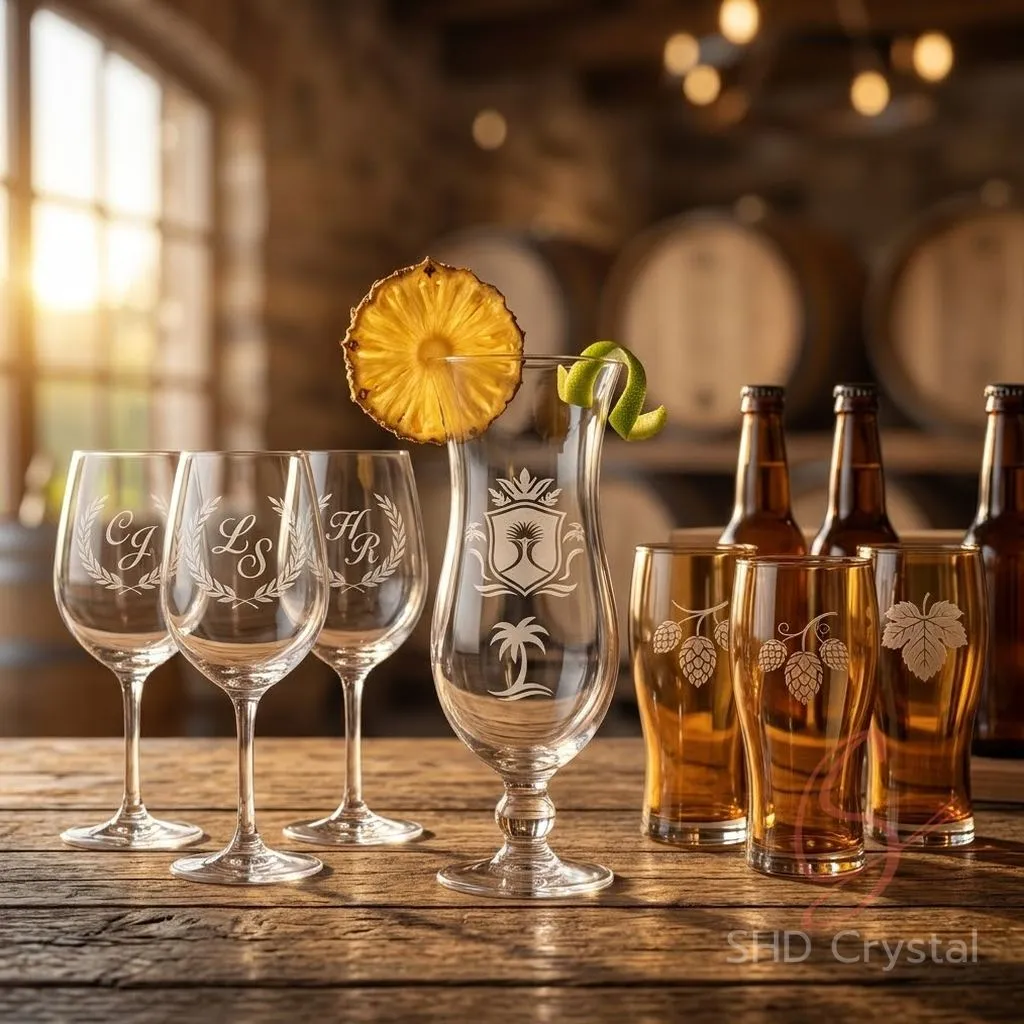
Personalized Wine and Beer Glasses: What Determines Quality
The quality of personalized wine and beer glasses starts with the glass itself. Soda-lime glass handles everyday use well and keeps costs reasonable for promotional runs. Borosilicate glass withstands thermal shock, making it a practical choice for beer glasses that cycle between cold storage and warm service. Lead-free crystal offers the clarity and weight that premium brands expect — but it demands more careful handling during decoration and shipping.
Decoration method matters just as much as the blank. Acid etching produces a smooth, uniform frosted finish ideal for large batches, while sandblasting creates deeper texture but carries a higher risk of micro-fractures on thin walls. Screen printing works for simple logos in bold colors, yet it shows edge wear well before etched glass needs replacement. Laser engraving handles fine detail in small runs, though the per-unit cost climbs quickly at scale.
Decoration Method Comparison
Method | Best For | Main Risk |
Acid Etching | Large volume, consistent frosted finish | Uneven opacity on curved surfaces |
Sandblasting | Deep texture, bold branding | Microfractures on thin-walled glass |
Screen Printing | Simple logos, colorful designs | Edge wear after repeated washing |
Laser Engraving | Fine detail, small production runs | Higher per-unit cost at scale |
On the ground, the better approach is usually to match the decoration method to the order volume and intended use. A hospitality group sourcing branded beer glasses for a chain of restaurants might lean toward acid etching for durability, while a craft brewery launching a limited-edition wine glass collection could justify laser engraving for the precision it offers.
Custom Drinkware Wholesale: MOQ, Lead Times, and Tooling
Minimum order quantities vary widely between factories. A typical glass factory in Hebei or Shandong might set MOQs at several hundred pieces for stock shapes with simple decoration, but custom molds push that number higher. Tooling costs for a new wine glass shape can range from modest to significant depending on cavity count and complexity — and that investment is worth specifying in the RFQ so there are no surprises on the PO.
Lead times depend on whether the supplier controls the full chain — blank production, decoration, and packaging — or uses subcontractors. Factories that handle everything in-house tend to offer tighter timelines. When decoration is outsourced to a separate workshop, add transit time between facilities. One thing buyers should note asking whether the factory runs its own etching line or sends blanks to a specialized decoration shop in another town.
A beverage brand planning a promotional push might need personalized wine and beer glasses ready within six weeks. That timeline works if the blank shape exists and decoration is straightforward. Custom molds, color matching, or complex engraving patterns extend the schedule — and that trade-off is worth discussing early in the vendor evaluation for custom drinkware wholesale.
Branded Glassware Supplier: Quality Inspection and Packaging
Receiving teams should plan for inbound inspection. Common defect tiers in glassware include chips, bubbles, seam lines, and decoration inconsistencies. AQL 2.5 or 4.0 sampling gives a structured framework for acceptance — but it only works if the spec sheet clearly defines what counts as a defect. Running a fingernail across an etched edge can reveal whether the etching depth is too aggressive; a sharp transition suggests the process needs adjustment.
Packaging matters more than many buyers expect. Individual carton dividers, foam inserts, and export-grade outer cartons protect personalized wine and beer glasses during transit. Pallet requirements and stacking limits should be confirmed before shipment — glass is heavy, and poorly planned pallet configurations lead to damage at the destination.
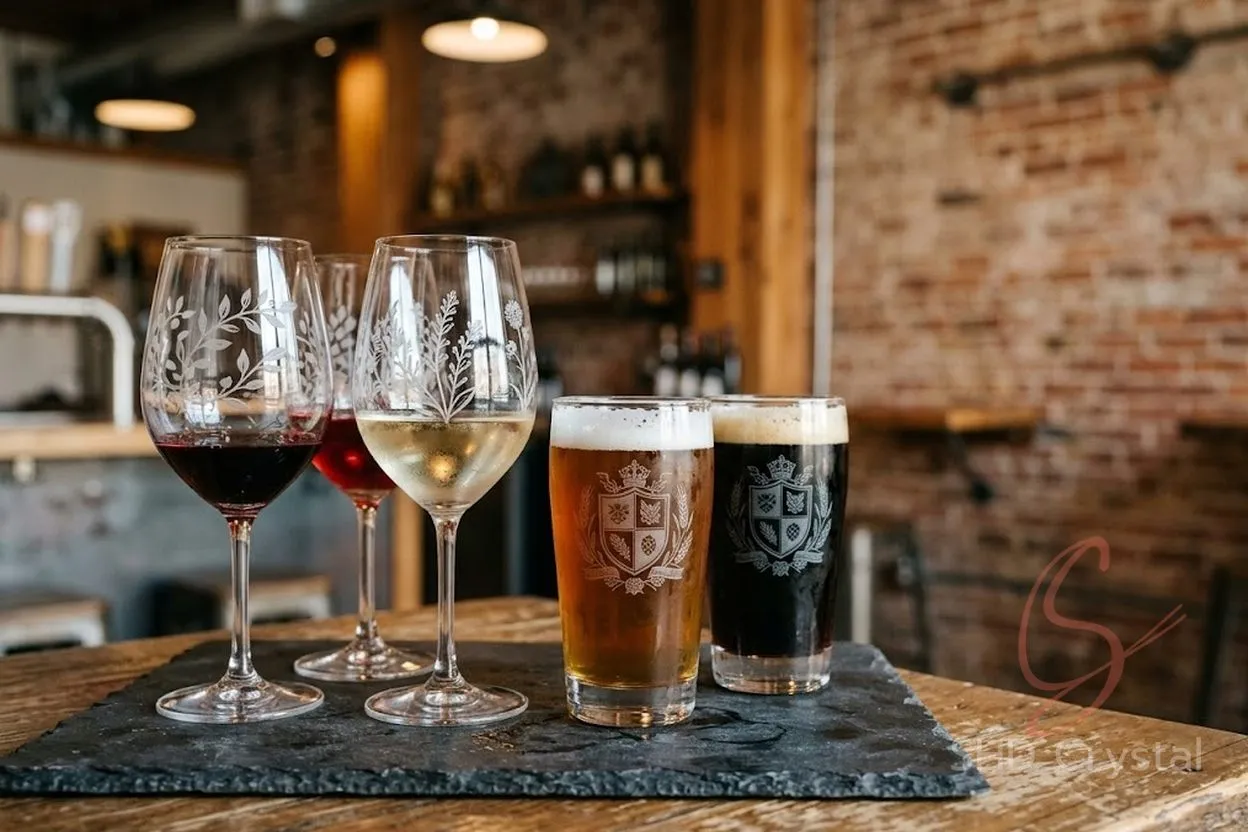
In one common scenario, a procurement team orders branded beer glasses with screen-printed logos, only to discover the decoration chips after a few dish cycles. The root cause was inadequate curing time between ink layers — a production shortcut that saved hours on the line but created returns and rework. Asking about the factory's decoration durability testing before placing the PO can prevent this kind of issue.
A reliable branded glassware supplier will provide AQL inspection reports and sample approvals before mass production. This step helps catch decoration inconsistencies early, when corrections are still manageable. When evaluating a branded glassware supplier, ask for references from buyers with similar order volumes and decoration requirements.
FAQ
What is the typical MOQ for personalized wine and beer glasses from Chinese manufacturers?
MOQs depend on the blank shape and decoration method. Stock shapes with simple etching or printing may start at a few hundred pieces. Custom molds or complex engraving patterns typically require higher minimums to justify tooling costs. Buyers should request a detailed quote that separates tooling fees from per-unit pricing.
How does acid etching compare to laser engraving for custom drinkware wholesale orders?
Acid etching works best for large batches where a uniform frosted finish is desired. It offers consistent results across high volumes. Laser engraving excels at fine detail and small runs, but the per-unit cost is higher. For branded glassware with intricate logos, laser engraving may be worth the premium. For simple designs at scale, acid etching is the practical choice.
What quality certifications should I look for when sourcing branded glassware?
Food-grade safety certifications are essential for any glassware intended for beverage service. ISO 9001 quality management certification indicates a factory follows structured processes. Buyers may also request material test reports confirming the glass composition meets food-contact standards. Buyers should confirm these requirements in the RFQ when evaluating a branded glassware supplier.
How do lead times differ between in-house and outsourced decoration?
Factories that control the full production chain — forming, decoration, and packaging — typically offer shorter and more predictable lead times. When decoration is outsourced, transit between facilities adds days. Clarifying the production workflow upfront helps set realistic delivery expectations.
Conclusion
Sourcing personalized wine and beer glasses is a multi-variable decision. Material selection, decoration method, MOQ, lead times, and packaging all shape the final product and its cost. Buyers who invest time in understanding these variables — and who ask the right questions during vendor evaluation — end up with glassware that meets their brand standards without unexpected delays or quality issues.
Your Next Step in Sourcing Custom Glassware
Whether you are evaluating options for personalized wine and beer glasses or exploring custom drinkware wholesale for a promotional campaign, the right supplier partnership makes the difference between a smooth project and a frustrating one. SHD Glassware works with procurement teams to match decoration methods, materials, and order volumes to specific brand requirements. Reach out to discuss your next project and receive a detailed quote.
If you are interested in our glassware or related products,
please feel free to contact us.

