


Blogpost keywords: printed reusable pint glasses, custom pint glasses, promotional drinkware
Printed reusable pint glasses have become a staple for breweries, bars, and event organizers seeking branded drinkware that holds up beyond a single use. The customization method, glass material, and production workflow all affect whether the final product reinforces a brand or looks like an afterthought.
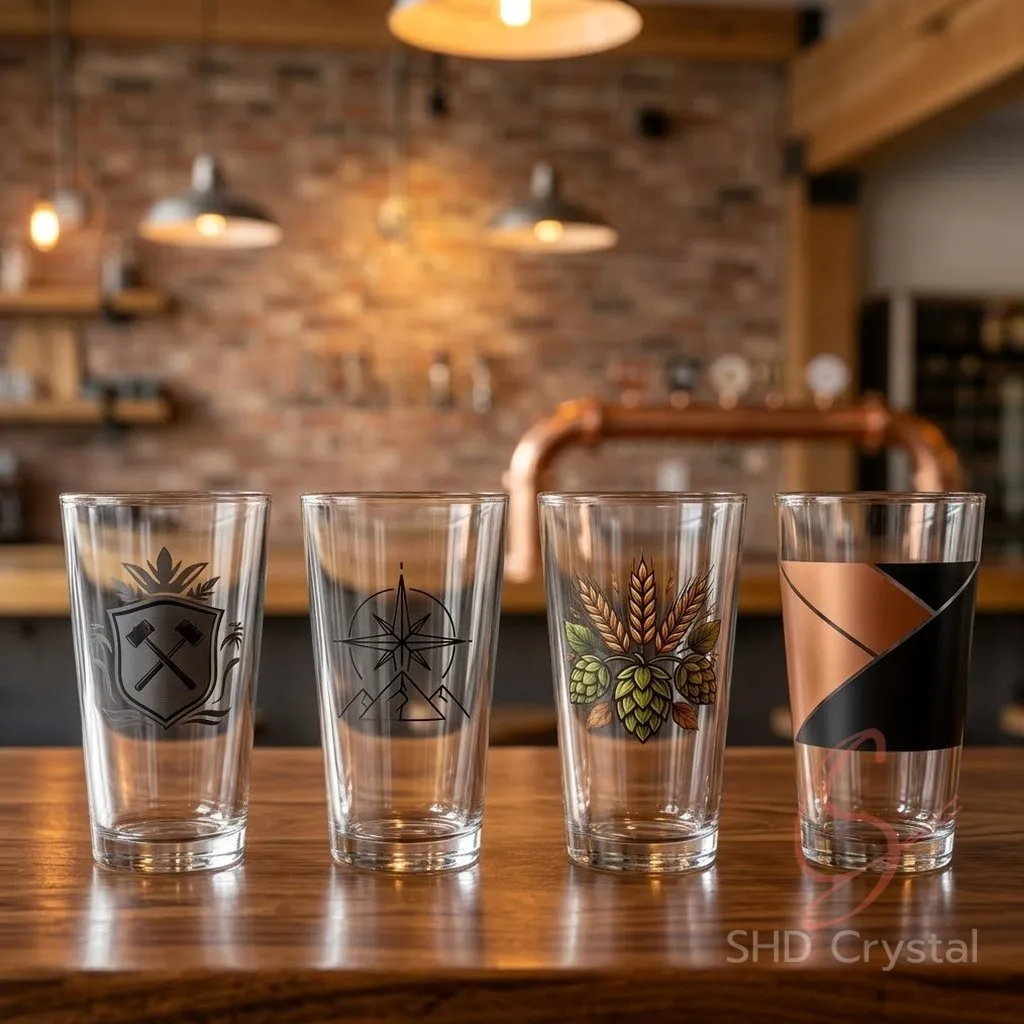
What Sets Printed Reusable Pint Glasses Apart From Standard Drinkware
Standard pint glasses are manufactured in high volume with uniform shapes and a finish designed for everyday service. Printed reusable pint glasses, by contrast, go through at least one additional production step — whether that is screen printing a full-color logo, pad printing a monogram, or applying a kiln-fired decal. Each decoration method carries its own tooling requirements and quality trade-offs.
One thing buyers should note that decoration adds lead time. Factories in the Boshan district of Shandong and across Hebei typically run blank production in one workshop and route pieces to a dedicated decoration line. That separation means changeover time between designs, and it is worth factoring into project timelines — especially when event deadlines are fixed.
Decoration Methods Compared
Method | Best For | Main Risk |
Screen printing | Large batches, full-color graphics, event branding | Surface wear after repeated dish cycles |
Pad printing | Small logos, curved surfaces, multi-color detail | Ink adhesion issues on certain glass finishes |
Kiln-fired decal | Photorealistic imagery, premium positioning | Higher per-unit cost, longer production time |
Screen printing sits on the glass surface rather than modifying the material itself, which means the graphic is vulnerable to abrasion. For a one-time festival, that limitation rarely matters. For a taproom that runs the same glasses through a dishwasher daily, edge wear will show up well before etched or kiln-fired alternatives show any sign of degradation.
Pad printing handles small, detailed logos on curved surfaces more cleanly than screen printing. The trade-off is that each color requires a separate plate, so multi-color designs carry higher setup costs. Kiln-fired decals fuse the design into the glass at high temperature, producing imagery that resists washing — but the process demands careful temperature control to avoid color drift across batches.
Screen printing delivers the lowest per-unit cost at volume, pad printing offers sharper detail on small logos, and kiln-fired decals provide the longest lifespan — each method makes a different trade-off between cost, visual fidelity, and durability. On the ground, the best choice depends on how long the glass needs to look good and how aggressively it will be washed.
Selecting Materials for Custom Pint Glasses
Custom pint glasses come in several material categories, and the choice affects both the feel of the glass and the type of decoration it can support. Soda-lime glass handles everyday use well and keeps costs down, making it a common choice for high-volume promotional drinkware. Borosilicate glass handles temperature changes more gracefully, which matters for venues that serve both hot and cold beverages from the same glassware line.
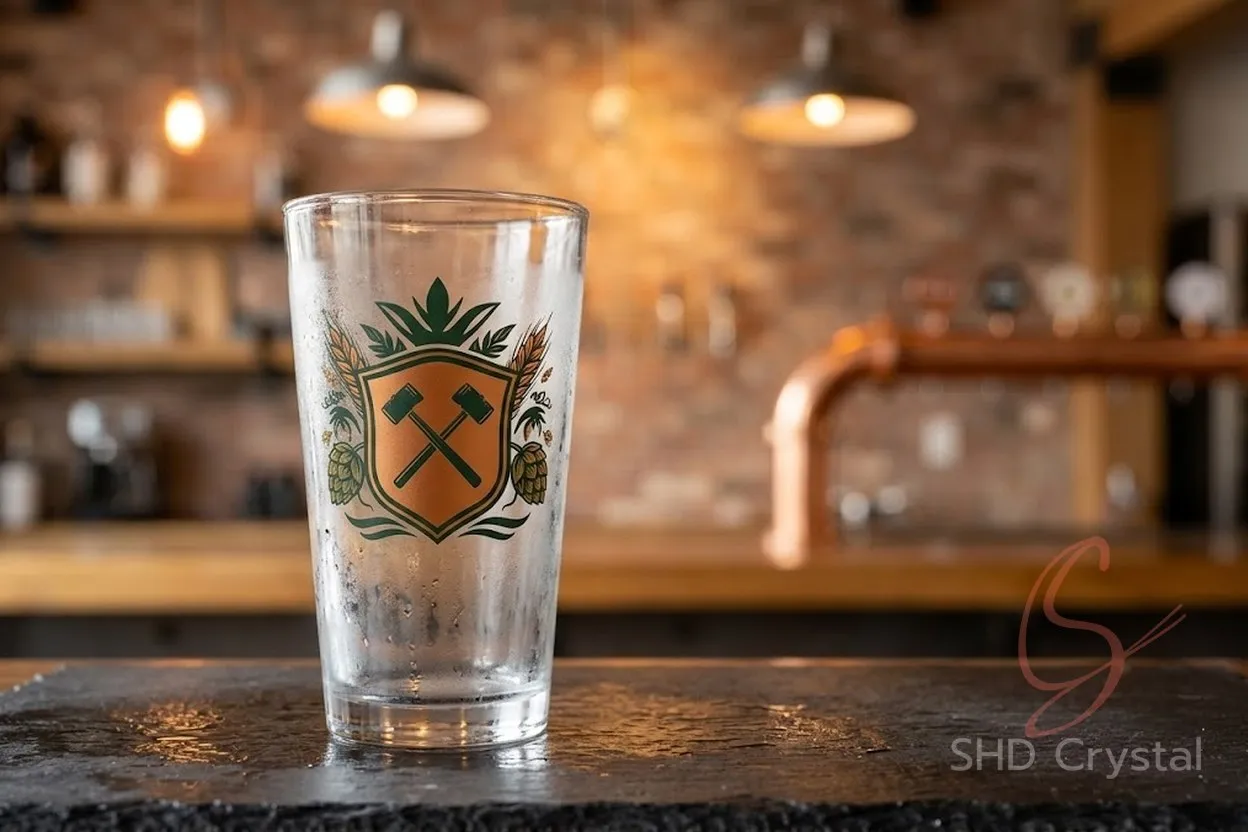
What matters most is material is objectively best, but which aligns with the intended use case and price point. A brewery ordering custom pint glasses for a seasonal promotion may prioritize durability and cost. A distillery curating a premium tasting experience may prefer the tactile refinement and clarity of lead-free crystal.
MOQ, Lead Times, and Production Workflow
MOQ for printed reusable pint glasses varies by decoration method and supplier. Screen-printed orders generally require higher minimums to justify the screen setup, while pad printing can start at lower volumes. Kiln-fired decals involve mold and decal preparation that adds tooling time, but the approach becomes cost-effective at higher quantities.
Lead times typically run several weeks from order confirmation to shipment for decorated glassware. Buyers should confirm that the supplier controls the full chain — from blank forming through decoration and packaging — rather than subcontracting the decoration step. That integration directly affects timeline reliability and consistency across batches. For promotional drinkware tied to specific launch dates, it may help to request a production timeline in writing before issuing a PO.
Branding Applications for Events and Programs
Printed reusable pint glasses serve branding purposes beyond simply displaying a logo. Breweries use them to create a consistent taproom experience. Event planners use them as table settings that double as take-home souvenirs. Corporate programs use branded glassware as merchandise that recipients actually keep and use.
A regional brewery ordered full-color printed pint glasses for a summer promotion. The designs looked sharp at launch, but within a few months of daily washing, the printed logos began to fade at the edges. The brewery switched to kiln-fired versions for the next order — the upfront cost was higher, but the glasses maintained their appearance through significantly more service cycles.
On the ground, the most effective branding on glassware is the one that feels intentional rather than pasted on. A subtle printed logo near the base of the glass tends to age better than a large graphic that wraps the full circumference. Buyers should consider the full lifecycle — from the unboxing moment through years of use — rather than optimizing solely for visual impact on day one.
FAQ
What is the typical MOQ for printed reusable pint glasses from Chinese manufacturers?
MOQ varies by decoration method. Screen printing can start at a few hundred units for single-color designs, while multi-color and kiln-fired options generally require higher minimums. Most suppliers in the Boshan and Hebei glass clusters offer flexibility for first-time buyers, though pricing improves significantly at higher volumes.
How do printed designs compare to engraved options in terms of durability?
Printed designs sit on the glass surface and are more vulnerable to abrasion from dishwashing and handling. Laser-engraved or etched designs modify the glass itself, so they resist wear much more effectively. For long-term branding durability, engraving or kiln-firing is typically the stronger choice.
What quality certifications should buyers look for when sourcing custom pint glasses?
Look for factories that can provide relevant food-contact safety certifications and demonstrate consistent AQL standards in their inspection process. A responsible supplier will also share details about raw material sourcing and forming methods, which affect both product safety and long-term durability.
Can printed reusable pint glasses be produced with custom shapes or sizes?
Yes, custom molds can be developed for specific silhouettes, wall thicknesses, or base designs. Custom mold development adds tooling cost and lead time, but it gives buyers full control over the glass geometry. For brands that need a distinctive shape, it is worth specifying custom molds early in the project.
Conclusion
Sourcing printed reusable pint glasses is a decisions-driven process where material selection, decoration method, and supplier capability all interact. The best outcomes come from buyers who specify requirements clearly, understand the trade-offs each method carries, and verify quality at the sample stage rather than discovering issues after a full shipment arrives.
Start Your Glassware Project
SHD Glassware works with buyers sourcing printed reusable pint glasses for events, bars, and corporate programs. Their team can walk through decoration options, material recommendations, and production timelines to help match glassware to specific branding goals. Reaching out early gives procurement teams the flexibility to explore samples and refine specifications before committing to a full order.
If you are interested in our glassware or related products,
please feel free to contact us.

