


Blogpost keywords: wholesale glass coffee cups, custom glass tumblers, glass coffee mug supplier
Sourcing wholesale glass coffee cups remains one of the most cost-effective ways for brands to build a premium drinkware line without stretching procurement budgets. Glass coffee cups sit at the intersection of everyday functionality and brand presentation — a segment where material choices, decoration quality, and supply chain reliability all matter equally. For procurement teams evaluating options, the real question is not whether glass works for coffee service, but which supplier configuration delivers consistent quality at competitive landed cost.
Why Wholesale Glass Coffee Cups Remain a Strategic Sourcing Category
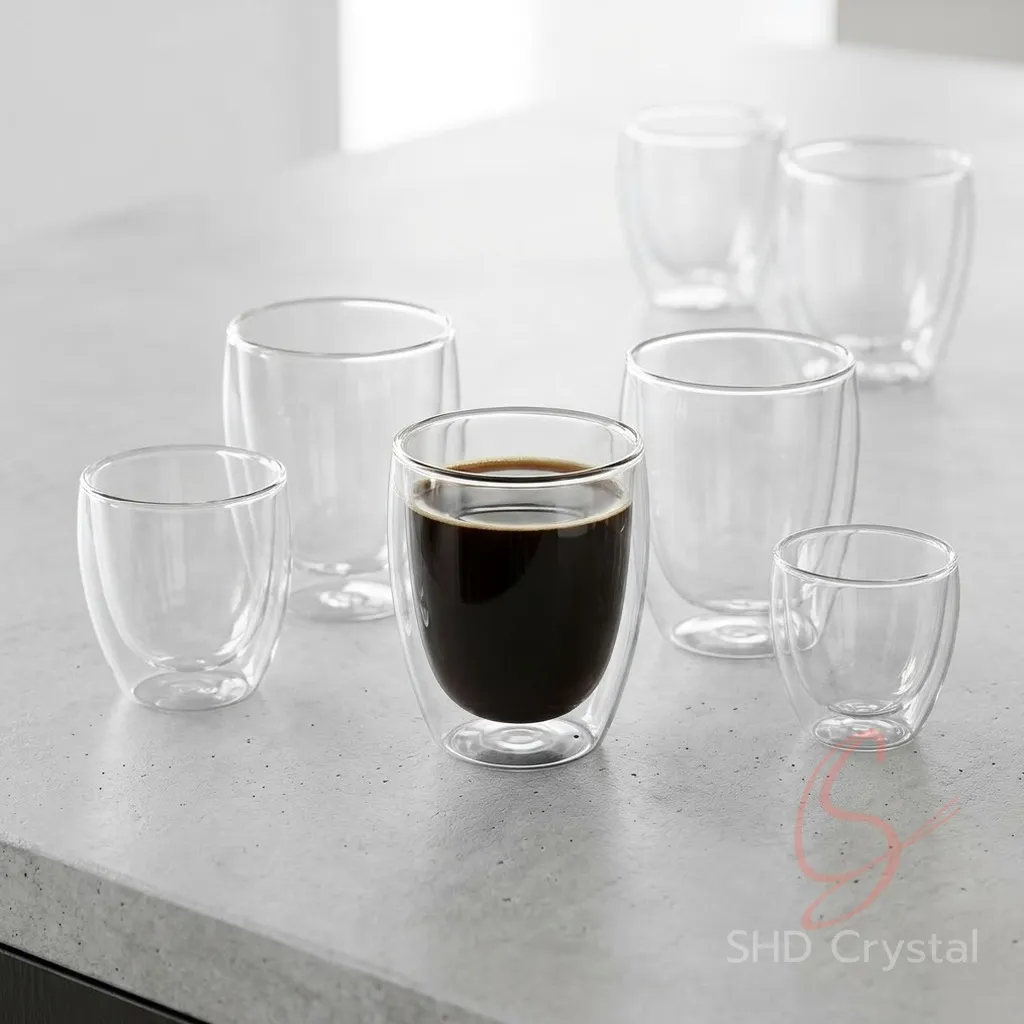
Glass type drives everything downstream — from annealing profiles and defect rates to packaging specs and end-user durability. Soda-lime glass dominates everyday drinkware production because the raw materials are cheap and forming speeds are high. Borosilicate glass costs more but handles thermal shock better, making it the preferred choice for double-walled and heat-resistant designs. Crystal glass sits at the premium end, offering unmatched clarity but requiring tighter process control and more careful handling throughout production.
A practical consideration for buyers: soda-lime glass handles everyday use well, borosilicate withstands thermal shock reliably, and crystal offers the transparency luxury hospitality brands expect — each material makes a different trade-off between cost, durability, and perceived value. On the ground, procurement teams that source for specialty coffee retail typically prefer borosilicate for its thermal performance, while hotel and restaurant buyers lean toward soda-lime for volume pricing.
That depends on your end use. A double-walled borosilicate cup may look elegant on a cafe menu, but the added thickness makes it heavier and more expensive to ship in bulk. Soda-lime alternatives weigh less per unit and stack more efficiently on pallets — a detail that matters when landed cost calculations include freight charges per kilogram.
How Glass Coffee Mug Suppliers Handle Quality Control at Scale
Quality control in glass production is not a single checkpoint — it runs through forming, annealing, decoration, and final packing. A reliable glass coffee mug supplier will operate annealing lehrs with temperature logging per batch, conduct visual inspections at multiple stations, and maintain traceability records that link finished cups back to raw material lots. For wholesale glass coffee cups specifically, batch inconsistency becomes a recurring problem that surfaces months after the order ships when these systems are absent.
Annealing precision matters more than most buyers realize. Glass cups with thick bases or double walls retain internal stress if the cooling curve is miscalculated. The result is spontaneous breakage — sometimes weeks or months after delivery. Responsible suppliers maintain lehr data logs and will share them on request. If a supplier cannot produce annealing records for a batch, that is a warning sign worth taking seriously.
Inbound inspection on the receiving side completes the loop. AQL 2.5 or 4.0 sampling, dimensional checks, rim finish verification, and thermal shock testing on a sample basis all help catch issues before inventory enters the warehouse. For custom glass tumblers with specialized finishes, these inspection protocols become even more critical — a minor defect in an acid-etched surface may not be visible until the product sits under retail lighting.
Design Flexibility and Custom Glass Tumblers at Production Scale
Decoration capability separates commodity suppliers from partners who can support brand differentiation. For wholesale glass coffee cups, acid etching, screen printing, spray coating, and laser engraving each produce distinct visual and tactile results — and combining techniques on a single production run is where Chinese glass clusters in Boshan and Hebei gain a real advantage. Factories with in-house decoration lines control timelines and quality more tightly than operations that outsource finishing to third-party workshops.
Mold development for custom glass tumblers is another area where supplier capability varies widely. A first-off sample typically takes three to four weeks, and mold life depends on design complexity — more intricate patterns wear cavities faster. Buyers should ask whether the supplier controls mold production in-house or subcontracts it, because that decision affects both timeline and dimensional consistency across a production run.
Volume flexibility also matters. A glass coffee mug supplier that handles both small trial batches and mass retail orders gives brands room to validate demand before committing to full-scale production. This kind of scalability turns sourcing from a one-time transaction into a long-term supply chain asset.
Decoration Methods Compared for Wholesale Glass Coffee Cups
Selecting the right decoration method for wholesale glass coffee cups is not just an aesthetic decision — it directly impacts unit cost, minimum order quantity, and product longevity. The table below breaks down three common approaches and where each one fits best.
TABLE:Decoration Method|Best For|Primary Limitation|Acid Etching|High-volume branded lines with a smooth, matte finish|Uneven opacity on tightly curved surfaces if bath concentration drifts|Screen Printing|Short-run promotions and multi-color logo work|Edge wear visible after repeated dish cycles|Laser Engraving|Fine detail, premium positioning, small to mid-size runs|Higher per-unit cost at volume, limited to single-color marks
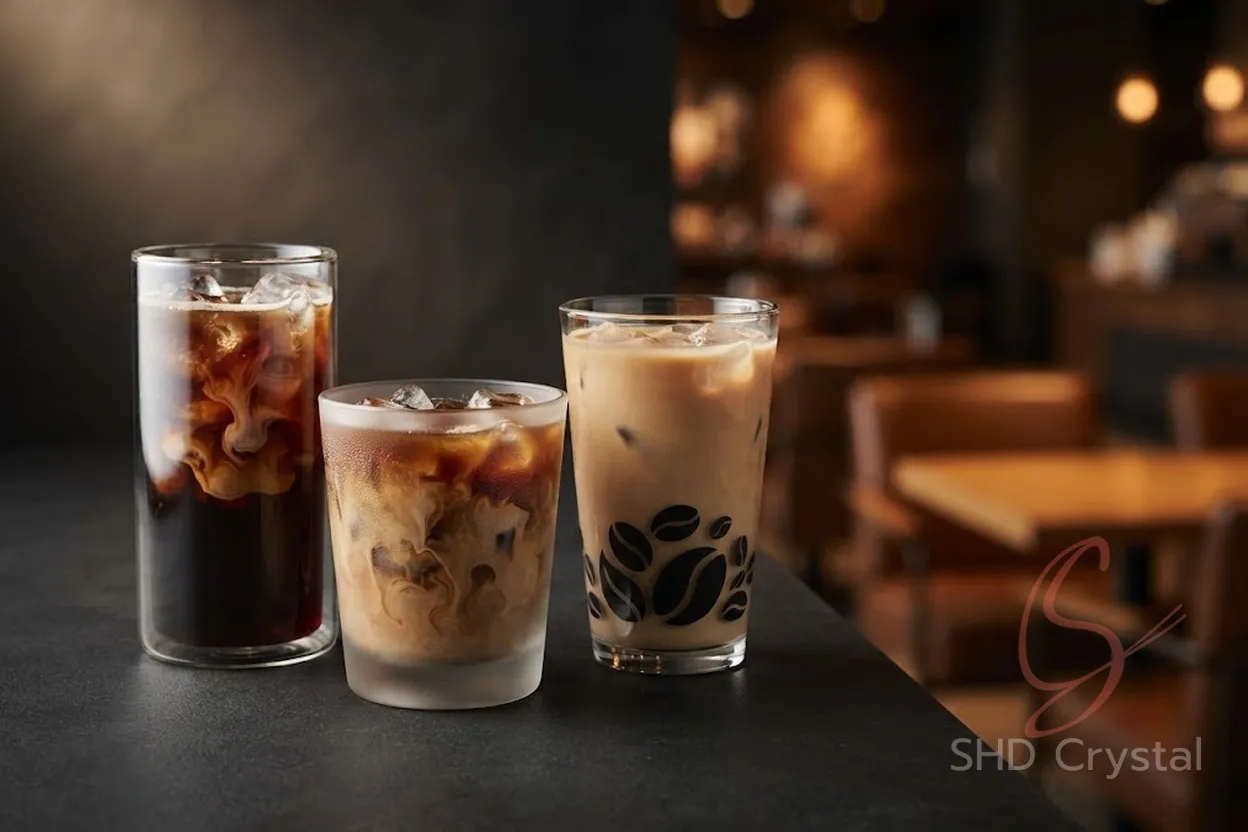
The trade-off between screen printing and etching often comes down to expected product lifespan. Screen-printed designs hold up well for promotional runs, but etched or laser-marked cups maintain their appearance through years of daily use — a meaningful difference for hospitality accounts that wash glassware multiple times a day.
Avoiding Common Pitfalls When Sourcing Wholesale Glass Coffee Cups
The most frequent mistake in glass drinkware procurement is selecting a supplier based solely on unit price. Extremely low quotes often signal the use of off-spec cullet, compressed annealing cycles, or production at unvetted sub-facilities. A transparent supplier provides a clear cost breakdown — raw materials, forming, decoration, packaging, and testing — so buyers can see exactly where value is being delivered and where corners might be cut.
Packaging specifications deserve more attention than they typically receive. Glass is fragile by nature, and transit damage rates climb when inner cell dividers, corrugated tray strength, or pallet stacking limits are not defined before production begins. Specifying these details in writing before the first unit is formed prevents costly disputes after arrival.
Communication gaps cause the most expensive delays. Verbal descriptions and sample photos work for simple items, but custom glass tumblers with tight dimensional tolerances require technical drawings with explicit measurements, material callouts, and finish standards. Without these, inconsistency between samples and production runs becomes almost inevitable.
A Real-World Sourcing Decision in Practice
A specialty coffee brand sourcing wholesale glass coffee cups once requested double-walled borosilicate custom glass tumblers at a price point only achievable with soda-lime glass. The supplier proposed a single-wall soda-lime alternative with a silicone grip band — maintaining the thermal comfort the brand wanted while keeping unit cost within budget. That kind of material-to-design pivot is common when procurement teams work with suppliers who understand the trade-offs rather than simply quoting what was asked for.
Conclusion
Sourcing wholesale glass coffee cups successfully requires clear specifications, disciplined quality verification, and a supplier partnership built on transparency rather than the lowest sticker price. For procurement teams that invest upfront in material selection, decoration validation, and annealing documentation, the payoff is a reliable drinkware supply chain that holds up through retail shelves and daily use alike.
FAQ
What is the typical MOQ for wholesale glass coffee cups from Chinese manufacturers?
MOQs vary by product complexity and decoration method, but most Chinese glass coffee mug suppliers accept orders starting around 1,000 to 5,000 units for standard designs. Custom molds, specialty finishes, or double-wall construction often carry higher minimums because setup costs and tooling investment need to be spread across sufficient volume.
How do borosilicate and soda-lime glass compare for coffee service?
Soda-lime glass handles everyday use at a lower price point, while borosilicate offers better thermal shock resistance — it tolerates sudden temperature changes without cracking. For hot coffee service specifically, borosilicate is generally preferred, though soda-lime works adequately when wall thickness and annealing are properly controlled.
What quality certifications should I look for when evaluating suppliers?
ISO 9001 is the baseline for quality management systems. For food-contact glassware serving North American or European markets, buyers should also request FDA or EU food-contact compliance documentation and lead-free material certifications. Accredited third-party lab reports add an extra layer of verification beyond the supplier's own claims.
How long does mold development typically take for custom glass tumblers?
First-off samples generally take three to four weeks from design approval, depending on mold complexity. High-detail embossing or multi-cavity molds may extend that timeline. Buyers should factor mold lead time into their launch schedule and confirm whether the supplier handles mold production in-house or through a subcontractor.
What decoration method holds up best for daily-wash glassware?
Acid etching and laser engraving both outperform screen printing in durability for glassware that goes through commercial dishwashers regularly. Etching creates a permanent surface change that does not wear off, while screen-printed designs show edge degradation after repeated wash cycles. The trade-off is cost — etching and laser methods carry higher per-unit charges.
Start Your Glass Coffee Cup Sourcing Evaluation Today
For procurement teams ready to evaluate wholesale glass coffee cups in detail, the practical next step is requesting samples, reviewing annealing documentation, and verifying decoration capabilities against your specifications. A glass coffee mug supplier that provides transparent cost breakdowns, accepts independent quality audits, and communicates clearly about lead times is the kind of partner that turns sourcing from a cost exercise into a long-term competitive advantage.
If you are interested in our glassware or related products,
please feel free to contact us.

