


Blogpost keywords: custom clear glass mugs, clear glass drinkware, personalized glass mugs
Procurement teams evaluating custom clear glass mugs for hospitality, retail, or promotional use need to weigh material quality, decoration options, and supplier capabilities before committing to a bulk order. The clarity of the glass, the durability of the finish, and the consistency across a production run all determine whether the final product meets brand standards or ends up in the seconds pile.
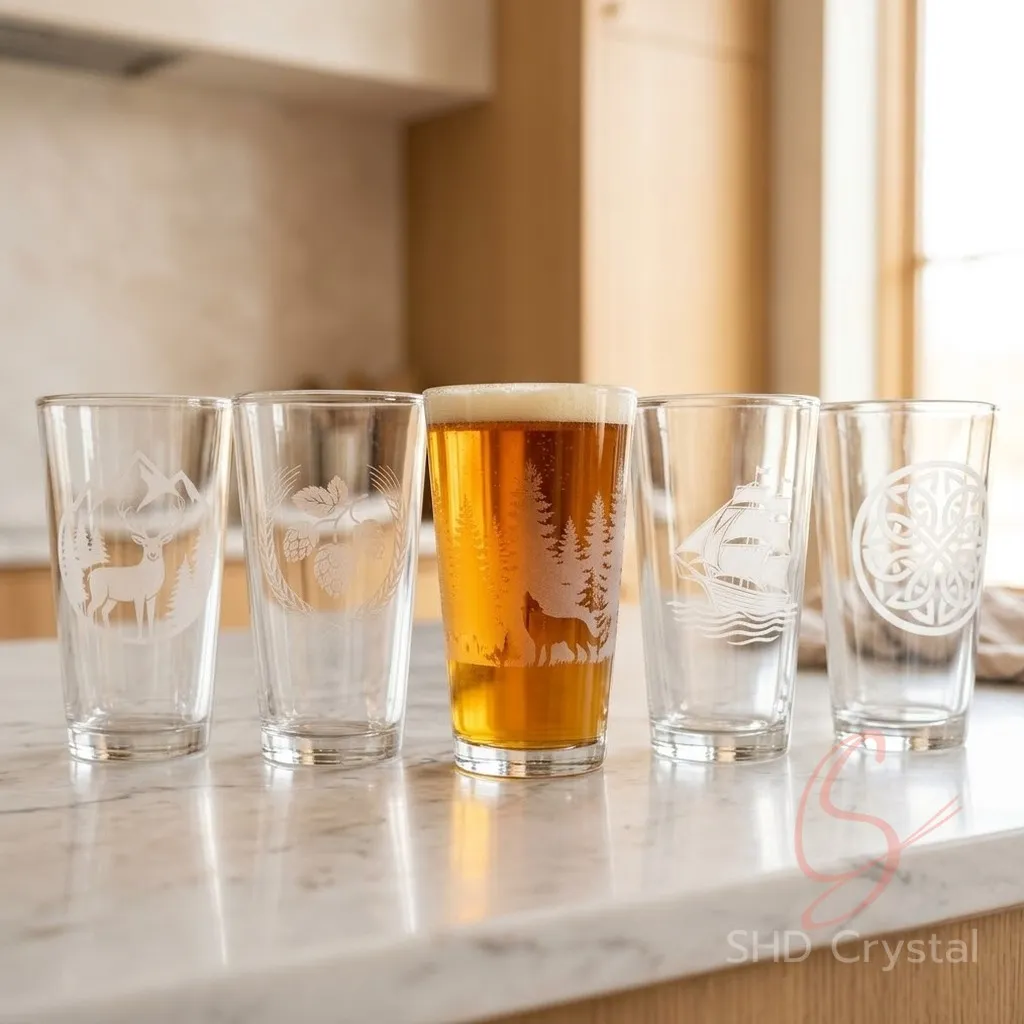
What Makes Custom Clear Glass Mugs Different from Standard Stock
Standard stock mugs come off a fixed mold with no decoration. Custom clear glass mugs, by contrast, involve decisions at every stage: glass composition, wall thickness, handle profile, and surface treatment. A buyer choosing personalized glass mugs for a hotel chain, for example, needs to specify tolerances that a stock catalog simply does not address.
the difference shows up in three areas. First, mold development — a custom mold costs more upfront but produces a shape that matches brand identity rather than generic geometry. Second, decoration flexibility — custom orders can include acid etching, silk screening, or laser engraving on the same blank. Third, quality consistency — a dedicated production run lets the factory hold tighter specs across the batch than mixed catalog production.
The key question becomes whether the volume justifies the tooling investment. For runs under a few thousand pieces, decorated stock mugs may be the more practical move. Once volume climbs, these mugs typically deliver better per-unit economics and a product that actually fits the brand.
Material and Clarity: What Buyers Should Actually Check
Not all clear glass is the same. Soda-lime glass handles everyday use and keeps costs down, but it can show a slight green or blue tint at the edges. Borosilicate withstands thermal shock and stays crystal-clear, which matters for premium presentation. Crystal offers the highest brilliance but raises the price and requires careful handling.
Each material makes a different trade-off between cost, durability, and perceived value — and that trade-off matters more for clear glass drinkware than for colored or frosted alternatives, where surface imperfections are less visible. For personalized glass mugs destined for high-traffic service, soda-lime typically provides the best balance of resilience and cost. Buyers sourcing clear glass drinkware for outdoor venues should also factor in UV exposure, which can accelerate clouding on lower-grade soda-lime over time.
When evaluating options, how the glass looks under the lighting conditions where it will actually be used. A clear glass drinkware order destined for an outdoor patio bar faces different visual demands than mugs on a fine-dining table. Testing samples under real lighting, not just warehouse fluorescents, is worth specifying in the RFQ process.
Material | Best For | Main Limitation |
Soda-lime glass | Everyday restaurant and bar use, budget-conscious orders | Slight edge tint, lower thermal shock resistance |
Borosilicate glass | Premium presentation, outdoor service, temperature-sensitive use | Higher material cost, requires careful handling during shipping |
Crystal glass | Luxury hospitality, gift sets, high-clarity branding | Most expensive option, sensitive to dishwasher chemicals |
Decoration Methods and Their Trade-offs
Surface decoration on clear glass demands more precision than on colored or frosted stock. Acid etching produces a smooth, uniform frosted finish ideal for large batches, while sandblasting creates deeper texture but carries a higher risk of micro-fractures on thin walls. Laser engraving handles fine detail and small runs, though the per-unit cost climbs once volume increases.
In most cases, the decoration method should match the product's end use. A hospitality group sourcing personalized glass mugs for daily restaurant service needs a finish that survives repeated dish cycles. Silk-screened logos show edge wear well before etched designs need attention — the difference is measured in years of service, not weeks.
Another factor to consider is whether the factory controls decoration in-house or subcontracts it. Factories in Boshan district and Hebei often separate blank production from decoration, sending mugs to specialized finishing lines in nearby towns. That split can introduce inconsistencies in color matching and alignment that a fully integrated operation avoids.
Procurement Pitfalls Most Buyers Overlook
A beverage brand once requested custom clear glass mugs with a metallic logo for a summer promotion. The samples looked sharp, but the first production batch arrived with logo edges that had oxidized during packing. The root cause: the factory used a metallic ink that reacted with the humidity in the export carton. A simple moisture barrier in the packaging specification would have prevented the issue.
That scenario illustrates a broader point. Lead times, packaging specs, and inbound inspection protocols matter as much as the glass itself. Buyers should consider requesting AQL defect tiers in the PO, specifying inner carton separation, and confirming whether the supplier runs a post-decoration inspection before boxing.
The trade-off is between cost and risk. Skipping detailed packaging requirements saves a small percentage on unit cost, but a receiving team inspecting damaged mugs faces a much larger expense in returns and reorders. Smart procurement teams treat packaging as a line item, not an afterthought.
Lead Times and Supply Chain Considerations
Custom clear glass mugs typically require longer lead times than stock orders. Mold development alone can take two to three weeks, and decoration adds another week or more depending on the method. Buyers planning a seasonal promotion should work backward from the launch date and build in buffer for ocean freight, customs clearance, and inland transport.
Chinese glass factories in Shandong and Hebei often operate on 25 to 35 working-day production schedules for custom orders. Rush timelines are possible but usually carry a premium. The better approach is to confirm production capacity early in the RFQ process and lock in a delivery window before committing to marketing materials.
That depends on whether the supplier controls the full production chain. A factory that handles blank forming, decoration, and packaging under one roof can move faster than one that coordinates three separate subcontractors. Asking about vertical integration during vendor evaluation is worth the five minutes it takes.
FAQ
What is the typical MOQ for these mugs from Chinese manufacturers?
Minimum order quantities vary by factory and mold complexity. Most Chinese glass manufacturers set MOQs between 1,000 and 5,000 pieces for custom orders. Factories with existing molds that match a buyer's requirements may accept smaller runs, while fully custom tooling typically requires higher volume to justify the setup cost.
How does soda-lime glass compare to borosilicate for clear glass drinkware?
Soda-lime glass is more affordable and suitable for everyday use, but it has lower thermal shock resistance. Borosilicate handles temperature changes better and maintains clarity, making it a stronger choice for premium applications. The decision often comes down to whether the product will encounter extreme temperature shifts during use.
What quality certifications should I look for when sourcing personalized glass mugs?
Buyers should request evidence of ISO 9001 quality management systems, FDA compliance for food-contact materials, and LFGB or California Prop 65 testing where applicable. A responsible manufacturer will provide these proactively. If certifications are not readily available, that is a signal to proceed with caution.
Can acid etching and laser engraving be combined on the same order?
Yes, both methods can be applied to the same piece, though the order of operations matters. Etching typically covers broader surfaces, while laser engraving handles fine detail. Factories with in-house decoration capabilities can coordinate the sequence; outsourced decoration may require additional coordination between vendors.
Conclusion
Selecting custom clear glass mugs is not a catalog purchase — it is a procurement decision that touches material science, decoration technology, packaging logistics, and supplier reliability. Buyers who invest time in understanding these variables before issuing an RFQ tend to receive samples that match expectations and production runs that hold quality across the batch.
The key takeaways are straightforward: verify glass composition under real lighting conditions, match the decoration method to the product's intended lifespan, and treat packaging specifications as a quality safeguard rather than a cost center. With those fundamentals in place, the right order of custom clear glass mugs delivers the consistency and brand alignment that stock alternatives cannot.
Let's Talk About Your Project
SHD Glassware works with procurement teams sourcing custom clear glass mugs for hospitality, retail, and promotional campaigns. Whether the project calls for a few thousand pieces or a full container load, the team can walk through material options, decoration methods, and production timelines to find the right fit. Reach out to discuss specifications and request samples.
If you are interested in our glassware or related products,
please feel free to contact us.

