


Blogpost keywords: engraved wine tasting glasses, personalized wine glasses, custom wine glassware
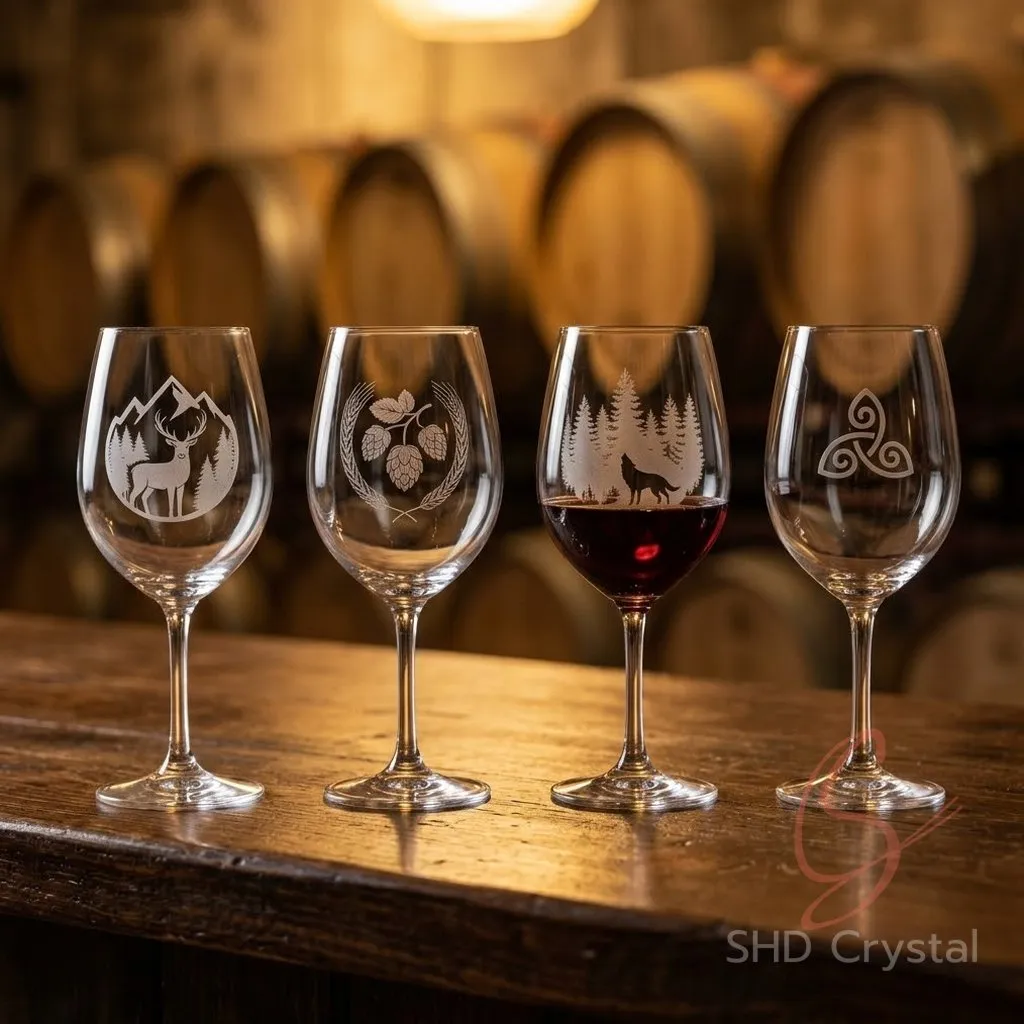
Engraved wine tasting glasses have become a preferred choice for wineries, hospitality groups, and corporate gift programs that want tableware carrying a permanent brand mark. Sourcing them well means understanding the engraving method, the glass material, and the production realities that shape quality and lead time.
Why Engraved Wine Tasting Glasses Stand Apart From Printed Alternatives
Printed designs sit on the glass surface and degrade with each dishwasher cycle. Engraving — whether laser, acid etch, or sandblast — modifies the glass itself, creating a mark that resists abrasion for the life of the product. Custom wine glassware with permanent engraving eliminates the peeling and edge wear that plague screen-printed alternatives within months.
The tactile quality of engraving also matters. Running a finger across an etched logo produces a subtle raised texture that signals craftsmanship. Buyers handling sample shipments often use this as an informal quality check — consistent depth suggests reliable process control, while uneven transitions point to variable bath conditions.
Engraving Methods Compared: Laser, Acid Etch, and Sandblast
Method | Best For | Main Risk |
Laser engraving | Fine detail, small runs, logo fidelity | Higher per-unit cost at volume |
Acid etching | Large batches, uniform frosted finish | Opacity variation if bath conditions drift |
Sandblasting | Deep texture, bold visual contrast | Microfractures on thin-walled glass |
Laser engraving offers the finest detail resolution. Intricate logos render cleanly, and the setup requires only a digital file. For buyers evaluating personalized wine glasses at scale, the trade-off is per-unit cost — laser remains the most expensive method at high volume.
Acid etching handles large orders more efficiently by submerging pieces in a chemical bath. The risk surfaces when concentration varies across a rack, producing uneven frosting. Sandblasting creates the deepest texture but carries a real risk of microfractures on thin-walled bowls.
Choosing Glass Material for Personalized Wine Glasses
Soda-lime, borosilicate, and lead-free crystal each present different profiles for engraved wine tasting glasses. Soda-lime handles everyday service economically. Borosilicate tolerates temperature variation better, making it practical for outdoor events. Lead-free crystal provides the clarity and thin rim that premium brands expect — light refraction enhances engraved detail visibility.
The better choice depends on which aligns with the use case. A hospitality group sourcing personalized wine glasses for a resort patio might prioritize borosilicate durability. A winery curating an exclusive member tasting might invest in crystal for the tactile refinement.
What Procurement Teams Should Verify Before Ordering Custom Wine Glassware
MOQ, lead time, and decoration workflow are the variables most likely to cause problems. Laser-engraved orders carry lower minimums because setup is digital. Acid-etched and sandblasted orders require physical tooling — stencils or masks — which adds cost that only justifies itself at higher volumes.
When evaluating options, whether the supplier controls the full production chain: blank forming, decoration, and packaging. Factories that subcontract the engraving step introduce a second facility into the timeline, increasing the risk of batch inconsistency. In the Boshan and Hebei glass clusters, some factories operate integrated decoration lines while others rely on subcontractors.
A hospitality brand that ordered personalized wine glasses for a quarterly promotion discovered that the supplier outsourced the engraving. The blanks arrived late, and the finished shipment arrived without the inbound quality inspection the buyer had specified. Nearly a third of the order showed inconsistent engraving depth.
Branding Applications Beyond the Tasting Room
Engraved wine tasting glasses serve branding purposes well beyond winery tasting rooms. Corporate gift programs incorporate them into client appreciation packages. Event planners use them as table settings that double as take-home gifts. Custom wine glassware with engraved branding also reinforces a hotel bar's visual identity.
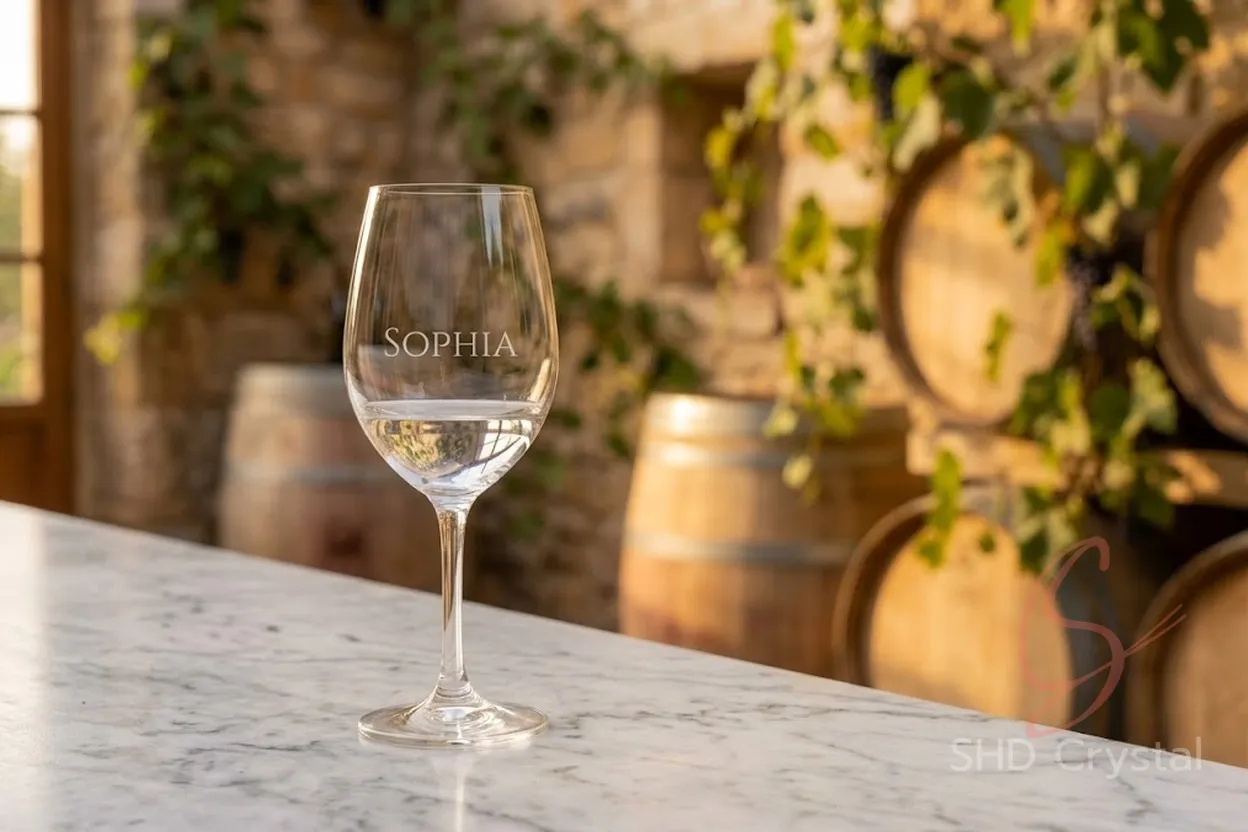
the engraving approach that ages best tends to be understated. A small logo near the base or a monogram along the bowl reads as intentional. Oversized graphics may look striking on the first day but feel dated quickly. Buyers should consider the full lifecycle — from unboxing through years of use.
FAQ
What is the typical MOQ for engraved wine tasting glasses from Chinese suppliers?
Laser engraving can start at a few hundred units since setup is digital. Acid etching and sandblasting generally require larger minimums. Most suppliers in the Boshan and Hebei glass clusters offer flexibility on first orders, though pricing improves at higher volumes.
How do engraved designs compare to screen printing for custom wine glassware?
Engraving modifies the glass surface itself, creating a mark that resists abrasion. Screen printing sits on the surface and is vulnerable to edge wear. For long-term branding, engraving outlasts printed alternatives by a wide margin.
What quality certifications should buyers look for when sourcing personalized wine glasses?
Food-contact safety certifications are a baseline. Buyers should also request AQL standards from the factory's inspection process, raw material documentation, and test samples before full production. A responsible supplier provides this information without hesitation.
Can engraved wine tasting glasses be produced with custom shapes or bowl sizes?
Custom molds can be developed for specific bowl profiles, stem lengths, or base dimensions. This adds tooling cost and lead time but gives buyers complete control over glass geometry. For brands building a distinctive identity, specifying custom molds early saves time and money.
How does engraving method affect pricing at different volumes?
Laser engraving has the lowest setup cost but the highest per-unit cost at volume. Acid etching requires more upfront tooling but becomes cost-effective at larger runs. Sandblasting falls between the two. The efficient choice depends on order size and design complexity.
Conclusion
Engraved wine tasting glasses represent a sourcing decision where technique, material, and supplier capability intersect. Buyers who specify requirements clearly and verify those specifications at the sample stage avoid costly surprises after a full production run ships.
Explore Your Engraving Options
SHD Glassware works with buyers sourcing engraved wine tasting glasses for wineries, hospitality programs, and corporate gifting. Their team can discuss customization methods, material recommendations, and production timelines to help match glassware specifications to branding goals. Reaching out early gives procurement teams the room to review samples before committing to volume orders.
If you are interested in our glassware or related products,
please feel free to contact us.

