


Blogpost keywords: monogramged glass mugs, personalized glass cups, custom etched mugs
Monogrammed glass mugs have become a staple in corporate gifting, hospitality programs, and premium retail — but sourcing them well requires more than choosing a shape and adding initials. The decoration method, glass material, and production workflow all influence whether the final product reflects brand identity or looks like an afterthought.
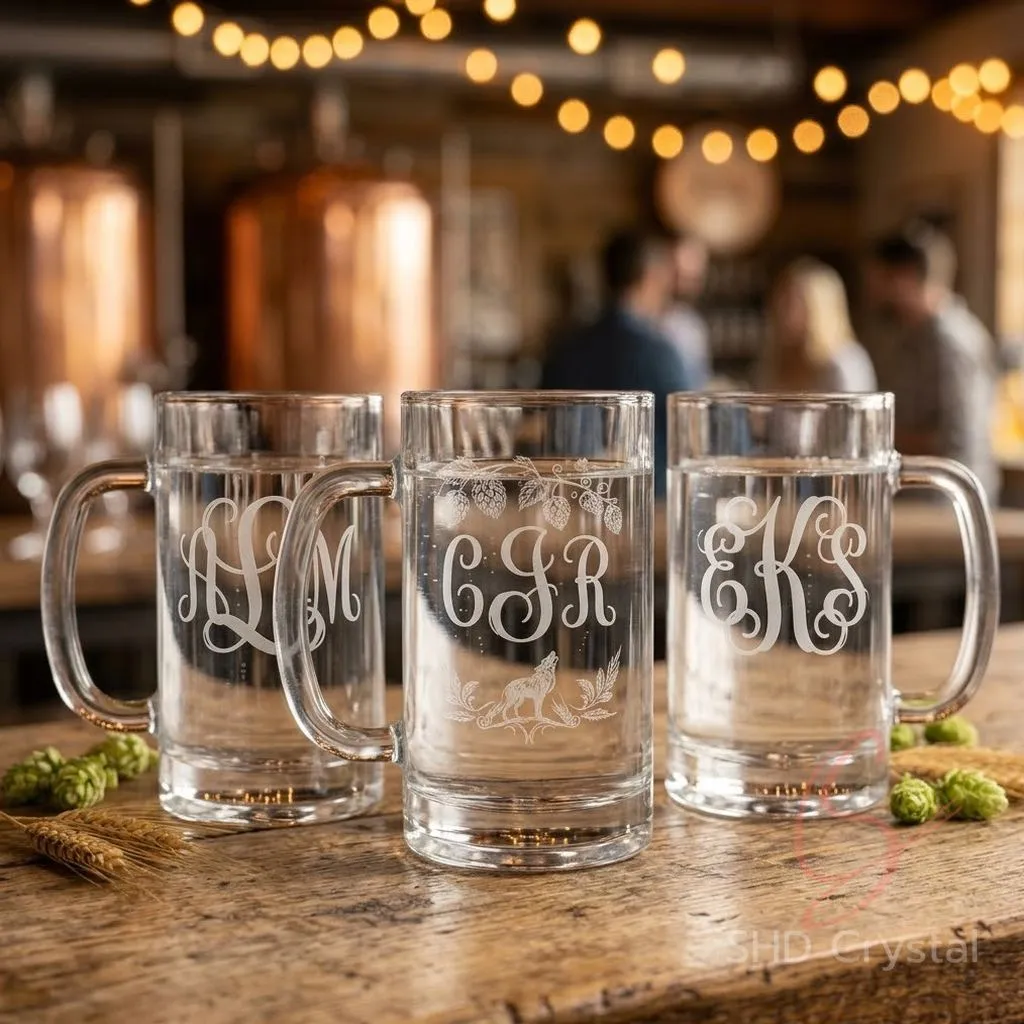
Monogrammed Glass Mugs vs Other Personalized Drinkware
Buyers evaluating monogrammed glass mugs alongside other drinkware quickly discover the term covers a wide range of decoration approaches. Acid etching, laser engraving, and sandblasting each produce distinct visual and tactile results, and the choice depends on order volume, design complexity, and expected product lifespan.
Acid etching produces a smooth, frosted finish ideal for large batches. Sandblasting creates deeper texture but carries a higher risk of microfractures on thin walls. Laser engraving handles fine detail and small runs without tooling changes, though the per-unit cost stays higher. Each method makes a different trade-off between cost, durability, and visual impact.
Monogramming Method | Best For | Main Limitation |
Acid etching | Large batches, consistent frosted finish | Uneven opacity on curved surfaces |
Laser engraving | Fine detail, small runs, sharp edges | Higher per-unit cost at scale |
Sandblasting | Deep texture, bold branding impact | Microfractures on thin-walled glass |
A factory experienced in decorative glassware will warn buyers that sandblasting a thin-walled mug invites microfractures around the design edge. Those cracks may not appear immediately, but after enough dishwasher cycles, tiny fissures can surface along the blasted outline. Personalized glass cups built from soda-lime handle daily service well, while borosilicate offers better thermal shock resistance.
Personalization Methods and Their Trade-offs
The decoration step is where monogrammed glass mugs either earn their price point or fall short. Laser engraving uses a focused beam to etch the design directly into the glass surface. It reproduces fine lines and small logos with precision, but the setup requires a digital file and the per-unit cost remains higher at volume.
Acid etching handles large batches more efficiently. A stencil is applied to the glass, and the exposed areas are immersed in an acid bath to create a frosted appearance. The trade-off is that chemical concentration and immersion time must remain consistent — if they drift, the opacity turns uneven. Personalized glass cups destined for daily commercial use benefit most from acid etching, because the frosted finish resists wear better than surface printing.
Material Selection for Custom Etched Mugs
The glass itself shapes how monogrammed glass mugs perform over time. Soda-lime dominates the market because it balances cost, clarity, and workability. Borosilicate handles temperature swings better, suitable for venues serving both hot and cold beverages. Lead-free crystal delivers the optical clarity premium brands expect — the light refraction makes etched designs appear sharper. Custom etched mugs from lead-free crystal command higher perceived value, but the cost premium requires justification.
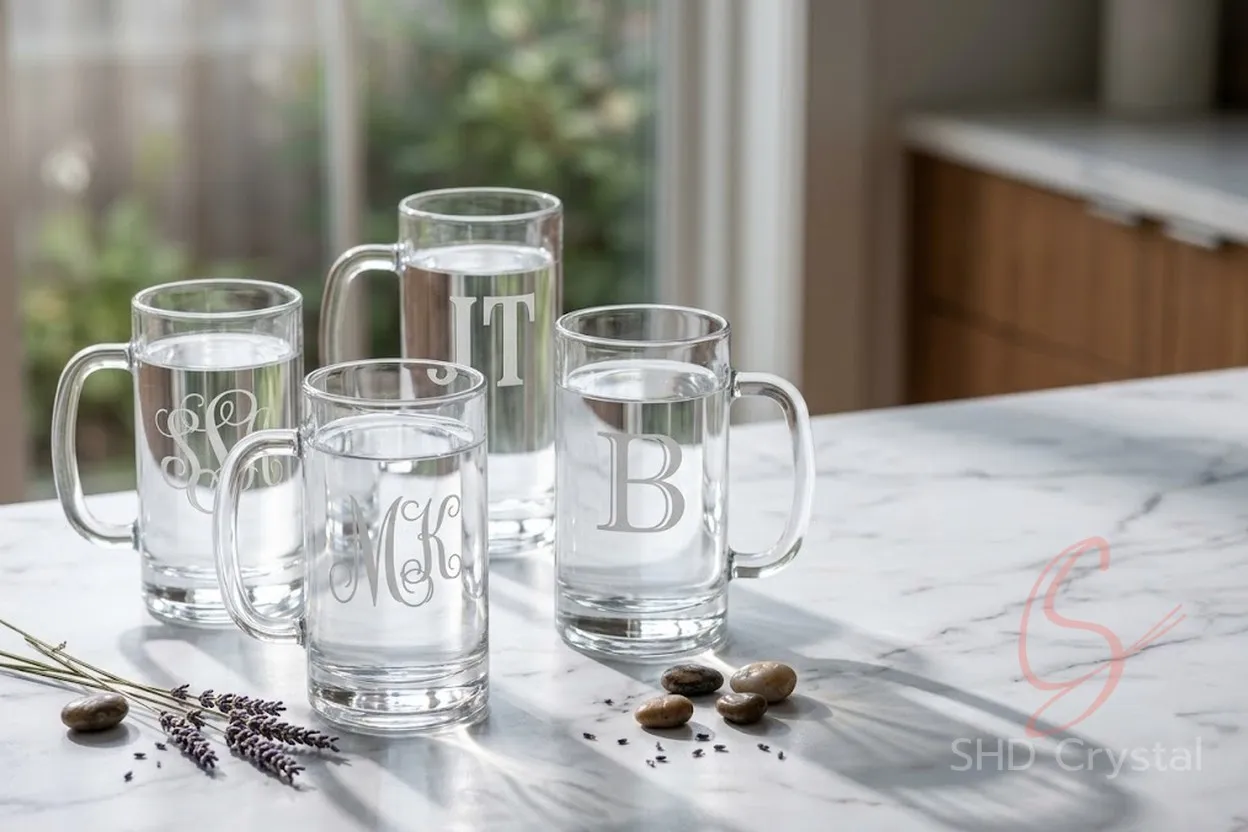
That depends on the end user. A hospitality group sourcing for resort restaurants may prioritize durability and dishwasher performance. A winery curating a member-exclusive tasting experience may prefer the tactile refinement of crystal. Material selection ultimately depends on brand positioning and expected product lifespan.
MOQ, Lead Times, and Supply Chain Considerations
Minimum order quantities for monogrammed glass mugs vary by customization method and supplier. Laser-engraved pieces may have lower minimums because the setup involves programming a digital file rather than producing a physical mold. Acid-etched designs require a stencil, which adds tooling time but becomes cost-effective at higher volumes.
Lead times typically run several weeks from order confirmation to shipment. Buyers should verify whether the supplier controls the full production chain — blank forming, decoration, and packaging — or relies on subcontractors. China’s glass clusters in Hebei and Shandong’s Boshan district often separate blank production from decoration, which can introduce variability. Personalized glass cups sourced from integrated factories tend to show more consistent results.
A beverage brand sourcing monogrammed glass mugs for a product launch once found that color consistency varied between batches because the decoration subcontractor used different ink suppliers. The issue only surfaced after a full shipment arrived. Asking for batch color records before committing to a full order is a reasonable request.
FAQ
What is the typical MOQ for monogrammed glass mugs from Chinese manufacturers?
Minimum orders commonly range from a few hundred to several thousand pieces, depending on the decoration method and supplier setup. Laser engraving typically offers the lowest minimums, while acid etching and sandblasting require larger runs to justify tooling costs. Custom etched mugs at volume benefit from amortized tooling expenses.
How do custom etched mugs compare to printed options in terms of durability?
Custom etched mugs modify the glass surface itself, so the design resists wear from repeated washing. Printed designs sit on the surface and are more vulnerable to abrasion, particularly with frequent dishwasher use. For long-term branding, etching or engraving is typically the stronger choice.
What quality certifications should buyers look for when sourcing personalized glass cups?
Look for factories that can provide relevant food-contact safety certifications and demonstrate consistent AQL standards. A responsible supplier will share details about raw material sourcing and forming methods. Personalized glass cups used in commercial settings should meet food-contact compliance standards.
Can monogrammed glass mugs be produced with custom shapes or sizes?
Yes, custom molds can be developed for specific profiles, handles, or base designs. Custom mold development adds tooling cost and lead time, but it gives buyers full control over the glass geometry. For brands that need a distinctive silhouette, custom molds are worth specifying early.
Conclusion
Sourcing monogrammed glass mugs is a decisions-driven process where material selection, decoration method, and supplier capability all interact. The best outcomes come from buyers who specify requirements clearly, understand the trade-offs each method carries, and verify quality at the sample stage rather than discovering issues after a full shipment arrives.
Start Your Monogrammed Glass Mug Project
SHD Glassware works with buyers sourcing monogrammed glass mugs for events, hospitality, and corporate gifting. From material selection through decoration method to final quality inspection, the team can help navigate the sourcing process and align production with your timeline — whether the project calls for personalized glass cups or custom etched mugs for a branded merchandise program.
If you are interested in our glassware or related products,
please feel free to contact us.

