


Blogpost keywords: picture engraved wine glass, custom photo etched wine glass, personalized crystal wine glass
A picture engraved wine glass carries emotional weight that mass-produced promotional items cannot match — it transforms a simple vessel into a keepsake, a branding tool, or a commemorative piece for hospitality groups and corporate buyers alike.
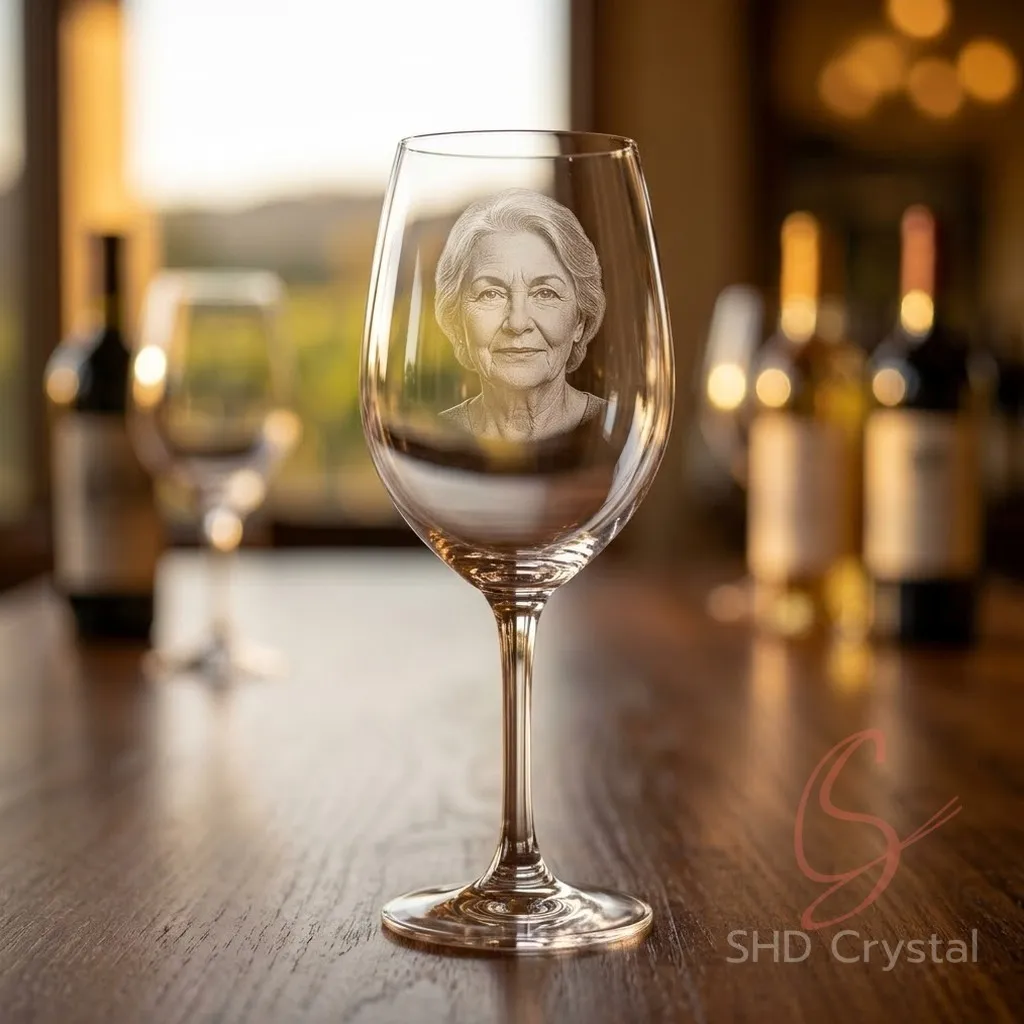
The appeal is straightforward: a logo, portrait, or scene etched into glass looks premium, lasts indefinitely, and avoids the fade issues common with printed drinkware. But sourcing a picture engraved wine glass at scale introduces variables that most first-time buyers do not anticipate.
Why a Picture Engraved Wine Glass Requires More Than a Pretty Design
Standard wine glasses are manufactured in high volume with uniform finishes. A picture engraved wine glass, by contrast, involves at least one additional production step — whether that is laser engraving a photographic image, sandblasting a logo, or acid etching a custom design. Each method introduces its own tooling cost, setup time, and quality risk.
Note that decoration often happens in a separate workshop from blank forming. In the Boshan district of Shandong and across Hebei province, glass clusters separate blank production from specialized decoration lines. That split means changeover time between orders, and it is worth confirming whether the supplier controls both stages or relies on subcontractors.
Engraving Methods: What a Custom Photo Etched Wine Glass Actually Demands
Method | Best For | Main Risk |
Laser engraving | Fine detail, small to mid runs, photographic reproductions | Heat stress on thin-walled crystal can cause micro-fractures if power settings drift |
Sandblasting | Deep texture, bold branding, larger logos | Uneven depth on curved surfaces; requires careful masking |
Acid etching | Smooth frosted finish, large batches, consistent opacity | Chemical concentration control is critical — drift turns opacity patchy |
Laser engraving handles fine photographic detail better than sandblasting or acid etching, making it the default choice when a buyer needs a portrait reproduced on a wine bowl. A factory with experience will calibrate power and speed per glass type — too much power on thin crystal risks thermal shock, while too little leaves a faint, inconsistent mark.
Sandblasting and acid etching produce frosted effects rather than photographic reproduction. They work well for logos and bold graphics but lose clarity on intricate imagery. The trade-off is durability: a sandblasted or acid-etched design resists abrasion better than printed alternatives, which matters for glassware that will cycle through commercial dishwashers repeatedly.
Soda-lime glass handles everyday restaurant use, borosilicate withstands thermal shock without cracking, and lead-free crystal delivers the clarity and weight that premium gift buyers expect — each material makes a different trade-off between cost, durability, and perceived value.
Material Choices for Personalized Crystal Wine Glass Orders
The key question is not which glass type is objectively best, but which aligns with the intended use case and price point. A hospitality group sourcing for a hotel chain may prioritize durability and cost. A winery curating a member-exclusive tasting experience may prefer the tactile refinement of crystal.
A practical note on engraving compatibility: laser engraving performs consistently on soda-lime and crystal alike, but the depth and contrast of the mark varies with glass composition. A factory contact in Guangdong once noted that high-lead crystal engraves cleanly but chips more easily during packing — a factor that affects both defect rates and packaging specifications.
For a custom photo etched wine glass order targeting the gift or hospitality market, lead-free crystal typically balances aesthetics with functionality. It holds engraving detail well, offers the hand-feel buyers associate with quality, and avoids the regulatory complications that lead crystal brings in certain export markets.
What Happens Between Sample Approval and Full Production
A beverage brand once approved a laser-engraved sample that looked sharp under showroom lighting. When the first production batch arrived, the engraving on roughly one in every twelve glasses appeared slightly blurred — not enough to fail AQL inspection, but enough to frustrate their retail packaging team.
Generally, this kind of drift typically stems from two sources: the engraving template was not re-verified after the blank supplier changed mold cavities, or the laser operator adjusted power settings between shifts without logging the change. Buyers should specify in their PO that the factory run a first-article inspection with photographic evidence before committing to the full quantity.
A personalized crystal wine glass order benefits from an additional safeguard: requesting that the factory engrave a test panel on each production day and retain it for buyer review. This adds minimal cost but creates a traceable quality record that helps both sides resolve disputes quickly.
Lead Times, Minimum Orders, and Packaging Realities
MOQ for picture engraved wine glass orders varies by blank type and engraving complexity. Standard blanks with laser engraving often start at 500 to 1,000 pieces, while custom-mold crystal orders may require higher commitments. Custom molds push both MOQs and lead times higher — standard blanks with custom engraving are faster and more cost-effective for buyers testing a new product line.
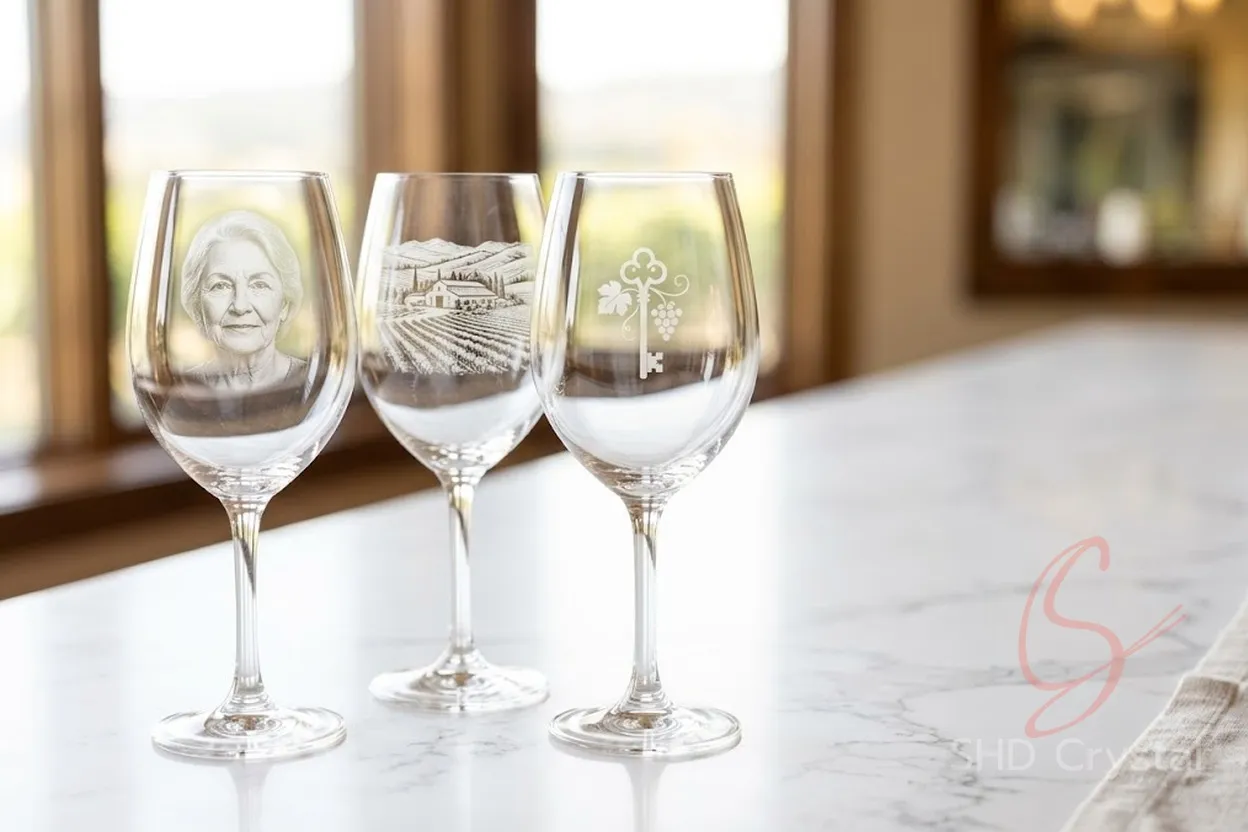
For a custom photo etched wine glass order, lead times typically run 25 to 35 working days from sample approval, though this varies with factory load and whether the engraving is done in-house or subcontracted to a specialized decoration facility. Factories in the Boshan district of Shandong often handle forming and decoration under one roof, while some Hebei operations outsource the etching step — a split that can add shipping time between workshops and introduce coordination risk.
Packaging specifications matter more than many buyers realize, especially for a personalized crystal wine glass where surface detail must survive transit. A wine glass with surface engraving needs individual inner wrapping to prevent abrasion during transit. Export cartons should include corrugated dividers, and pallet configurations need to account for the added weight of crystal versus soda-lime. Buyers should specify inner carton material and divider counts in their RFQ to avoid packing defaults that do not match the product's fragility profile.
FAQ
What is the typical MOQ for a picture engraved wine glass order from Chinese manufacturers?
Minimum order quantities vary by blank type and engraving complexity. Standard blanks with laser engraving often start at 500 to 1,000 pieces, while custom-mold crystal orders may require higher commitments. Buyers should request MOQ details during the RFQ stage to align expectations with production economics.
How does laser engraving compare to acid etching for a custom photo etched wine glass?
Laser engraving reproduces photographic detail with higher fidelity and works well for portraits or complex imagery. Acid etching produces a smooth frosted finish better suited for logos and simple graphics. Laser engraving carries higher per-unit costs at large volumes, while acid etching scales more efficiently for simpler designs.
Can a personalized crystal wine glass with engraving survive commercial dishwashers?
Laser-engraved and sandblasted designs hold up well under repeated commercial wash cycles. UV-printed and sealed designs are more vulnerable to abrasion and may show wear over time. Buyers planning hospitality use should specify dishwasher durability requirements in their quality checklist.
What quality certifications should buyers look for when sourcing engraved wine glasses?
Look for factories that can provide ISO 9001 certification and demonstrate consistent AQL standards in their inspection process. For food-contact glassware, verify compliance with FDA or EU food safety regulations. Buyers targeting premium retail should also ask whether the factory can provide material composition test reports, particularly for crystal products.
Conclusion
Sourcing a picture engraved wine glass is less about finding a supplier with the right equipment and more about understanding the variables that sit between a good sample and a consistent production run — material selection, engraving method, packaging rigor, and quality verification all shape the final result.
Buyers who invest time in specifying these details up front — rather than discovering them after the first shipment — typically see fewer disputes, stronger retail presentation, and better repeat order rates. The upfront effort pays for itself across every batch that follows.
Working With SHD Glassware on Your Next Engraved Order
SHD Glassware works with buyers sourcing picture engraved wine glass products across a range of materials, engraving techniques, and order volumes. Whether the requirement is a small batch of personalized crystal wine glass gifts or a large run of custom photo etched wine glass inventory for retail distribution, the team can help evaluate blank options, engraving methods, and packaging configurations that match the project's specifications and budget.
If you are interested in our glassware or related products,
please feel free to contact us.

