


Blogpost keywords: wholesale beer cups, bulk drinking glasses, custom beer glasses
Procurement teams sourcing wholesale beer cups face a market where material choices, wall thickness, and decoration durability directly affect long-term costs and brand perception. A typical bar ordering two thousand units per year may not notice subtle quality differences on the first delivery, but the cumulative impact of chipping, fading logos, and inconsistent sizing adds up fast.
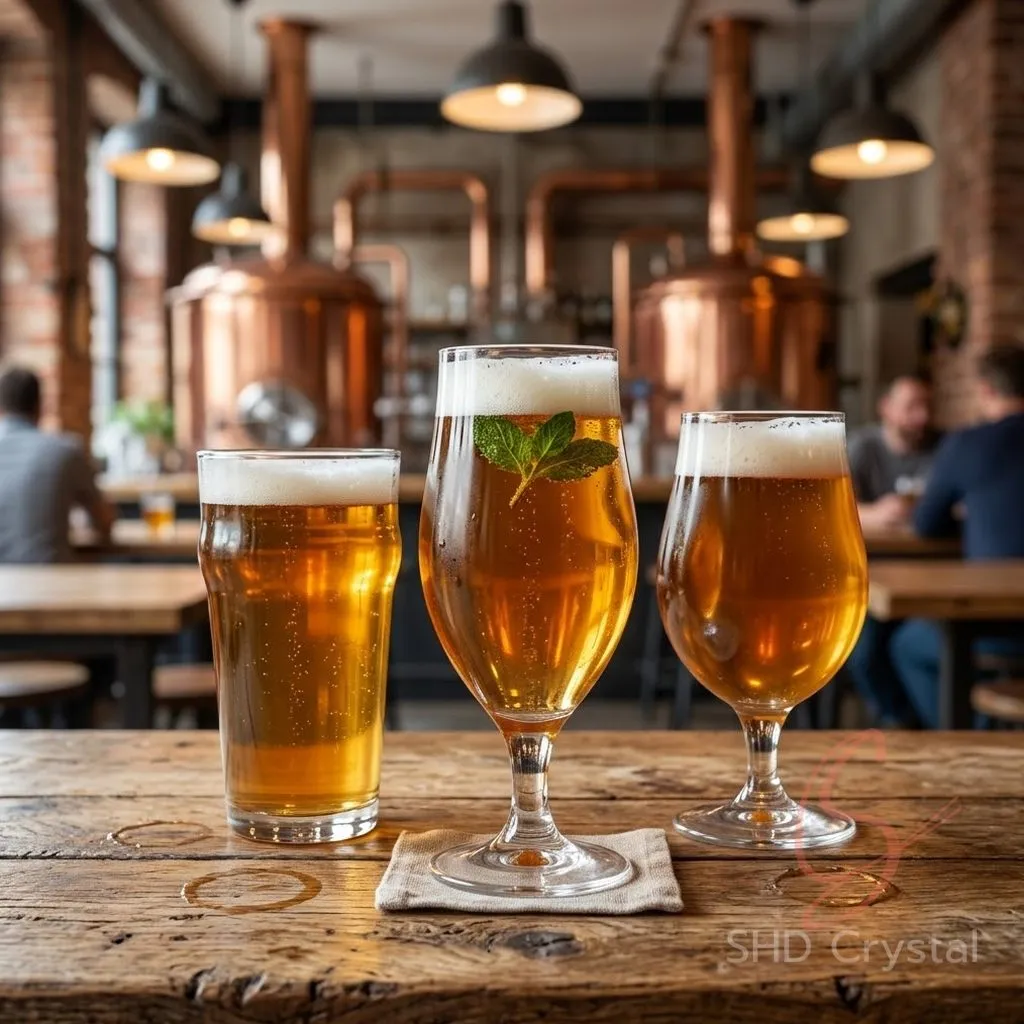
Why Material Selection Matters for Wholesale Beer Cups
Beer glass material drives three things: thermal shock resistance, weight in the hand, and how the liquid looks under bar lighting. Wholesale beer cups made from soda-lime glass handle everyday pub use and keep per-unit costs low, but borosilicate resists thermal shock better — a practical advantage for venues serving both ice-cold lagers and room-temperature ales. Crystal offers clarity that premium craft breweries often want for tasting flights, though it demands more careful handling during busy service shifts.
Material | Best For | Main Trade-off |
Soda-lime | High-volume bars, everyday service | Lower thermal shock resistance |
Borosilicate | Breweries serving varied temperatures | Slightly higher per-unit cost |
Crystal | Premium tasting rooms, brand-forward venues | Requires careful handling |
A brewery taproom that serves flights and full pours may find borosilicate cups handle temperature swings without cracking, while a sports bar pouring primarily cold beer can stretch budgets further with soda-lime. That trade-off between durability and cost is worth specifying early in any RFQ.
Bulk drinking glasses in soda-lime dominate the high-volume hospitality market because they balance acceptable durability with the lowest per-unit price. Custom beer glasses made from borosilicate occupy a middle ground — better thermal performance and a lighter feel in the hand, at a price point that works for craft-focused venues. Crystal beer cups sit at the premium end, where clarity and thin-wall construction justify higher sourcing budgets for brands that want to signal quality.
Decoration Methods That Affect Wholesale Beer Cup Pricing
Decoration methods change both the look and the lifespan of branded beer cups. Screen printing produces sharp logos at low per-unit cost but shows wear after repeated dish cycles. Acid etching creates a permanent frosted effect that holds up through heavy commercial dishwashing, though it requires more careful chemical concentration control during production. Laser engraving delivers fine detail for small-batch or limited-edition runs, but the per-unit cost rises quickly at scale.
Custom beer glasses with embossed or debossed logos add a tactile element that screen printing cannot replicate, and the raised surface survives dishwasher exposure. The choice between visual impact and long-term durability depends on the venue's procurement goals — both approaches work, but they serve different needs.
A beverage brand that ordered screen-printed cups for a summer festival found the graphics held up through the event itself, but within a few months the logos showed visible edge wear. The lesson: match the decoration method to the expected product lifespan, not just the upfront budget.
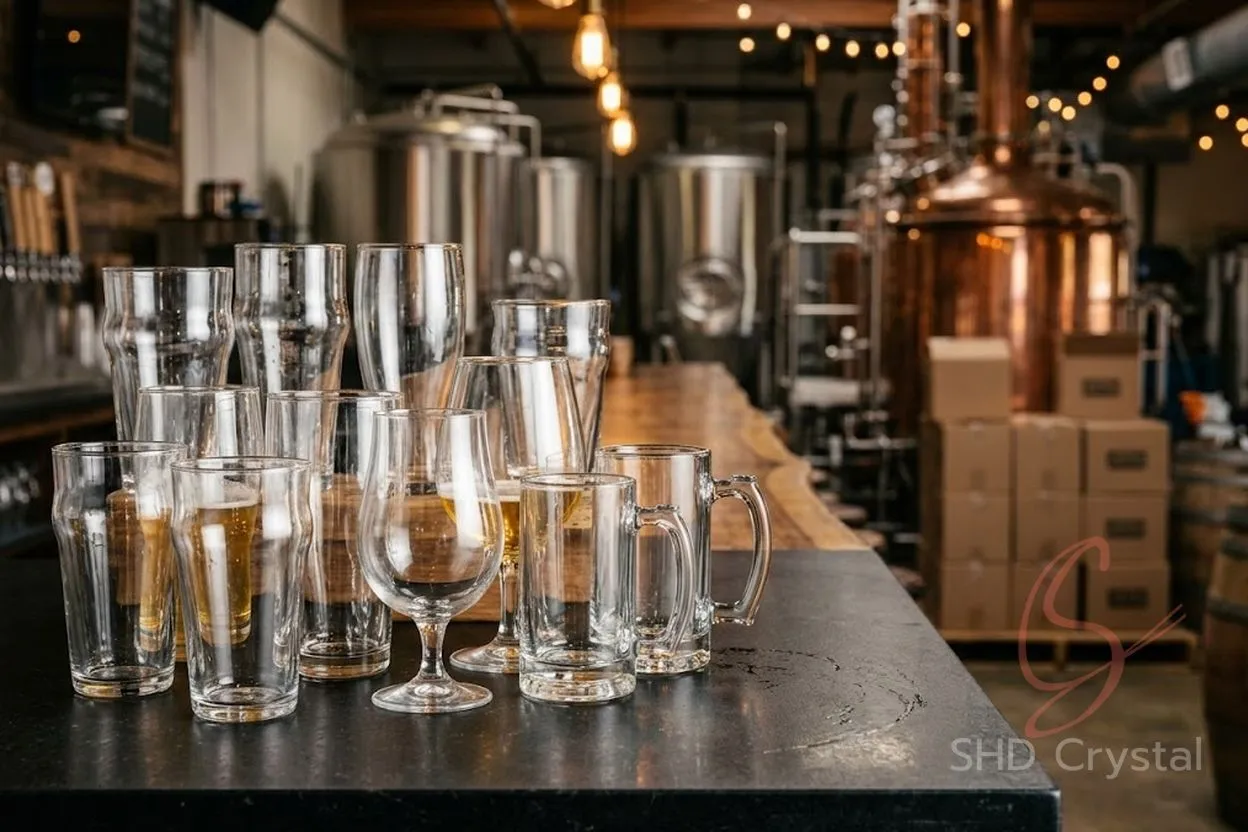
Supplier Evaluation: What to Verify Before Placing a PO
A responsible manufacturer should provide cavity count data for their IS machine runs, weight tolerance specs, and defect tier documentation aligned with AQL 2.5 or 4.0 standards. Buyers sourcing bulk drinking glasses should ask whether forming and decoration happen in-house or through subcontractors — separated production lines often mean longer lead times and less consistent quality control across batches.
Regional glass clusters in Shandong and Hebei produce different quality tiers, and the better approach is to request samples from multiple factories before committing to a large order. A hospitality group ordering bulk drinking glasses for a chain of sports bars once discovered that switching between two suppliers mid-production created visible color variations in the final delivery — a problem that could have been avoided with a single-source agreement and pre-production approval samples.
For buyers evaluating wholesale beer cups across multiple suppliers, it pays to compare not just unit pricing but also packing standards, sample availability, and willingness to run small pre-production trials before committing to a full order.
Lead Times, Packaging, and Shipping Considerations
Standard lead times for wholesale beer cups from Chinese manufacturers typically run three to five weeks for uncustomized blanks, with an additional one to two weeks for decoration. Export packaging requires inner cartons with dividers, corrugated export cartons, and pallet stacking that meets freight forwarder specifications. Inadequate packaging is one of the most common causes of breakage in transit, and it may help to request photographic documentation of the packing process before the first shipment leaves the factory.
Custom beer glasses with unique shapes or heavy bases often require reinforced inner packaging to prevent movement during ocean freight. Bulk drinking glasses shipped in standard pint or tumbler profiles tolerate standard packing more readily, but any deviation from catalog dimensions warrants a conversation with the supplier's logistics team.
FAQ
What is the typical MOQ for wholesale beer cups from Chinese manufacturers?
Minimum order quantities vary by factory and decoration method, but most suppliers set MOQs between five hundred and one thousand units for screen-printed orders, with higher minimums for acid etching or embossed designs. Custom molds typically require larger commitments to offset tooling costs.
How do soda-lime and borosilicate beer cups compare for commercial use?
Soda-lime offers lower per-unit pricing and works well for venues serving primarily cold beverages. Borosilicate provides better thermal shock resistance, making it a stronger choice for breweries that serve both chilled and room-temperature beers or expect frequent temperature changes.
What quality certifications should buyers request when sourcing beer glasses?
Buyers should request documentation aligned with AQL 2.5 or 4.0 sampling standards, along with food-contact safety certifications appropriate for their target market. Factories with ISO 9001 certification demonstrate a baseline quality management system, though on-site audits remain the most reliable way to verify production conditions.
Can suppliers produce branded beer cups with our own logo and colors?
Most Chinese glass manufacturers offer screen printing, acid etching, and laser engraving for custom branding. Embossed or debossed logos require custom molds, which adds upfront tooling cost but reduces per-unit decoration expense on larger orders.
Conclusion
Sourcing wholesale beer cups requires balancing material performance, decoration durability, and supplier reliability against per-unit budget targets. The most common buyer mistake is choosing the lowest price without factoring in defect rates, packaging quality, and long-term brand impact. A well-structured RFQ that specifies material type, decoration method, AQL standards, and packaging requirements helps buyers avoid surprises and build lasting supplier relationships.
Partnering With the Right Supplier
SHD Glassware works with bars, breweries, and hospitality groups to produce wholesale beer cups in soda-lime, borosilicate, and crystal materials. Whether the priority is high-volume everyday glassware or custom beer glasses with branded decoration, the team can help procurement teams specify the right combination of material, finish, and packaging for their needs.
If you are interested in our glassware or related products,
please feel free to contact us.

