


Blogpost keywords: glass tea cups bulk, wholesale tea glassware, custom glass teacup supplier
Why Material Choice Drives Your Bulk Tea Cup Sourcing
Choosing the right material is the first decision any buyer faces when sourcing glass tea cups bulk from Chinese manufacturers. Borosilicate and soda-lime glass dominate the market, but they serve very different purposes. The wrong choice leads to complaints, returns, and wasted spend — so understanding the trade-off before placing a purchase order matters.
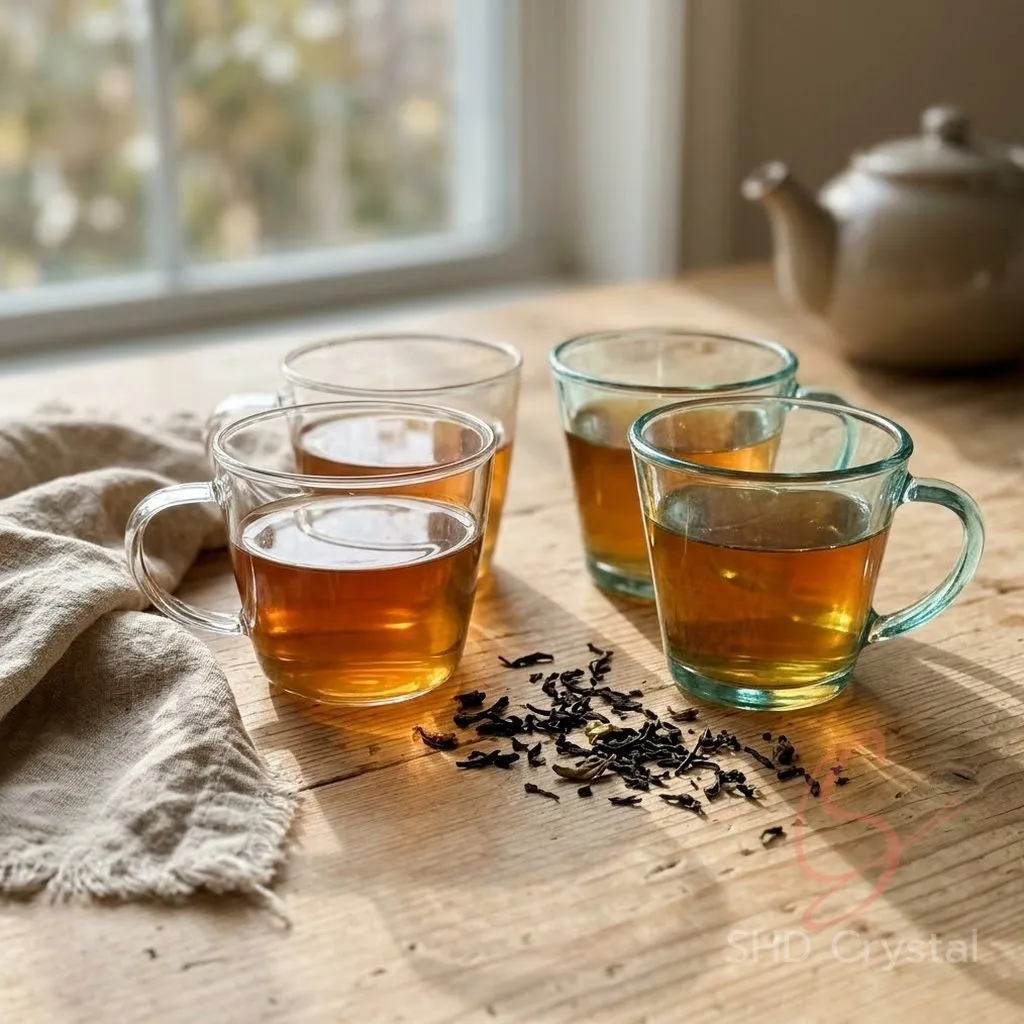
In practice, borosilicate glass handles thermal shock better — a hot pour into a cold cup won't shatter it. Soda-lime, the workhorse of daily-use glassware, costs less and feels sturdier in hand. But the decision isn't just about heat resistance. Wall thickness, rim finishing, and overall weight profile shape how the cup performs in actual service — and most buyers discover this only after receiving a sample batch.
Property | Borosilicate | Soda-Lime |
Thermal Shock | Withstands rapid temperature changes | Prone to cracking under sudden shifts |
Cost | Higher — smaller production runs | Lower — efficient at scale |
Weight | Lighter, thinner walls common | Heavier, sturdier feel |
Durability | Good chemical resistance | Higher breakage tolerance in daily use |
Clarity | Crystal-clear transparency | Slight green tint at edges common |
Dishwasher Safe | Yes, with care | Yes, robust |
Lead-Free | Yes | Yes |
What a Wholesale Tea Glassware Order Actually Looks Like
When placing a bulk order for glass tea cups, the factory's production setup directly affects lead times and unit cost. Borosilicate blanks typically run on smaller IS machines with fewer cavities, meaning slower output and higher per-unit tooling costs. Soda-lime blanks, by contrast, are produced on high-cavity IS machines that run efficiently at scale. This is why large-volume orders for wholesale tea glassware tend to come in at significantly lower price points.
For buyers who need branded or custom designs, the decoration process adds another layer of consideration. Soda-lime glass accepts screen printing and spray coating without difficulty. Borosilicate requires higher firing temperatures for decal application — a detail that some factories handle in-house and others outsource to specialized decoration workshops in Hebei or Shandong. The difference shows up in both timeline and consistency.
Quality Control Differences
A practical consideration is how each material behaves under quality inspection. Borosilicate composition is sensitive to batch-to-batch variation — minor shifts in the raw material blend can affect thermal performance. Receiving teams should request documentation on batch composition. Soda-lime is more forgiving but still requires AQL inspection for dimensional tolerance and surface defects, especially on printed or coated finishes of wholesale tea glassware.
The Custom Glass Teacup Supplier Question
Buyers evaluating a custom glass teacup supplier should look beyond material choice and examine production integration. Some Chinese factories control the entire chain — blank forming, decoration, packaging — while others rely on subcontractors for finishing steps. Integrated production typically means tighter quality control and shorter lead times, but subcontracted decoration can offer more specialized finishes.
A beverage brand sourcing 10,000 glass tea cups bulk for a premium tea line might work with a custom glass teacup supplier to specify borosilicate for the thermal shock benefit, while a hospitality group outfitting hotel rooms might choose soda-lime for its weight and cost advantages. The right answer depends on the end-use scenario, not a universal rule.
Regional glass clusters in Boshan (Shandong) and Hebei each have distinct strengths. Boshan is known for higher-end decorative glassware, while Hebei factories often handle large-volume daily-use glass production. A buyer's sourcing strategy should account for these differences when selecting a manufacturing partner.
Common Misconceptions in Bulk Sourcing
One persistent myth is that borosilicate is always the premium choice for glass tea cups bulk. In reality, a well-made soda-lime tea cup with proper wall thickness and annealing can outperform a poorly manufactured borosilicate one. The material sets the ceiling for performance, but production quality determines where you actually land.
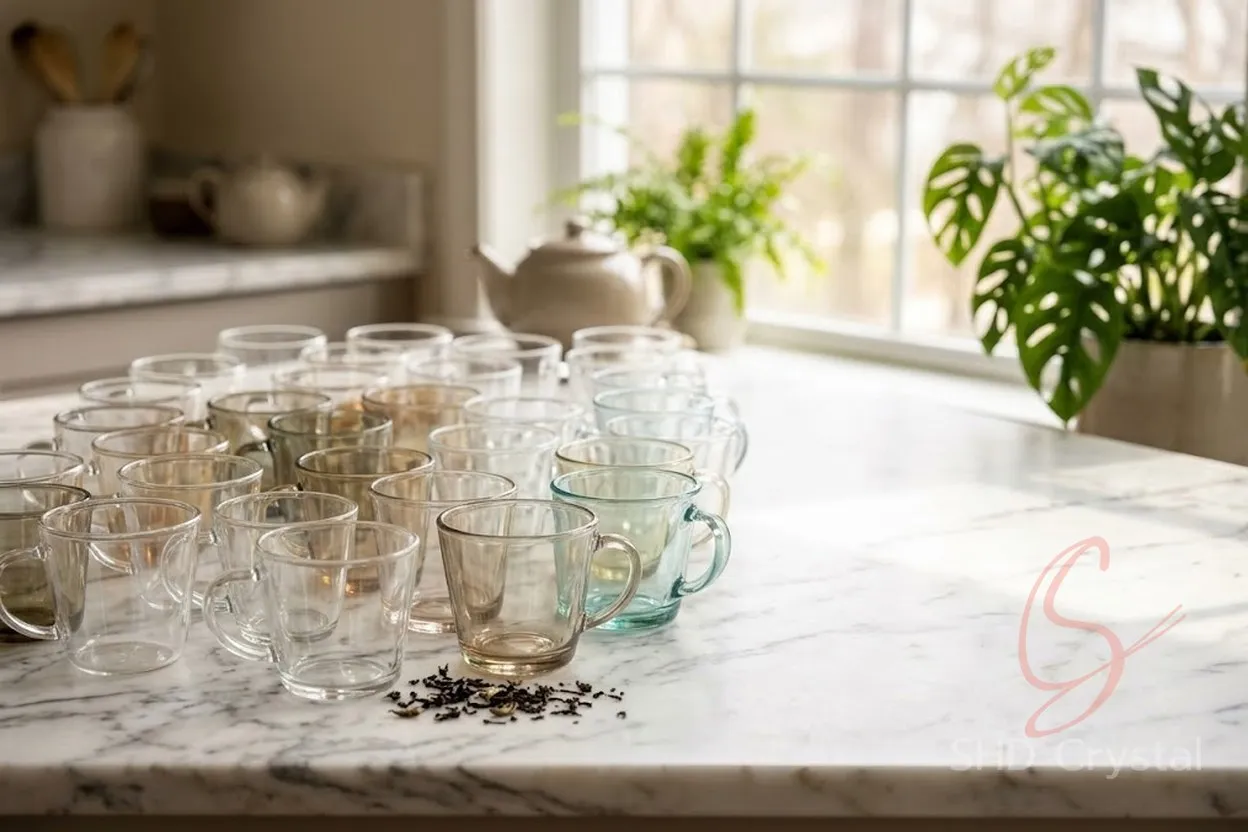
Another mistake buyers make is ordering samples from one production line and receiving bulk from another. Mold changes between sample and production runs are common — requesting a pre-production pilot batch of a few hundred units of glass tea cups bulk can prevent costly surprises on the full order.
That depends on the factory's cavity count and mold condition. A responsible custom glass teacup supplier will let you inspect sample cavities before committing to full production — if they won't, treat that as a red flag.
FAQ
What is the typical MOQ for glass tea cups bulk orders from Chinese manufacturers?
Minimum order quantities vary by factory and material. For soda-lime glass tea cups, MOQs typically start around 1,000 to 3,000 pieces. Borosilicate orders may carry higher minimums due to smaller production runs. Custom molds or exclusive designs generally require larger commitments — usually 5,000 pieces or more.
How does borosilicate compare to soda-lime for hot tea service?
Borosilicate resists thermal shock, so pouring boiling water into a chilled cup is far less likely to cause cracking. Soda-lime can handle normal hot service but may fail under extreme temperature swings. For everyday tea drinking, soda-lime is often sufficient — but borosilicate is the safer choice for premium or specialty tea presentation.
What quality certifications should I look for when sourcing wholesale tea glassware?
Buyers should request food-grade safety documentation, including LFGB or FDA compliance certificates. For export orders, ask for recent AQL inspection reports and verify whether the factory holds ISO 9001 certification. Third-party audits from SGS or Bureau Veritas add an extra layer of assurance for wholesale tea glassware purchases.
Conclusion
There is no single best material for glass tea cups bulk — the right choice depends on your use case, budget, and quality expectations. Borosilicate excels in thermal resistance and clarity for premium applications. Soda-lime offers durability and cost efficiency for large-volume orders. A thorough evaluation of your supply chain, end-user needs, and production partner will yield the most reliable results.
Start Your Sourcing Conversation
Whether you are comparing materials, evaluating suppliers, or planning a bulk order of glass tea cups, SHD Glassware works with buyers across multiple industries to match the right glass solution to each application. Reach out to discuss specifications, request samples, or explore custom design options for your next project.
If you are interested in our glassware or related products,
please feel free to contact us.

