


Blogpost keywords: beer can glass cups bulk, wholesale beer glasses, custom brewery glassware
Sourcing beer can glass cups bulk orders is a decision that affects everything from pour presentation to per-unit cost — and the margin for error is thinner than most procurement teams expect. The can-shaped silhouette has become a staple in craft beer bars, taprooms, and event venues, but sourcing these glasses at scale requires understanding material science, mold economics, and the realities of Chinese glass supply chains.
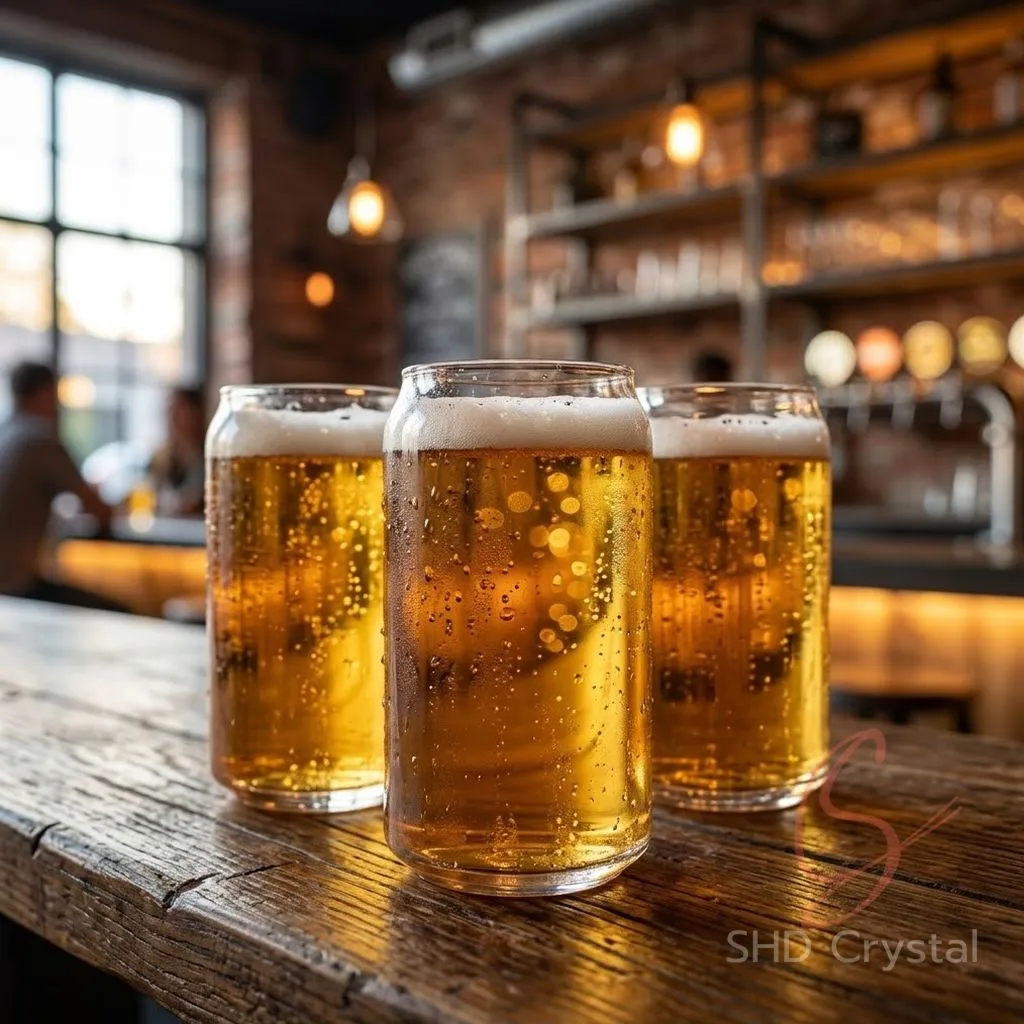
What Buyers Get Wrong About Beer Can Glass Cups Bulk Orders
Many procurement teams treat can-shaped beer glasses as commodity items — pick a shape, request a quote, compare unit prices. The problem is that two factories can quote identical-looking specs at wildly different prices, and the difference shows up months later when glasses arrive with visible mold seams, inconsistent wall thickness, or chips along the rim.
The first misconception is that wall thickness equals durability. Thicker glass feels heavier and more premium, but it also means longer cooling cycles on the IS machine, which drives up per-unit cost without necessarily improving drop resistance. A well-formed thin-wall can glass with proper annealing will outperform a thick, poorly annealed version in everyday bar use.
The second mistake is assuming all factories handle decoration in-house. In practice, many Chinese glass clusters — particularly around Boshan in Shandong and parts of Hebei — separate forming from decoration. Blanks are produced in one workshop and transferred to a specialized etching or screen-printing line in another town. That split introduces logistics risk and makes quality control harder to manage, especially when ordering custom brewery glassware with precise branding requirements.
Material Comparison: The Core Trade-Off
The choice between soda-lime and borosilicate glass is the first decision buyers face, and it shapes every downstream cost.
Material | Best For | Main Risk |
Soda-lime glass | High-volume bars, everyday use, cost-sensitive buyers | Lower thermal shock resistance; chips more easily at thin rims |
Borosilicate glass | Premium taprooms, brewery tasting flights, thermal versatility | Higher material cost; fewer factories run borosilicate on standard IS machines |
Lead-free crystal | Luxury hospitality, gift sets, brand differentiation | Significantly higher unit cost; requires careful handling during shipping |
Soda-lime glass handles everyday bar use without complaint. Borosilicate withstands thermal shock — a pour of near-boiling water into a chilled can glass won't crack it — and lead-free crystal offers the clarity luxury brands expect. Each material makes a different trade-off between cost, durability, and perceived value. The better approach is usually to match material to the intended use case rather than defaulting to the cheapest option.
Mold Economics and Minimum Order Realities
Can-shaped glasses sit between simple tumblers and complex stemware in terms of mold complexity. Most factories stock standard can molds with cavity counts ranging from six to twelve, depending on the IS machine setup. Custom molds add tooling cost — typically a few thousand dollars — but the per-unit savings on large orders usually justifies the investment within the first production run.
MOQ expectations vary significantly by factory. A facility running high-volume commodity glass may quote MOQs in the tens of thousands, while a mid-size operation specializing in custom brewery glassware might accept runs as small as a few thousand pieces. Smaller runs carry higher per-unit costs and longer lead times because the mold setup dominates the production schedule.
Quality Control: What to Inspect Before You Ship
AQL sampling gives you a statistical framework, but it does not replace hands-on inspection. For beer can glass cups bulk orders, the most common defect tiers include: visible mold seams that catch a fingernail, rim chips from de-molding, inconsistent wall thickness visible when held to light, and decoration defects such as misregistered screen prints or uneven etching depth.
The receiving team should pull samples from different pallet positions — not just the top layer. Glasses packed near the bottom absorb more vibration during transit, and rim chips often concentrate there. Running a fingernail across an etched surface reveals whether the transition is smooth or sharp; an overly sharp edge suggests the etching depth is aggressive and may weaken the glass over repeated dish cycles.
A beverage brand preparing for a summer festival once ordered five thousand can-shaped glasses with custom screen-printed logos. The sample batch looked clean, but the bulk production showed logo misalignment on roughly one in twenty pieces — well above the AQL 2.5 threshold they had agreed on.
Packaging, Shipping, and the Last Mile
Glass packaging for export follows a layered approach: each piece gets an individual inner wrap, nested in an inner carton, then packed into an export carton on a pallet. The added packaging cost is modest compared to the expense of replacing scratched or chipped glassware that arrives damaged.
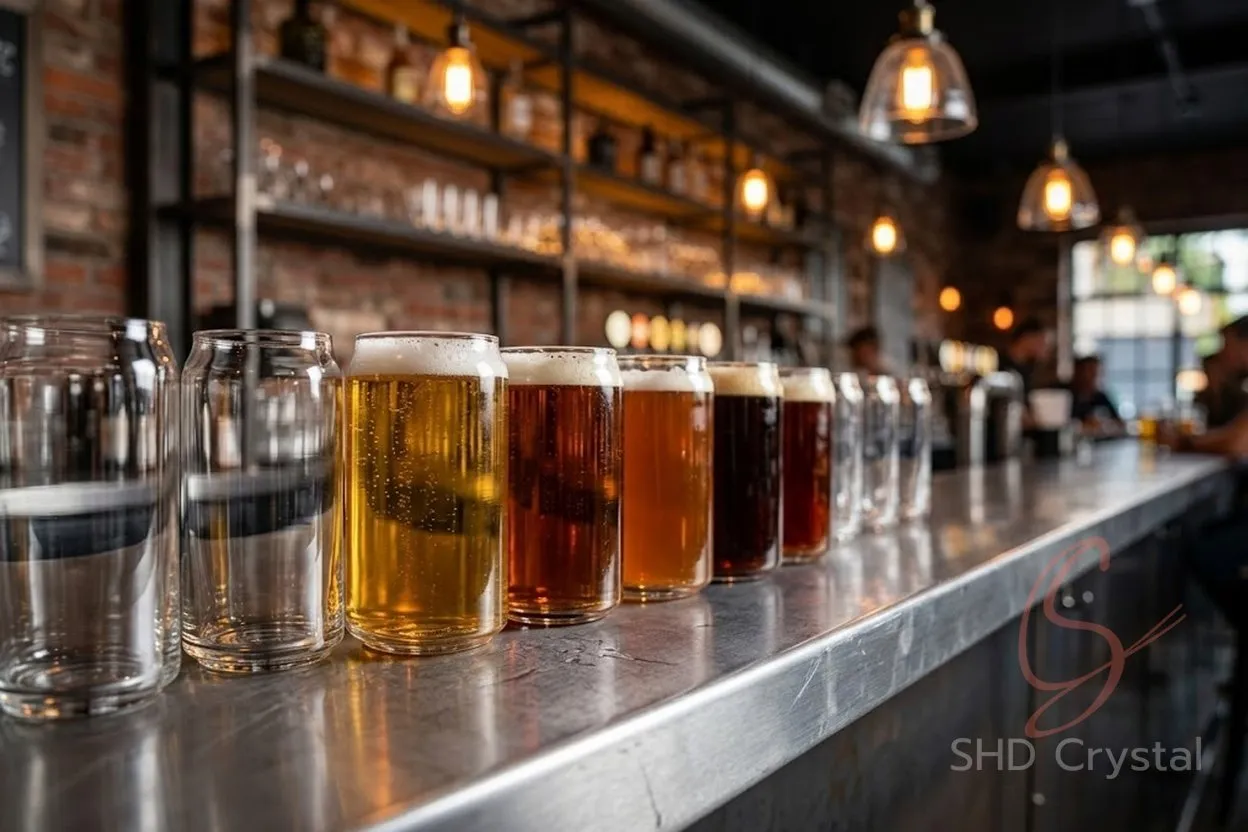
Bulk can glasses are typically packed upside down or nested rim-to-base. Nested packing saves container space — which matters when sourcing wholesale beer glasses by the container load. The real variable is how tightly the inner cartons are packed within the export carton. Loose packing invites movement during ocean freight, and that is where most transit damage originates.
FAQ
What is the typical MOQ for beer can glass cups bulk orders from Chinese manufacturers?
MOQs vary by factory size and mold availability. High-volume commodity glass producers may require tens of thousands of pieces, while mid-size operations specializing in custom brewery glassware often accept runs starting at a few thousand pieces. Tooling costs for custom molds are typically amortized across the first production run.
How does soda-lime glass compare to borosilicate for wholesale beer glasses?
Soda-lime glass is the standard for high-volume bar use — it is cost-effective and handles everyday conditions well. Borosilicate offers superior thermal shock resistance and a lighter feel, but it costs more and fewer factories produce it on standard IS machine lines. The choice depends on your use case and price point.
What quality certifications should I look for when sourcing custom brewery glassware?
Look for ISO 9001 quality management certification and ask about internal AQL standards. Factories with consistent export experience will have documented defect tier classifications and a track record of passing third-party inspections. For food-contact glass, verify compliance with FDA or EU food safety regulations.
Conclusion
Sourcing beer can glass cups bulk orders is not a transaction — it is a procurement process that rewards diligence. The buyers who get the best results understand mold economics, specify material requirements clearly, and build quality inspection into their timeline. The difference between a good supplier relationship and a costly mistake often comes down to the questions asked before the purchase order is signed.
Ready to Source With Confidence
SHD Glassware works with procurement teams navigating the complexities of bulk glass sourcing — from material selection and mold development through to quality inspection and logistics. If your next order of beer can glass cups bulk or custom brewery glassware needs a partner who understands the trade-offs, reach out to discuss your specifications and timeline.
If you are interested in our glassware or related products,
please feel free to contact us.

