


Blogpost keywords: beer cups personalized, custom beer glasses, personalized drinkware wholesale
Selecting beer cups personalized for a taproom involves more than choosing a logo placement — it requires weighing decoration methods, material durability, minimum order quantities, and how the glass survives nightly dish cycles. For procurement teams evaluating custom beer glasses, the framework below breaks down the variables that drive cost and quality.
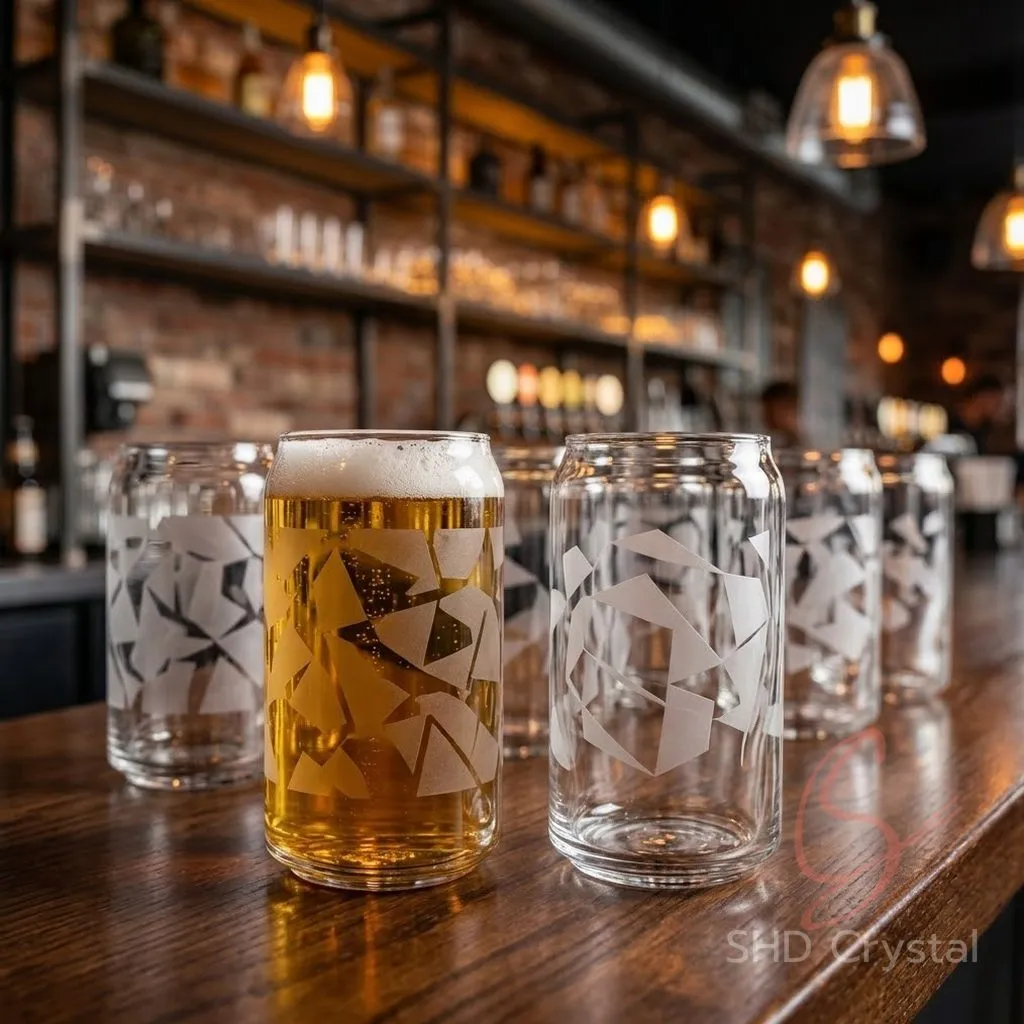
Why Beer Cups Personalized for Taprooms Demand a Structured Approach
A craft brewery ordering branded glassware faces three competing priorities: distinctive branding, per-unit costs within budget, and durability behind a busy bar. Deep-etched logos look premium but raise the price at low volumes. Screen-printed designs are affordable but chip away after a few months of commercial dishwashing.
In practice, the better approach is to match the decoration method to the glass’s expected service life. A taproom rotating seasonal releases every six weeks may not need acid etching’s permanence, while a flagship pint glass in circulation for years warrants the investment.
Choosing the Right Personalization Method
Three decoration techniques dominate the personalized drinkware wholesale market, each carrying distinct trade-offs in cost, durability, and visual effect.
Method | Best For | Main Risk |
Acid Etching | Large batches, uniform frosted finish | Uneven opacity on curved surfaces |
Sandblasting | Deep texture, bold logo presence | Microfractures on thin-walled glass |
Laser Engraving | Fine detail, small production runs | Higher per-unit cost at scale |
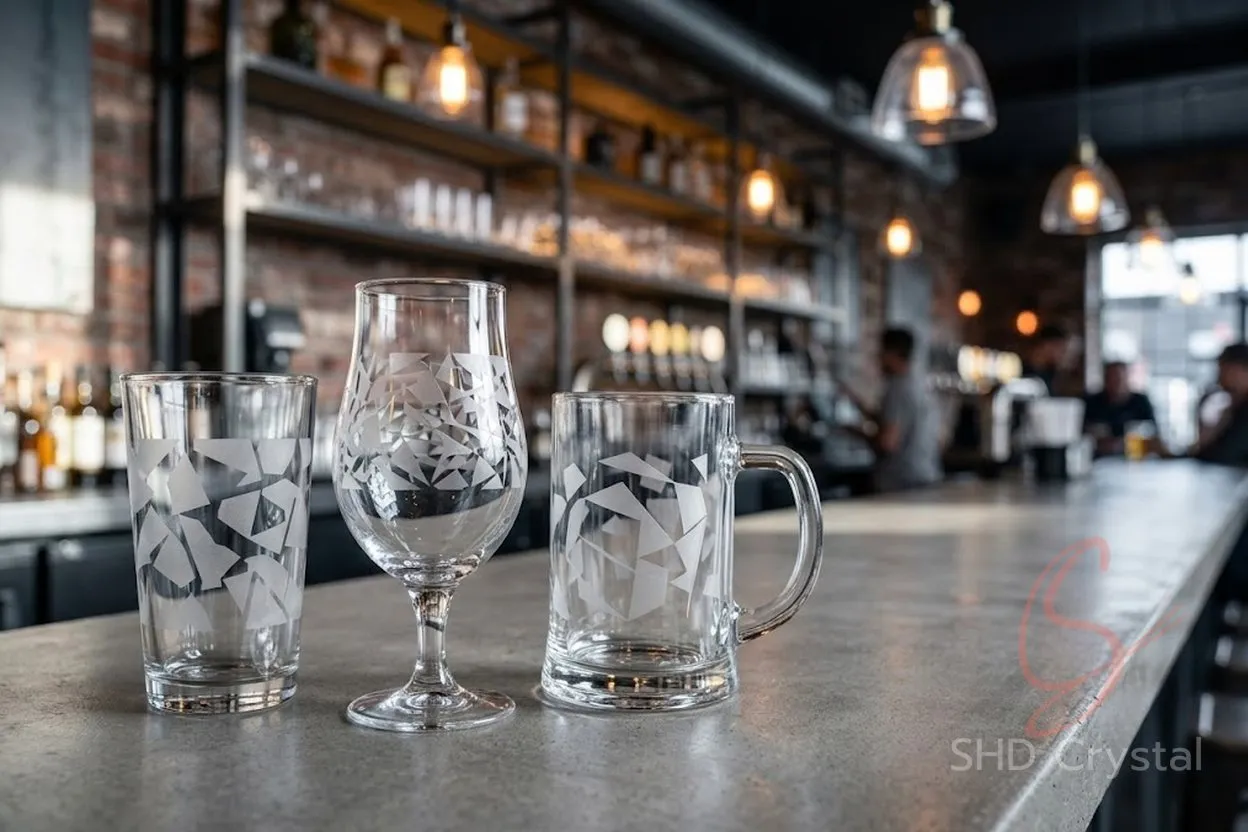
Acid etching on a curved beer bowl requires careful chemical concentration control. If the bath temperature drifts or immersion time varies across a rack, the opacity turns uneven and the logo looks patchy in direct light. Sandblasting creates deeper texture but carries a higher risk of micro-fractures around the design edge on thin walls — damage that shows up after enough dish cycles, not immediately upon inspection.
Laser engraving offers the finest detail, making it attractive for complex taproom logos or limited-edition runs. The trade-off: small quantities are cost-effective, but per-unit pricing climbs once volume exceeds a few thousand pieces.
Material Choices That Affect Brand Perception
The glass material sends a message before a customer reads the logo. Soda-lime glass handles everyday use and keeps costs predictable. Borosilicate withstands thermal shock — useful for taprooms serving both cold and hot drinks. Crystal offers the clarity and weight that premium brands associate with a luxury experience.
A practical consideration is wall thickness. Thin-walled glasses feel refined but chip more easily in a commercial setting. Thick-bottomed shaker pints survive rough handling but look heavier than some brand identities warrant. The real question isn’t which material is “best” — it’s which matches the brand story the taproom is trying to tell.
What a Taproom Procurement Team Should Verify Before Ordering
Consider a regional brewery chain sourcing personalized drinkware wholesale for twelve locations. The procurement team requests samples from two factories: one in Shandong’s Boshan glass cluster and another in Hebei. The Boshan facility controls blank forming, decoration, and packaging in-house. The Hebei supplier outsources etching to a specialized workshop. Lead times differ by roughly a week, and the in-house operation offers tighter quality consistency — important when branding must look identical at every location.
Buyers should request defect tier documentation and ask about AQL standards before committing to a production run. Specifying acceptable chip tolerances in the purchase order helps, since what constitutes an acceptable defect varies between factories.
MOQ, Lead Times, and What Drives Both
Minimum order quantities for custom beer glasses depend on decoration method and mold requirements. Laser engraving accommodates lower MOQs since no mold setup is needed. Acid etching and sandblasting require higher volumes to justify tooling. A custom mold adds several weeks before production begins.
Lead times from Chinese manufacturers commonly run three to five working weeks for repeat orders, with new mold development pushing that further. Planning two to three months ahead gives procurement teams room for sample approvals, packaging, and shipping without last-minute pressure.
FAQ
What is the typical MOQ for beer cups personalized with acid etching from Chinese manufacturers?
MOQs for acid-etched custom beer glasses generally start at one to two thousand pieces. Lower quantities are possible with laser engraving, which skips the mold and chemical bath setup entirely.
How does screen printing compare to etching for taproom glassware durability?
Screen-printed designs show edge wear well before etched glass needs replacement — the difference is measured in years, not weeks. For high-traffic bars, etching is typically the more durable choice, though it carries a higher upfront cost.
What quality certifications should I look for when sourcing personalized drinkware wholesale?
Buyers should ask for food-contact safety certifications relevant to their market, such as LFGB or FDA compliance. A defect sampling plan based on AQL standards helps ensure incoming inspection aligns with expectations.
Can factories in Hebei and Shandong handle both forming and decoration in-house?
Some factories control the full chain — blank production, decoration, and packaging — while others outsource decoration to specialized workshops. In-house integration generally offers tighter quality control and shorter lead times.
Conclusion
Sourcing beer cups personalized for a taproom is a decision that balances brand expression, budget, and durability. The decoration method, glass material, and supplier capability each play a role in quality and cost. A structured evaluation — comparing techniques, verifying factory processes, and planning lead times early — helps procurement teams avoid pitfalls that lead to reorders or inconsistent branding.
Working With a Glassware Sourcing Partner
SHD Glassware works with taprooms, breweries, and beverage brands navigating these sourcing decisions. Whether the priority is finding the right decoration method for beer cups personalized with a specific brand identity, or evaluating custom beer glasses across material options, an experienced sourcing partner helps align specifications with production timelines. Reaching out early typically saves both time and cost.
If you are interested in our glassware or related products,
please feel free to contact us.

