


Blogpost keywords: custom engraved glass mugs, custom glass tumblers, personalized glassware gifts
Choosing the right decoration method for custom engraved glass mugs is rarely a straightforward decision. The method that looks perfect on a sample can behave differently once a production run scales from fifty units to five hundred, and the gap between what a factory promises and what arrives on the loading dock often comes down to which technique was specified in the first place.
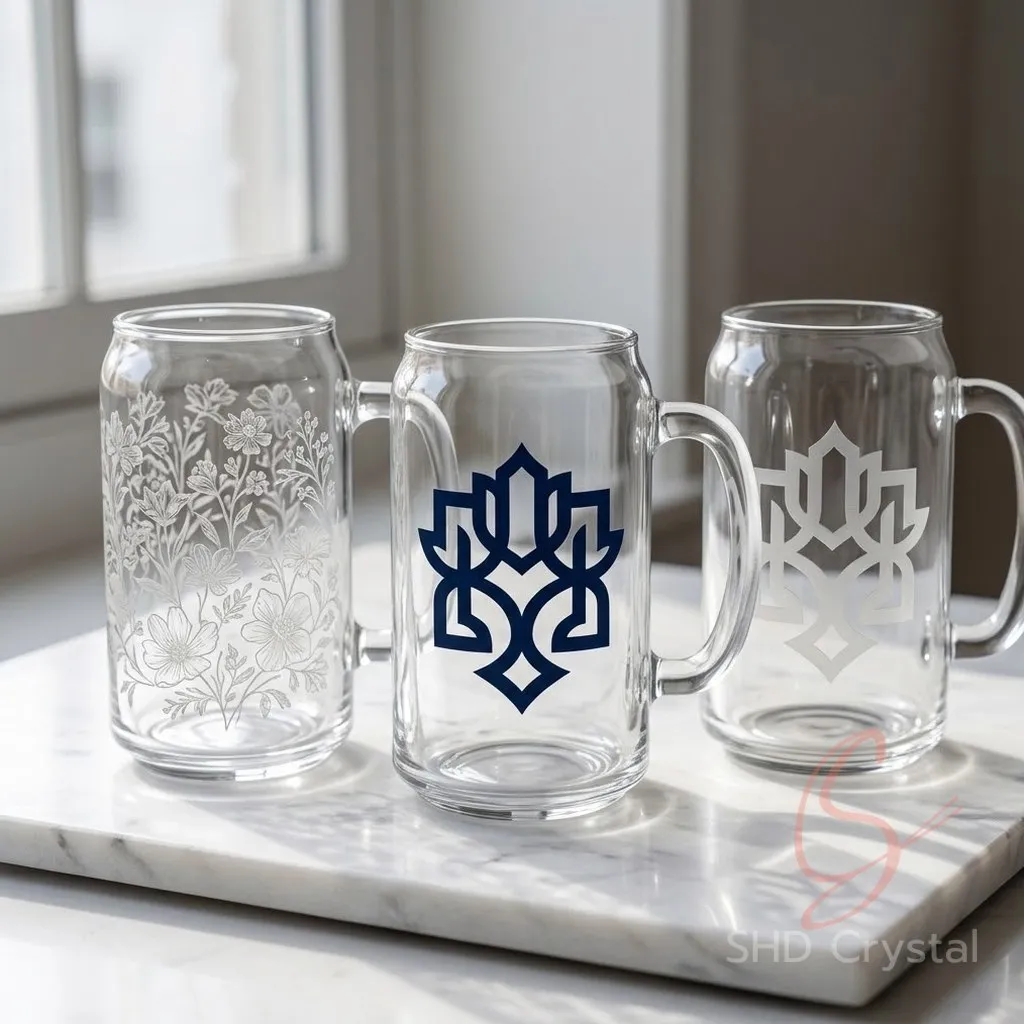
Why Custom Engraved Glass Mugs Demand Careful Method Selection
A procurement team evaluating custom glass tumblers for a hospitality brand will quickly discover that laser engraving, screen printing, and acid etching each carry distinct trade-offs in cost, durability, and visual effect. Laser engraving offers precision and works well for small-batch orders, but the per-unit cost climbs steeply at volume. Screen printing handles large runs efficiently, yet the ink sits on the surface and wears down after repeated dishwasher cycles. Acid etching produces a smooth, matte finish that feels premium to the touch, though achieving consistent opacity across a curved mug surface demands careful chemical concentration control.
Method | Best For | Main Risk |
Laser Engraving | Fine detail, small to mid-size runs | Higher per-unit cost at scale |
Screen Printing | Large volume, multi-color designs | Surface wear after repeated use |
Acid Etching | Premium finish, brand logos on curved surfaces | Uneven opacity if bath conditions drift |
A typical glass factory in the Boshan district of Shandong might handle blank production in one workshop and route mugs to a specialized etching line elsewhere. That separation between forming and decoration is common across Chinese glass clusters — and it matters because quality control on the decoration side depends heavily on the etching shop’s experience, not just the blank supplier’s specs. Buyers who assume the factory controls the full chain often find that timelines and defect rates reflect a more fragmented supply picture than expected.
Comparing the Three Methods Side by Side
Laser engraving, screen printing, and acid etching each answer a different buyer priority. A beverage brand ordering personalized glassware gifts for a product launch might lean toward laser engraving for its clean, sharp lines and fast turnaround on modest quantities. A hotel group outfitting hundreds of rooms per property would typically favor screen printing for its cost efficiency at scale, accepting that the decoration may not last as long as an etched alternative.
Laser Engraving: Precision Without the Mess
Laser engraving removes a thin layer of glass to create the design, leaving a frosted mark that is part of the surface rather than sitting on top of it. This makes it durable for everyday use, though the process is slower than printing and the equipment cost translates directly into the per-unit price. For custom glass tumblers ordered in quantities below a few hundred, laser engraving often delivers the best balance of quality and speed.
Screen Printing: The Volume Workhorse
Screen printing pushes ink through a mesh screen onto the glass surface. It handles bold, solid-color logos efficiently and scales well into the thousands. The trade-off is durability: the ink bonds to the surface rather than altering the glass itself, so it can chip or fade under aggressive dishwasher conditions. A practical consideration is that many factories apply a clear coat after printing to extend lifespan, but that adds a production step and a small per-unit cost.
Acid Etching: The Premium Touch
Acid etching uses a chemical bath to create a frosted, matte finish on the glass. The result is tactile and visually distinct — the kind of finish that communicates quality when someone picks up a mug. The challenge is consistency. If the bath temperature drifts or immersion time varies across a rack, the opacity turns uneven and the logo looks patchy in direct light. A factory with real experience will warn you about this upfront. A factory without will ship and let you find out.
What Most Buyers Overlook
In practice, the decoration method is only part of the decision. Packaging and handling after decoration matter as much as the technique itself. A beautifully etched mug that arrives with hairline scratches from inadequate dividers between units in the export carton defeats the purpose. Buyers should ask whether the factory uses individual inner cartons or bulk-packed kraft dividers — and whether the receiving team has an inbound inspection protocol that catches surface damage before inventory gets warehoused.
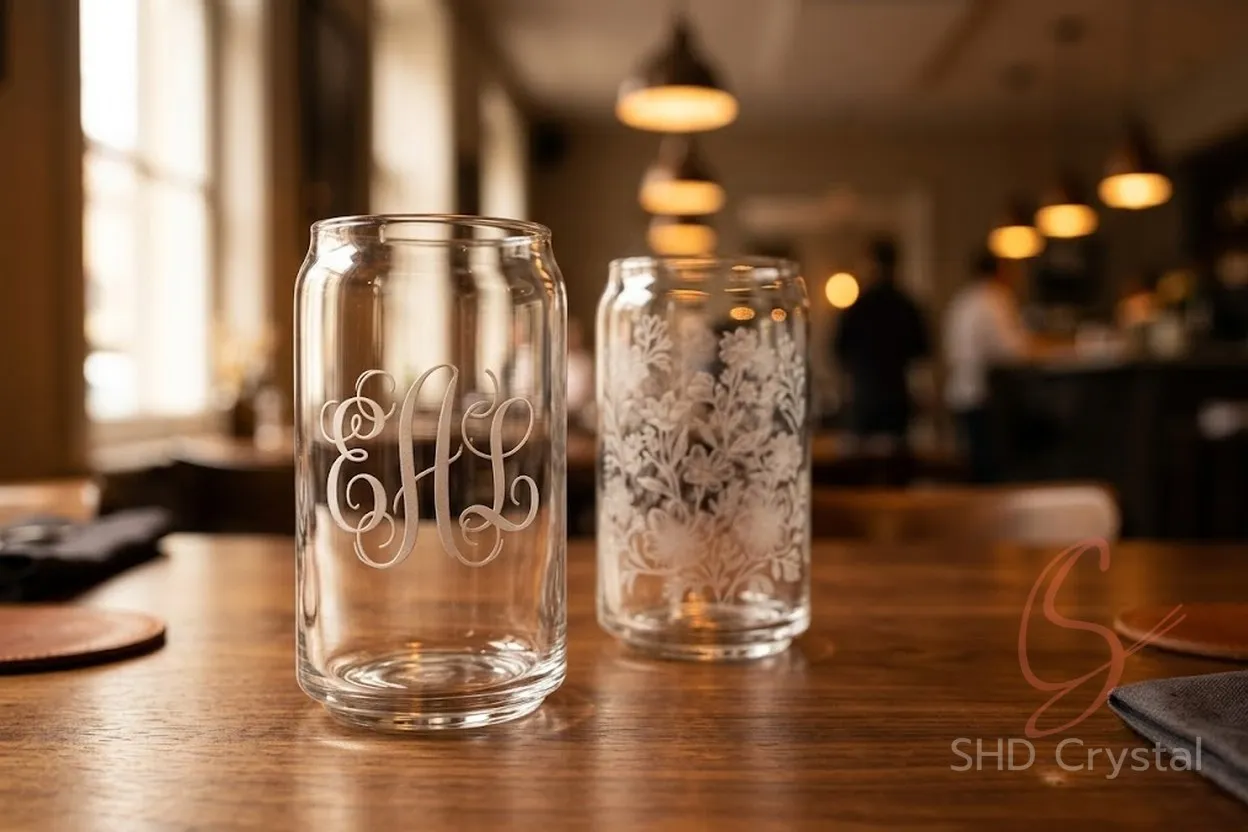
A hospitality group sourcing custom engraved glass mugs for a hotel renovation once specified acid etching for its premium feel. The samples looked excellent. But at production scale, the etching shop could not maintain uniform opacity across three consecutive batches. The root cause was a temperature-controlled bath that had not been calibrated in months. The lesson: requesting process documentation from the decoration facility, not just the blank supplier, is a reasonable and often overlooked step in vendor evaluation. Many buyers of custom glass tumblers discover this only after the first production run.
Matching Method to Use Case
The real question is not which method is universally best, but which one fits the specific order. A corporate gift program ordering personalized glassware gifts in quantities of two to three hundred will likely find laser engraving the most straightforward choice — fast setup, consistent results, no minimum order anxiety. A retail brand producing custom glass tumblers for seasonal promotion at five thousand units would typically find screen printing the more sensible path, provided the brand can tolerate a shorter decoration lifespan.
Acid etching sits in a different category. It suits orders where the tactile experience matters — premium gift sets, high-end restaurant ware, or branded mugs intended to convey craftsmanship. The better approach is usually to request acid etching samples under different bath conditions before committing to a large run, because the variation between shops is wider than most buyers expect. Buyers planning personalized glassware gifts for luxury events should note that the tactile quality of an etched surface often communicates premium positioning more effectively than any printed design.
FAQ
What is the typical MOQ for custom engraved glass mugs from Chinese manufacturers?
Minimum order quantities vary by method. Laser engraving often accepts orders as small as 100 units, while acid etching and screen printing typically require 500 or more to justify setup costs. Factories in the Boshan and Hebei regions sometimes offer lower MOQs for repeat customers.
How does laser engraving compare to acid etching for durability?
Both methods alter the glass surface rather than adding a coating, so they tend to outlast screen printing. Acid etching creates a more uniform matte texture across the design area, while laser engraving can show fine tool marks under close inspection. For daily-use mugs, either method holds up well over years of service.
Can I combine two decoration methods on the same mug?
Yes, and it is more common than buyers realize. A typical combination is acid etching for the main logo with screen-printed color accents for secondary design elements. The practical challenge is sequencing the processes correctly — the etched surface needs to be clean and free of residue before printing, so the factory must manage the handoff between decoration stations carefully.
What quality certifications should I look for when sourcing personalized glassware gifts?
Look for factories that can provide ISO 9001 certification and documentation of their AQL standards. For food-contact glassware, FDA compliance or LFGB certification is worth specifying in the RFQ. Asking for third-party inspection reports from previous export orders is also a reasonable request during vendor evaluation.
Conclusion
Selecting the right decoration method for custom engraved glass mugs comes down to matching the technique to the order volume, the intended use, and the brand’s tolerance for trade-offs in cost and durability. Laser engraving, screen printing, and acid etching each serve a legitimate purpose — the mistake is assuming one method fits every scenario. Buyers who invest time in understanding how each technique actually performs at production scale tend to avoid the costly surprises that surface after the shipment arrives.
Start Your Next Glassware Project
SHD Glassware works with buyers navigating exactly these kinds of decoration decisions. Whether the priority is precision engraving for a boutique order or high-volume printing for a retail rollout, the team can walk through method selection, sample evaluation, and production planning to help ensure the finished mugs match the brief. Reaching out with a spec sheet and quantities is a practical first step toward getting a quote tailored to your custom engraved glass mugs project.
If you are interested in our glassware or related products,
please feel free to contact us.

