


Blogpost keywords: personalised mugs and glasses, custom printed coffee mugs, personalised drinkware suppliers
Sourcing personalised mugs and glasses for a brand, hospitality group, or corporate gifting programme sounds straightforward until the first round of samples arrives and the decoration looks nothing like the digital proof. The gap between expectation and delivery is usually a specification problem, not a material one.
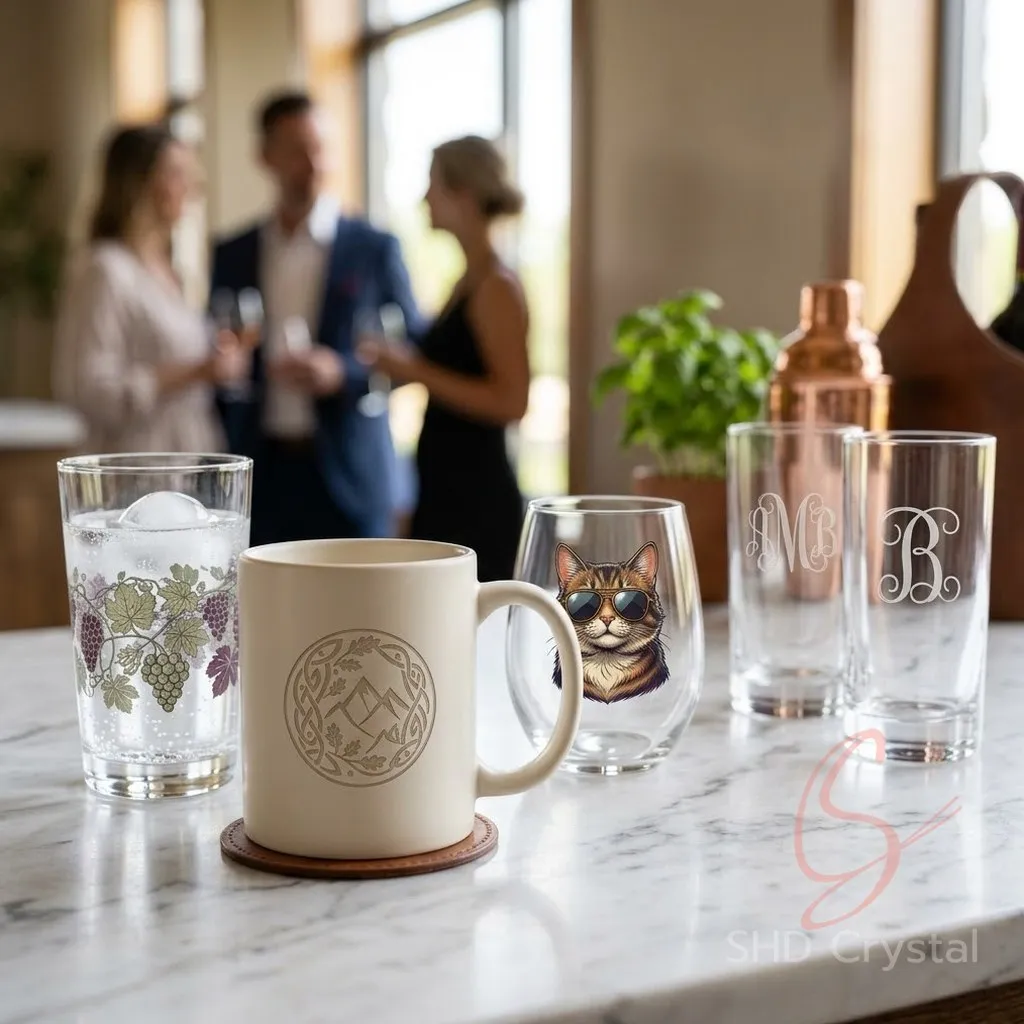
What Actually Matters When Sourcing Personalised Mugs and Glasses
Buyers evaluating personalised mugs and glasses tend to focus on unit price and logo placement. Those are downstream consequences of earlier decisions. The real levers are material selection, decoration method, and whether the factory controls the full chain or subcontracts critical steps. Wall thickness affects how etching and printing interact with the surface, and mug handle geometry determines how a pad-printed logo wraps around the body. These details rarely appear on a spec sheet unless the buyer asks.
Decoration Methods for Custom Printed Coffee Mugs and Glasses
Choosing a decoration method is where procurement teams face their first trade-off. Each technique produces a different visual result, carries different durability expectations, and scales differently.
Method | Best For | Main Risk |
Screen Printing | Large runs with bold, solid-colour logos | Edge wear after repeated dishwasher cycles |
Digital Printing | Photorealistic detail, small to mid runs | Higher per-unit cost at scale |
Laser Engraving | Permanent, premium finish on glass or ceramic | Limited to single-colour output; setup adds lead time |
Screen printing is the most economical choice for large-volume custom printed coffee mugs with simple graphics. The ink sits on the surface, giving vivid colour but showing wear before an etched alternative. Laser engraving removes material from the substrate — nothing to chip or fade. Digital printing handles photographic imagery without screen setup, making it practical for limited editions or variable-data campaigns. The real question is which method matches the order volume, design complexity, and end-use environment.
Material Considerations for Personalised Drinkware Suppliers
The substrate determines how well decoration survives daily use. Soda-lime glass handles everyday service, but borosilicate withstands thermal shock — meaningful for venues serving hot and cold beverages in the same vessel. Crystal offers clarity and weight that luxury brands expect, though it demands careful handling. On the mug side, ceramic dominates the personalised market because it accepts decoration reliably. Bone china provides a lighter alternative for upscale settings, while stoneware suits craft coffee shops.
A beverage brand once specified borosilicate glass for a promotional tumbler series. The factory delivered soda-lime with a borosilicate-style finish. The brand's receiving team caught the difference only after a hot-liquid test in-house — a step many procurement teams assume the supplier handles.
Working With Personalised Drinkware Suppliers Across Regions
Chinese glass factories often separate forming from decoration — blanks are produced in one facility and shipped to a specialised printing line, sometimes in a different town. This split affects timeline and quality consistency. Ask whether the supplier controls the full chain from blank production through decoration to packaging. In-house capabilities tend to offer tighter quality control and more predictable lead times.
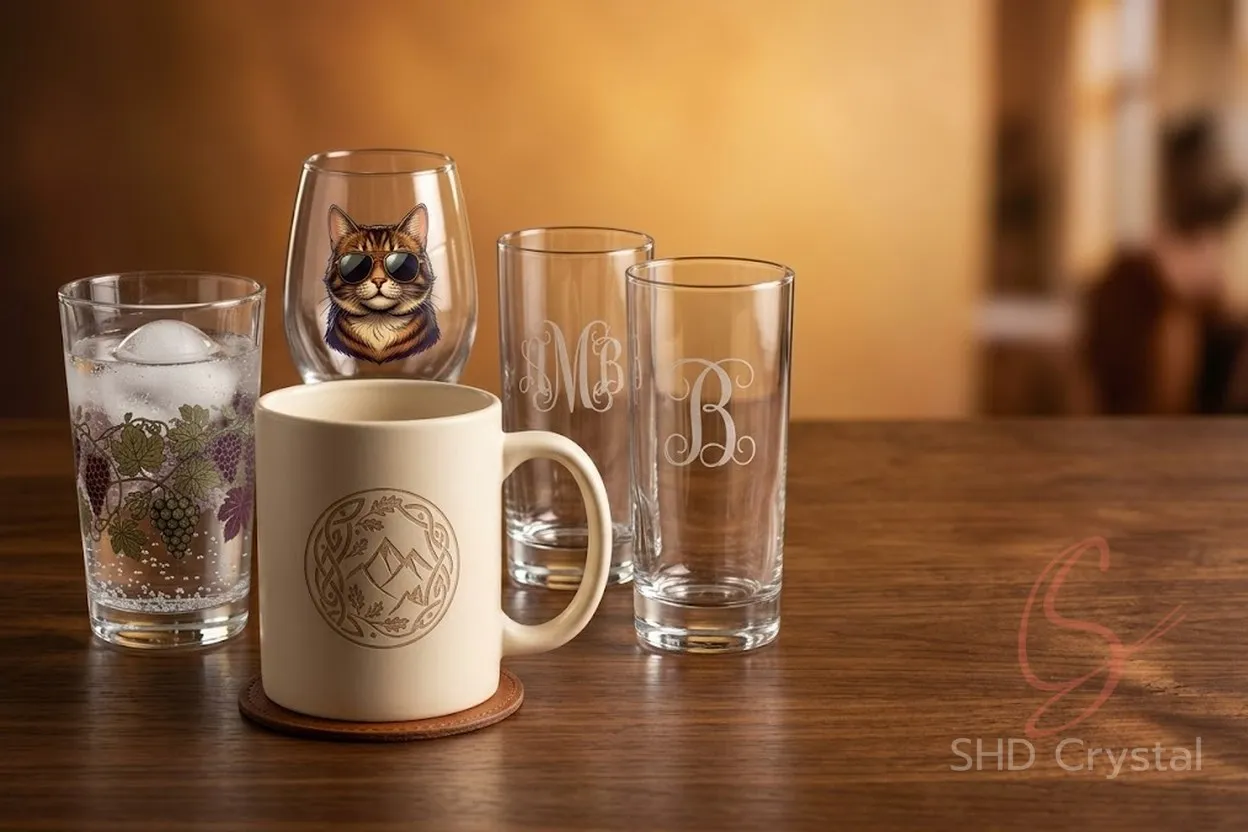
Regional clusters matter. Shandong's Boshan district is known for glassware, Guangdong handles ceramic mug volume, and Hebei covers daily-use glass. A sourcing team that understands these clusters sets realistic expectations for turnaround and capacity.
Beyond Decoration: What Determines a Successful Order
MOQs vary between factories, and some suppliers set higher minimums for decorated items than for plain stock. Lead times for custom work typically run longer, especially when new tooling is involved. Packaging deserves early attention — inadequate internal packaging is a common cause of damage claims on personalised items.
Quality inspection should be proactive: evaluate pre-production samples with the same team that inspects the final shipment, and run in-line checks during production to catch decoration drift before the order is packed.
FAQ
What Is the Typical MOQ for Personalised Mugs and Glasses?
Minimums vary by decoration method. Screen printing often runs 500-plus pieces, while digital printing may accept 50 to 100 units. Many factories offer trial runs at slightly higher per-unit pricing before full commitment.
How Durable Are Custom Printed Coffee Mugs Compared to Engraved Alternatives?
Durability depends on method and firing temperature. Screen-printed designs show edge wear after dishwasher cycles, while laser-engraved or high-fired decals maintain appearance for years. Request wash-tested samples before ordering.
Can I Source Both Mugs and Glasses From the Same Supplier?
Some factories specialise in one substrate while larger operations handle both. Evaluate whether the supplier's capabilities match both categories rather than assuming cross-category competency.
What Quality Certifications Matter When Sourcing Personalised Drinkware Suppliers?
Food-safety compliance is the baseline: FDA or EU certifications depending on the target market. ISO 9001 indicates process consistency, though certification alone does not guarantee output quality.
How Do Lead Times Differ Between Decoration Methods?
Digital printing offers the fastest turnaround with no screen setup. Screen printing adds setup time per colour. Expect decorated orders to run longer than plain-stock by roughly a week or more.
Conclusion
Choosing the right approach to sourcing personalised mugs and glasses is less about finding the cheapest option and more about aligning material, decoration, and supplier capability with the end use. The strongest outcomes come from treating procurement as a structured project — evaluating personalised drinkware suppliers on full capability and verifying quality through hands-on sample testing before scaling to production volumes.
Moving Forward With Your Sourcing Strategy
When the time comes to evaluate personalised mugs and glasses for a specific project, SHD Glassware works with procurement teams navigating these exact decisions — from material selection and decoration method through to packaging and logistics. Their team can help assess which approach fits the order volume, budget, and quality expectations at hand.
If you are interested in our glassware or related products,
please feel free to contact us.

