


Blogpost keywords: personalized margarita cups, custom margarita glasses, wholesale cocktail glassware
Personalized margarita cups have become a staple in the hospitality industry, and for good reason: a branded glass turns a routine cocktail into a memorable experience. For procurement teams sourcing drinkware for resorts, bars, or event venues, the challenge is finding a supplier who can deliver consistent quality at scale without sacrificing the fine detail that makes personalization worthwhile.
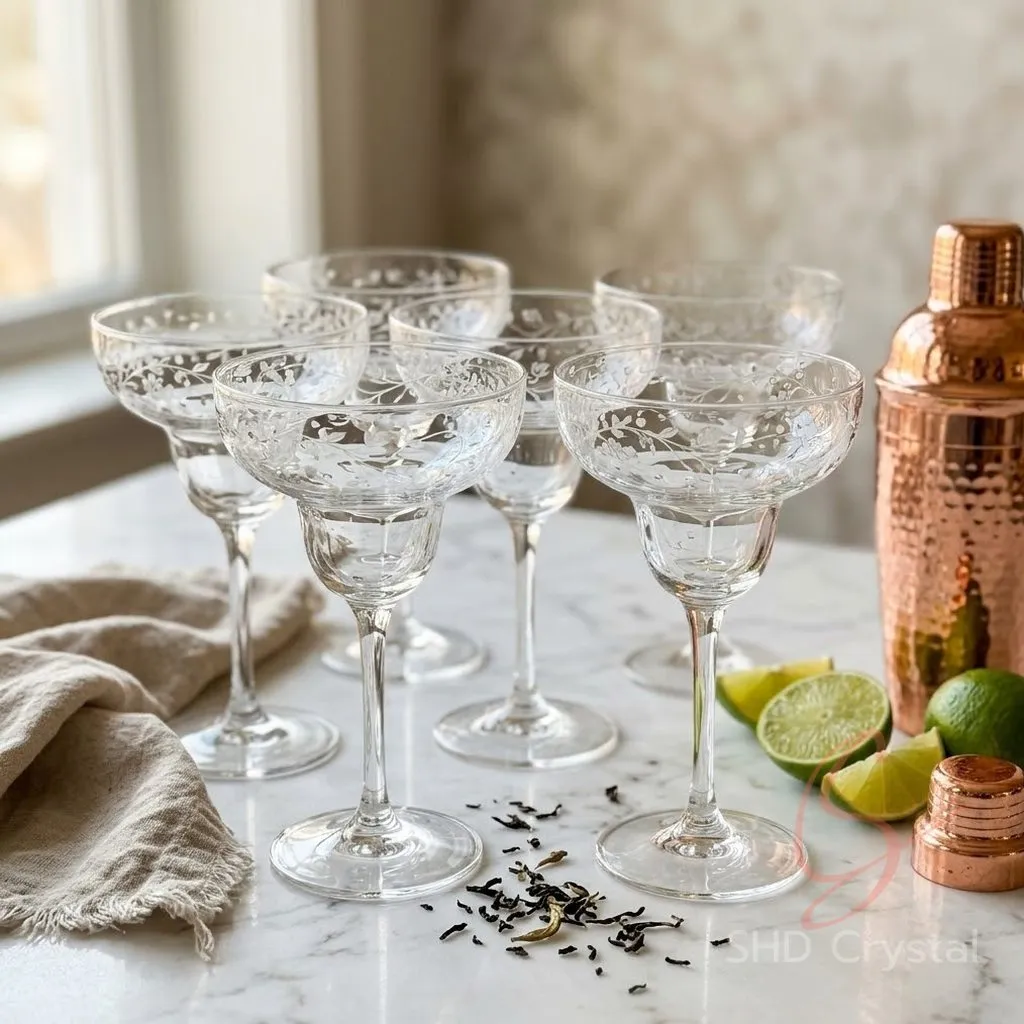
Why Personalized Margarita Cups Matter for Hospitality Brands
A hospitality group that switched from generic tumblers to engraved glassware reported a noticeable uptick in social media mentions within the first season. Guests photographed their drinks and shared them online — organic exposure that printed signage or disposable cups struggle to match.
From a procurement standpoint, personalized margarita cups simplify inventory management. When every venue in a portfolio carries the same branded glass, bulk purchasing becomes straightforward and the receiving team can standardize quality checks across locations. The trade-off is a higher upfront tooling investment, but for organizations ordering in sufficient volume, that cost spreads thin across years of service.
Decoration Methods Compared: Etching, Sandblasting, and Laser
Choosing the right personalization technique depends on design complexity, order volume, and the durability the venue demands. Three primary methods dominate the custom margarita glasses market.
Method | Best For | Main Risk |
Acid etching | Large batches, consistent frosted finish | Uneven opacity on curved surfaces if bath temperature drifts |
Sandblasting | Deep texture, bold branding on thick walls | Microfractures along the design edge on thin-walled glass |
Laser engraving | Fine detail, small-to-medium runs | Higher per-unit cost at very large volumes |
Acid etching produces a smooth, uniform frosted look ideal for large hospitality orders. Sandblasting offers deeper tactile feel but demands strict quality control — without it, hairline cracks may appear only after repeated dishwasher cycles. Laser engraving suits short runs needing intricate detail, though per-unit cost climbs at volume.
A practical consideration is how the decoration interacts with the glass shape. A wide-rim margarita glass presents a flat etching surface, but a tapered tumbler can produce uneven logo placement if masking is not calibrated to the curve. In practice, factories in the Boshan district of Shandong — a well-established glassware cluster — handle these geometry issues reliably.
Material Choices for Wholesale Cocktail Glassware
Soda-lime glass handles everyday use and keeps costs manageable, making it the default for high-traffic venues. Borosilicate resists thermal shock better, relevant for venues serving frozen margaritas alongside room-temperature spirits. Crystal delivers superior clarity and a premium feel that luxury resorts prefer, though it commands a higher price and requires careful shipping.
The real question is not which material is objectively best, but which matches the venue’s service model. Custom margarita glasses ordered for a resort pool deck may need to survive drops onto concrete — a scenario where soda-lime’s flexibility outperforms crystal’s rigidity.
Quality Inspection and Lead Time Realities
Buyers should request defect tier documentation before placing a first order. Reputable suppliers typically operate at AQL 2.5 or 4.0, but the practical meaning varies. AQL 2.5 allows roughly two to three defective units per hundred — acceptable for premium venues but problematic for high-volume hospitality chains ordering wholesale cocktail glassware.
Lead times generally run 20 to 30 working days, though tooling for custom molds adds weeks. A common mistake is treating production as the only time commitment. Inbound inspection, warehousing, and distribution to multiple venues can add another two to three weeks. Coordinating with logistics early avoids the most painful delays.
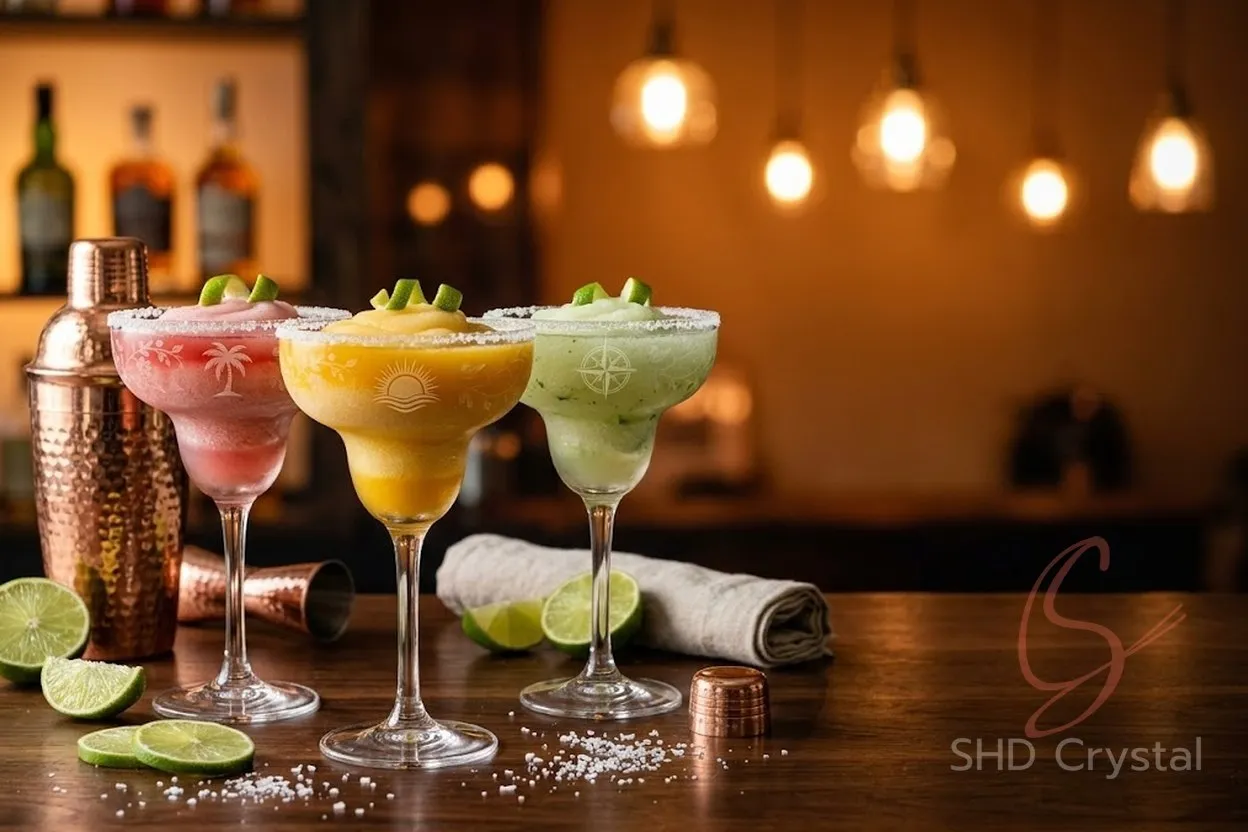
Sourcing Pitfalls Worth Avoiding
One frequent misstep is ordering a sample and assuming production units will match exactly. Samples often come from a dedicated finishing line with tighter tolerances than the main run. The better approach is requesting a pre-production run of 50 to 100 units and inspecting those before approving mass production of custom margarita glasses.
Another pitfall involves packaging. Export cartons rated for domestic shipping may not survive international freight without additional dividers or foam inserts. A beverage brand that shipped 2,000 wholesale cocktail glassware units overseas in standard cartons found roughly 8 percent arrived chipped — an avoidable loss if the packaging spec had been specified more carefully during the RFQ stage.
FAQ
What is the typical MOQ for personalized margarita cups from Chinese manufacturers?
Minimum order quantities vary by supplier and decoration method, but most factories in the Shandong and Hebei glass clusters set MOQs between 500 and 1,000 units for acid-etched or laser-engraved orders. Sandblasted designs may carry a slightly higher minimum due to masking setup costs.
How do custom margarita glasses compare to standard tumblers for branding?
Margarita glasses have a distinctive silhouette that draws attention, making them more effective for brand visibility than generic tumblers. The wide rim provides a larger canvas for logos and event details. For venues focused on presentation, the glass shape itself becomes part of the brand story.
What quality certifications should I look for when sourcing wholesale cocktail glassware?
Verify that the factory holds food-contact safety certifications for the destination market — FDA for the US, LFGB for Germany, or equivalent. ISO 9001 signals a documented quality system, though it does not guarantee defect-free output. Ask for recent third-party audit reports rather than relying on self-declared certifications.
Can personalization survive commercial dishwasher cycles?
Acid-etched and laser-engraved designs typically withstand hundreds of commercial wash cycles without visible degradation. Sandblasted surfaces are slightly more vulnerable to clouding over time, particularly if the blast depth is aggressive. The durability difference is measured in years of service, not weeks.
Conclusion
Selecting personalized margarita cups involves material decisions, decoration trade-offs, quality assurance protocols, and logistics planning that each make or break the final result. Procurement teams that treat drinkware sourcing as a strategic decision — rather than a commodity buy — consistently end up with glassware that supports their brand.
Next Steps for Your Drinkware Program
For hospitality buyers evaluating personalized margarita cups, SHD Glassware works with venues and beverage brands across multiple production clusters in China, offering guidance on decoration methods, material selection, and quality control. Reaching out early in the planning cycle gives the production team room to flag issues and suggest practical alternatives that keep costs in line.
If you are interested in our glassware or related products,
please feel free to contact us.

