


Blogpost keywords: personalized wine glass with stem, custom engraved wine glasses, stemmed wine glass supplier
A personalized wine glass with stem carries more weight than a simple logo print — it sits on a banquet table, passes through a commercial dishwasher, and reflects the brand that commissioned it. Procurement teams evaluating options across soda-lime, lead-free crystal, and borosilicate need to understand how each material interacts with the chosen personalization method before committing to a bulk order.
Why Material Selection Comes Before Method
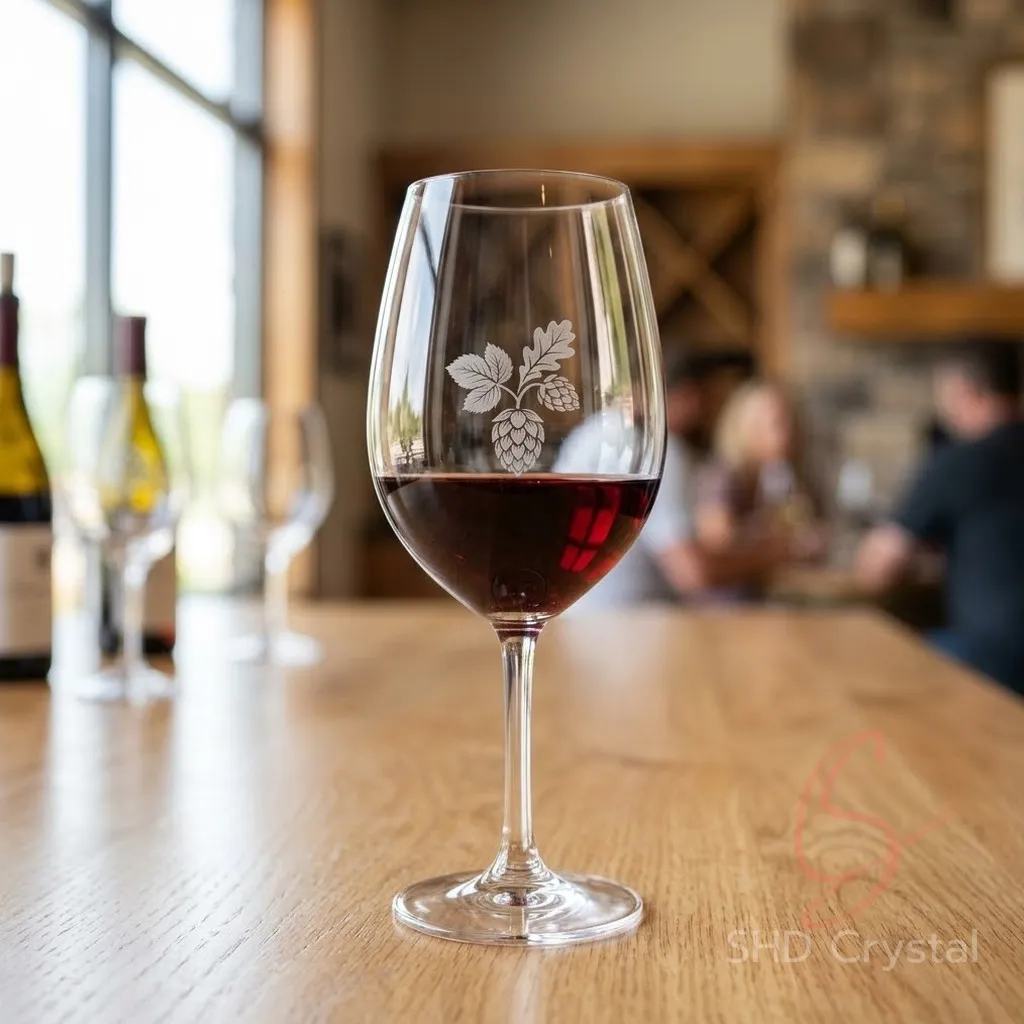
The glass body determines which personalization techniques are viable for a personalized wine glass with stem and how durable the result will be. Soda-lime glass dominates the entry-level market because it accepts acid etching and sandblasting reliably at a modest price point. Lead-free crystal offers superior clarity and a heavier hand-feel that hospitality buyers associate with premium service, but its softer composition demands more care during laser engraving — excessive power settings risk microfractures along the engraved edge. Borosilicate glass, prized for thermal shock resistance, appears in specialty applications where glasses transition between cold storage and warm environments.
Material Comparison at a Glance
Material | Best For | Main Trade-Off |
Soda-Lime Glass | High-volume, everyday use | Lower clarity; etching contrast may appear muted |
Lead-Free Crystal | Premium hospitality, gifting | Softer surface requires calibrated engraving power |
Borosilicate Glass | Specialty, thermal resilience | Less common in wine service; limited method options |
A practical consideration is how the material’s surface energy affects coating adhesion. Crystal glasses often receive a thin protective layer after etching to reduce haze buildup from repeated washing — a step that soda-lime rarely requires. Buyers should ask their stemmed wine glass supplier whether the quoted price includes this finishing step, because omitting it can reduce per-unit cost but shorten the glass’s visual lifespan in commercial settings.
Matching Personalization Methods to Glass Type
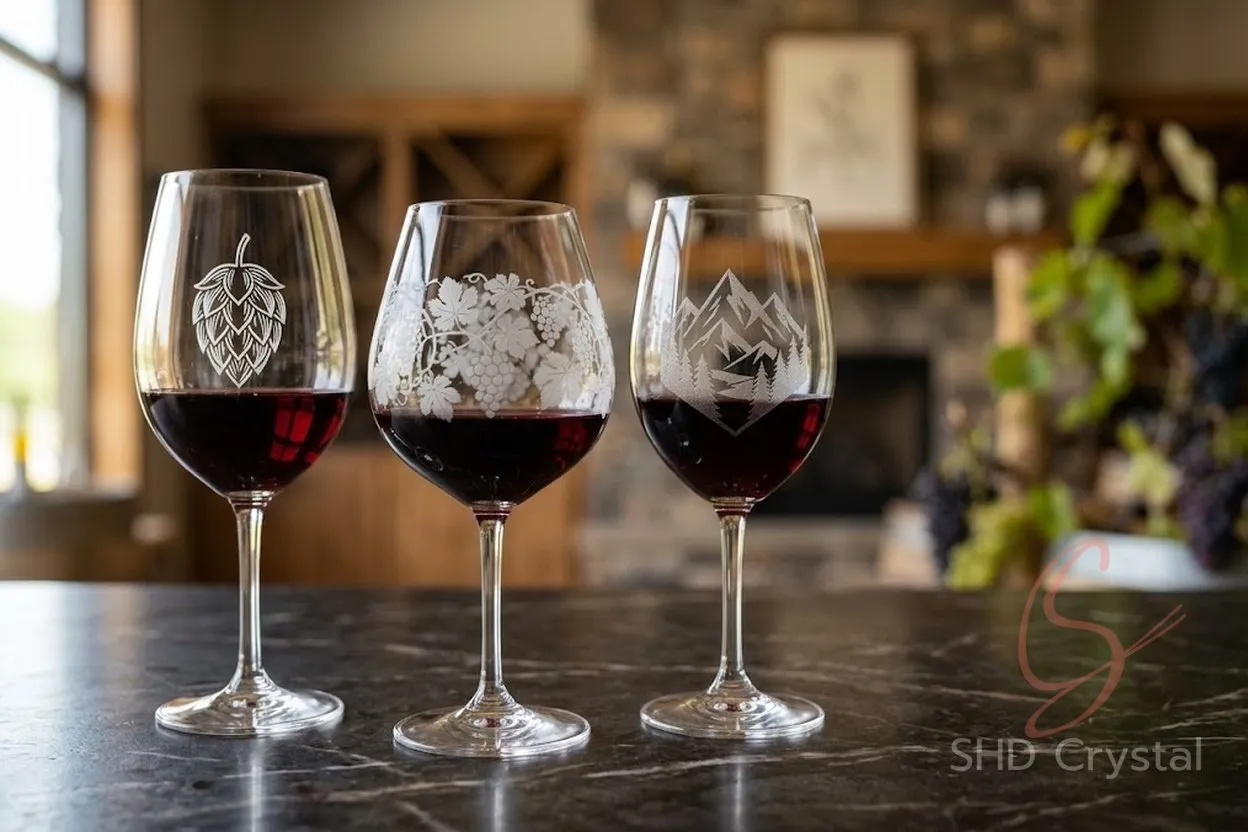
Laser engraving produces precise, fine-line results that suit small-run orders and complex artwork. On soda-lime glass, the laser creates a frosted mark by disrupting the surface at a controlled depth — the contrast is subtle but durable. On crystal, the same power setting may create a brighter white mark, which looks striking but can weaken the glass if the engraving depth is not carefully calibrated. For a personalized wine glass with stem intended as a keepsake, the choice between laser and acid etching often comes down to the level of detail in the artwork.
Acid etching works best on large batches where uniform frosted coverage matters more than fine detail. The process submerges the glass in a chemical bath, so curved surfaces like a wine bowl need careful rack positioning to avoid uneven opacity. Sandblasting creates deeper texture and a bolder tactile feel, which some branding teams prefer for custom engraved wine glasses intended as corporate gifts. Screen printing remains the lowest-cost option for simple, single-color logos, but the ink sits on the surface and wears faster than etched or engraved marks.
What Separates a Reliable Supplier From a Risky One
In practice, the difference between a satisfactory order and a problem order often comes down to the supplier’s control over the full production chain. A stemmed wine glass supplier in the Boshan district of Shandong or parts of Hebei may specialize in glass forming, but decoration — etching, engraving, printing — is frequently outsourced to workshops in adjacent towns. This separation creates handoff points where quality can slip: a blank formed to tight tolerances may arrive at the etching line contaminated with dust, and the decorator has no visibility into the forming conditions.
A supplier that handles blank production, personalization, and packaging under one roof offers tighter process integration and shorter lead times. When evaluating a stemmed wine glass supplier, it is worth asking whether the factory runs its own decoration line or subcontracts that work. The answer affects not just quality consistency but also how quickly a rework can be completed if the first batch does not meet spec.
A beverage brand ordering 5,000 personalized wine glass with stem units for a product launch discovers mid-production that the etching depth varies across batches. The supplier’s forming workshop and etching workshop are in different facilities, and neither has a shared QC protocol for handoff inspection. The brand’s receiving team catches the inconsistency during inbound inspection, but the supplier needs an additional production window to re-etch the affected pieces.
Overlooked Details That Affect the Final Result
Buyers frequently focus on the artwork and underestimate the influence of glass thickness on engraving visibility. A thin-walled wine glass produces a more delicate engraved mark that can disappear under certain lighting, while a thicker bowl holds the contrast better but adds weight that changes the drinking experience. The real question is not which glass looks best in a catalog photo, but which one serves the intended purpose — a fine-dining establishment may prioritize clarity, while a corporate gifting program may favor durability.
Packaging is another area where sourcing decisions have downstream consequences. Custom engraved wine glasses ship best in individual inner cartons with dividers, nested inside a master export carton on pallets. A stemmed wine glass supplier that skips the inner carton to save cost increases the breakage rate during transit — and a damage rate of a few percent on a multi-thousand-unit order is not unusual when packaging is downgraded.
FAQ
What is the typical MOQ for a personalized wine glass with stem from Chinese manufacturers?
MOQs vary widely by factory and personalization method. Laser-engraved orders often start at 300 to 500 pieces, while acid-etched orders may require higher minimums because the chemical bath setup is shared across the entire batch. A stemmed wine glass supplier working with Boshan or Hebei production clusters may offer lower MOQs if the decoration line is in-house.
How does laser engraving compare to acid etching for custom engraved wine glasses?
Laser engraving suits small to mid-size runs with detailed artwork and produces a precise frosted mark. Acid etching works better for large-volume orders requiring uniform frosted coverage across the entire glass surface. Both methods produce permanent marks, but acid etching creates smoother transitions on curved bowls while laser engraving shows sharper edges on fine-line designs.
What quality certifications should I look for when sourcing stemmed wine glassware?
ISO 9001 certification indicates documented quality management processes. For food-contact glassware, FDA compliance or EU food safety registration matters for those import markets. Beyond certifications, buyers should verify AQL inspection standards — commonly AQL 2.5 for critical defects — and request a pre-shipment inspection report.
Conclusion
Selecting a personalized wine glass with stem is not a single decision — it is a chain of linked choices where material affects method, method affects durability, and supplier structure affects quality control. The procurement teams that get the best results evaluate these variables together rather than optimizing each one in isolation.
Next Steps for Your Personalization Project
SHD Glassware works with buyers navigating these trade-offs on every order, from material selection through final packaging specifications. If your team is evaluating options for a personalized wine glass with stem — whether for a hospitality program, a corporate gifting initiative, or a retail private-label line — it may help to request material samples and decoration proofs before committing to a full production run. Comparing how the same artwork reads on soda-lime versus crystal, or how laser engraving holds up against acid etching, is a small upfront investment that avoids costly corrections later.
If you are interested in our glassware or related products,
please feel free to contact us.

