


Blogpost keywords: wholesale glass beer mugs, bulk drinking glasses, custom beer steins
Sourcing wholesale glass beer mugs looks straightforward until a procurement team realizes how many variables affect the final order — glass thickness, handle attachment, cavity uniformity, and packaging all shift cost and quality in ways that aren't obvious from a catalog photo. For buyers placing bulk drinking glasses orders, understanding the trade-offs before sending an RFQ saves time and prevents costly reorders.
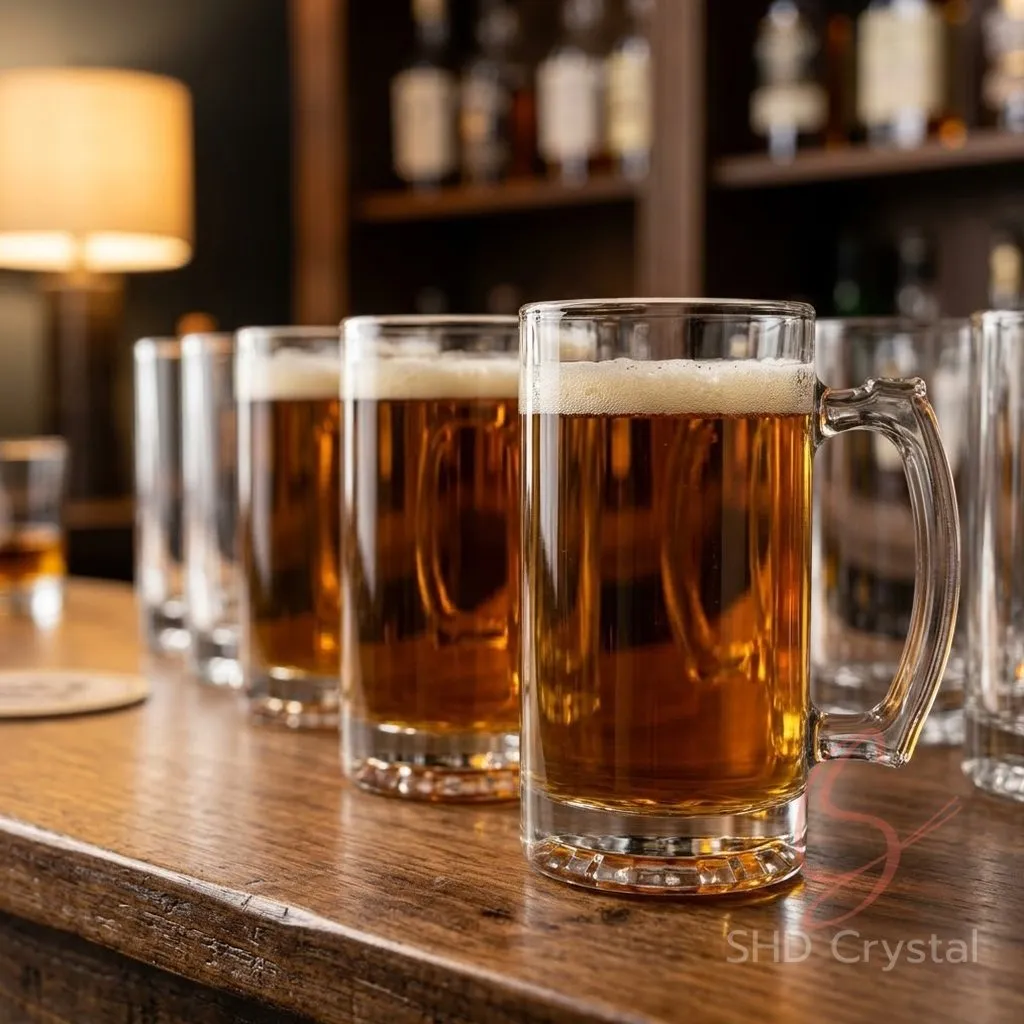
Why Beer Mugs Are Harder to Source Than They Look
A glass beer mug appears simple: thick walls, a sturdy handle, maybe an etched logo. But the variables that separate a reliable supplier from a costly mistake are buried in the details. Wall thickness consistency across cavities, handle-to-body joint strength after thermal cycling, and whether the factory controls forming and decoration in-house or outsources to a subcontractor all matter more than the unit price on a quotation.
Chinese glass clusters in Boshan (Shandong) and Hebei province handle the majority of daily-use glass production for export. Factories typically separate blank forming from decoration — mugs are blown or press-molded on IS machines, then sent to specialized etching or screen-printing lines. When forming and decoration happen in different workshops, lead times stretch and quality communication gets harder. A supplier that controls the full chain — from molten glass to packed carton — usually offers tighter tolerances and fewer surprises at inbound inspection.
Material Choices That Actually Matter
Buyers comparing wholesale glass beer mugs will encounter three main glass types, each making a different trade-off between cost, clarity, and durability:
Material | Best For | Main Limitation |
Soda-lime glass | High-volume restaurant supply, tight budgets | Lower thermal shock resistance; chips more easily at rim |
Borosilicate glass | Premium taprooms, branded retail lines | Higher per-unit cost; fewer factories run it on IS machines |
Crystal glass | Luxury gifting, hotel bar programs | Heaviest; requires lead-free formulation for food-contact compliance |
Soda-lime glass dominates the wholesale beer mug market — it runs efficiently on standard IS machines and keeps per-unit cost low. Borosilicate handles thermal shock better, which matters when mugs cycle between dishwashers and cold fills. Crystal offers the clarity luxury brands expect, but the weight makes it a niche choice for most bulk drinking glasses orders. In practice, the better approach is to match material to the end-use environment, not to the lowest quote.
Decoration Methods: What Survives Daily Use
Logo and branding decoration is where many orders go sideways. Three methods dominate:
Acid etching on a curved beer mug surface needs careful chemical concentration control. If the bath temperature drifts or immersion time varies across a rack, the frosting turns patchy and the logo looks uneven in direct light — something that doesn't show up in a sample photo but becomes obvious when 500 mugs arrive. Sandblasting creates deeper texture but carries a risk of micro-fractures along the design edge. Screen printing is fastest for full-color work, but edge wear shows up well before etched alternatives need replacement.
A practical consideration is requesting a wash-test sample: ask the supplier to run a printed mug through 30 to 40 commercial dish cycles before approving the production run. It adds a few days to sampling but catches adhesion problems that a single-pass sample will never reveal.
MOQ, Tooling, and the Real Cost Breakdown
Most Chinese glass manufacturers set minimum order quantities for wholesale glass beer mugs between 3,000 and 5,000 units per design. Custom molds for custom beer steins with unusual proportions typically carry a tooling fee that amortizes over the first production run. Mold development can take two to three weeks and add to the overall lead time.
The real cost breakdown extends well beyond unit price. Buyers should factor in inner carton configuration, pallet stacking height, export carton weight limits, and whether the supplier includes AQL inspection or if you will need third-party QC. A hospitality group sourcing mugs for a chain of brewpubs discovered that their quoted unit price did not include inner dividers — repackaging at the destination port added nearly 15% to landed cost.
Quality Inspection: What to Specify in Your RFQ
When issuing an RFQ for wholesale glass beer mugs, specifying acceptance criteria upfront prevents disputes later. Wall thickness tolerance should be tight enough that cavities feel consistent in hand. Handle bond strength — a tug test on a random sample from each cavity position reveals whether the joint was properly annealed. Capacity should match the specification across the batch so that bar pours look uniform.
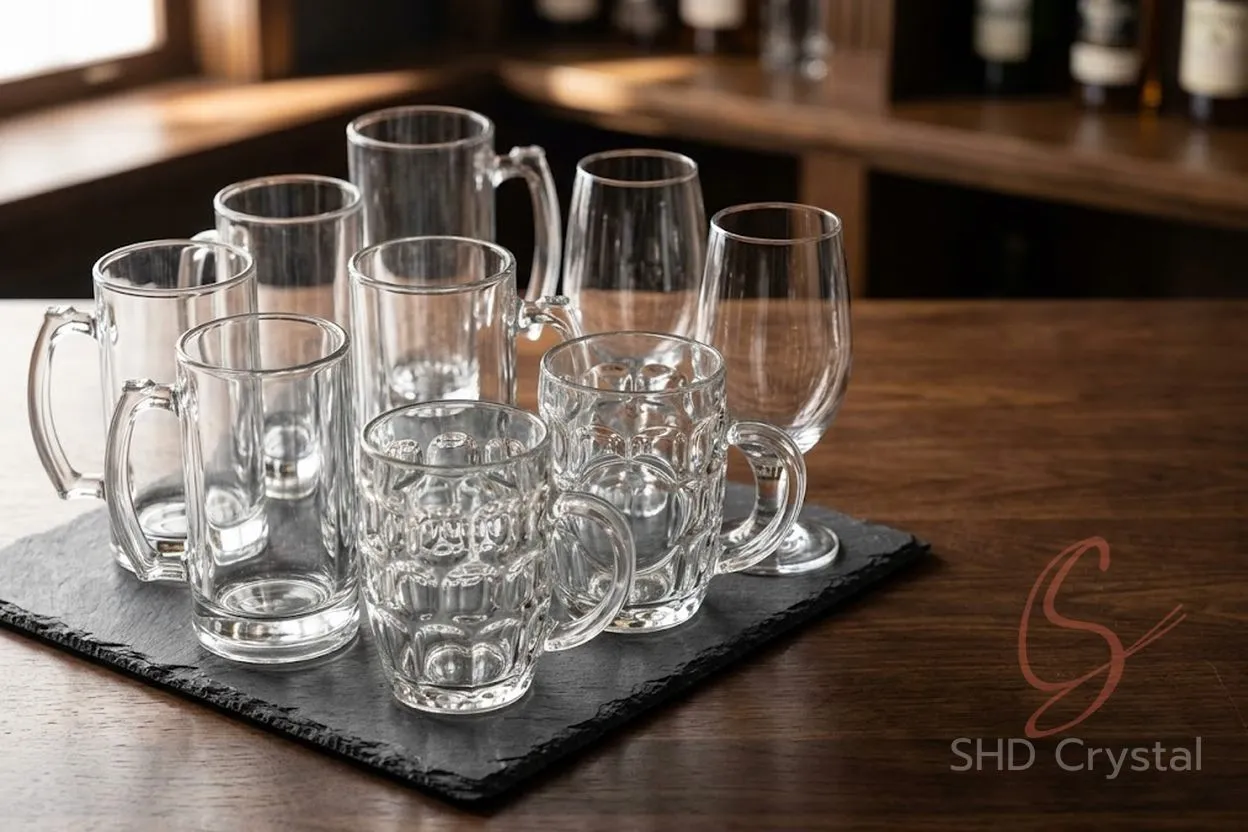
Ask the factory whether they run in-house QC or rely on the buyer's third-party inspector. A factory with integrated quality control typically catches issues before packing. A factory without that capability will ship and let your receiving team discover the problems.
FAQ
What is the typical MOQ for wholesale glass beer mugs from Chinese manufacturers?
Most factories set MOQs between 3,000 and 5,000 units per design for standard press-molded mugs. Custom shapes or embossed logos may require higher minimums to justify tooling costs. MOQ flexibility often depends on whether the factory runs the mug on an existing mold or needs new cavities.
How does soda-lime glass compare to borosilicate for beer service?
Soda-lime glass handles everyday commercial use well and keeps per-unit cost low. Borosilicate offers better thermal shock resistance, which matters in settings where mugs cycle between hot dishwashers and cold fills. For most bulk drinking glasses programs, soda-lime is the standard — borosilicate makes sense for premium lines or environments with extreme temperature swings.
What quality certifications should I look for when sourcing beer glassware?
Look for ISO 9001 quality management certification, food-contact compliance testing (FDA or EU LFGB depending on your market), and evidence of AQL-based inspection protocols. Factories in Boshan and Hebei that export regularly should be familiar with these standards.
Conclusion
Sourcing wholesale glass beer mugs at scale requires more than comparing unit prices. Material selection, decoration durability, factory integration, and quality inspection protocols all shape the true cost. For procurement teams evaluating custom beer steins or standard bulk drinking glasses, the upfront diligence pays for itself in avoided rework and cleaner inbound inspections.
Ready to Source With Confidence
SHD Glassware works with wholesale glass beer mugs programs ranging from restaurant supply chains to branded retail lines. If you are comparing options for bulk drinking glasses or evaluating custom beer steins for a hospitality project, reaching out for a detailed specification review can help you avoid common sourcing pitfalls before they become costly ones.
If you are interested in our glassware or related products,
please feel free to contact us.

