


Blogpost keywords: wholesale latte glasses, custom printed glass cups, bulk coffee glassware
Sourcing wholesale latte glasses for a café chain, hotel group, or specialty roaster involves more than comparing unit prices. Material choices, wall thickness, and packaging standards all influence whether the glasses survive commercial dishwashing or arrive intact at the receiving dock. For procurement teams evaluating bulk coffee glassware, the real work begins once you move past the price per unit.
What Wholesale Latte Glasses Buyers Should Evaluate First
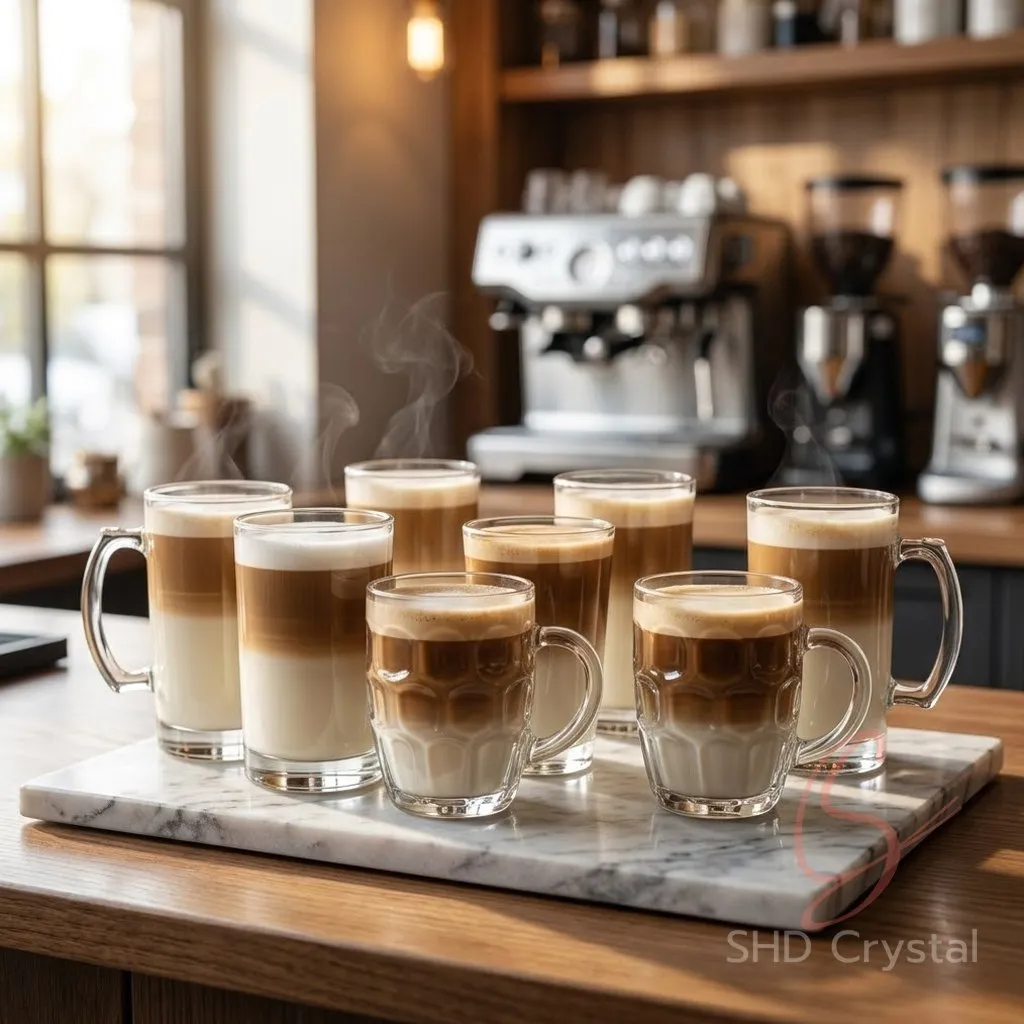
The most common mistake in glass procurement is treating every latte glass as interchangeable. A 240ml latte glass for a specialty café has different requirements than one destined for a high-volume hotel buffet. Wall thickness, base diameter, and thermal shock resistance all vary — and those variations matter when glasses are loaded into a commercial dishwasher multiple times a day.
A practical consideration is that latte glasses serve a dual function: they must perform well in service and photograph well for the customer's social media. That balance between durability and aesthetics drives many sourcing decisions. In practice, procurement teams that skip the sample-testing phase often discover issues only after the full order arrives.
Glass Material Choices for Coffee Service
The three most common materials for wholesale latte glasses are soda-lime glass, borosilicate glass, and crystal. Each makes a different trade-off between cost, durability, and perceived value.
Soda-lime glass handles everyday café use well and is the most cost-effective option for high-volume orders. Borosilicate glass resists thermal shock better, which matters where hot espresso meets a glass straight from the rinse cycle. Crystal offers superior clarity and a premium feel, but carries a higher unit cost.
Material | Best For | Main Trade-off |
Soda-lime glass | High-volume cafés, hotel service | Lower thermal shock resistance |
Borosilicate glass | Specialty coffee shops, thermal stress | Higher unit cost |
Crystal | Luxury lounges, premium branding | Fragile, higher replacement cost |
A typical glass factory in the Boshan district of Shandong will run soda-lime and borosilicate on separate forming lines because the melting temperatures differ. That separation matters for lead times — if your order mixes both materials, expect a longer production window. Buyers sourcing bulk coffee glassware for the first time sometimes underestimate how much material choice affects the production schedule.
Decoration Methods for Custom Printed Glass Cups
For cafés and roasters building a brand identity, custom printed glass cups are a natural extension of the marketing strategy. But the decoration method you choose affects durability, minimum order quantities, and how the glass looks after hundreds of dish cycles.
Screen printing produces vibrant, opaque logos and works well for large runs. Acid etching creates a subtle, frosted effect that feels premium and lasts indefinitely — but it cannot reproduce fine color detail. Laser engraving offers precision for small batches, though the per-unit cost scales quickly.
A hospitality group sourcing for a hotel chain might find that acid-etched logos survive years of commercial dishwashing without fading, while screen-printed designs begin to show edge wear after months of daily service. The difference is measured in years of service, not weeks. Many Chinese decoration workshops handle acid etching in-house, but screen printing is often subcontracted — a detail that can affect consistency across a large order of wholesale latte glasses.
Lead Times, Tooling, and the Real Cost of a Low Unit Price
The quote you receive from a glass manufacturer rarely tells the full story. Tooling costs, mold setup fees, and packaging specifications all influence the actual landed cost — and those variables are where many procurement teams get surprised.
A responsible supplier will break out tooling amortization separately from the per-unit price. Standard latte glasses from an existing mold avoid tooling charges, but custom shapes require new molds, and that investment gets spread across the order volume. The higher the volume, the lower the amortized tooling cost per unit.
Packaging is another cost driver buyers sometimes overlook. Export-grade packaging typically includes inner cartons with dividers, an outer corrugated carton, and palletization with stretch wrap. The added cost is usually modest compared with replacing scratched premium glassware, but it needs to be factored into the RFQ. Procurement teams ordering wholesale latte glasses in volume should also ask whether the factory controls the full chain — blank production, decoration, and packaging — or uses subcontractors.
FAQ
What is the typical MOQ for wholesale latte glasses from Chinese manufacturers?
Most factories in the Hebei and Shandong glass clusters set minimum order quantities based on mold setup and production run efficiency. MOQs typically range from 500 to 3,000 units for standard designs, with higher minimums for custom shapes or decoration.
How do I compare soda-lime and borosilicate for daily café service?
Soda-lime is the default for high-volume service because it is cost-effective and durable enough for commercial dishwashing. Borosilicate becomes the better choice when glasses experience frequent temperature swings. The trade-off is unit cost: borosilicate typically costs more per piece.
What quality certifications should I look for when sourcing custom printed glass cups?
Look for factories that can demonstrate compliance with food-contact material standards relevant to your target market — FDA registration for the US, LFGB for Germany, or equivalent. AQL inspection standards, commonly AQL 2.5 for critical defects and AQL 4.0 for minor defects, provide a structured way to evaluate incoming quality.
Conclusion
Sourcing wholesale latte glasses is a decision that affects your brand, your customer experience, and your bottom line for years. The right procurement approach balances material selection, decoration durability, and total landed cost — not just the lowest unit price. Buyers who invest time in sample testing, clear specification sheets, and supplier evaluation typically avoid the costly surprises that come with rushed decisions.
Partnering for Better Coffee Glassware
SHD Glassware works with cafés, roasters, and hospitality groups to source and manufacture coffee glassware that meets real-world service demands. Whether you need standard wholesale latte glasses in volume or custom printed glass cups with acid-etched branding, the team can help you navigate material selection, decoration options, and production timelines. Reach out to discuss your next bulk coffee glassware order.
If you are interested in our glassware or related products,
please feel free to contact us.

