


Blogpost keywords: blue glass mugs from friends, colored glass drinkware, blue tinted glass cups
Blue glass mugs from friends have become one of the more eye-catching options in the colored glass drinkware market, drawing interest from boutique retailers and hospitality buyers alike. A procurement team evaluating new drinkware lines might wonder whether tinted glass is worth the extra cost over standard clear options. The short answer depends on the use case, the target customer, and the supplier's ability to deliver consistent color across a production run.
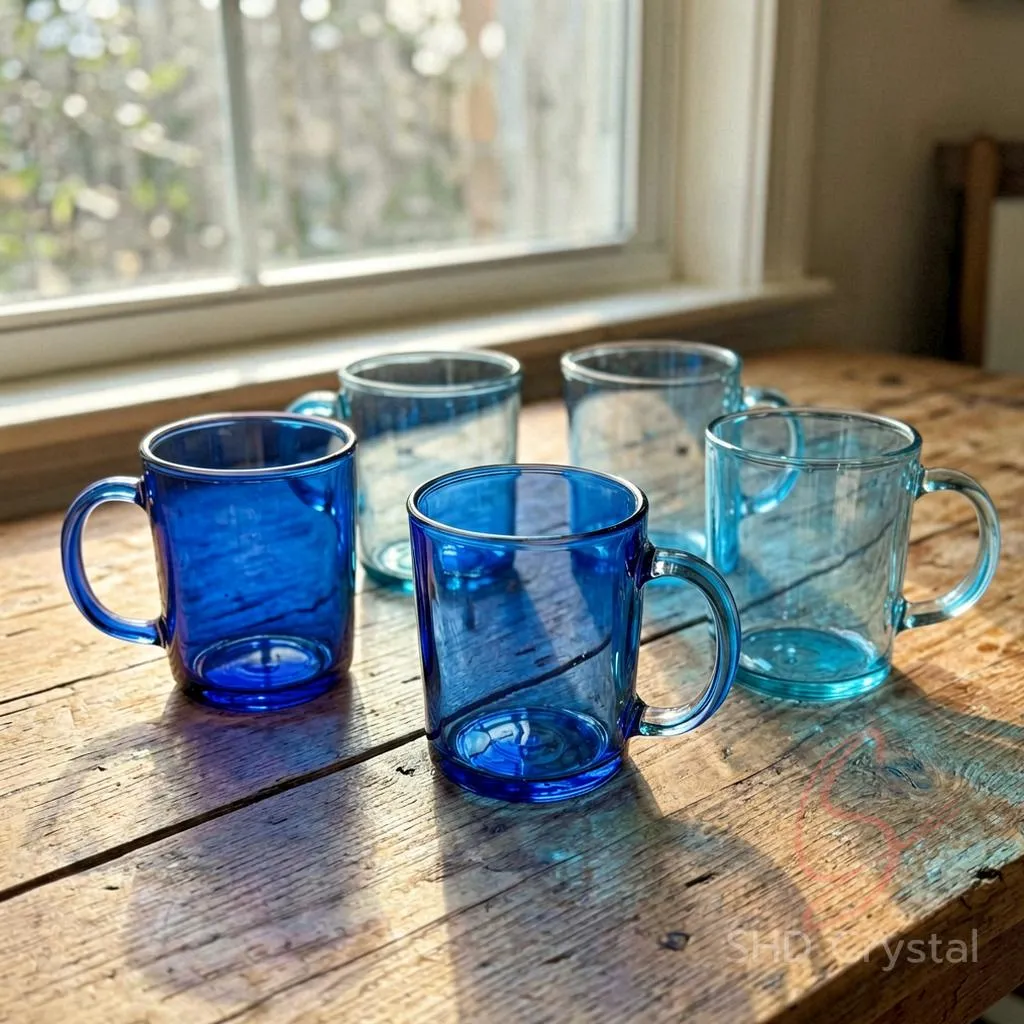
What Sets Blue Glass Mugs From Friends Apart in the Drinkware Market
The first thing buyers notice when evaluating tinted options is how the color shifts by glass type. Soda-lime glass accepts blue colorants readily and keeps production costs manageable, making it the default for casual-use drinkware. Borosilicate handles thermal shock better, which matters for hot beverage service. Crystal delivers the highest clarity but commands a premium price. Each material creates a different trade-off between durability, visual appeal, and landed cost.
A practical consideration is that the tint itself can be applied through two methods: through-body coloring or surface coating. Through-body coloring mixes cobalt oxide directly into the glass melt, producing a permanent, dishwasher-safe hue. Surface coloring applies a tinted layer to the exterior, which looks striking initially but may degrade with repeated washing. For tinted items intended for frequent use, the coloring method is worth specifying in the RFQ.
Comparing Blue Tinted Glass Cups Across Glass Types
Glass Type | Best For | Main Limitation |
Soda-lime | Casual retail, high-volume orders | Lower thermal shock resistance |
Borosilicate | Hot beverage service, premium bars | Higher per-unit cost than soda-lime |
Crystal | Luxury hospitality, gift sets | Premium pricing, careful handling required |
A beverage brand targeting a casual cocktail line would lean toward soda-lime for its cost efficiency. A hotel group outfitting executive lounges might prefer borosilicate for heat tolerance. The real question is not which glass type is objectively best, but which one matches the service environment and price expectations of the end customer.
Common Mistakes When Sourcing Blue Glass Mugs From Friends
One frequent misstep is assuming that a sample from a first-article run represents what the full production batch will look like. A sample might display the correct ocean-blue tone, but the production run pulled weeks later from different raw material lots could drift toward a cooler slate. Buyers should always request production-representative samples before committing to a PO.
Another mistake is treating all colored glass drinkware as interchangeable. A cobalt tumbler intended for a high-traffic bar faces different demands than blue tinted glass cups designed for casual home use. Bar environments demand chip resistance and thermal tolerance; home settings prioritize visual appeal and dishwasher durability.
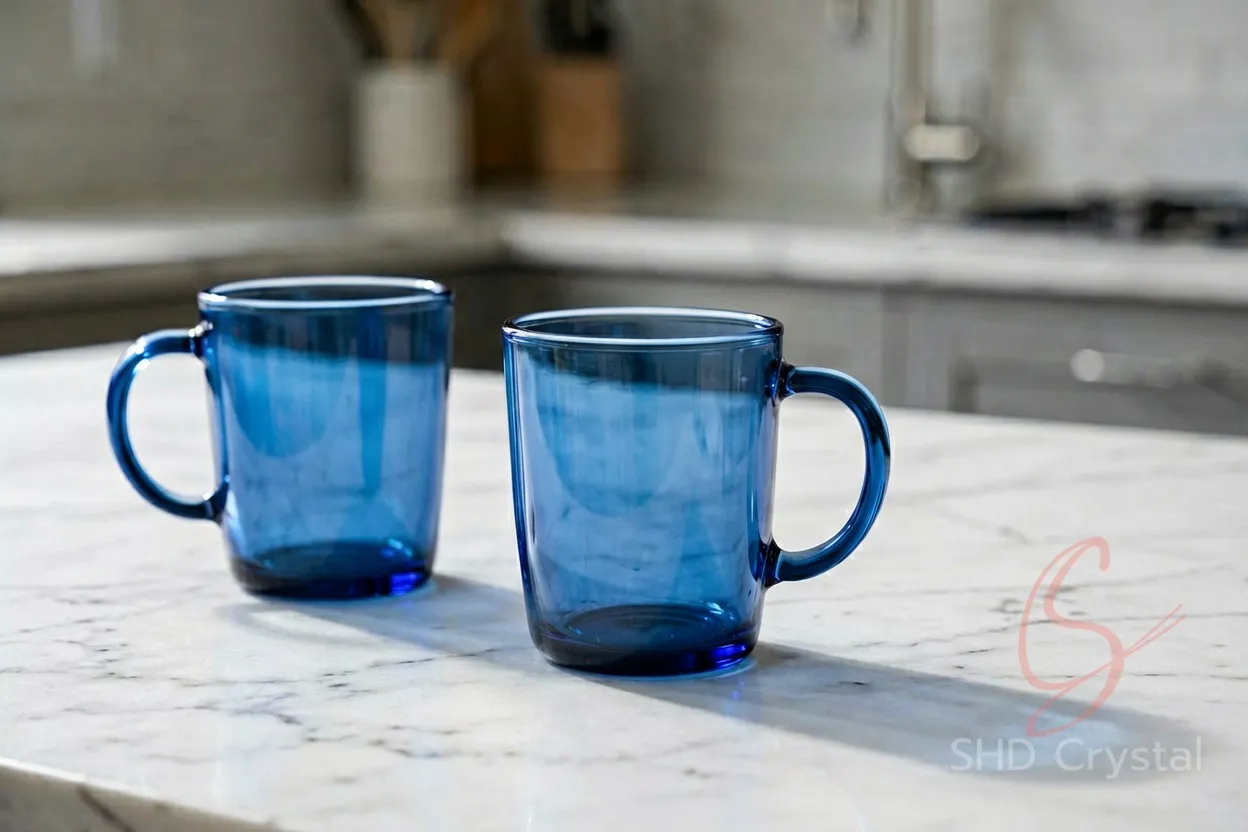
Shipping presents its own challenges. Blue-tinted glass shows fingerprints and minor surface imperfections far more readily than clear glass. Inner carton padding and individual wrapping matter more with tinted products than buyers often expect. A hospitality group sourcing mugs for a seasonal pop-up found that upgrading to tissue-wrapped inner cartons reduced visible surface damage compared to standard bulk packing.
How Quality Control Affects the Final Appearance
Color consistency is the single biggest QC challenge with tinted glass. Across a production run, the hue can shift depending on furnace temperature, batch composition, and even which shift the glass was formed on. In practice, a factory that runs its blanks and decoration on separate lines — common in Hebei and Shandong glass clusters — introduces additional variability when the blank color doesn't match the decoration department's reference standard.
For branded projects, color consistency becomes even more critical. When tinted glass sits next to a logo or packaging insert, even a minor hue shift can make the product look off-brand. The better approach is to lock the color standard early in the sampling phase and insist that the supplier reproduce that standard at multiple checkpoints throughout the production run, not just at final inspection.
FAQ
What is the typical MOQ for blue glass mugs from friends from Chinese manufacturers?
MOQs for colored glass items tend to run higher than clear glass because tinted batches require dedicated furnace runs. Typical minimums range from 1,000 to 5,000 units depending on the supplier, though custom colors may require even higher commitments. Larger runs improve color consistency across the batch.
Which glass type works best for blue tinted glass cups in everyday use?
Soda-lime glass offers the best balance of cost and durability for everyday use. It handles standard dishwasher cycles, resists moderate impact, and accepts through-body coloring well. Borosilicate is a stronger choice only when thermal shock resistance is a hard requirement.
How does surface coloring compare to through-body coloring?
Through-body coloring is more durable and dishwasher-safe because the tint is embedded in the glass itself. Surface coloring looks vibrant initially but may fade or scratch over time. For items destined for commercial use, through-body coloring is generally the more reliable choice.
Conclusion
Conclusion
Blue glass mugs from friends offer a genuine differentiator in a crowded drinkware market, but the advantage only holds if the color stays consistent, the material matches the use case, and the supplier controls the production chain from blank through decoration. For procurement teams evaluating colored glass drinkware, the real decision comes down to color durability, supplier QC capability, and whether the blue tinted glass cups will hold up under actual service conditions.
Next Steps for Your Drinkware Sourcing Project
SHD Glassware works with buyers to match color specifications and maintain consistency across production runs of blue glass mugs from friends. Whether the order calls for soda-lime casual drinkware or borosilicate premium tumblers, the team can help evaluate options and build a spec sheet that reflects real-world use conditions. Reach out to discuss your next colored glass drinkware project.
If you are interested in our glassware or related products,
please feel free to contact us.

